What Fruits Can Cats Eat? Safe Bites, Risky Parts, and Portions
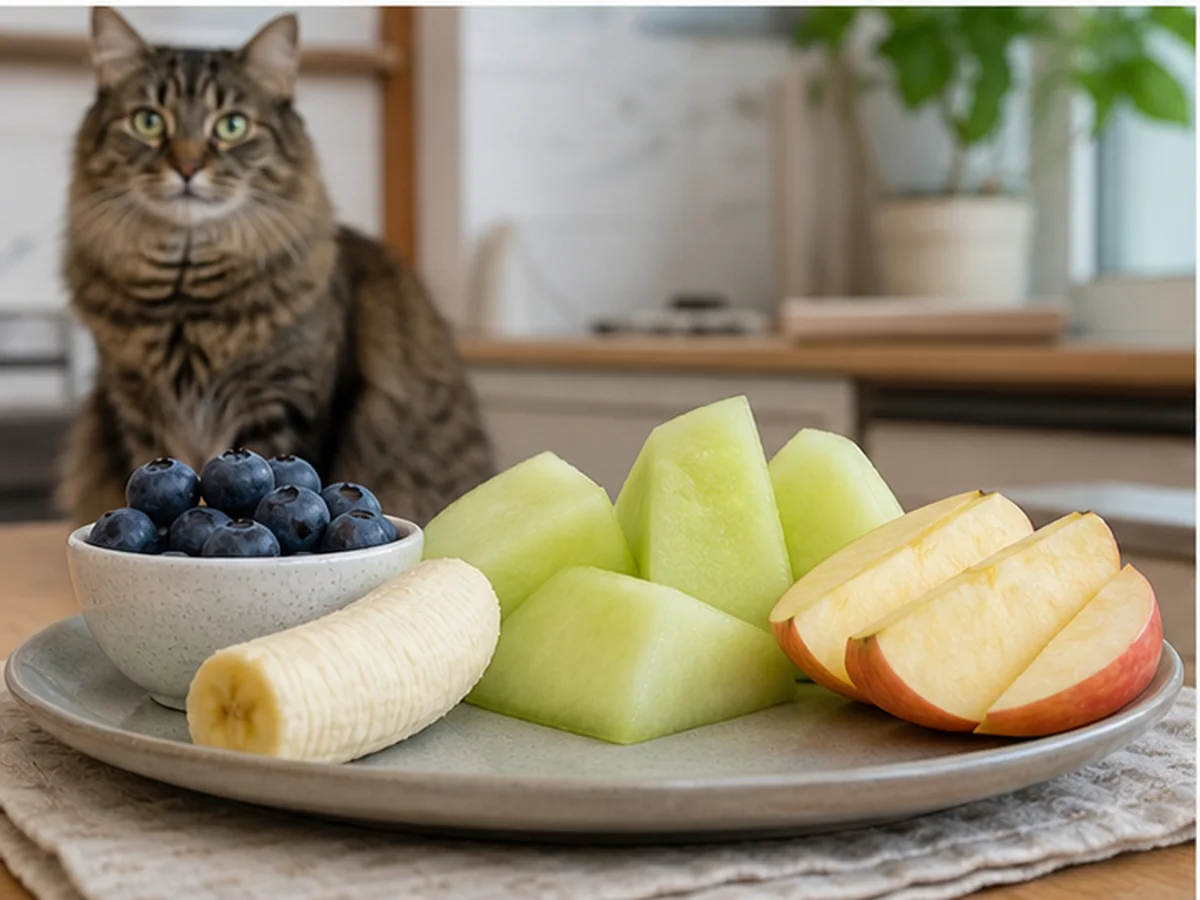
Healthy cats can usually have a tiny, occasional bite of plain apple flesh, banana, blueberry, cantaloupe, mango, pear, pineapple, raspberry, strawberry, or seedless watermelon. Remove pits, seeds, stems, tough peel, and rind first, and skip grapes, raisins, fruit packed in syrup, and anything sweetened or fermented.
Fruit is optional for cats, not a vitamin assignment. Cats are obligate carnivores, and a nutritionally complete cat food should remain the main event even if your countertop has the charisma of a farmers market.
A quick fruit safety chart
| Fruit | Reasonable form | What to remove or avoid |
|---|---|---|
| Apple or pear | A pea-size piece of washed flesh | Seeds, core, stem, leaves, rotten fruit, sweetened products |
| Banana | A thin piece of fresh flesh | Peel and large sticky chunks |
| Blueberry, raspberry, strawberry | Washed, plain, cut or mashed | Stems, mold, syrups, chocolate coating |
| Cantaloupe or watermelon | Seedless flesh in a tiny soft cube | Rind, seeds, large slippery pieces |
| Mango or peach | Only ripe flesh, finely cut | Pit, leaves, stem, skin if tough |
| Pineapple | A tiny piece of fresh flesh | Spiny skin, hard core, canned syrup, cocktails |
| Orange, lemon, lime, grapefruit | Best skipped | Peel, plant parts, concentrated oils, cleaners and extracts |
| Cherry, apricot, plum | Safer to choose another fruit | Pit, stem, leaves and damaged or wilted plant material |
| Grape or raisin | Do not offer | Call after an exposure because a safe feline amount is not established |
| Avocado | Do not use as a routine treat | Pit, peel, leaves, stem, guacamole and high-fat portions |
Why cats do not need fruit
Cats require nutrients that come naturally from animal tissues, including preformed vitamin A, taurine, and specific fatty acids. Cornell’s feline feeding guidance explains why cats are obligate carnivores and why balanced commercial food is the simplest nutritional foundation.
That does not make every plant food toxic. It means a blueberry is an enrichment snack at most, not a nutritional upgrade your cat needs to complete the day.
Fruit also contributes sugar and calories without supplying the full package a cat requires. For a cat with obesity, diabetes, digestive disease, or a therapeutic diet, even a “healthy” human snack may be more complication than benefit.
Fruits that are generally reasonable in tiny bites
Apples and pears
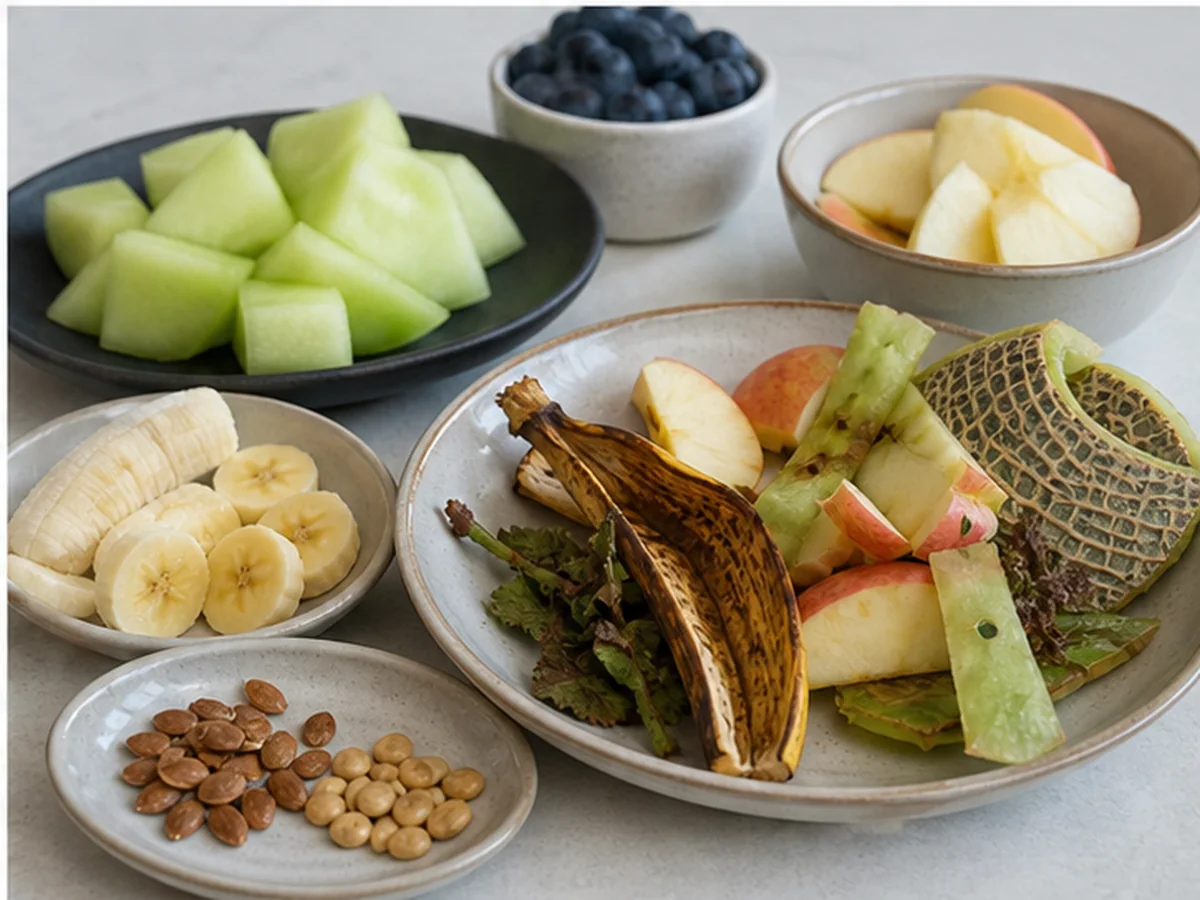
Washed apple or pear flesh can be offered in a very small, seedless piece. Remove the core, seeds, stem, and leaves because seeds and some plant tissues contain cyanogenic compounds, and the core is a choking or obstruction hazard.
Plain, unsweetened puree is easier to swallow, but jars and pouches need a label check. Our applesauce guide covers sweeteners, spices, fermented jars, mold, caps, and squeeze-pouch hazards.
Do not cut around visible mold and serve the remaining fruit. Soft produce can be contaminated beyond the patch you can see, and cats do not need a salvage operation disguised as dessert.
Bananas
A thin piece of ripe banana is not known to be toxic to cats. Keep it small because the soft, sticky texture can be awkward to swallow, and the peel is fibrous enough to cause vomiting or an obstruction if a cat chews off a substantial strip.
Banana bread, pudding, smoothies, dried chips, and flavored yogurt are separate products. They may add chocolate, raisins, xylitol, alcohol flavoring, excessive fat, or more sugar than the original fruit ever volunteered for.
Blueberries, raspberries, and strawberries
Fresh, washed berries can work as occasional pea-size bites, preferably cut or mashed for a cat that gulps. Remove strawberry tops and discard berries that are fermented, leaking, or moldy.
Jam, pie filling, gummies, yogurt coatings, and chocolate-covered berries are not fruit equivalents. Their sugar, fat, sweeteners, chocolate, and packaging deserve their own risk check.
Cantaloupe and watermelon
A seedless cube of melon flesh can be offered occasionally. Remove every strip of rind because rind is hard to digest and can become a choking or obstruction problem.
Watermelon seeds are not a sensible test of your cat’s chewing technique, even though an accidental single pale seed is unlikely to create a poisoning crisis. Seedless flesh, finely cut, keeps the decision pleasantly boring.
Mango, peach, and pineapple
Ripe mango and peach flesh can be served in tiny pieces after removing the pit and tough skin. Peach and other stone-fruit pits can obstruct the gut, and their kernels and plant parts contain cyanogenic compounds.
Fresh pineapple flesh is not known to be toxic, but the spiky peel and hard core are poor chewing projects. Canned pineapple often comes in syrup, while pineapple cocktails may add alcohol or sweeteners.
Fruit parts that change the answer
Pits, seeds, cores, stems, and leaves
A food can have edible flesh and hazardous hardware. The ASPCA’s cherry entry identifies stems, leaves, and seeds as sources of cyanogenic glycosides and lists breathing difficulty, dilated pupils, and shock among possible signs.
Cherry flesh is not the part highlighted for cyanide risk, but a whole cherry gives a cat access to the pit and stem in one rollable package. Choosing a blueberry instead removes a surprising amount of administrative work.
Peach, plum, apricot, and nectarine pits pose similar physical and plant-compound concerns. Never crack a pit or offer a fruit with the pit “mostly removed” if fragments remain.
Peels and rinds
A soft, thin peel may simply cause stomach upset, while a thick strip of melon rind can obstruct. Citrus peel also contains more concentrated essential oils and plant compounds than the juicy flesh, so “my cat licked an orange segment” and “my cat chewed lemon peel” are different calls.
Wash produce under running water before cutting it, and do not use soap, bleach, or produce disinfectant. The FDA’s produce-cleaning advice recommends running water because cleaning products can leave residues not intended for ingestion.
Fruits and fruit products to avoid
Grapes and raisins
Grapes and raisins can cause acute kidney injury in dogs, and feline evidence is sparse rather than reassuring. Cornell lists them among common cat hazards, while Merck notes anecdotal feline reports but no published feline case reports.
Because no dependable safe feline amount exists, do not offer them and call after an exposure. Our grape and raisin guide explains the evidence gap, mixed foods, symptoms, and the information a poison professional will ask for.
Citrus peel, oils, and concentrated products
Most cats dislike citrus, which is convenient but not a lock on the pantry. Citrus peels, leaves, stems, essential oils, cleaners, extracts, and concentrated flavorings create more concern than a lick of peeled fruit flesh.
Essential oils should not be treated like juice. Concentration, route of exposure, grooming after a spill, and cats’ metabolic limitations can turn a small bottle into a veterinary problem.
Avocado and guacamole
Avocado is high in fat, the pit can obstruct, and plant parts contain persin. Mammals are generally less sensitive than some birds and large animals, but the fruit offers no benefit that requires accepting those uncertainties.
Guacamole is worse because it commonly contains onion, garlic, salt, citrus, and hot pepper. If your cat sampled the bowl, use the recipe or label to assess every ingredient rather than focusing only on avocado.
Dried, canned, candied, fermented, and sugar-free fruit
Drying concentrates sugar and makes pieces chewy; canning may add syrup; candy can add chocolate or xylitol. Fermented fruit and juice can contain alcohol, while spoiled fruit can carry microbes or toxins.
Read labels for xylitol, sometimes called birch sugar, but remember that feline xylitol sensitivity is not established as it is in dogs. That uncertainty still warrants a call because a product can contain chocolate, caffeine, raisins, or another hazard.
How much fruit can a cat have?
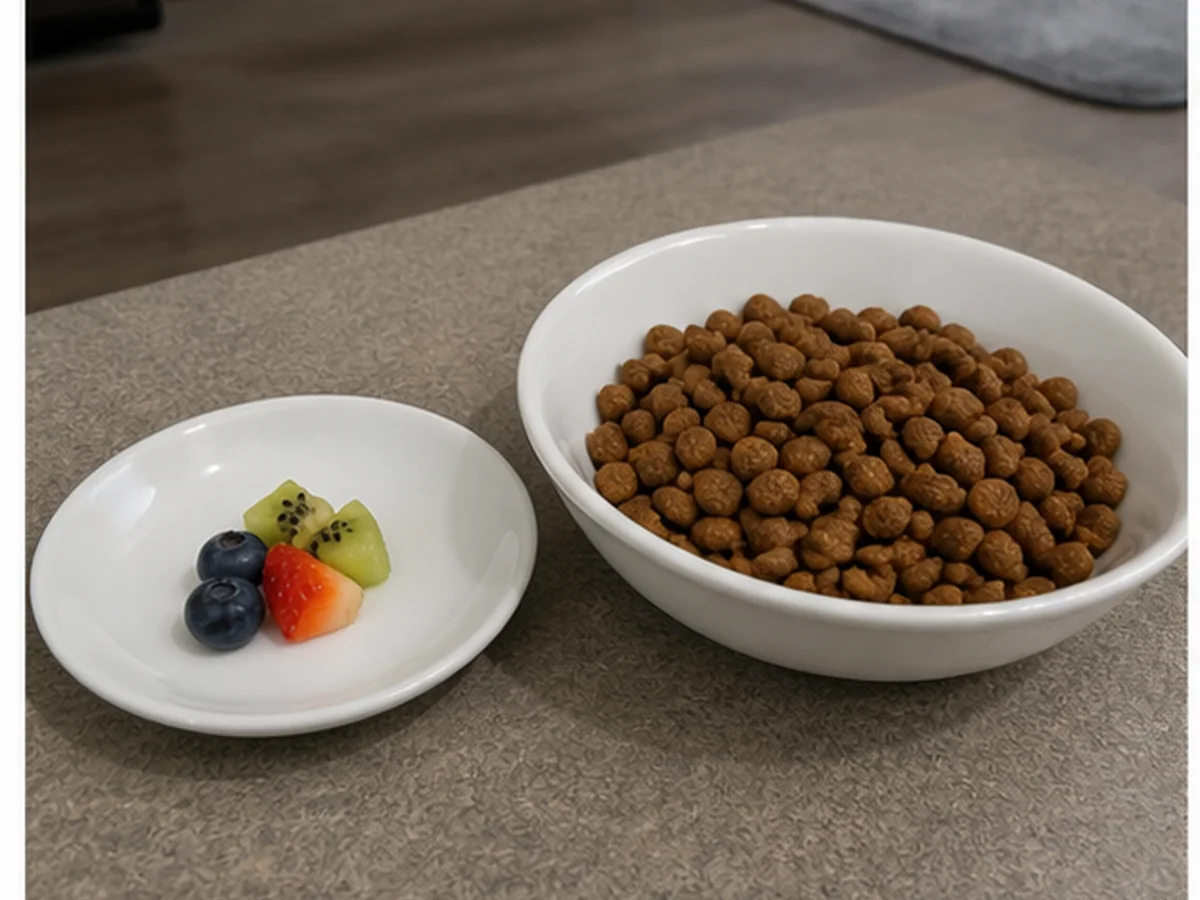
There is no universal serving size because fruit is not required and cats vary in size, health, and calorie needs. For a healthy adult whose veterinarian has not restricted treats, start with one pea-size piece, then stop.
Do not introduce several fruits at once, and do not use fruit daily just because the first taste went well. Vomiting, diarrhea, gas, or appetite changes mean the experiment did not earn a sequel.
Treats should remain a small slice of daily calories so the complete food supplies the intended nutrient balance. The FDA’s explanation of nutritional adequacy statements shows what to look for on the cat-food label.
A safe way to offer fruit
- Choose fresh, plain fruit. Skip syrup, seasoning, sweeteners, alcohol, chocolate, and dairy coatings.
- Wash it. Rinse under running water before cutting.
- Remove the risky parts. Take away pits, seeds, core, stem, leaves, peel, and rind as appropriate.
- Cut it smaller than you think. A pea-size soft piece is plenty for a first taste.
- Supervise. Pick up rejected pieces before they collect dust, string, or a second cat.
- Keep the regular meal regular. Fruit should not replace a complete and balanced cat food.
A cat that sniffs the offering and walks away has made a perfectly respectable nutritional choice. Try a piece of their usual food as a treat, or ask your veterinarian whether plain cooked egg is appropriate; our boiled egg guide covers preparation and storage.
When to call a veterinarian
Call promptly for grapes or raisins, meaningful amounts of pits or plant parts, essential oil exposure, alcohol, chocolate-coated fruit, xylitol products, or any swallowed rind, pit, skewer, wrapper, or pouch cap. Do not induce vomiting at home unless a veterinary professional specifically directs it.
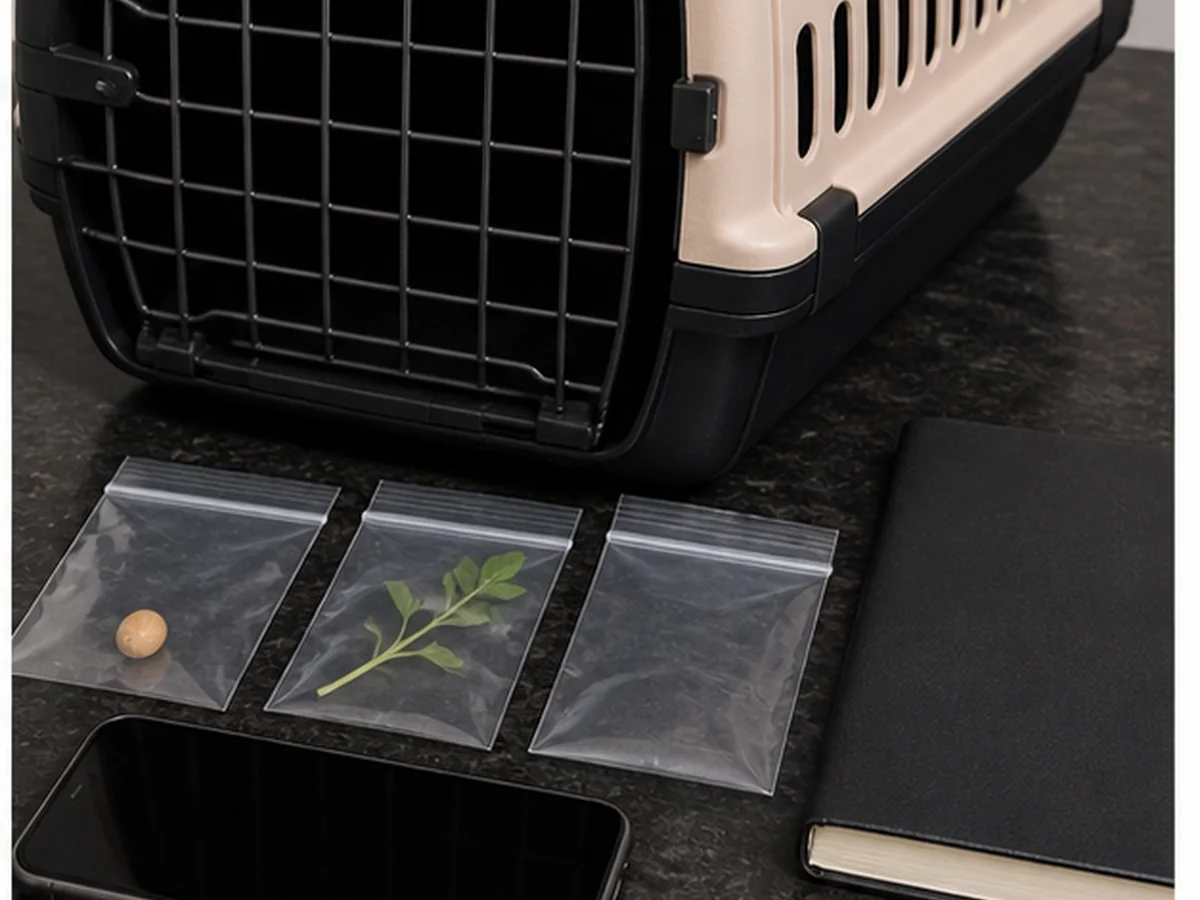
Seek emergency care for trouble breathing, collapse, seizures, severe weakness, repeated vomiting, a swollen or painful belly, inability to swallow, pale or blue gums, or marked changes in urination. Bring the package, recipe, or a photo of the plant when available.
Frequently asked questions
Can kittens eat fruit?
Kittens have small stomachs and large nutritional demands, so fruit can displace food designed for growth. Ask the kitten’s veterinarian before offering extras, and never use a round fruit or hard piece that can choke.
Can cats drink fruit juice?
Juice concentrates sugar, removes useful texture, and may include grape juice, sweeteners, preservatives, or alcohol from fermentation. Water and a complete cat food are the sensible defaults.
Can cats eat fruit yogurt or smoothies?
Check every ingredient, because dairy may cause digestive upset and recipes can include xylitol, chocolate, grapes, raisins, protein powders, caffeine, or supplements. A flavored blend is not nutritionally equivalent to its fruit picture.
Is frozen fruit safe?
Plain fruit can be thawed and cut into a tiny soft piece, but a hard frozen berry may be a choking or tooth hazard. Frozen mixed-fruit bags may also contain grapes, cherries with pits, or sweetened pieces.
Bottom line
Cats can sample tiny pieces of several plain fruits, but they do not need fruit. Remove every pit, seed, stem, core, and rind, keep portions comically small, avoid grapes and raisins, and let a complete cat food handle the serious nutrition work.