Can Cats Eat Applesauce? Labels, Sweeteners, Spoilage, and Jars
One small lick of plain unsweetened applesauce is usually low risk for a healthy adult cat, but applesauce is optional human food, not feline digestive care. Added sugar, sweeteners, spices, fermentation, mold, large portions, medical diets, jars, lids, pouches, and missing packaging can change the answer quickly.
Read the exact label first
- One small lick of apple-only unsweetened sauce: remove the rest and monitor for digestive upset.
- A bowl, pouch, or unknown amount: call for advice, especially for a kitten, small cat, or cat with a medical condition.
- Sweetened, sugar-free, spiced, fermented, or moldy product: identify every ingredient and storage concern.
- Apple seed, core, stem, leaf, essential oil, alcohol, or medication mixed in: assess separately from ordinary sauce.
- Broken glass, sharp lid, pull tab, pouch cap, plastic, or foil seal missing: seek prompt veterinary guidance.
Save the jar, cup, pouch, label, or recipe and record amount, time, cat weight, conditions, medications, diet, symptoms, storage history, and missing objects. “Natural” and “no added sugar” do not reveal every ingredient.
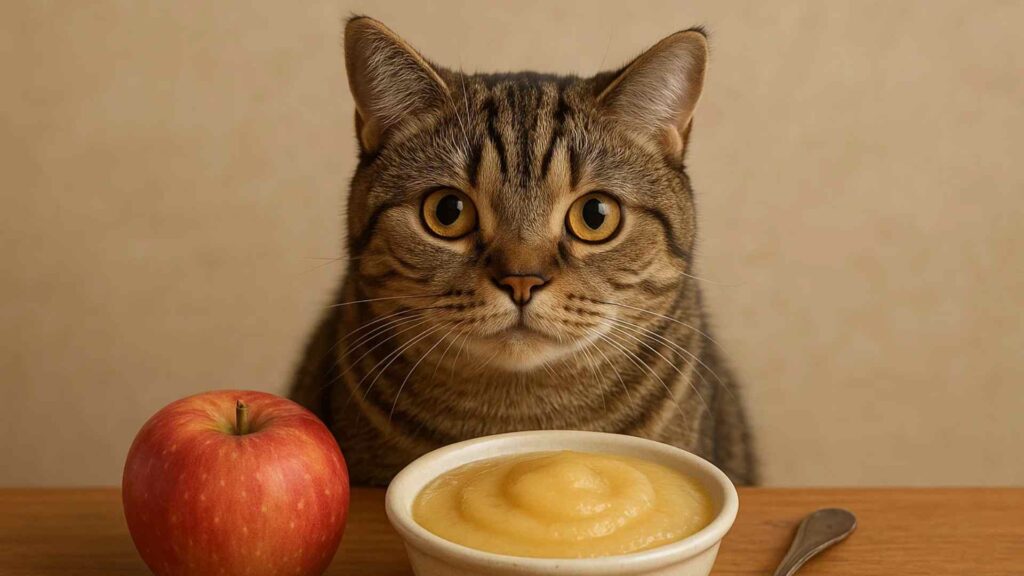
Plain applesauce is not poisonous, but it is not useful nutrition
Apple-only sauce is cooked fruit puree, so a lick does not contain a special feline toxin. It does contain plant carbohydrate and natural sugar without the complete nutrient balance a cat needs.
The Merck Veterinary Manual nutrition overview explains why cats are obligate carnivores and why complete and balanced food matters. That classification does not make every fruit poisonous, but it does make “vitamin-packed applesauce” a poor reason to add it routinely.
Do not promise immune support, better vision, improved coat, extra energy, or disease prevention from a spoonful of sauce. Cats need feline-appropriate amounts and forms of essential nutrients, and more of one human-food ingredient does not improve a diet already formulated to be complete.
Unsweetened, no added sugar, and sugar-free mean different things
Unsweetened applesauce may still contain natural fruit sugar, while “no added sugar” means no sugar was added during processing but may allow flavors or other ingredients. Sugar-free products may use sweeteners, so the ingredient panel still controls the decision.
Ordinary sugar mainly adds calories and may worsen gastrointestinal upset after a large serving. Cats with diabetes, obesity, a calorie plan, or a prescription diet should not receive improvised sweet foods without veterinary approval.
Do not call every sweetener xylitol or assume every sugar-free cup contains it. Photograph the label and identify the exact sweeteners, because a product may also contain erythritol, stevia, sucralose, flavor concentrates, or ingredients unrelated to sweetness.
Xylitol evidence in cats is limited, so avoid dog-dose claims
Xylitol causes a well-established emergency syndrome in dogs, but feline evidence is far thinner. A small study of six healthy cats indexed in PubMed did not reproduce the dog-like hypoglycemia or acute liver failure response at the tested doses.
That small study does not prove that every dose, cat, formulation, or mixed product is harmless. Do not copy a canine xylitol threshold into a cat article, and do not dismiss an exposure when the total product or other ingredients are unknown.
Call a veterinarian or animal poison service with the label after a sugar-free product raid. This is particularly important when a cat has symptoms, a medical condition, or possible access to gum, candy, medication, chocolate, caffeine, alcohol, or packaging along with the applesauce.
A large serving can upset the gut
Applesauce can deliver a sudden load of sugar, soluble fiber, and fermentable carbohydrate to a cat that is not accustomed to it. Vomiting, diarrhea, gas, cramping, reduced appetite, or stool changes are plausible after a larger amount.
There is no evidence-based universal spoon-per-pound amount for cats, and no need to test a cat’s tolerance deliberately. The relevant variables are the product, amount, cat size, usual diet, health, and whether signs are already present.
Persistent vomiting, repeated diarrhea, a painful abdomen, marked lethargy, inability to keep water down, or refusal to eat deserves veterinary attention. Cats can become medically vulnerable when appetite loss continues, so “wait a few days” is not a sound default.

Applesauce is not a constipation treatment
Fiber can influence stool, but the type and amount needed depend on the reason for constipation and the cat’s hydration, diet, medications, mobility, and underlying disease. More fruit puree can worsen gas or stool problems and delay care for obstruction, megacolon, pain, kidney disease, or another cause.
Do not publish a homemade applesauce dose table for constipation or diarrhea. A veterinarian may recommend a particular fiber strategy for a diagnosed cat, but that is different from treating every litter-box change with human baby food.
Our cat pickle guide makes a similar point about using pantry foods as remedies: a familiar ingredient is not a substitute for identifying why a cat is ill. Straining without producing stool, vomiting, pain, or repeated unproductive litter-box trips needs timely care.
It is not hydration therapy either
Applesauce contains water, but a cat with dehydration, heat illness, kidney disease, vomiting, diarrhea, or urinary signs needs assessment and an appropriate fluid plan. Sweet puree cannot replace measured veterinary fluids or a complete moisture-rich feline diet.
Keep fresh water available unless a veterinarian has given different instructions, but do not force water by syringe into a nauseated or struggling cat. Aspiration can create a second emergency.
If increasing dietary moisture is the goal, ask about an appropriate wet cat food or adding water to the existing complete food. That approach preserves nutrient balance and can be adjusted to the cat’s diagnosis.
Cinnamon and spice need proportion
Cinnamon applesauce is not plain applesauce, but one lightly flavored lick is different from chewing a cinnamon stick, inhaling powder, or contacting essential oil. The form, concentration, amount, and route of exposure determine the concern.
Spiced products may include cinnamon, nutmeg, clove, ginger, vanilla extract, citrus oil, or alcohol-based flavoring. Essential oils and concentrated extracts deserve prompt professional advice, especially after oral, eye, skin, or inhalation exposure.
Wipe residue from fur with a damp cloth before the cat grooms it, and rinse an exposed eye with plain lukewarm water if the cat allows safe handling. Persistent drooling, coughing, vomiting, wobbliness, tremors, breathing difficulty, or eye pain needs veterinary care.
Apple seeds are not the main applesauce question
Commercial smooth applesauce should not contain intact apple seeds, cores, stems, or leaves. The ASPCA apple plant entry identifies cyanogenic glycosides in apple stems, leaves, and seeds, particularly when plant material is chewed or wilting.
Do not turn one swallowed intact seed into a guaranteed cyanide emergency, and do not claim apple flesh or ordinary seed-free sauce is cyanide-rich. Concern rises with chewed seeds, a larger unknown amount, plant debris, respiratory distress, collapse, or abnormal gum color.
Homemade sauce should start with washed sound fruit and exclude the core, seeds, stem, and leaves, but there is still no nutritional need to make it for a cat. If the goal is a treat, a measured cat treat is simpler and easier to count.
Fermented, moldy, or spoiled sauce is a different exposure
Opened applesauce is perishable and can mold or ferment after poor storage. Bubbling, swelling, spraying, alcohol-like odor, visible mold, slime, strange color, or a damaged container is a discard signal, not a reason to scrape off the top.
The USDA shelf-stable food guide advises against using leaking, bulging, badly dented, foul-smelling, or spurting containers. Secure suspect food where cats and people cannot reach it.
Fermentation may introduce alcohol, while moldy food can cause gastrointestinal or neurologic signs depending on what grew and how much was eaten. Weakness, abnormal walking, tremors, seizures, repeated vomiting, or collapse after spoiled food is urgent.
Jars, lids, pouches, and cups can injure
A glass jar can break, and a metal lid, foil seal, or pull tab can cut the mouth or gastrointestinal tract. Plastic cups, pouches, caps, rings, spoons, and clips can choke or obstruct.
A cat with a head stuck in a jar or pouch can panic and lose air, while a flexible bag can seal over the face. Store sauce in a closed cupboard or refrigerator and discard empty containers into a secured bin promptly.
If packaging is missing, do not induce vomiting or feed bulky food to cushion it. Report the object’s material, dimensions, sharp edges, and whether it was chewed, along with any gagging, vomiting, pain, or appetite change.

Calories and complete-diet displacement
Applesauce should not replace a meal, carry medication without veterinary approval, or become a daily fiber ritual. Repeated substitution matters more than whether one lick contains a trace vitamin.
Our cat cashew guide covers the same calorie-and-displacement problem in a much denser food, while the cat grape guide helps separate applesauce from a different fruit exposure. Ingredient identity always comes before fruit-category assumptions.
What to do after an applesauce raid
Remove access and save the product, recipe, and packaging, then estimate the maximum amount. Record time, cat weight, conditions, medications, usual diet, symptoms, storage history, and every missing object.
Call promptly for a large or unknown amount, a sugar-free mixed product, alcohol, essential oil, meaningful chewed seed or plant material, mold or fermentation, missing glass or packaging, a medically vulnerable cat, or significant signs. Do not induce vomiting, force water, or give charcoal, oil, milk, laxatives, or human stomach medicine unless directed.
After one small lick of plain apple-only unsweetened sauce in a healthy symptom-free adult cat, normal food and water plus observation are usually proportionate. Watch for vomiting, diarrhea, appetite change, drooling, coughing, pain, weakness, or unusual behavior.
The bottom line on applesauce for cats
A tiny lick of plain unsweetened applesauce is usually low risk, but it offers no necessary feline health benefit. Sugar, sweeteners, spice concentrates, spoilage, fermentation, large fiber portions, medical diets, jars, lids, pouches, and other packaging deserve closer attention.
Do not use applesauce as a hydration, constipation, diarrhea, vitamin, or weight treatment. Keep the complete feline diet at the center and use the exact label to decide whether a pantry accident needs simple observation or professional help.