Can Cats Eat Ham? Sodium, Glazes, Bones, Deli Slices, and Leftovers
A tiny shred of plain cooked ham is unlikely to harm a healthy adult cat, but ham is a poor routine treat. Curing concentrates sodium, fatty edges can upset digestion, glazes and seasonings may contain onion or garlic, and bones, netting, foil, skewers, and spoiled leftovers add avoidable hazards.
Triage the ham, not just the meat
Put leftovers away and identify the product: deli slice, holiday ham, canned ham, spiral ham, country ham, prosciutto, glazed roast, bone, or raw pork. Save the label and recipe, then estimate the amount and time.
- One tiny lean unseasoned shred: offer water and monitor for vomiting, diarrhea, thirst, or appetite change.
- Several slices, country ham, brine, glaze, or a medically fragile cat: call for individualized advice.
- Onion, garlic, alcohol, bone, toothpick, string, netting, foil, or plastic: contact a veterinarian promptly.
- Breathing difficulty, collapse, repeated vomiting, severe weakness, pale or yellow gums, tremors, or seizures: seek urgent care.
Do not induce vomiting, force water, or pull visible string from the mouth or rectum. Sharp bones and linear foreign bodies make improvised treatment especially risky.
Why ham differs from plain cooked pork
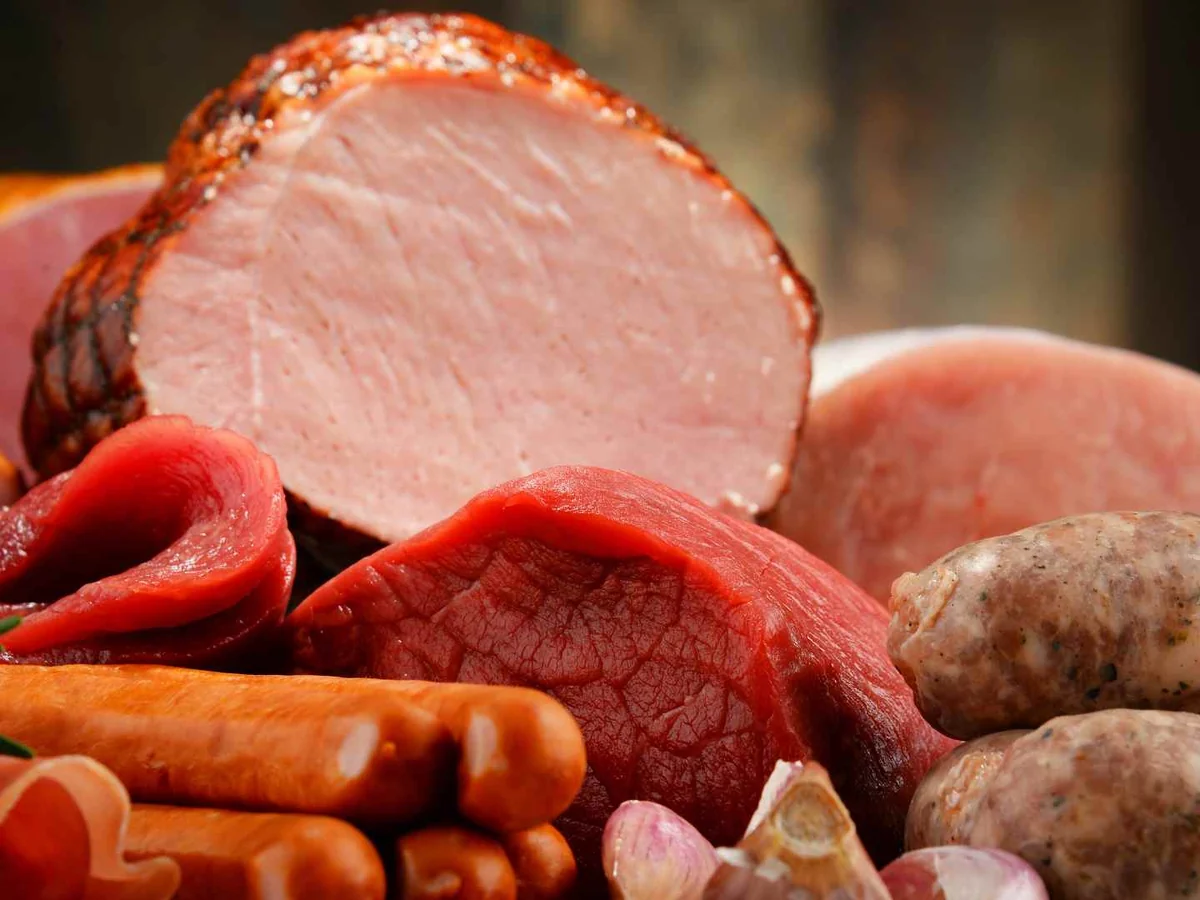
Ham comes from pork, but it is commonly cured with salt and may be smoked, sweetened, glazed, injected, or preserved. That processing creates a different food from a plain fully cooked lean pork morsel.
Meat alone is not a complete cat diet either. Cats need a balanced profile of taurine, fatty acids, vitamins, minerals, and amino acids that one muscle meat cannot provide.
The Merck Veterinary Manual nutrient guide explains why cats require animal tissues yet can develop deficiencies on unbalanced meat-heavy homemade diets. Ham is a garnish-sized accident, not a meal plan.
Sodium is the central everyday concern
Curing and brining can load a modest slice with sodium. One small taste is far from proving salt poisoning, but a cat can eat several folded deli slices quickly if the package is open.
The Merck salt toxicosis review describes thirst, vomiting, diarrhea, incoordination, tremors, seizures, and other serious signs after excessive sodium exposure. Water access, amount, product concentration, and medical history shape risk.
Leave clean water available and call after a substantial theft, but do not syringe water into the mouth. Dangerous sodium abnormalities require carefully controlled correction.
Kidney, heart, and urinary diets
A cat with kidney disease, heart disease, hypertension, urinary concerns, or another therapeutic diet may have a deliberately managed sodium and nutrient intake. One shared bite can be more relevant for that cat than for a healthy adult.
Ask the prescribing clinic before using ham as a topper, training reward, or pill wrap. The diet is part of treatment, and salty table meat can undermine the plan without looking dramatic.
Glazes can hide the urgent ingredient
Brown sugar, honey, maple, pineapple, mustard, clove, bourbon, rum, cola, garlic, onion, stock, and spice blends are common ham companions. Removing the browned outer layer cannot guarantee that injected or basted flavor stayed on the surface.
Garlic and onion are Allium plants capable of damaging feline red blood cells. The Merck Allium toxicosis review notes that cats are especially susceptible and that visible anemia can be delayed.
Call with the full recipe after a meaningful seasoned serving rather than waiting for weakness, rapid breathing, pale gums, yellow gums, or dark urine. Unknown restaurant glaze should remain unknown in the history.
Fat cap, rind, skin, and pan drippings
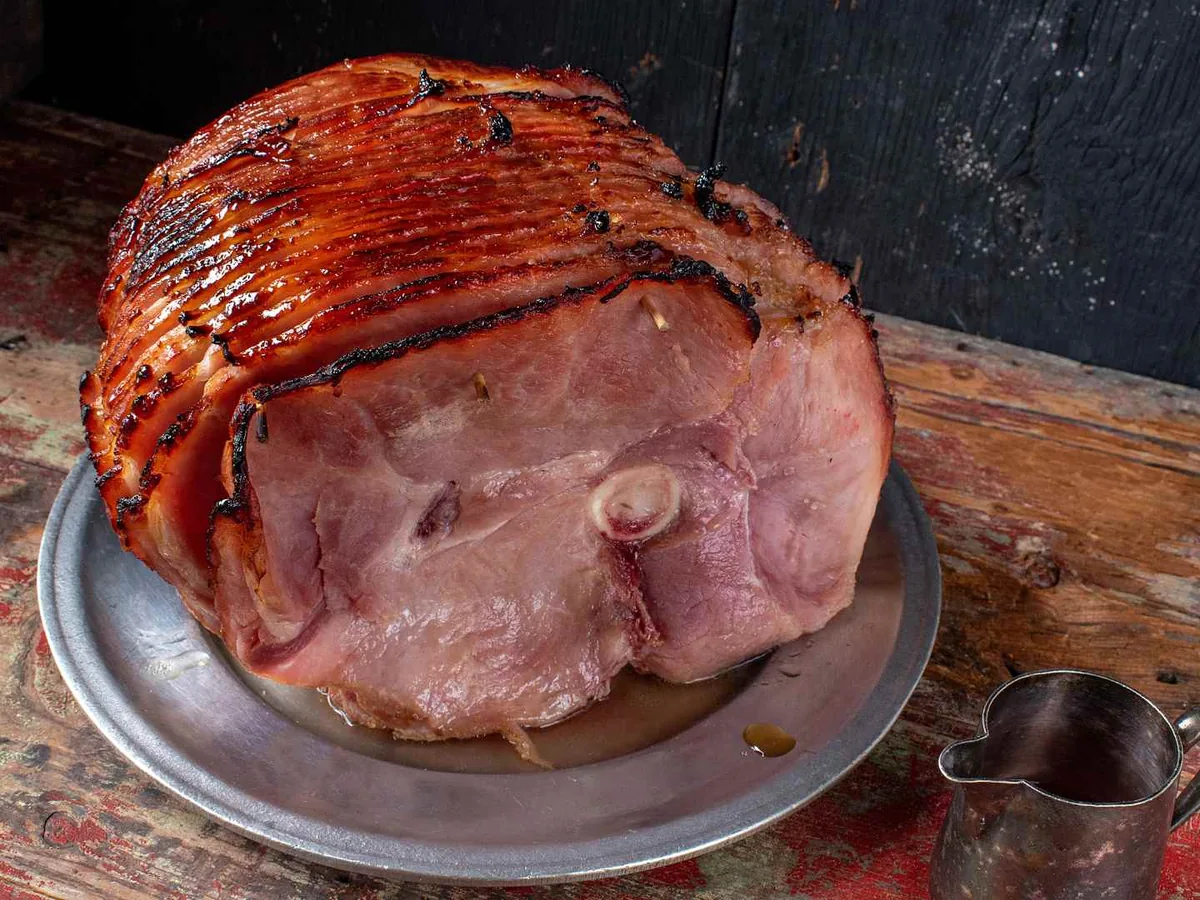
The outer fat and rind are calorie-dense, chewy, and harder to digest than a lean interior shred. Large strips can cause gagging, vomiting, diarrhea, or obstruction.
Pan drippings combine fat, salt, glaze, and seasoning in a concentrated liquid. Do not pour them over cat food to improve appetite unless a veterinarian has reviewed the recipe.
A single fatty bite does not establish pancreatitis, which is complex in cats, but a cat with prior pancreatic or fat-sensitive gastrointestinal disease should avoid rich leftovers. Our butter guide explains similar fat and wrapper issues.
Ham bones are not cat chews
Cooked ham bones can splinter, but raw bones are not safe by contrast. Either can break teeth, lodge in the throat or esophagus, obstruct the intestine, or puncture tissue.
Coughing, gagging, mouth pawing, repeated swallowing, noisy breathing, or respiratory distress can signal a lodged bone. Later vomiting, abdominal pain, appetite loss, straining, reduced stool, or lethargy can signal obstruction or injury.
Breathing trouble is an emergency, and vomiting should not be induced after bone ingestion. Keep the remaining bone and estimate the missing section for the clinic.
Deli ham and lunch meat
Deli ham can be brined, smoked, formed, injected with broth, sweetened, and seasoned. A lower-sodium label does not mean low sodium for a cat or reveal every flavor ingredient.
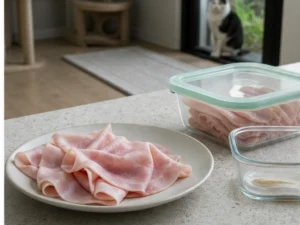
Thin slices fold into a dense mouthful and may be swallowed with plastic separator film. Count slices and packaging rather than estimating by how full the packet looks.
Country ham, prosciutto, and canned ham
Dry-cured country ham and prosciutto can be particularly salty and chewy. Canned ham may contain brine, sugar, preservatives, gel, a sharp metal lid, and a key or pull tab.
These versions are not safer because pieces are thin or shelf-stable. Skip intentional feeding and call after a large theft or missing container part.
Ham sandwiches, pizza, and party plates
A sandwich may add onion, garlic mayonnaise, cheese, mustard, pickles, bread, avocado, raisins, or toothpicks. Pizza adds sauce, cheese, dough, garlic, onion, and box or foil debris.
Our guides to pizza, pickles, salami, and boiled eggs help assess the entire stolen bite. Check every component and remove duplicate assumptions before calling.
Raw ham and food safety
Products labeled fresh ham may be uncooked pork, while some cured hams still require cooking. Read the safe-handling and cooking instructions rather than judging by pink color.
The FDA warns that raw animal food can carry disease-causing bacteria affecting pets and people. Wash hands and surfaces, keep raw meat separate, and mention exposure if vomiting, diarrhea, fever, appetite loss, or lethargy develops.
Netting, string, foil, and absorbent pads
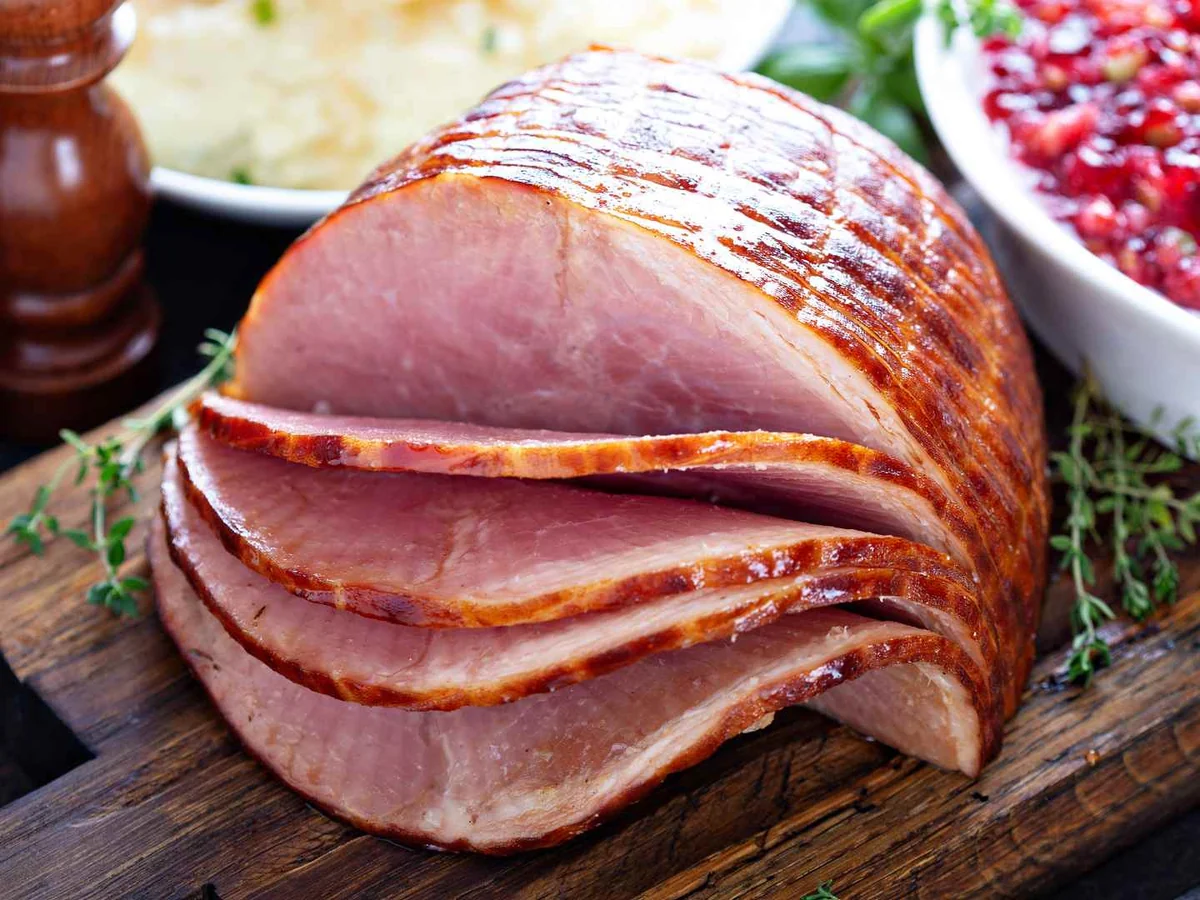
Holiday hams arrive with nets, strings, clips, glaze packets, plastic caps, foil, and absorbent pads that smell like meat. Swallowed string can bunch the intestines, while clips and bones can puncture.
Call when any item is missing and do not pull visible linear material. Put carving waste directly into a lidded bin before leaving the kitchen.
Storage, spoilage, and leftovers
Follow product refrigeration and use-after-opening instructions, refrigerate leftovers promptly, and discard meat that is slimy, moldy, sour-smelling, or held unsafely. Reheating does not reverse every spoilage toxin.
Keep the original label and lot code, and use clean utensils. Do not let the cat lick the carving board, storage bag, or drippings while cleanup is underway.
What to watch for over the next day
After a small, low-risk taste, note normal eating, drinking, litter-box use, comfort, and energy rather than hovering over every whisker twitch. Vomiting more than once, repeated diarrhea, a swollen or painful abdomen, unusual hiding, refusal of food, or increasing lethargy deserves veterinary advice.
Ingredient-related red-cell damage may not look immediate, so the recipe matters even when the cat seems perfectly pleased with the theft. If onion or garlic was present, follow the veterinarian’s monitoring window and watch for weakness, rapid breathing, pale or yellow gums, and dark urine.
How much is a treat-sized piece?
A pea-sized shred is easier to portion than a vaguely defined bite, especially when a human slice can outweigh several commercial cat treats. Tear the piece before approaching the cat, because negotiating with a cat beside an open ham packet rarely improves anyone’s arithmetic.
Treat calories must fit within the day’s total, and cats needing weight loss have even less room for extras. If ham is being used to give medicine, ask about a lower-sodium commercial pill treat or a spoonful of the cat’s usual wet food.
Holiday-kitchen prevention that works
Give the cat a quiet room or perch away from carving, with water, a litter box, and the usual meal served before guests arrive. Clear plates quickly, close the dishwasher, and place bones, string, foil, and fatty scraps in a secured bin rather than a tempting open bag.
Ask guests not to feed from their plates, since five people offering “just one little piece” creates a surprisingly large serving. A measured bowl of approved treats lets generous visitors participate without turning dinner into an accidental sodium buffet. The cat still gets to supervise.
A safer way to share
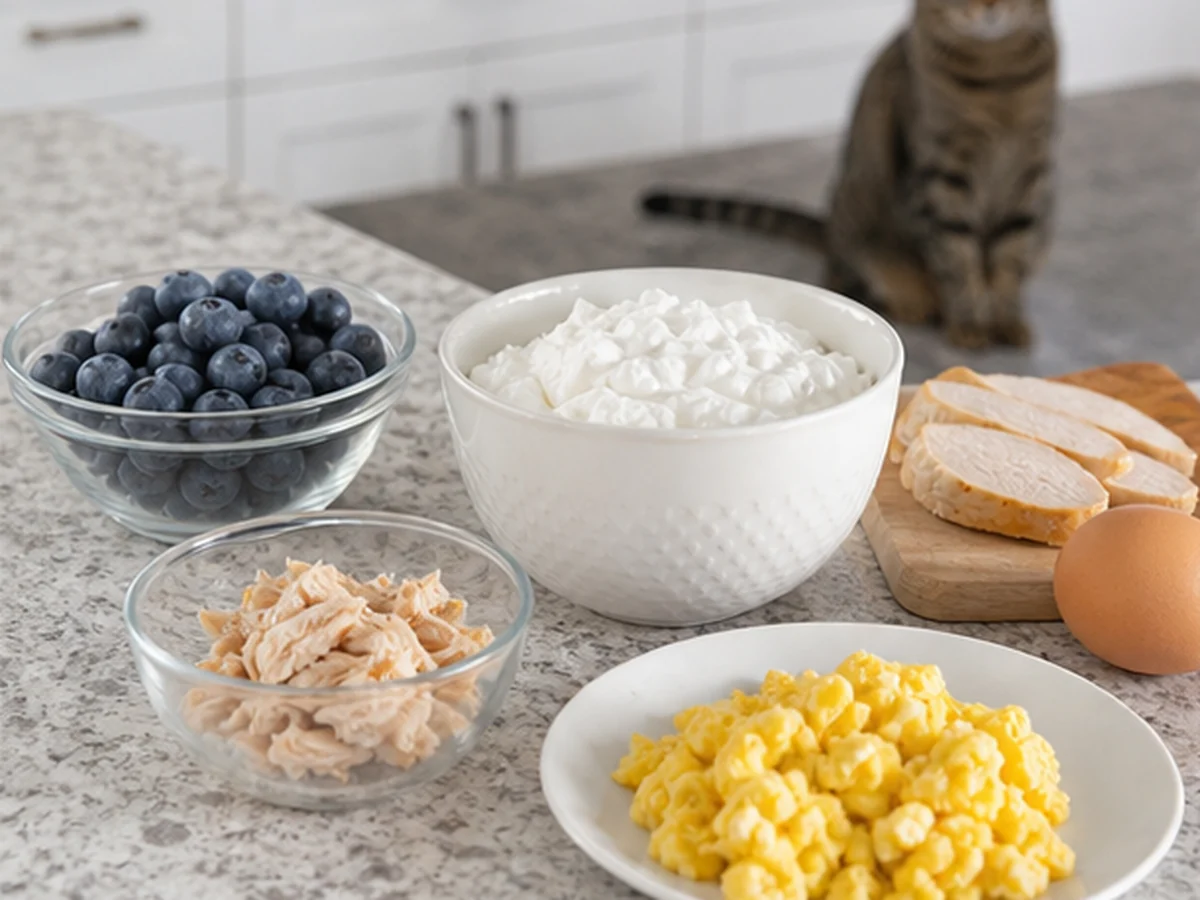
If the veterinarian approves pork, set aside one pea-sized shred of lean meat before brining, glazing, seasoning, and carving near the bone. Cook it fully, cool it, and remove visible fat.
The Cornell Feline Health Center recommends complete balanced food and keeping treats occasional. Part of the regular ration is an even simpler holiday gift.
Frequently asked questions
Can kittens eat ham?
Skip it. Kittens need complete growth food and have small calorie budgets, airways, and digestive tracts.
Is one piece of ham an emergency?
A tiny lean plain shred is usually not, but a full slice, glaze, bone, netting, or medically restricted cat changes the decision. Save the label and call when unsure.
Can cats eat low-sodium ham?
Lower sodium is relative to another human product and does not make ham balanced cat food. Check seasoning and serve plain cooked meat instead if the veterinarian approves a treat.
The bottom line
One tiny plain ham shred is usually a minor detour, while brine, glaze, fat, bone, raw pork, string, and packaging raise concern. Keep the recipe and label, call for high-risk details or symptoms, and give the cat complete food rather than salty leftovers.