Can Dogs Eat Salmon? Cooking, Bones, and Raw-Fish Risks
Dogs can eat fully cooked, boneless, unseasoned salmon in small amounts. Raw or undercooked salmon is unsafe, bones can injure or obstruct, and smoked, cured, heavily salted, buttered, or sauce-covered fish belongs on the human plate rather than in the dog bowl.
Can dogs eat salmon safely?
Salmon can be an ingredient in complete dog foods and a small topper for some healthy dogs. The home-kitchen version needs four controls: cook it thoroughly, remove every bone, leave it plain, and keep the portion within the dog’s treat allowance.
Those details matter more than whether the fish is wild or farmed, pink or red, fresh or previously frozen. Freezing does not replace cooking for food safety, and beautiful fish can still carry bacteria or parasites when raw.
Salmon is optional when a dog already eats a complete and balanced diet. It can add flavor, protein, fat, and long-chain omega-3 fatty acids, but a casual forkful is not a precisely dosed joint, skin, heart, or brain treatment.
The safest way to prepare salmon for a dog
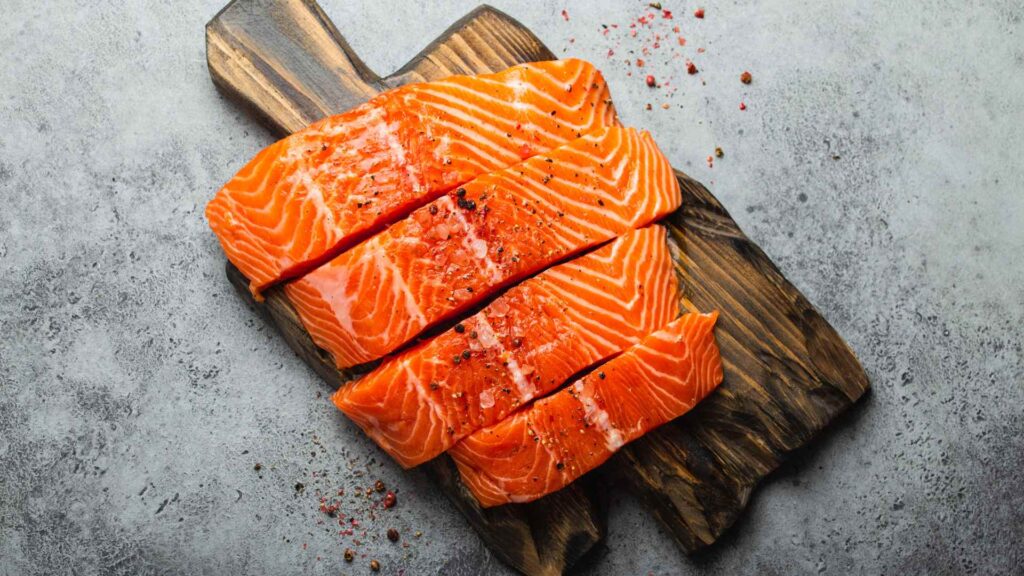
- Buy fresh or properly frozen salmon from a reputable food source and keep it cold.
- Remove packaging and inspect for pin bones with clean fingers or tweezers.
- Bake, poach, steam, or grill it without oil, butter, salt, garlic, onion, lemon, glaze, or spice rub.
- Cook fish to 145°F, or 62.8°C, at the thickest part and verify with a food thermometer.
- Let it cool, flake it apart, inspect again for bones, and serve a measured amount.
- Refrigerate leftovers promptly in a clean covered container and discard spoiled fish.
The USDA safe-temperature chart lists 145°F for fish and shellfish. Color and flaking are less reliable than a thermometer, especially in a thick fillet.
Keep raw fish and its juices away from the cooked portion, dog bowl, cutting boards, and ready-to-eat foods. Wash hands, utensils, counters, and dishes with hot soapy water after preparation.
Why raw salmon is a firm no
Raw salmon can carry pathogens that threaten the dog and people in the household. Dogs may shed foodborne bacteria without looking obviously ill, spreading contamination through saliva, feces, bowls, floors, and hands.
In an FDA study summarized in its raw pet-food safety guidance, raw pet food samples were more likely than other tested foods to contain disease-causing bacteria. The agency recommends thorough cooking and careful hygiene.
Sushi-grade, sashimi-grade, frozen, home-cured, and freshly caught are not canine safety guarantees. Raw trimmings, skin, roe, heads, and carcasses should be secured so a dog cannot raid the counter, trash, dock, or riverbank.
Salmon poisoning disease is not a salmon allergy
Salmon poisoning disease is an acute systemic infection in dogs, not poisoning from the fish’s natural flesh. The disease occurs when a dog eats raw or undercooked fish carrying a fluke that itself carries Neorickettsia bacteria.
The Merck Veterinary Manual review of salmon poisoning disease describes fever, vomiting, diarrhea, weakness, weight loss, and enlarged lymph nodes. Treatment involves veterinary diagnosis and prescription medication, not a home dewormer.
In the United States, the classic disease is concentrated along the Pacific coast, especially from northern California through the Pacific Northwest and into Alaska, including rivers used by migrating fish. Geographic concentration does not make raw salmon elsewhere a good idea because ordinary bacterial and parasite risks remain.
If a dog eats raw salmon, trout, steelhead, or related fish in or from an endemic area, call a veterinarian promptly and explain exactly where the fish came from. Do not wait for severe illness before mentioning the raw-fish exposure.
Bones are small enough to hide and sharp enough to matter
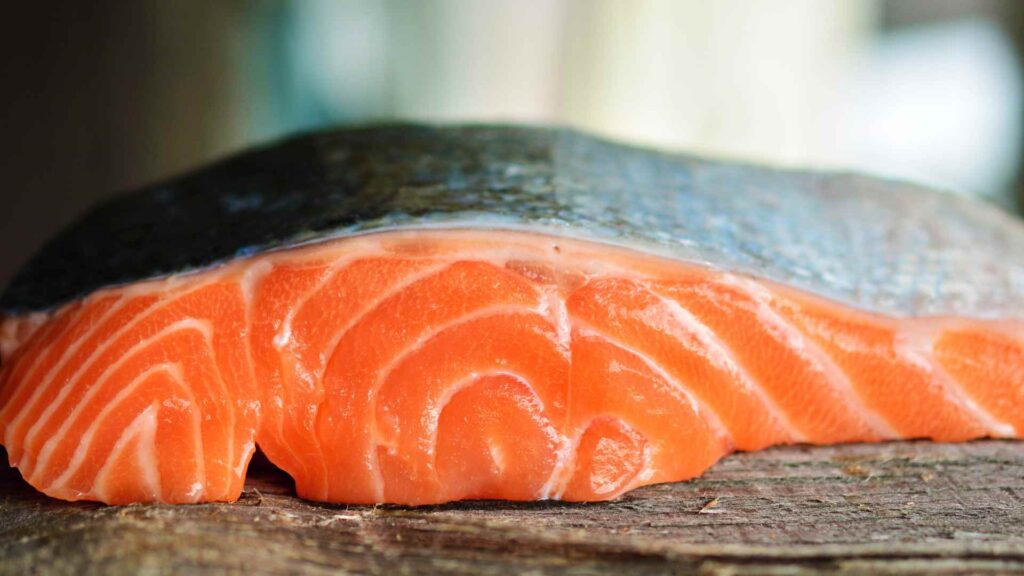
Salmon pin bones can be difficult to see, and cooked bones may become brittle. A bone can lodge in the mouth, throat, or esophagus, or irritate and injure farther down the gastrointestinal tract.
Run clean fingers over the cooked fish after it cools and flake it under good light. Commercially labeled boneless fillets still deserve a second look because bone removal is not always perfect.
Gagging, repeated swallowing, pawing at the mouth, drooling, coughing, breathing trouble, or sudden refusal to eat after fish requires veterinary advice. Breathing difficulty, blue or pale gums, collapse, or an obvious airway obstruction is an emergency.
Do not reach blindly into a struggling dog’s throat or pull on a deeply embedded bone. A veterinarian can assess the mouth and esophagus without turning a sharp object into a larger injury.
How much salmon can a dog eat?
A universal ounces-per-pound chart creates false precision because salmon varies in fat and the dog’s calorie needs vary with size, age, activity, body condition, and disease. The rest of the day’s food matters too.
The UC Davis veterinary treat guidance recommends keeping treats and extra foods below 10 percent of daily calories, with at least 90 percent from a complete and balanced diet. Salmon shares that allowance with every other snack and topper.
For a first exposure in a healthy adult dog, one small flake is enough to test tolerance. A veterinarian can calculate a repeatable portion when salmon will be used regularly for medication, training, or appetite support.
A homemade bowl built around salmon and a few vegetables is not automatically complete. Long-term home-prepared diets need formulation by a board-certified veterinary nutrition specialist to supply calcium, trace minerals, vitamins, fatty acids, and other nutrients in correct proportions.
Does salmon’s omega-3 content help dogs?
Salmon contains EPA and DHA, long-chain omega-3 fatty acids studied in canine nutrition. Their effects depend on the amount consumed, the balance of the complete diet, the dog’s condition, and product stability.
That makes two claims simultaneously true: salmon can contribute useful nutrients, and a random serving is not guaranteed to stop itching, relieve arthritis, sharpen cognition, or boost immunity. Therapeutic nutrition needs a diagnosis and a dose, not hopeful sprinkling.
Dogs with itchy skin, recurring ear infections, stiffness, pain, or cognitive changes should be examined. Adding salmon may delay diagnosis, add calories, or conflict with an elimination diet even when the fish itself is well tolerated.
What about salmon oil?
Salmon oil is more concentrated than salmon flesh, so dose, EPA and DHA content, oxidation, storage, and the existing diet matter. Too much can add substantial calories and may cause digestive upset or interact with medical plans.
Ask the veterinarian to choose the product and amount for the intended condition. Do not copy a dose from another dog, and discard oil that smells rancid or has been stored contrary to the label.
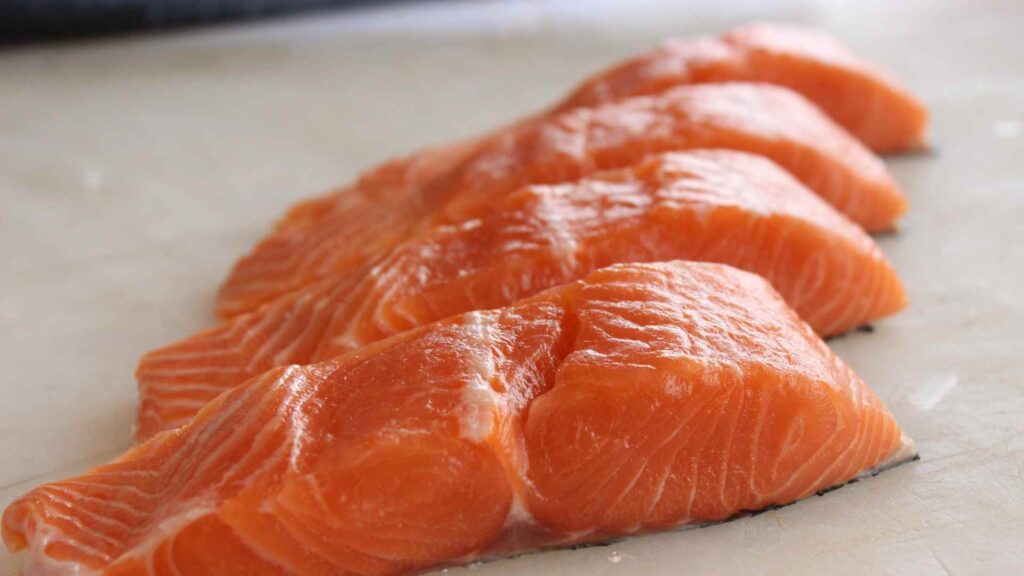
Fresh, canned, smoked, cured, and skin-on salmon
Plain cooked fresh or frozen salmon
This is the easiest form to control. Cook to temperature, remove bones, cool, and serve plain without assuming that previously frozen fish is safe to feed raw.
Canned salmon
A small amount of salmon canned in water with no added salt can be workable if the label contains no seasoning. Drain it, inspect for bones, and count the portion toward treats.
Canned salmon may include softened bones that people can eat, but a dog treat does not need them. Remove visible bone and skin to make the portion simpler and lower in fat.
Smoked salmon, lox, and gravlax
These are poor dog treats because they may be heavily salted, seasoned, cured rather than fully cooked, or prepared with garlic, onion, sugar, alcohol, or other ingredients. One stolen shred is not automatically salt poisoning, but a plateful or a symptomatic dog needs veterinary advice.
Salmon skin
Fully cooked, unseasoned, boneless skin is not inherently toxic, but it can be fattier than the flesh and may retain seasoning. Remove it for dogs with fat restriction, pancreatitis history, obesity, or sensitive digestion.
Salmon jerky
Commercial jerky may be salty and calorie dense, while homemade dehydration can leave unsafe moisture or fail to control pathogens if temperature and storage are poor. Choose a reputable dog treat with clear feeding directions instead of improvising shelf-stable fish.
Salmon burgers and fish cakes
These often contain onion, garlic, salt, breadcrumbs, sauces, or cooking fat. Ingredient complexity makes them unsuitable even when salmon is the first word in the name.
Dogs that should be more cautious
- Dogs with a known fish allergy or a veterinary elimination diet.
- Dogs with pancreatitis, hyperlipidemia, obesity, or a prescribed low-fat diet.
- Dogs with kidney, liver, heart, urinary, or gastrointestinal disease on a specific nutrition plan.
- Dogs that swallow food whole or have a history of gastrointestinal foreign bodies.
- Puppies whose complete growth diet should not be displaced by toppers.
- Immunocompromised dogs and households with people at higher risk from foodborne infection.
Senior dogs can eat appropriately prepared salmon if their health plan allows it, but age increases the chance of concurrent disease. Soft fish is convenient, yet it should not cover up dental pain or unexplained appetite loss.
Food allergy and salmon
A dog can react to fish protein, although itching or diarrhea after one meal does not prove a salmon allergy. Skin disease, parasites, infection, and other foods can produce similar signs.
Veterinary elimination trials require strict control of every treat, topper, flavored medication, and supplement. Salmon is not allowed merely because it seems wholesome, and an accidental fish treat can make the trial uninterpretable.
Facial swelling, widespread hives, breathing trouble, weakness, or collapse after eating calls for emergency care. Less dramatic recurring skin or gastrointestinal signs still deserve a veterinary appointment before the menu is repeatedly changed.
What to do if your dog ate salmon
A small amount of plain cooked boneless salmon
If a healthy dog is comfortable and the fish was fully cooked, unseasoned, and boneless, monitor at home. Stop extra treats for the day and call the veterinarian if vomiting, diarrhea, pain, itching, swelling, or unusual lethargy develops.
Raw or undercooked salmon
Call the veterinarian with the fish source, geographic origin, amount, time, and dog’s weight. Mention Pacific Northwest or northern California exposure explicitly, but remember that foodborne bacteria matter regardless of region.
Fish bones
Call promptly for gagging, drooling, repeated swallowing, vomiting, pain, bloody stool, or difficulty eating. Go to emergency care for breathing trouble, collapse, or a suspected airway blockage.
Smoked or seasoned salmon
Save the label or recipe and identify salt, onion, garlic, alcohol, sweeteners, and missing packaging. A veterinarian or poison specialist can assess the full product and the dog rather than guessing from the word salmon.
Do not induce vomiting unless a veterinary professional directs you. Sharp bones and neurologic or swallowing problems can make home decontamination especially unsafe.
How salmon compares with other seafood
Our broad fish for dogs guide covers cooking and bone principles across species. Fish differ in fat, mercury exposure, bone structure, and parasite risk, so one rule cannot answer every fillet.
For mercury-specific caution, compare tuna and dogs. For a leaner shellfish option that still needs thorough cooking and shell removal, see shrimp for dogs.
If salmon is paired with a starchy topper, our sweet potatoes for dogs guide explains why plain cooking and calorie accounting still apply. Combining two safe extras does not make a balanced meal.
Frequently asked questions
Can puppies eat cooked salmon?
A tiny amount of cooked, boneless, plain salmon can fit some puppies, but it is not needed for brain development when the puppy eats a complete growth diet. Ask the veterinarian before making it a regular topper.
Can dogs eat salmon every day?
Not as an improvised extra. Daily salmon can add calories and alter nutrient balance, while a complete commercial food containing salmon is formulated differently from adding fish at home.
Is frozen raw salmon safe?
No. Freezing protocols can control some parasites for human consumption, but they do not reliably eliminate all bacterial hazards and do not turn raw fish into a recommended dog food.
Can dogs eat salmon skin?
Only when it is fully cooked, boneless, unseasoned, and medically appropriate, and even then a small amount is enough. Removing skin is the simpler choice for dogs that need less fat.
Is canned salmon better than fresh?
Neither is universally better. Plain fresh salmon offers ingredient control, while no-salt-added water-packed canned salmon offers convenience, but both need portioning and a bone check.
The bottom line
Fully cooked, boneless, plain salmon can be a tasty occasional extra for many healthy dogs. Cook it to 145°F, inspect it twice for bones, keep seasonings off, and let complete dog food remain the nutritional foundation.
Raw fish, Pacific Northwest exposure, bones, smoked or cured products, missing packaging, and symptoms all change the response. When any of those appear, give the veterinarian the exact fish source and preparation instead of waiting for the mystery to solve itself.