Can Cats Eat Ground Beef? Cooking, Fat, and Diet Balance
Many healthy adult cats can have a pea-sized amount of plain, lean ground beef cooked to 160°F, drained, and cooled. Raw or undercooked meat, high-fat mince, onion, garlic, salt, burger toppings, bones, spoiled leftovers, packaging, and using beef as a complete diet turn a simple taste into a different decision.
Follow the beef from package to saucer
| Stage | Question | Best practice |
|---|---|---|
| Raw package | Did juice leak or plastic disappear? | Separate, clean, and account for wrapping |
| Cooking pan | Did the center reach 160°F? | Check with a food thermometer |
| Draining | Is grease pooled in the portion? | Choose lean meat and remove excess fat |
| Seasoning | Were onion, garlic, salt, sauce added? | Set aside the cat piece first |
| Serving | Is it cool and pea-sized? | Offer only as an occasional extra |
Ground meat mixes surface bacteria throughout the batch, so browning color alone cannot confirm safety. A thermometer in the thickest part answers the question better than a crumbled piece that merely looks done.
Keep the cat outside the raw-meat work area, use separate utensils, and wash hands and surfaces after handling. Do not rinse ground beef because splashing spreads microbes around the sink.
Cook ground beef to 160°F
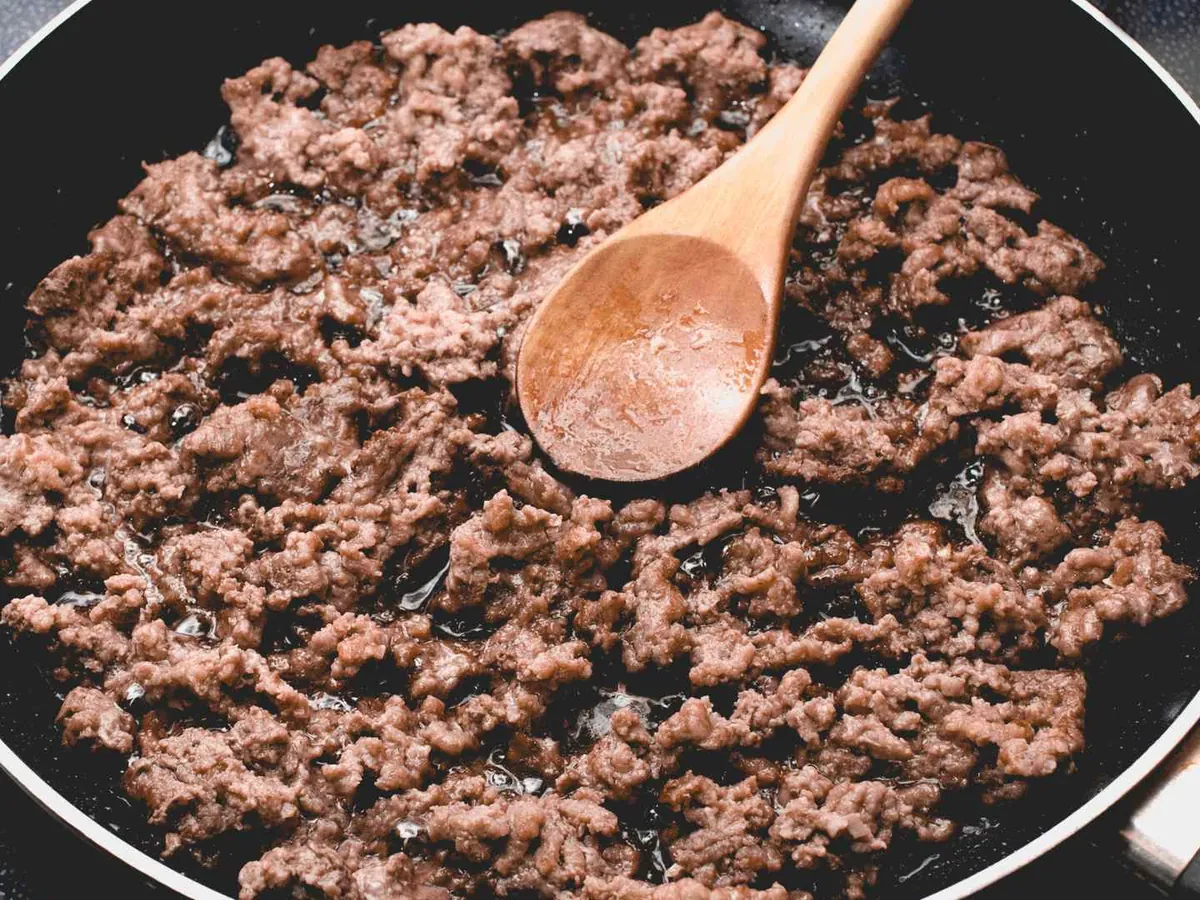
The USDA advises cooking ground beef to 160°F and explains that grinding distributes possible pathogens. Use a clean food thermometer rather than testing by pinkness, firmness, or juice color.
Once cooked, cool the cat’s portion completely and crumble it finely. A searing pan and spatters can burn paws or skin, so stove safety precedes treat preparation.
Plain and lean is the useful lane
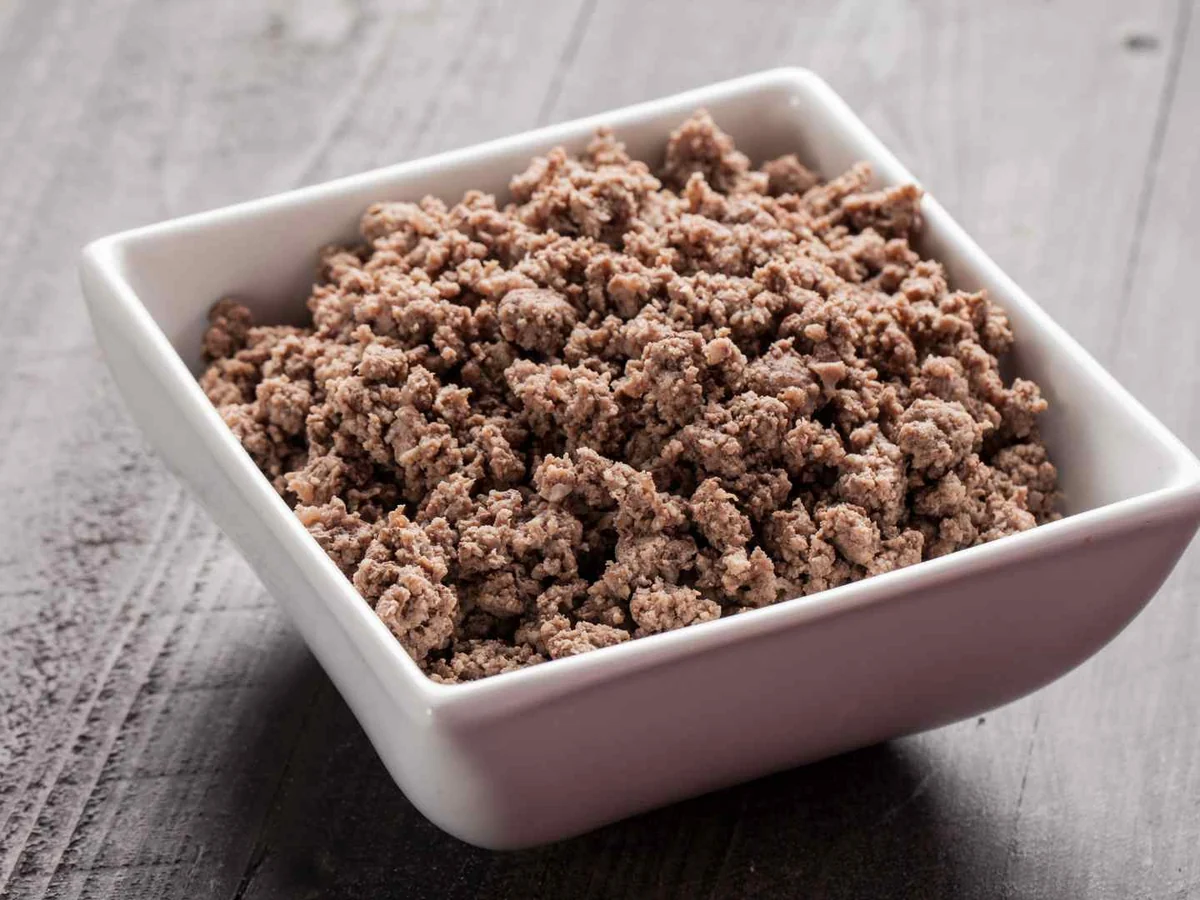
Choose unseasoned lean ground beef without onion, garlic, broth, salt, smoke flavor, or sauce. Drain rendered fat and offer no more than a pea-sized crumble for a first taste.
A cat that tolerates beef does not need a daily serving. Treat calories should remain a small part of intake, and the normal complete food should not shrink to make room for hamburger.
Raw beef brings risk to pets and people
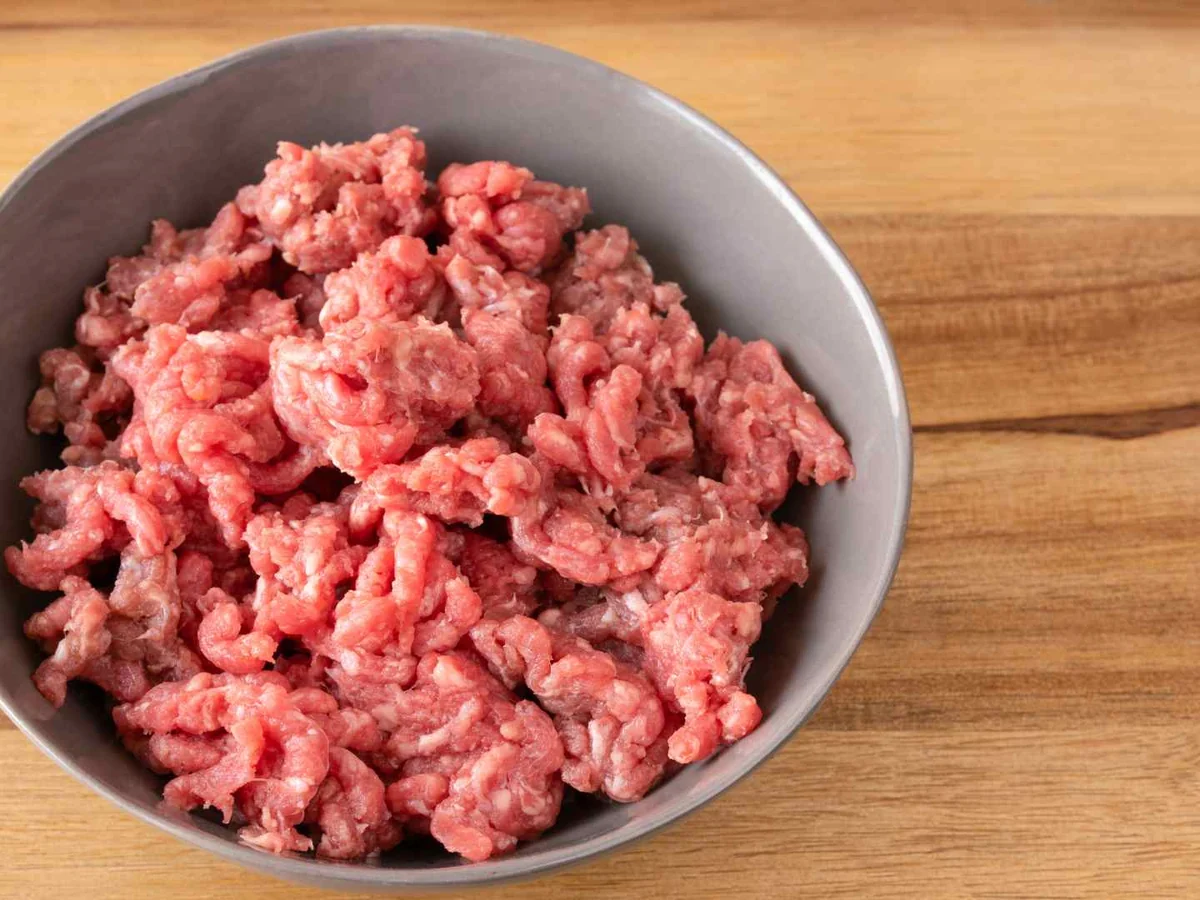
Raw meat can carry pathogens even when it smells fresh, came from a trusted butcher, or was previously frozen. Cats may become ill or shed organisms into the household through saliva, dishes, stool, and contaminated surfaces.
The CDC does not recommend raw pet food for cats or dogs. Our raw-meat guide adds household hygiene and vulnerable-person context.
Fat percentage changes the practical serving
Packages labeled 70/30, 80/20, 90/10, or leaner describe different fat proportions. A small ball of fatty mince can deliver more grease and calories than its size suggests.
Large rich portions may lead to vomiting, diarrhea, abdominal discomfort, or trouble for a cat with pancreatitis history. Do not pour drippings over cat food as gravy, even when the aroma receives an enthusiastic review.
Season first for people, never for the cat
Taco meat, meatloaf, meatballs, chili, sloppy joes, kofta, dumpling filling, and casseroles often contain onion and garlic. Cats are particularly susceptible to oxidative red-cell injury from Alliums, and powders vanish into ground meat.
Reserve a plain piece before seasoning if the veterinarian permits treats. The site’s onion guide explains delayed signs, while the garlic article covers concentrated forms.
A hamburger is more than ground beef
Restaurant patties may contain salt, pepper, garlic, onion, butter, cheese, or proprietary seasoning, while buns and toppings add sauce, pickles, bacon, toothpicks, wrappers, and possibly mold. “All beef” does not mean plain.
A tiny interior crumble from a fully cooked unseasoned patty is different from half a loaded burger. Save the menu and ask the restaurant for current ingredients rather than relying on a years-old copy online.
Meatballs and meatloaf hide binders
Egg, breadcrumbs, milk, cheese, onion, garlic, herbs, ketchup, barbecue sauce, soup mix, and glaze can all appear in a compact bite. Picking around visible onion does not remove powder or absorbed sauce.
Call with the recipe after meaningful Allium or unsafe-ingredient exposure. Account for foil, parchment, skewers, and elastic covers when a cat raids the cooling pan.
Bone belongs outside ground meat
Commercial ground beef should not contain bone fragments, but home grinders, raw blends, and scraps can introduce sharp pieces. Cooked bone can splinter, while raw bone can fracture teeth, choke, obstruct, or transmit pathogens.
Do not assume grinding makes bone harmless or nutritionally correct. Call for gagging, drooling, repeated swallowing, vomiting, abdominal pain, straining, or a known swallowed fragment.
Ground beef alone is not a complete feline diet
Muscle meat supplies protein and several nutrients, but it does not provide every feline requirement in correct proportion. Long-term beef-only feeding can create serious calcium, vitamin, fatty-acid, trace-mineral, and other imbalances.
The FDA explains how complete pet food is identified. Home-cooked diets require formulation by a veterinarian or appropriately qualified veterinary nutrition professional, not a burger-plus-supplement guess.
Prescription and elimination diets change the answer
Kidney, heart, gastrointestinal, urinary, allergy, diabetes, and weight-management plans can impose specific protein, phosphorus, sodium, fat, calorie, or ingredient targets. Ground beef may conflict even when it is cooked perfectly.
During an elimination trial, an unauthorized beef crumb can invalidate weeks of strict feeding. Use the prescribed ration as rewards and ask before using meat to hide medication.
Storage begins at the grocery checkout
Buy intact cold packages, refrigerate promptly, prevent raw juices from touching other food, and follow the use-or-freeze window on authoritative guidance. Thaw in the refrigerator rather than on the counter.
Cooked leftovers also need prompt refrigeration in a shallow covered container. Discard meat that is sour, slimy, moldy, leaking, swollen, forgotten, or left warm too long rather than reheating it for a cat.
Packaging can outlast the meal
Absorbent pads, plastic film, foam trays, metal clips, labels, butcher paper, and grocery bags smell of beef and can be swallowed. A missing pad or wrapper changes the situation even when little meat is gone.
Call promptly for foreign material or repeated vomiting, appetite loss, belly pain, reduced stool, or marked lethargy. Do not induce vomiting when plastic, metal, or absorbent material may be involved.
After an unauthorized beef dinner
- Remove raw meat, cooked food, grease, seasonings, and packaging.
- Identify fat percentage, cooking temperature, recipe, amount, and time.
- Check for onion, garlic, salt, sauce, bones, mold, and missing objects.
- Call for raw meat in a vulnerable patient, toxins, symptoms, a large fatty amount, or packaging.
- Do not force food, fluids, or home vomiting.
After one pea-sized fully cooked plain lean taste, observe appetite, comfort, vomiting, stool, and energy. Stop serving beef if digestive or skin signs follow.
If several cats shared the pan, list each animal’s weight and likely access separately. The boldest thief is not automatically the one that ate the most.
Home grinding adds equipment to the hazard list
- Keep grinder cords, blades, plates, augers, pushers, and cleaning brushes inaccessible to pets.
- Chill meat as the manufacturer directs and prevent raw juices from reaching ready-to-eat food.
- Disassemble only after the machine is unplugged, then clean and sanitize every food-contact part.
- Never push meat with fingers or allow a cat beside an operating attachment.
- Account for chipped plastic, metal fragments, and broken blade pieces before serving the batch.
Grinding steak at home does not preserve the safety profile of an intact cut because surface organisms become distributed through the mince. The finished product still needs the ground-beef cooking target throughout.
Do not grind seasoned leftovers, cooked bones, or scraps simply to make them look cat-sized. Smaller particles can hide unsafe ingredients and sharp material without making either nutritionally or physically appropriate.
If equipment damage is discovered after cooking, discard the batch and inspect every part. A veterinarian should assess any credible swallowed metal or hard-plastic fragment promptly.
Beef enthusiasm can reveal a different health story
A cat that suddenly raids meat, begs constantly, or eats rapidly may be experiencing a broader appetite change rather than a new gourmet preference. Hyperthyroidism, diabetes, intestinal disease, medication effects, parasites, and other conditions can increase hunger.
Track body weight, measured meals, drinking, urine output, vomiting, stool, and the timing of begging. Weight loss despite a large appetite is especially worth reporting to the veterinarian.
Do not answer unexplained hunger by increasing hamburger portions. Extra muscle meat can mask the severity of the appetite change, add unbalanced calories, and delay the examination that identifies its cause.
Cooked plain beef can sometimes be used to tempt eating under direct veterinary guidance, but appetite loss still requires a diagnosis. Ask how much to offer, how long to try, and whether the clinic wants the cat examined before any home feeding experiment.
Do not hide repeated food refusal beneath increasingly rich toppings. Cats can develop serious metabolic complications when intake falls, and a few beef crumbles may create the appearance of eating while total calories remain dangerously low.
For medication, confirm that the tablet may be given with food and must not be crushed or split. Use the smallest approved crumble, watch the entire swallow, and check the floor afterward because a cat can extract beef with remarkable pharmaceutical precision.
Commercial precooked beef crumbles may contain salt, onion, garlic, smoke flavor, preservatives, or sauce despite looking plain. Frozen products also require verified reheating and intact storage, so read both the cooking directions and ingredient panel.
Ground-beef questions from the skillet
Can kittens eat cooked ground beef?
A tiny plain cooked crumble may not be toxic, but kittens need complete growth food and should not fill up on muscle meat. Ask the veterinarian before adding extras.
Is pink ground beef safe for cats?
Use a thermometer, not color. USDA advises 160°F for ground beef because pinkness and browning are unreliable indicators of safety.
Can ground beef replace canned cat food?
No. Plain muscle meat is not complete and balanced, so long-term use without professional formulation can cause nutritional deficiencies and excesses.
The skillet verdict
Plain lean ground beef can be a tiny occasional treat when it reaches 160°F, is drained, cooled, and kept free of seasoning. Raw meat, grease, Alliums, mixed dishes, bones, spoilage, packaging, and diet imbalance are the reasons to keep the portion measured and the complete cat food in charge.