Can Cats Eat Pecans? Whole Nuts, Shells, Mold, and Mixes
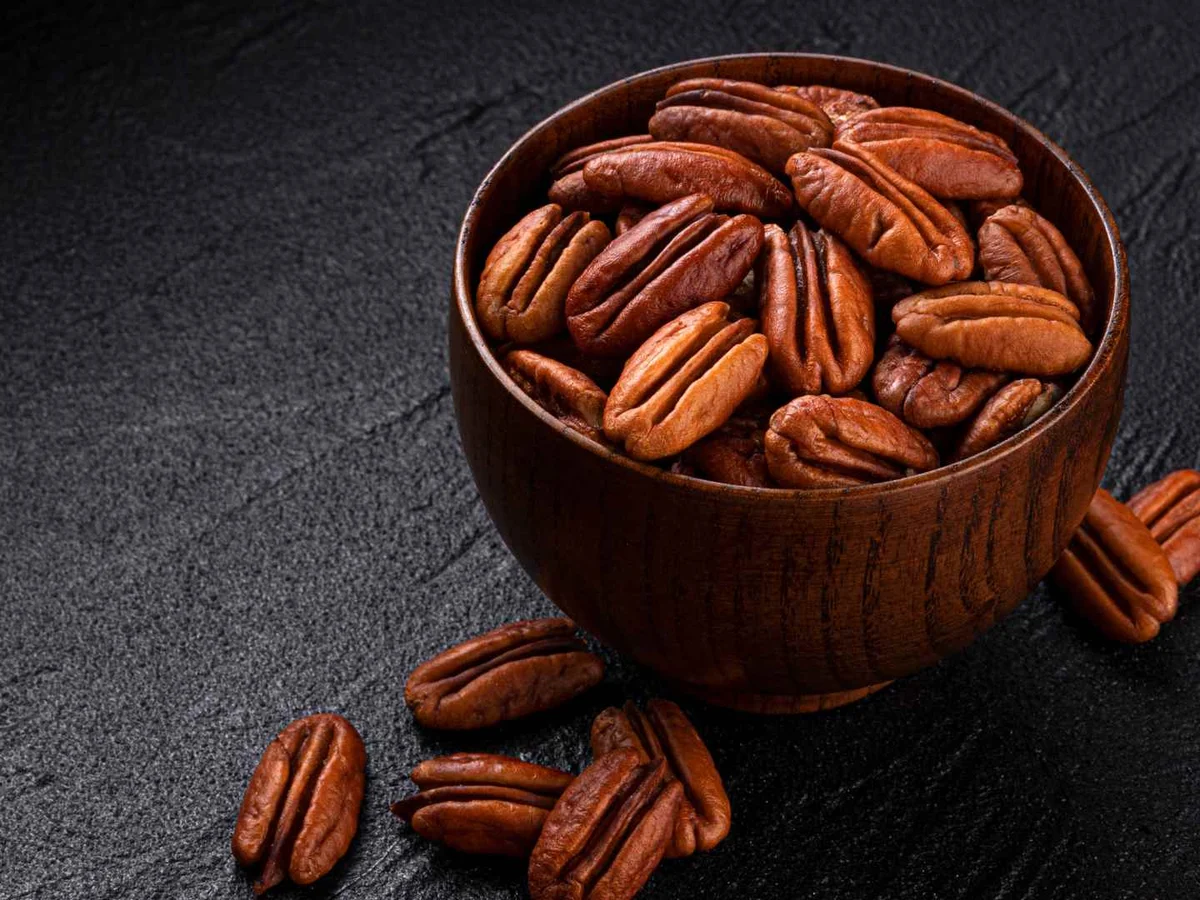
One tiny fragment of a plain, fresh, shelled pecan is not a known feline poison, but pecans are hard, fatty, and unnecessary. Whole halves, shells, mold, salt, chocolate, mixed nuts, baked goods, spreads, and packaging create the meaningful risks.
Count nuts, shells, and wrappers
Inspect the scene for whole halves, shell pieces, other nuts, raisins, chocolate, seasoning dust, foil, and plastic. Save the bag and estimate the maximum missing amount.
A tiny fresh kernel crumb often needs observation. Call for choking, a whole nut, shell, mold, chocolate, large quantity, or missing packaging.
Breathing trouble, repeated vomiting, abdominal pain, tremors, seizures, weakness, or collapse is urgent. Do not induce vomiting.
Plain kernel is low in toxicity and high in calories
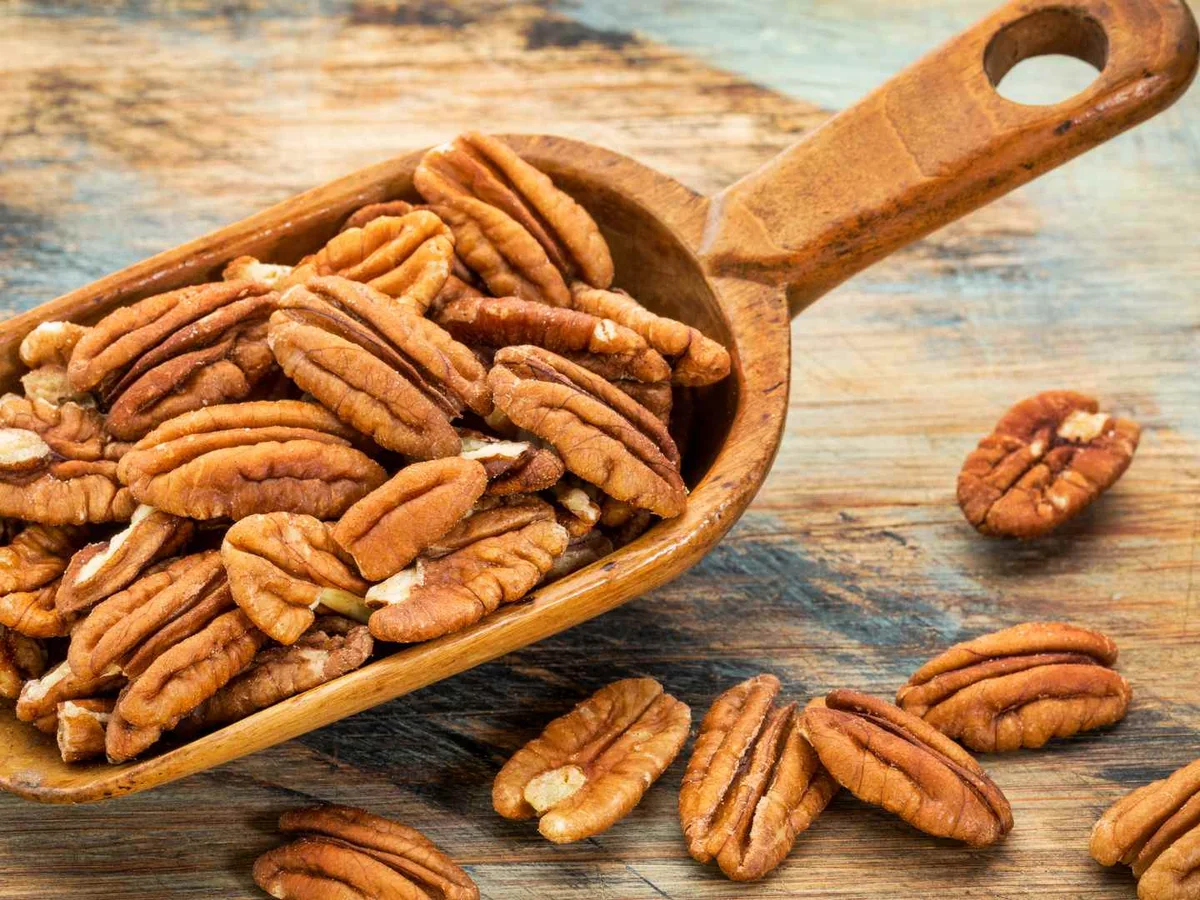
Pecan meat is not established as a feline toxin, but it concentrates fat and calories while providing no complete feline nutrition.
The Cornell Feline Health Center emphasizes balanced diets and occasional treats. One tolerated crumb does not create a recommended portion.
Cats with obesity, diabetes, pancreatitis history, or chronic digestive disease should skip nuts entirely.
Whole halves can choke
A pecan half is hard, irregular, and large enough to lodge in a small cat’s throat. Pieces can also be gulped with minimal chewing.
Seek emergency help when the cat cannot move air, turns blue-gray, or collapses. Avoid blind finger sweeps.
Call after a swallowed whole nut even when breathing stays normal. Later vomiting, appetite loss, lethargy, or pain can indicate obstruction.
Shells are sharp foreign objects
Pecan shells can splinter into pointed woody fragments capable of injuring the mouth or gastrointestinal tract. Cracking does not make them edible.
The Merck obstruction overview includes vomiting, appetite loss, lethargy, pain, and shock among possible signs.
Call whenever shell is missing and never feed bread or oil to cushion it. Do not pull fragments from the mouth or anus.
Mold deserves faster action
Pecans can mold during poor storage, and some molds produce tremorgenic toxins. Fuzzy growth, damp clumps, musty odor, or questionable nuts should be discarded.
Vomiting, tremors, poor coordination, feverish behavior, seizures, or profound weakness after moldy food is an emergency.
Do not pick out visible mold and feed the remaining nuts. Secure the whole batch from every pet.
Rancid is different from moldy
Pecan fats oxidize and develop bitter, sour, paint-like, or stale odors. Rancid nuts may cause digestive upset without the same neurologic mechanism as tremorgenic mold.
Discard stale nuts instead of sharing them. Call for persistent vomiting, abdominal pain, lethargy, or food refusal.
Store pecans cool, dry, sealed, and according to package instructions. A forgotten open holiday bowl is poor pet storage.
Salted and flavored pecans
Candied, barbecue, ranch, chili, and garlic pecans add sugar, sodium, oil, spice, and sometimes alliums. The coating may be more relevant than the kernel.
The ASPCA notes feline susceptibility to onion and garlic. Call with the label rather than waiting for delayed anemia signs.
One salty crumb is unlikely to cause salt poisoning, while many nuts or concentrated seasoning requires advice.
Mixed nuts and trail mix
A snack blend can contain macadamias, raisins, chocolate, coffee beans, candy, dried fruit, and freshness packets. Identify each component.
Macadamia toxicosis is documented in dogs, not established with the same evidence in cats. Do not copy the canine syndrome or dose.
The cat hazelnut guide helps compare another nut’s shell, spread, and mold concerns without treating all nuts as identical.
Pecan butter and milk
Pecan butter removes the whole-nut shape but remains thick, fatty, and label-dependent. It may contain cocoa, coffee, salt, oils, or sweeteners.
Plant beverages can include gums, flavors, added vitamins, and sugar. They should not replace water or kitten formula.
The FDA label guide helps interpret ingredients and serving sizes. Human fortification does not establish a cat dose.
Baked goods and recipes
Cookies, praline, brownies, stuffing, salads, and pies add chocolate, alcohol, raw dough, raisins, onion, butter, and wrappers. Report the complete recipe.
The cat pecan-pie guide covers a rich layered dessert rather than plain kernels.
A garnish nut should not distract from a missing skewer, chocolate filling, or onion-heavy stuffing.
Bags and shelling tools
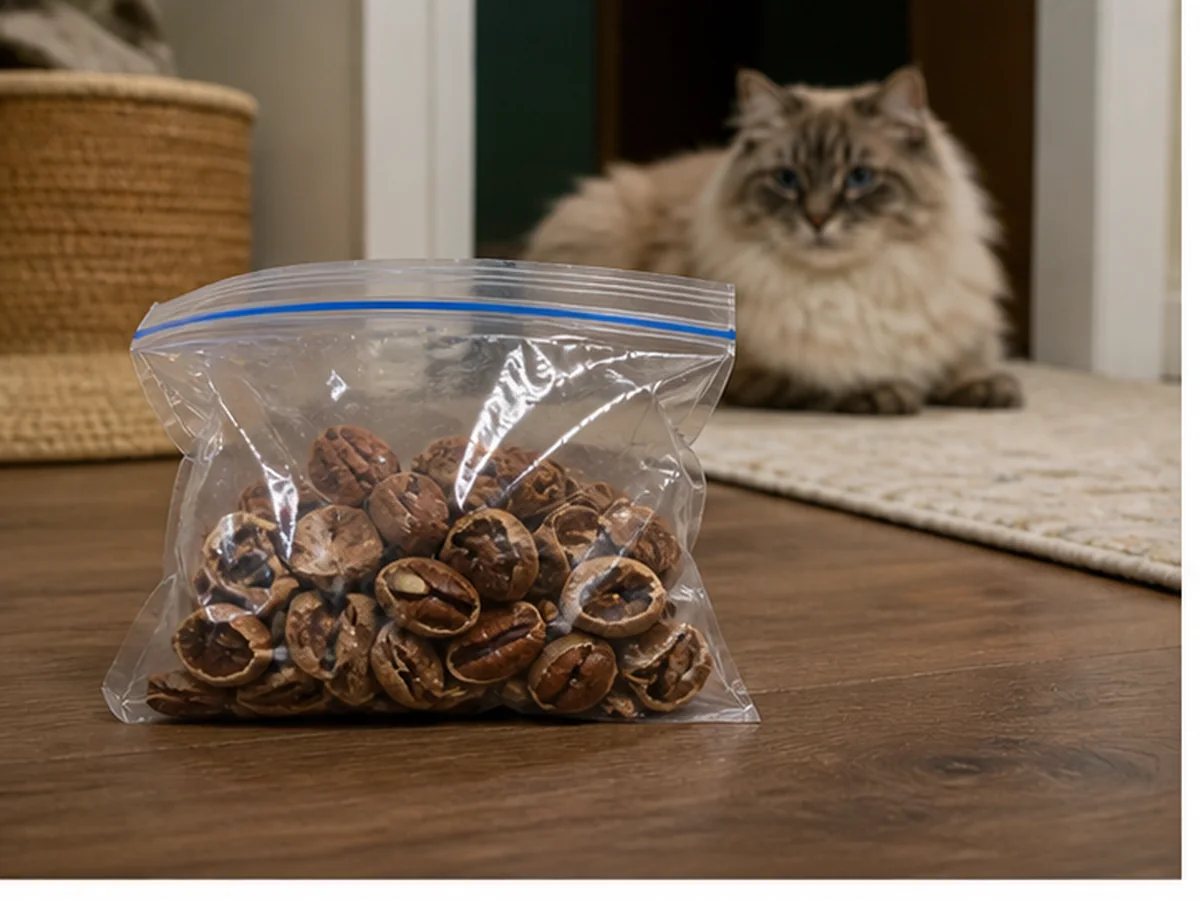
Plastic, mesh, clips, desiccant packets, and shell fragments can be swallowed because they retain food scent. Nutcrackers and sharp tools create additional injuries.
FDA’s household pet-safety overview supports treating greasy nut packaging as its own exposure. Call about missing material.
Sweep shelling areas immediately and use lidded trash. Do not allow pecans to become rolling cat toys.
Monitoring one fresh crumb
Continue regular meals and water while watching swallowing, appetite, vomiting, stool, energy, and abdominal comfort. Do not offer a second piece as a tolerance test.
Call if signs recur or include pain, weakness, dehydration, or food refusal. Mold, shell, whole nuts, and mixed ingredients never belong in simple monitoring.
A tiny fresh kernel fragment is usually low risk, but whole nuts, shell, spoilage, coatings, recipes, and packaging make pecans a poor cat treat.
Pecan meal and flour
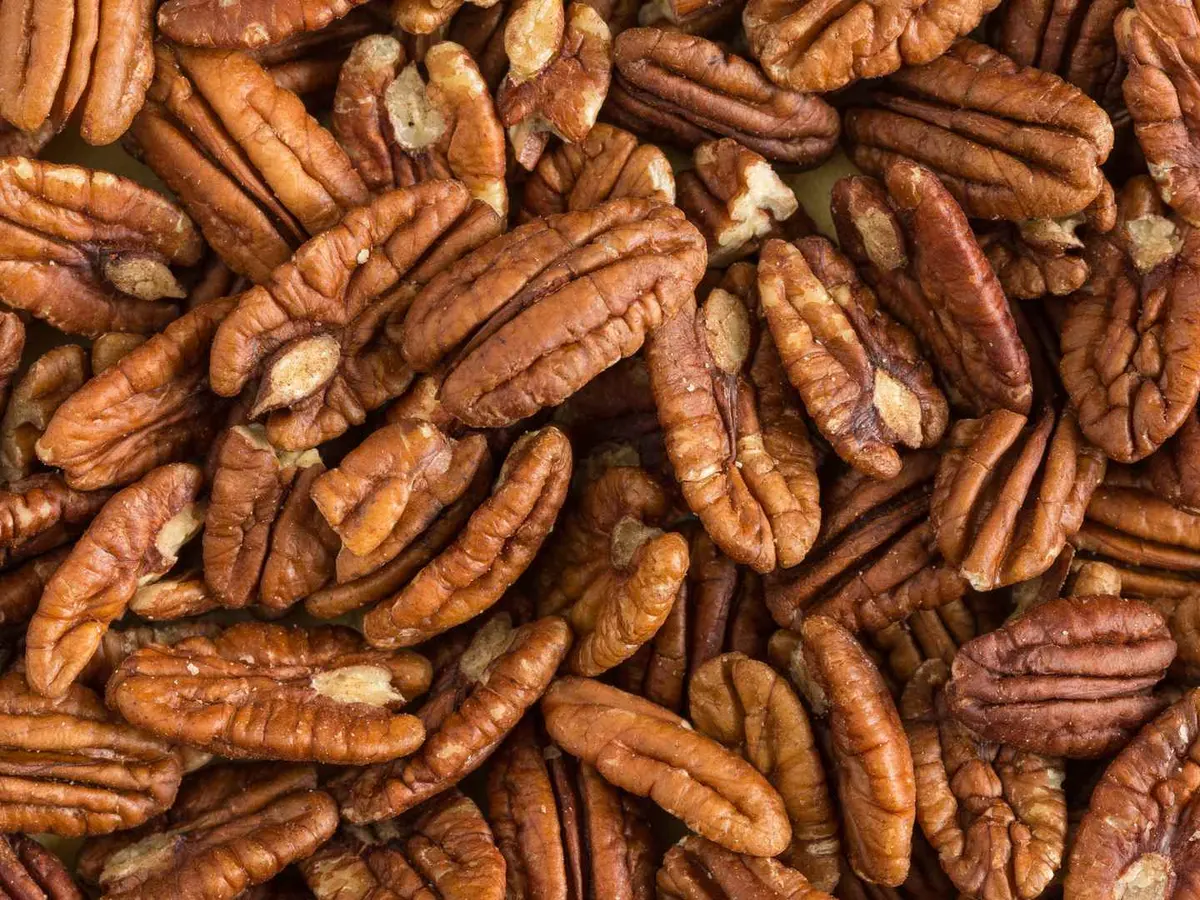
Ground pecans remove the whole-nut shape but retain concentrated fat and may be inhaled as dust. They commonly appear in cookies, crusts, coatings, and raw batter.
Assess the entire recipe for chocolate, coffee, alcohol, raisins, raw flour, egg, and sweeteners. A powder spill also requires attention to coughing and eye irritation.
Move the cat away without brushing dust into the air. Use only professional cleaning guidance after significant coat or eye contact.
Orchard nuts and blackened hulls
Pecans collected outdoors may carry soil, mold, insects, pesticide, and fragments of husk or shell. Weathered nuts cannot be judged safe by cracking one open.
Photograph the tree and collection area and identify lawn products. Clear fallen nuts from cat-accessible yards before shells become toys.
Wildlife may move other nut species into the same area. Identification should precede toxicology conclusions.
Praline, brittle, and candy
Pecan praline and brittle add hard sugar, butter, chocolate, coffee, or alcohol and can fracture into sharp pieces. Sticky candy may adhere to teeth and palate.
Call for choking, a large amount, chocolate, alcohol, or sugar-free ingredients. Do not use milk to dissolve candy in the mouth.
The cat caramel guide offers relevant sticky-sugar and wrapper context. It does not clear the nut component.
Stuffing, salads, and savory meals
Pecans in stuffing or salad can arrive with onion, garlic, grapes, raisins, cheese, dressing, bones, and skewers. The whole dish must be reconstructed.
The cat grape guide preserves feline uncertainty instead of importing dog kidney-injury doses. Call about mixed dishes with Vitis fruit.
Count serving utensils, foil, and picks. A shell fragment is not the only foreign object at the table.
Nut oils and supplements
Pecan oil is concentrated fat and can cause a greasy digestive exposure or coat fur. Capsules may include other oils, vitamins, or botanicals.
Prevent grooming, wipe a small food-oil smear with a damp cloth, and call about a large spill or supplement. Do not use essential oil for cleanup.
Human fatty-acid claims do not establish a feline dose. Use veterinary supplements only as directed.
Dental fractures and mouth pain
Hard nuts and shell can crack teeth or lodge between them. Drooling, pawing, blood, facial swelling, or sudden refusal of hard food requires examination.
Do not pry deeply embedded material from a conscious cat’s mouth. A veterinarian can assess tooth roots and soft-tissue injury safely.
A cat with known dental disease should never receive whole or chopped pecans. Ground food is not permission to ignore the recipe.
Pecan wood, smoker chips, and nutshell mulch are not edible nut forms. They may splinter, carry mold, or be treated with products that require separate assessment.
Keep cats away from smoking supplies, fire pits, and garden mulch, then identify any lighter fluid, preservative, or pesticide involved. Coughing after smoke exposure deserves prompt advice.
When more than one pet had access to a bowl, preserve the remaining count and report the maximum each animal could have eaten. The neatest-looking pet is not always innocent.
Pecans sold in the shell often come with mesh sacks, tags, clips, and loose shell dust. Keep the entire bag away from cats rather than relying on the shell as natural packaging.
A cat that cracks a tooth may suddenly drop food, chew on one side, drool, paw at the mouth, or avoid kibble. Dental pain after hard-nut access deserves an examination even when no gastrointestinal sign appears.
Pecan pieces sold for baking can be easier to scatter across a floor than whole nuts, and small fragments may hide beneath appliances. Vacuum or sweep thoroughly before pets return to the kitchen.
A package labeled chopped can still contain shell fragments, chocolate cross-contact warnings, or other nuts. Ingredient and advisory labels help identify the scene but do not replace symptom-based veterinary advice.
Never use pecans as a calorie booster for an underweight cat without a veterinary plan. Weight loss can reflect dental disease, kidney disease, hyperthyroidism, cancer, diabetes, or other conditions that require diagnosis.
FAQ
Are pecans poisonous to cats?
Plain fresh kernel is not established as a feline poison, but whole nuts are fatty choking hazards and mold can be dangerous.
What if my cat swallowed a pecan shell?
Call because shell can splinter, injure, or obstruct. Do not feed bread or induce vomiting.
Can cats eat candied pecans?
Do not offer them. Sugar, salt, spices, alliums, hard texture, and calories add risk without benefit.
Do macadamia dog warnings apply to pecans?
No. Different nuts and species require separate evidence; do not transfer a canine toxicosis to cats.
Bottom line
A tiny fresh kernel fragment is usually low risk, but whole nuts, shell, spoilage, coatings, recipes, and packaging make pecans a poor cat treat.