Can Cats Eat Mozzarella? Dairy, Salt, Shapes, and Add-Ins
One tiny piece of plain, pasteurized mozzarella is unlikely to harm a healthy adult cat, although dairy may cause stomach upset. Fresh balls, string cheese, smoked or marinated products, whole chunks, salt, spoilage, pizza toppings, and packaging each change the practical answer.
Start by naming the mozzarella
Fresh mozzarella packed in liquid is not the same product as low-moisture shreds, string cheese, smoked slices, or an herb-marinated tub. Find the package and note the amount, sodium, flavorings, pasteurization statement, and any missing wrapper.
A small plain crumb generally calls for observation. Contact a veterinarian for choking, a whole string or ball, garlic or onion flavoring, raw-milk cheese, spoiled product, large quantity, or swallowed plastic.
Repeated vomiting, severe diarrhea, belly pain, weakness, breathing trouble, collapse, or inability to swallow needs urgent care. Do not induce vomiting or give more dairy to settle the first dairy exposure.
A cheese crumb is not balanced protein
Mozzarella contains animal protein, but that fact does not make it complete feline food. Cheese lacks the total nutrient balance supplied by a properly formulated cat diet and brings concentrated calories along for the ride.
The Cornell Feline Health Center recommends complete nutrition and notes that many cats are lactose-intolerant. Use a morsel of normal cat food for treats rather than turning the cheese drawer into a feeding plan.
A tiny tolerated bite proves only that no obvious sign followed that bite. It does not establish an ideal portion or a weekly need.
The cat cheese guide compares broader dairy forms and red flags. Mozzarella still needs its own shape, moisture, storage, and flavoring assessment.
Lactose varies, and cats vary too
Cheesemaking removes some lactose with whey and fermentation changes the remainder, but mozzarella is not automatically lactose-free. Fresh high-moisture varieties and processed products can differ substantially.
Many adult cats produce less lactase than kittens and may develop gas, soft stool, abdominal discomfort, or vomiting after dairy. One cat’s tolerance cannot predict another’s.
Lactose intolerance is digestive, while milk-protein allergy involves an immune reaction. Facial swelling, hives, breathing difficulty, or collapse after any food requires urgent care.
Fresh mozzarella balls can become choking objects
Bocconcini, ciliegine, and pearl mozzarella are smooth, slippery, and easy to gulp. Their cheerful salad sizing was not designed with a cat’s airway in mind.
Do not offer a whole ball or let a cat fish one from brine. Emergency signs include silent gagging, panic, blue-gray gums, little or no air movement, and collapse.
A swallowed large ball may also obstruct farther down. Call if vomiting, food refusal, lethargy, straining, or abdominal pain appears later.
String cheese earns its name
A pulled strip can lodge in the throat or be swallowed as a long elastic ribbon. Cats that play with strings do not need a dairy version of the same bad idea.
If string cheese has veterinary approval as a medication aid, use only a tiny cross-cut piece and confirm the medicine was swallowed. Never let the cat tear off long fibers from the stick.
The live string-cheese product guide helps identify forms and packaging, but canine serving advice does not define a feline portion.
Salt depends on type and quantity
Fresh mozzarella may be mildly salted, while brined, smoked, deli, and processed varieties can contain much more sodium. Compare serving size and sodium on the exact label.
The FDA Nutrition Facts guide explains how serving size relates to nutrient amounts. A human serving may represent many cat-sized tastes.
One salty crumb rarely causes salt poisoning, but a cat that drinks brine or eats a large portion needs advice. Vomiting, extreme thirst, weakness, disorientation, tremors, seizures, or collapse is urgent.
Fat and calories arrive quietly
Whole-milk mozzarella is calorie-dense compared with cat-sized energy needs. Regular extras can displace balanced food and undermine weight or diabetes management even when the cat digests lactose well.
Rich cheese may trigger vomiting or diarrhea, and cats with pancreatitis history or chronic digestive disease deserve individualized guidance after a large exposure. Appetite loss and abdominal pain should not be dismissed as pickiness.
Part-skim does not mean free food. Judge the actual calories, sodium, ingredients, and cat’s medical plan.
Pasteurized and raw-milk mozzarella
Raw milk can carry pathogens, and a cheese made from it should not be offered to cats. Check the label because farmstead, handmade, or traditional does not tell you whether milk was pasteurized.
The FDA warns that unpasteurized dairy can contain Salmonella, E. coli, Listeria, Campylobacter, and other harmful germs. Kittens, seniors, pregnant cats, and immune-compromised cats have less room for foodborne illness.
Report vomiting, diarrhea, feverish behavior, lethargy, appetite loss, or neurologic changes after raw or mishandled dairy. Preserve the package and date codes.
Marinated tubs hide the bigger problem
Mozzarella marinated in oil may include garlic, onion, shallot, chives, chili, herbs, pepper, and considerable salt. Feline red blood cells are unusually vulnerable to oxidative injury from allium ingredients.
The ASPCA people-food guidance notes feline sensitivity to onion, garlic, and chives. Call with the ingredient list rather than waiting for weakness, pale gums, fast breathing, or dark urine.
Oil itself can cause a greasy digestive upset and coat fur. Wipe a surface smear with a damp cloth and do not use another oil as a cleaning agent.
Smoked, seasoned, and deli styles
Smoked mozzarella may have more sodium and concentrated flavor, while deli slices can include anti-caking agents or other ingredients. Pepper and chili coatings can irritate the mouth and gut.
A crumb of plain smoked cheese is not a poisoning event by default, but the label and amount matter. Call for coughing, persistent drooling, repeated vomiting, or eye exposure to seasoning.
Do not give milk for spice irritation because more dairy may add diarrhea. Offer normal water without forcing it.
Pizza changes the entire question
Melted mozzarella on pizza arrives with sauce, garlic, onion, dough, cured meat, grease, and sometimes foil or a plastic table. A stolen topping is rarely just cheese.
The cat pizza guide breaks down those additions. Photograph the slice and report toppings rather than peeling off a cheese strand and treating it as an isolated exposure.
Hot cheese can burn the mouth and adhere to fur. Cool a minor surface exposure with room-temperature water and seek care for blistering, pain, or inability to eat.
Caprese salad includes hardware
Caprese may add tomato, basil, pesto, balsamic glaze, salt, oil, garlic, and toothpicks. Count picks before clearing the plate and identify pesto ingredients.
A ripe tomato-flesh smear is different from an onion-heavy dressing or a swallowed wooden point. The most consequential item should set the urgency.
Large mozzarella balls, cherry tomatoes, and olives are all round choking shapes. Do not let a cat graze from a party skewer.
Spoilage and storage
Fresh mozzarella is perishable and should remain refrigerated according to the label. Sour odor, slime, discoloration, leaking packaging, or accidental warmth makes it unsuitable.
Do not rinse questionable cheese and feed it to avoid waste. Foodborne illness can cause vomiting, diarrhea, feverish behavior, dehydration, and appetite loss.
Intentionally mold-ripened cheese and accidental mold are also different situations. Mozzarella with unplanned fuzzy growth belongs in covered trash.
Wrappers, liquid, and absorbent pads
Plastic film, individual string-cheese wrappers, tub seals, clips, and absorbent material smell like dairy and may be swallowed. Foreign objects can choke or obstruct without contributing meaningful cheese exposure.
Call whenever packaging is missing and watch for repeated vomiting, abdominal pain, lethargy, reduced stool, or food refusal. Do not pull visible film from the mouth or anus.
The FDA pet-hazard guide includes food bags and foreign objects among household concerns. Secure dairy trash before the cat begins quality control.
Which cats should skip mozzarella?
Cats with obesity, diabetes, kidney or heart disease, chronic gastrointestinal illness, pancreatitis history, food allergy, or prescription diets should not receive casual cheese. The added calories, sodium, fat, and dairy are not worth disrupting treatment.
A cat in an elimination trial must avoid unapproved milk proteins. One hidden cheese bite can make weeks of diet work harder to interpret.
Kittens do not need cow-milk cheese and must never receive it as a kitten-milk replacement. Use a veterinarian-approved formula when maternal milk is unavailable.
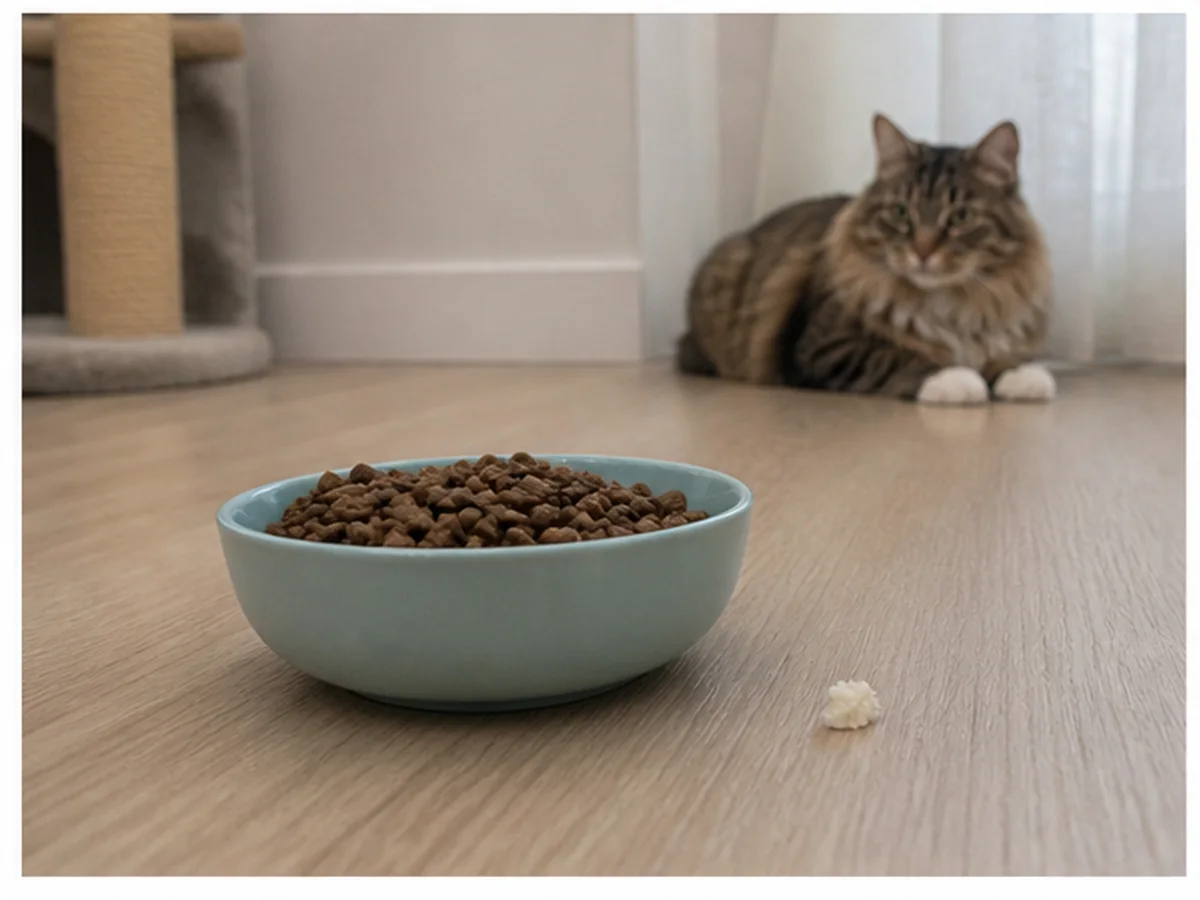
After one known plain crumb
Continue normal measured meals and fresh water, then watch appetite, energy, stool, vomiting, swallowing, and abdominal comfort. Do not offer another piece to test tolerance.
Call if digestive signs recur, the cat becomes lethargic, pain develops, or normal food is refused. Cats that stop eating deserve timely veterinary attention.
Store mozzarella behind a refrigerator door or in a closed bin, clear brine and wrappers promptly, and reserve part of the cat’s normal ration for snack time.
FAQ
Can cats eat fresh mozzarella?
One tiny piece of plain pasteurized fresh mozzarella is generally low risk, although lactose-sensitive cats may develop digestive upset. Whole balls are choking hazards.
Can cats have string cheese?
Do not offer long strips. A tiny cross-cut plain piece may be low risk, but the cheese is nutritionally unnecessary and wrappers must stay out of reach.
Is mozzarella better than other cheese for cats?
Not in a way that makes it necessary. Moisture, lactose, fat, sodium, flavorings, and portion vary among cheeses and products.
What if the mozzarella contained garlic?
Call with the label and amount because cats are unusually sensitive to alliums. Do not wait for pale gums or weakness before seeking advice.
Bottom line
A tiny plain pasteurized mozzarella crumb is usually low risk, but there is no reason to serve it regularly. Dairy tolerance, shape, salt, fat, raw-milk status, flavorings, spoilage, and packaging decide the practical risk.