Can Cats Eat Papaya? Ripe Flesh, Seeds, Skin, Products, and Supplements
One pea-sized piece of ripe, peeled, seed-free papaya flesh is unlikely to harm most healthy adult cats, but it is optional. Skin, clustered seeds, unripe fruit and latex sap, large slippery chunks, dried or candied products, smoothies, supplements, spoiled fruit, garden chemicals, and medical diets need separate attention.
Prepare one tiny piece, not a fruit bowl
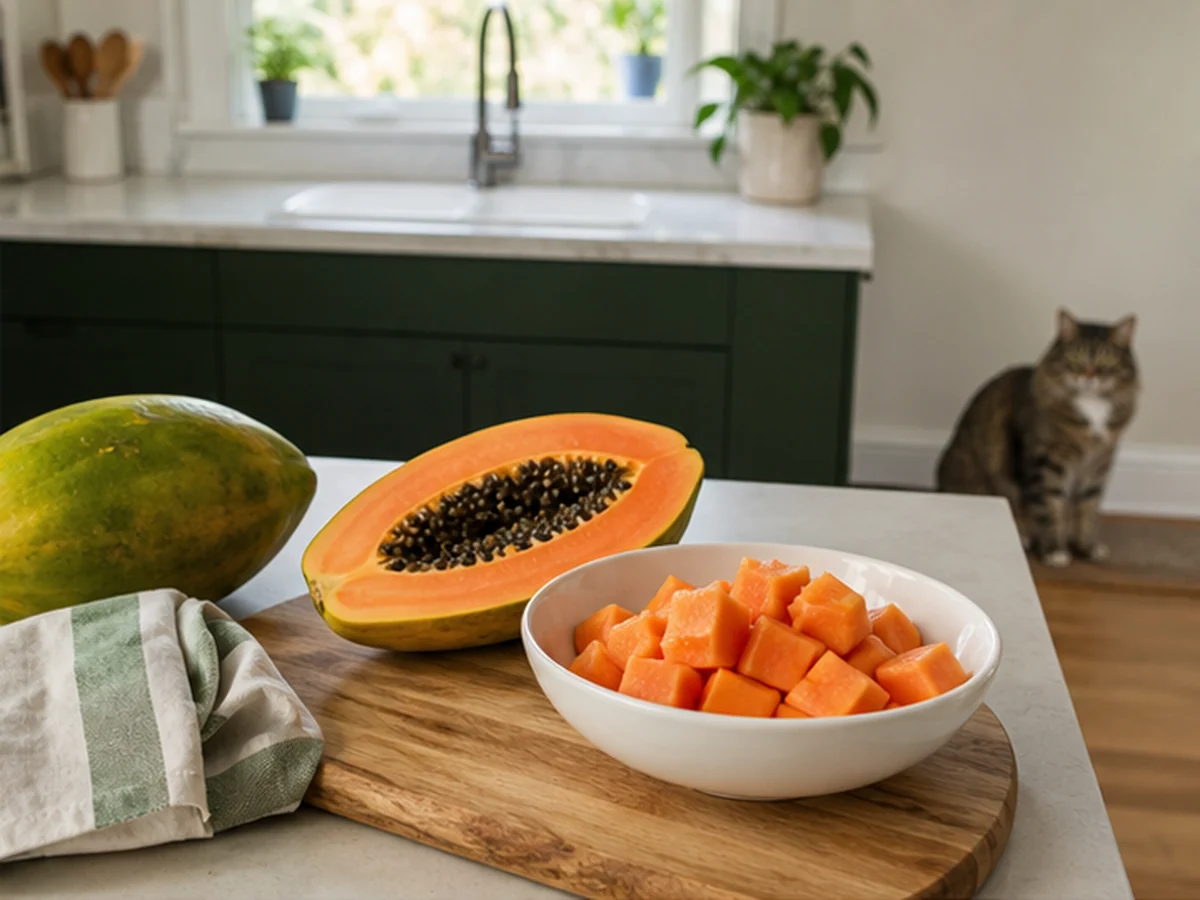
Wash the whole fruit, cut it on a clean board, remove skin and every seed, then dice soft ripe flesh smaller than a pea. Offer no more than one first taste to a healthy adult whose veterinarian has not restricted extras.
Kittens, cats with swallowing trouble, and cats on therapeutic diets should skip it. A tolerated cube does not establish a daily benefit.
Ripe flesh is the narrow low-risk form
Ripe papaya should be soft but not leaking, fizzy, slimy, moldy, or fermented. Its sweetness and orange color do not make it required feline nutrition.
The FDA describes how a staple pet food declares nutritional adequacy. Papaya cannot replace animal-source nutrients or a balanced meal.
Seeds are clustered and unnecessary
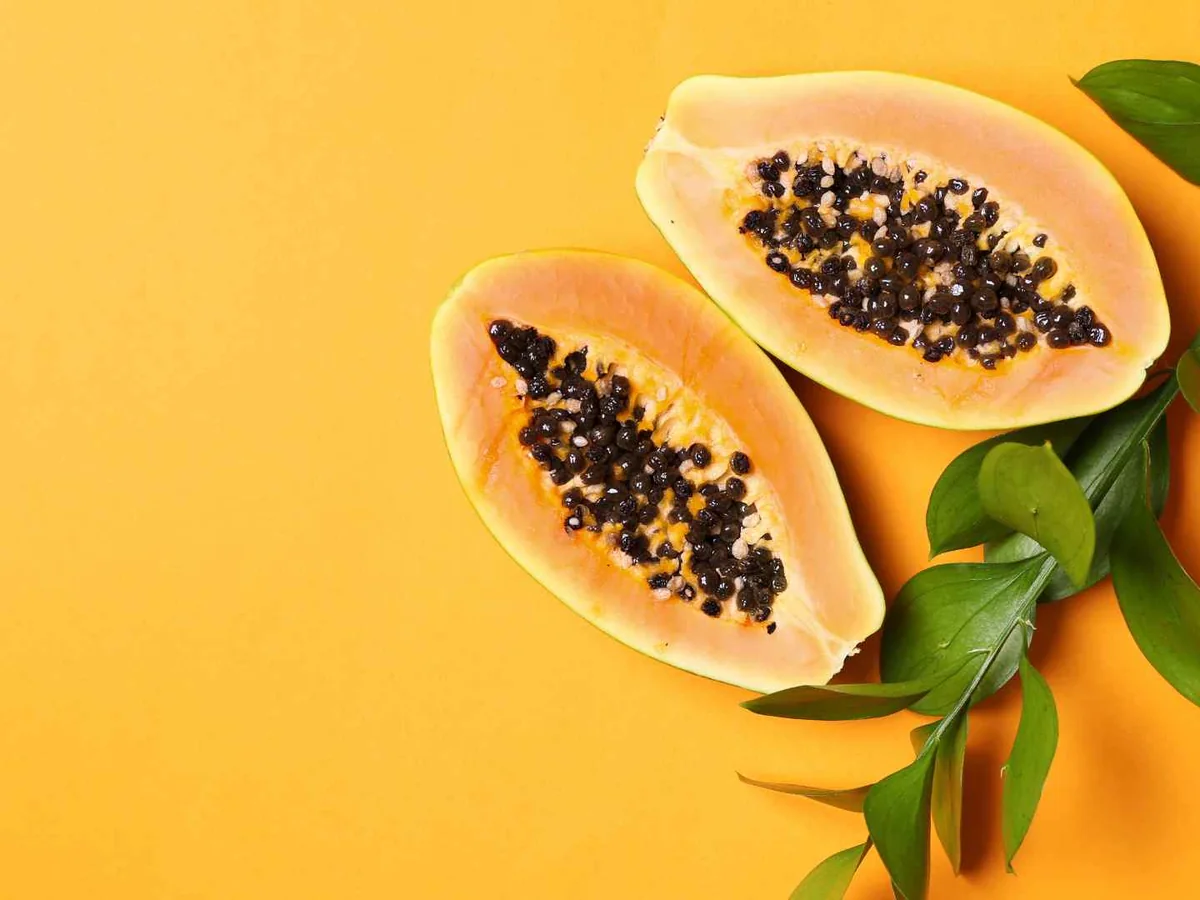
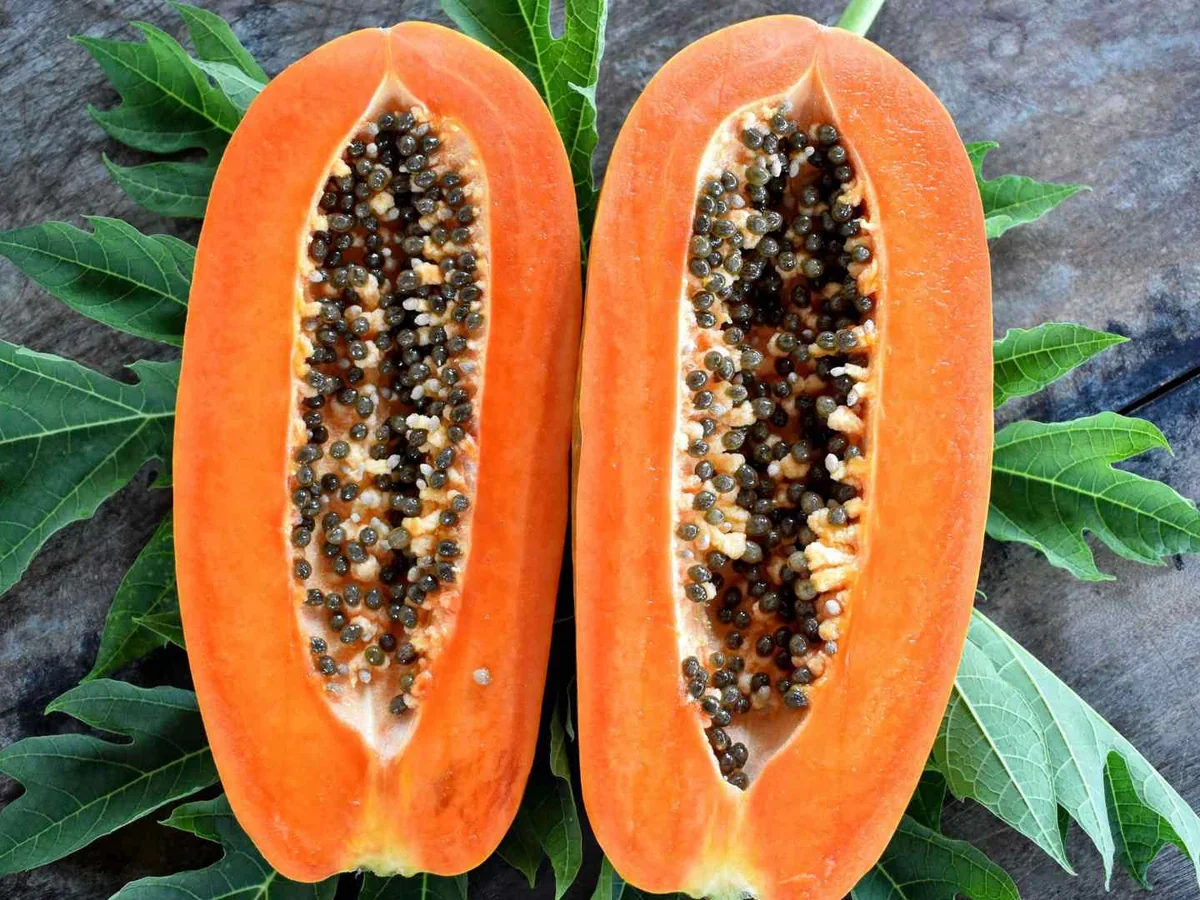
Papaya’s many black seeds are firm, peppery, and easy to scoop into flesh accidentally. Remove the entire seed cavity rather than handing a cat a wedge to clean.
One stray seed is not automatically poisoning, but a cluster can create choking or digestive trouble. Call for gagging, repeated swallowing, vomiting, pain, or food refusal.
Skin and hard ends change texture
Papaya skin is tough and fibrous, while stem and blossom ends can be firm. Both may carry soil, stickers, wax, or handling residue.
Discard peel into a lidded bin and account for produce labels, bags, and rubber bands. Do not expect a cat to chew around the undesirable parts.
Unripe fruit and latex sap are different
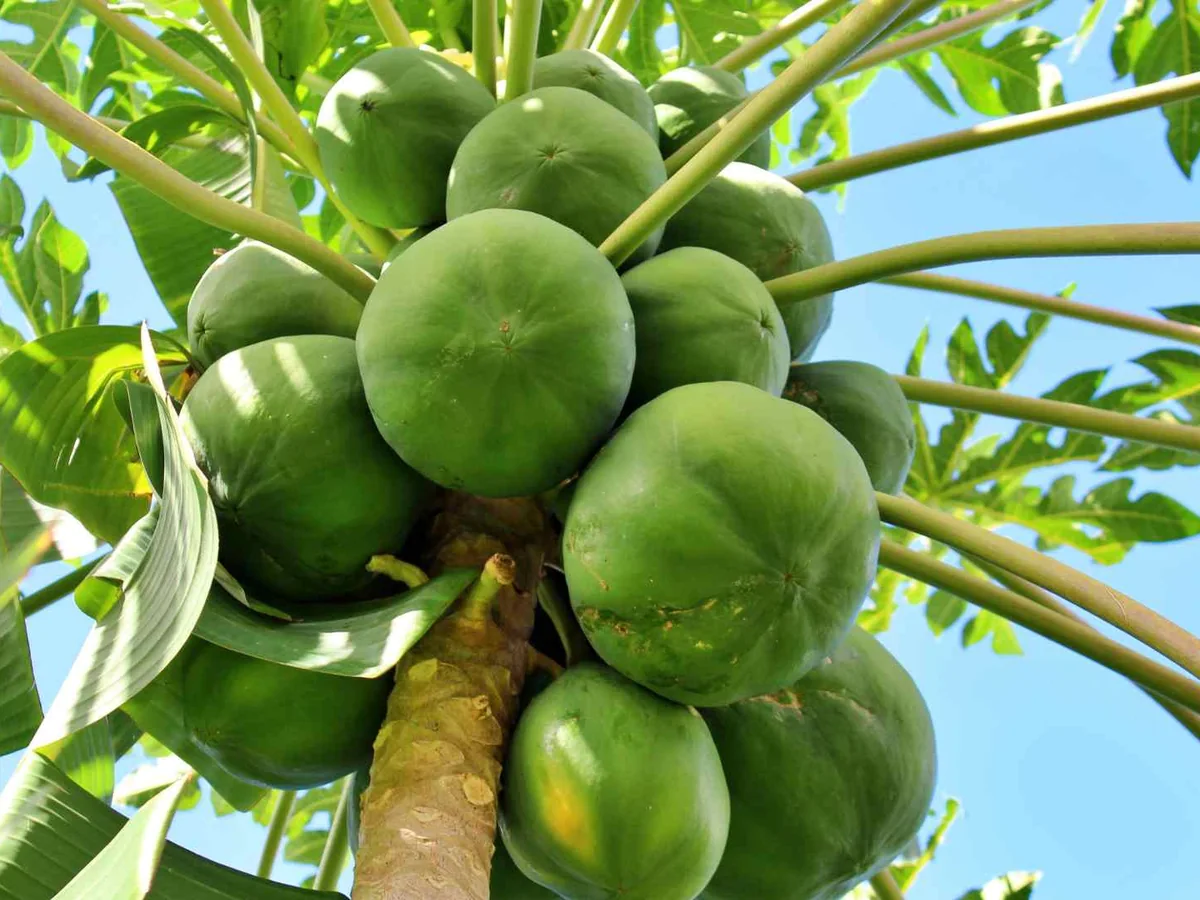
Green papaya contains more latex-like sap and is firmer than ripe flesh, while culinary green-papaya dishes add dressings and seasonings. Human traditional uses do not establish a feline serving.
Avoid unripe fruit and sap, especially around irritated skin or mouths. Call for significant exposure, swelling, persistent drooling, vomiting, or respiratory signs.
Papain supplement is not fruit
Papain is an enzyme derived from papaya and appears in meat tenderizers, digestive supplements, powders, creams, and combination products. Concentration, carriers, other enzymes, sweeteners, and intended use vary.
The FDA identifies papain as a food-processing enzyme, not a feline therapy. Do not give supplements or apply creams without veterinary direction.
Food safety starts on the outside
The FDA describes past Salmonella outbreaks linked to imported papayas and prevention work. Wash produce, refrigerate cut fruit, and heed recalls.
This human outbreak evidence does not mean every papaya is contaminated. It explains why appearance alone cannot replace clean handling and current alerts.
Dried and candied papaya concentrate the portion
Dried strips become chewy and easy to overportion, while candied cubes add sugar, coloring, preservatives, or syrup. Hard, leathery pieces are poor choices for dental disease or gulping.
Skip these forms, including sugar-free versions with uncertain sweetener blends. Save the exact label after a package raid.
Smoothies are multi-ingredient exposures
Papaya drinks can contain grapes, citrus peel, avocado, dairy, plant milk, protein powder, caffeine, herbs, alcohol, sweeteners, or vitamins. A cat can lap liquid quickly.
Use the fruit overview to identify every component. Call for unsafe ingredients, a large unknown amount, or symptoms.
Salads, salsa, and chutney add seasoning
Prepared papaya may include onion, garlic, chile, lime, salt, vinegar, fish sauce, sugar, raisins, or skewers. Removing visible onion does not remove absorbed liquid or powder.
Save the recipe and use the onion guide when Alliums appear. Hot chile can also irritate the mouth, eyes, skin, and gut.
Allergy and individual intolerance deserve proportion
Stop papaya for itching, hives, facial swelling, repeated vomiting, or diarrhea. Breathing trouble, collapse, or rapidly progressing swelling is an emergency.
Human latex-fruit allergy patterns do not diagnose a cat. Do not stage repeated challenges or eliminate broad food groups without veterinary guidance.
Fiber and enzymes do not diagnose constipation
Papaya is not a proven feline treatment for hairballs, constipation, diarrhea, or digestion. Straining may even reflect urinary obstruction rather than stool.
Use only the veterinarian-selected fiber or medication after diagnosis. A male cat repeatedly straining with little urine requires emergency care.
Storage and packages matter
Refrigerate cut papaya promptly in a covered container and discard moldy, sour, slimy, or long-warm pieces. Check knives, peelers, blender blades, plastic film, clamshells, and stickers.
Call for missing objects, repeated vomiting, abdominal pain, reduced stool, or lethargy. Never induce vomiting after sharp material.
The papaya counter reset
- Identify ripe flesh, seed, skin, unripe fruit, sap, dried product, drink, supplement, dish, or package.
- Save amount, time, recipe, concentration, storage, medical history, and symptoms.
- Call for supplements, sap reactions, unsafe ingredients, severe signs, or foreign material.
- After one tiny ripe flesh cube, monitor appetite, mouth comfort, vomiting, stool, and energy.
- Do not force fruit or transfer human wellness claims to cats.
Use the regular ration for treats and enrichment. A tropical color palette is not a feline nutrient requirement.
Papaya in pet food is judged as a finished formula
A commercial cat food may include papaya within a complete recipe, where processing, nutrient balance, calories, and intended life stage are defined across all ingredients. That does not prove loose fruit improves the diet.
Read the nutritional adequacy statement, feeding directions, calories, and treat status. A product marketed as a topper or supplement should not quietly replace complete meals.
Keep the original package for lot and expiration information. A decorative bin erases the details needed during a recall or illness investigation.
Meat tenderizer can be a pantry hazard
Some tenderizers use papain with salt, sugar, onion, garlic, spice, or other enzymes. Fine powder can reach eyes and airways or coat paws for grooming.
Move the cat away before damp cleanup and save the exact label. Open-mouth breathing, wheezing, severe cough, blue-gray gums, or collapse requires emergency attention.
A tenderized steak also contains the entire seasoning mixture, not merely papaya enzyme. Evaluate the cooked dish and raw-meat handling as separate exposures.
Papaya leaf products are not ripe fruit
- Leaf tea may include caffeine-containing tea, herbs, sweeteners, or extracts.
- Leaf capsules concentrate plant material and may use proprietary blends.
- Cosmetics can combine papaya enzymes with acids, fragrances, and detergents.
- Garden leaves can carry pesticide, fertilizer, soil, ties, and netting.
Do not transfer a ripe-flesh answer to leaf tea, plant sap, tablets, or skin products. Call with the formula and route after ingestion, inhalation, or coat contamination.
Prevent grooming without applying a second cosmetic or solvent. Product-specific decontamination is safer than improvised chemistry.
A better response to sudden fruit interest
A cat that newly raids produce, plastic, or unusual foods may be showing pica, nausea, increased hunger, or boredom. Track weight, measured meals, thirst, urine, vomiting, stool, and medication changes.
Weight loss despite increased appetite or persistent non-food chewing deserves veterinary assessment. Offering more papaya can hide the behavior without explaining it.
Use puzzle feeders with the normal ration for enrichment. The cat gets a hunting problem while the diet remains measurable and complete.
For another soft tropical fruit, the mango guide compares flesh, peel, pit, dried products, and prepared dishes. Similar texture does not erase each fruit’s distinct anatomy.
Papaya baby food and pouches can be single-ingredient or blended with apple, banana, dairy, grains, vitamins, sweeteners, or juice concentrate. Check the label each time because front images do not reveal proportions.
Pouch caps and foil seals can obstruct, while a punctured pouch can spoil. Account for the package and never let a cat chew directly from it.
Papaya candy, jam, and fruit leather add sugar, syrup, coloring, preservatives, and sticky or chewy texture. Sugar-free versions require the exact sweetener rather than a canine xylitol threshold copied onto cats.
Papaya enzymes can appear in exfoliating masks and skin peels with acids or fragrances. Prevent licking after a spill and call from the cosmetic label rather than treating the product like fruit.
A ripe fruit attracts flies and can leak beneath appliances, creating a second scavenging opportunity after the obvious pieces are gone. Clean the full area and empty rubbish into a secured bin.
Cats with diabetes, obesity, chronic bowel disease, kidney disease, or a prescription diet should not receive unplanned fruit. The tiny portion offers no benefit worth disrupting calorie or ingredient control.
If the cat develops vomiting or diarrhea, stop papaya instead of retesting a smaller amount the same day. Persistent signs, pain, blood, dehydration, lethargy, or poor appetite need examination.
Record all foods eaten during the previous day, not only the colorful fruit. A full dietary history helps distinguish papaya exposure from spoiled meat, plants, medication, or foreign material.
Frozen papaya chunks are too hard to offer directly and become slippery while thawing. If fruit was frozen for people, thaw it in the refrigerator and still choose one fresh-textured tiny cube only after every seed and skin fragment is removed.
Fruit flies, leaking juice, and a torn produce bag can spread the cleanup beyond the cutting board. Inspect beneath appliances before releasing the cat, then wash the food area and replace contaminated pet water.
Frequently asked questions
Can kittens eat papaya?
Kittens need complete growth food and gain no necessary benefit from papaya. Seeds, skin, slippery pieces, and tiny calorie needs add avoidable problems.
Can cats eat papaya seeds?
Remove them. A cluster is firm, unnecessary, and can create choking or digestive trouble.
Can papaya treat cat constipation?
Do not use it as treatment. Constipation needs diagnosis, and urinary straining can look similar.
The seed-free verdict
A single ripe, peeled, seed-free papaya cube may be tolerated by a healthy adult, but it is not a supplement or therapy. Avoid skin, seeds, sap, processed products, seasoned dishes, spoilage, and packaging, and keep the complete diet central.