Can Cats Eat Kiwi? Peeled Flesh, Skin, Portions, and Products
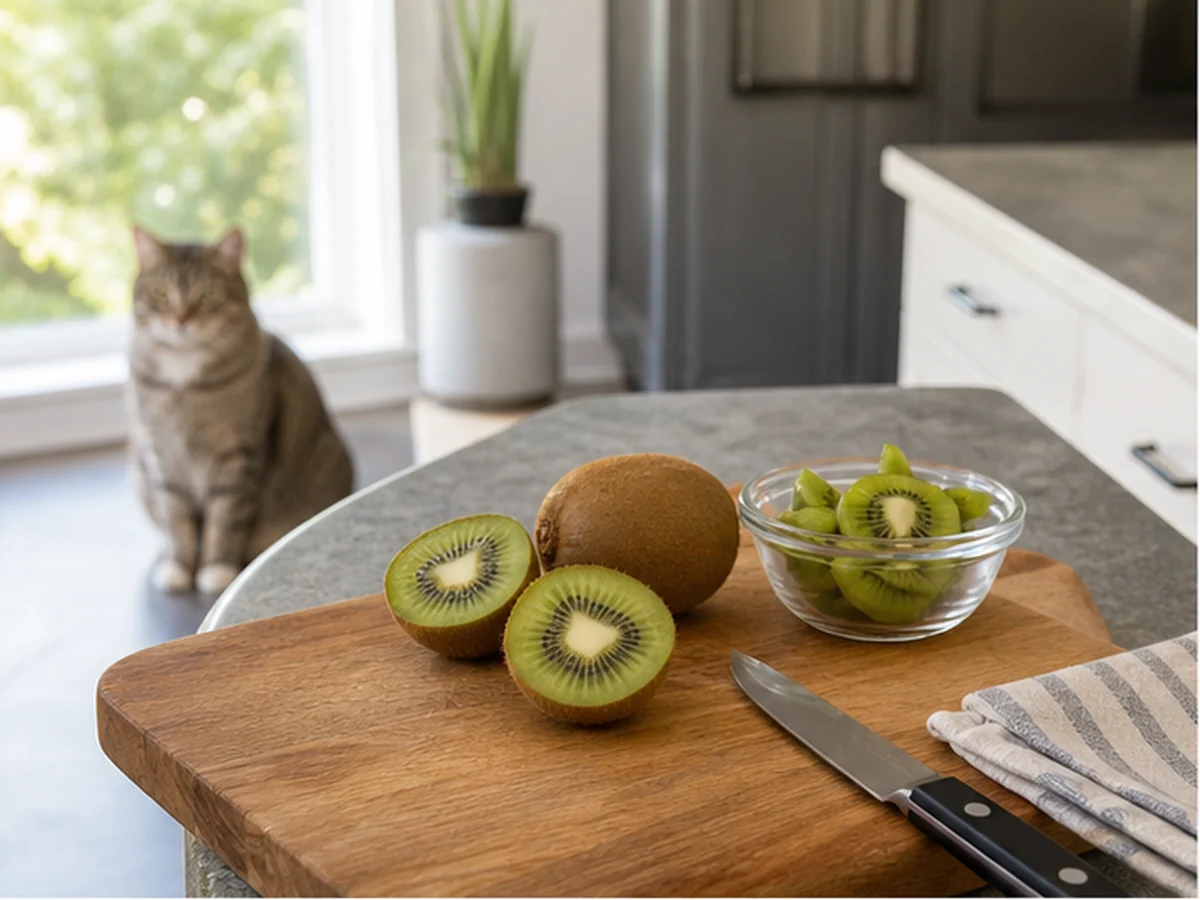
Most healthy adult cats can probably tolerate one pea-sized piece of ripe, peeled kiwi flesh, but they do not need it. Remove the fuzzy skin and hard ends, cut the flesh small, and skip whole fruit, large chunks, dried or candied slices, smoothies, yogurt coatings, vines, spoiled produce, and products that conflict with a medical diet.
Peel, trim, cut, and stop
| Preparation step | Reason | Cat-sized result |
|---|---|---|
| Wash before cutting | Reduces dirt moving from skin to flesh | Clean exterior |
| Peel fuzzy skin | Removes tough texture and residue surface | Bare flesh |
| Trim both hard ends | Avoids firm fibrous pieces | Soft center only |
| Dice smaller than a pea | Reduces choking and portion size | One tiny cube |
| Offer once, then remove | Tests tolerance without escalation | Optional taste, not a serving |
Choose a ripe fruit that yields slightly to pressure without feeling mushy or fermented. Use a clean knife and board, then cool or bring the piece to room temperature rather than serving it frozen or hot from a recipe.
A tiny taste is for a healthy adult whose veterinarian has not restricted extras. Kittens, cats with swallowing trouble, or cats on therapeutic diets should receive their normal food as rewards.
Kiwi flesh is food, not feline wellness medicine
Kiwi contains nutrients valued in human diets, but human antioxidant, vitamin C, digestive, sleep, immune, and fiber claims do not prove a benefit from feeding it to cats. Feline nutrient requirements and metabolism are different.
The Cornell Feline Health Center emphasizes complete, balanced feeding. A cat’s essential nutrition should not depend on fruit garnish.

Fuzzy skin is edible to people but awkward for cats
Kiwi peel is tough, fibrous, and covered with fine hairs that can be unpleasant in the mouth. It can also retain soil, handling residue, stickers, and traces from storage.
Remove the peel rather than counting on a cat to separate it. Drooling, gagging, repeated swallowing, mouth pawing, vomiting, or food refusal after a large skin piece warrants veterinary advice.
The hard ends and whole fruit are choking hazards
The stem end and blossom end are firmer than the center, and a whole kiwi is far beyond a sensible feline portion. A round fruit can also roll off the counter near knives, glass, or hot appliances.
Do not hand over half a kiwi for the cat to excavate. Remove both ends, portion one tiny cube, and store the remainder where produce bags and rubber bands are inaccessible.
Acidity can make a small experiment unpopular
Kiwi’s organic acids may irritate a sensitive mouth or stomach, especially when a cat already has oral ulcers, reflux-like signs, nausea, or gastrointestinal disease. Sourness can trigger drooling without indicating systemic poisoning.
Stop after a lick if the cat backs away, smacks the lips, drools, or seems uncomfortable. Persistent drooling, oral pain, vomiting, or appetite loss deserves examination rather than a second trial with sweeter fruit.
Sugar and portions matter more over time
One tiny fresh cube contains little total sugar, but repeated fruit treats add carbohydrate and calories while displacing balanced food. Cats with diabetes or obesity need a clinician-approved treat plan.
Do not use kiwi to correct low blood sugar unless a veterinarian gives emergency instructions for the specific cat. The cause, medication timing, and safe treatment cannot be inferred from a fruit bowl.
Seeds are tiny, but the fruit is still optional
The small black seeds embedded in ripe flesh are difficult to remove and are not generally treated like large stone-fruit pits. Their presence does not make kiwi a necessary or unlimited cat food.
Focus on the soft flesh portion and remove hard plant material. If a product contains added chia, flax, large seeds, nuts, or pits, evaluate those ingredients separately.
Golden, green, and red-centered varieties share the same rule
Cultivars vary in color, sweetness, acidity, hairiness, and size, but none earns a feline wellness claim. Peel, trim, dice, and keep any first taste extremely small.
A mini kiwi or hardy kiwi may have smooth edible skin for people, yet plant identification and choking size still matter. Do not transfer advice from one labeled species to mystery fruit growing on a vine.
Dried and candied kiwi concentrate the snack
Drying removes water and creates chewy, leathery, or hard slices that are easy to overportion. Candied kiwi adds sugar, syrup, coloring, preservatives, or sulfur compounds and can cling to teeth.
Skip both forms for cats, especially with dental disease, diabetes, obesity, or swallowing difficulty. A sugar-free bag requires exact sweetener identification rather than a guess from the front label.
Smoothies are ingredient investigations
Kiwi drinks may contain grapes, raisins, citrus peel, avocado, cocoa, coffee, tea, protein powder, vitamins, herbs, sweeteners, yogurt, or plant milk. A cat can lap a meaningful amount before anyone notices.
Save the recipe and every supplement container. The site’s fruit overview helps identify component forms, while the grape guide keeps canine evidence boundaries clear for feline exposures.
Yogurt coatings turn fruit into confectionery
White-coated dried kiwi can combine sugar, oil, dairy solids, flavoring, and stabilizers, while chocolate coatings introduce methylxanthines. The fruit image on the bag does not describe the nutritional role of the finished snack.
Call promptly for chocolate exposure and retain cacao percentage, amount, and timing. Our honey article covers another sweet human ingredient without promoting it as feline nutrition.
Wash produce without household chemicals
The FDA advises rinsing produce under running water and does not recommend soap, detergent, or commercial produce wash. Wash before peeling so the knife does not carry surface contamination inward.
Discard moldy, leaking, fermented, deeply bruised, or foul-smelling fruit. Cutting around one suspicious area does not create a cat treat worth defending.
Vines, leaves, soil, and plant tags are different exposures
A fruiting vine may be treated with fertilizer, pesticide, fungicide, or insect bait and supported by ties, wire, and stakes. Plant material can also cause digestive upset even when the ripe flesh is tolerated.
Identify the botanical species and every garden product before calling. Do not assume that a supermarket fruit’s name clears a houseplant, ornamental vine, or unlabeled volunteer plant.

Kiwi is not a constipation prescription
A fruit’s fiber does not make it a universal treatment for hairballs, diarrhea, or constipation. Straining may reflect urinary blockage rather than stool, particularly in male cats producing little or no urine.
Use the fiber product, amount, and hydration plan the veterinarian recommends for the diagnosis. Adding acidic fruit can complicate appetite and stool while delaying urgent urinary care.
Packages and utensils deserve an inventory
Clamshells, produce stickers, elastic bands, plastic bags, foil seals, blender blades, skewers, and knives can disappear or injure during preparation. A flexible bag around the head is an immediate suffocation emergency.
The FDA lists food bags and obstructive items among pet hazards. Call for missing objects, repeated vomiting, belly pain, reduced stool, or refusal to eat, and never induce vomiting after sharp material.
A practical kiwi response
- Identify fresh flesh, skin, end, whole fruit, dried product, smoothie, coating, plant, or package.
- Save ingredient labels, amount, time, medical history, garden products, and missing objects.
- Call for chocolate, grapes, concentrated sweeteners, plant chemicals, symptoms, or foreign material.
- After one peeled pea-sized cube, monitor appetite, vomiting, stool, oral comfort, and energy.
- Do not force fruit, use it as treatment, or extrapolate human wellness claims.
If the cat refuses the sample, discard it and count the household experiment complete. Adding cream, syrup, or tuna juice to make kiwi appealing defeats the point and creates a different food.
Store cut fruit in a covered labeled container and collect the peel immediately. The trash needs a lid, because yesterday’s fuzzy skin becomes tomorrow’s exciting discovery.
Allergy and individual reaction deserve calm attention
A cat can react poorly to a food without that food being a universal toxin. Stop kiwi if itching, hives, facial swelling, vomiting, diarrhea, ear irritation, or recurring skin signs follow a taste.
Breathing difficulty, collapse, or rapidly progressing facial swelling is an emergency. Milder recurring symptoms need veterinary assessment and a complete diet history rather than repeated kiwi tests to prove causation.
Human kiwi allergy, pollen-food syndrome, and latex cross-reactivity do not provide a feline diagnosis. Do not withhold multiple foods or begin an elimination diet from human allergy articles; veterinary trials require controlled ingredients and adequate nutrition.
Kiwi enzymes can also tenderize meat and appear in marinades, where onion, garlic, soy sauce, salt, chile, and sweetener may accompany them. A seasoned meat theft should be evaluated from the entire marinade, not from the fruit enzyme alone.
Prepared fruit cups can include grapes, cherries, melon rind, syrup, juice, or plastic film. Save the label and identify each missing piece, especially when the cup was transferred into an unlabeled bowl.
For a similarly soft tropical fruit, our mango guide compares flesh with peel, pit, dried products, and chutney. The shared lesson is preparation and portion, not a claim that cats require tropical variety.
Frozen kiwi cubes are too hard to offer directly and can become slippery choking pieces as they thaw. If fruit was frozen for a human recipe, thaw it fully in the refrigerator, discard pooled old liquid, and still limit any approved taste to one fresh-textured tiny piece.
Do not serve kiwi from a cocktail garnish or fruit skewer. Alcohol, syrup, grapes, cherries, sharp picks, and decorative plastic turn a simple flesh question into a multi-part exposure that needs its own inventory.
Kiwi questions, neatly peeled
Can kittens eat kiwi?
Kittens need complete growth food and gain no necessary benefit from kiwi. Their small mouths also make peel, hard ends, and chunks poor choices.
Can cats eat kiwi skin?
Skip it. The fuzzy peel is tough, fibrous, and more likely than soft flesh to cause mouth, choking, or digestive trouble.
Is kiwi good for cat constipation?
Do not use it as a home remedy. Constipation requires diagnosis, and urinary obstruction can resemble straining to pass stool.
The kiwi verdict
One peeled, soft, pea-sized kiwi cube is usually a low-stakes curiosity for a healthy adult, not a wellness strategy. Remove skin and hard ends, avoid whole, dried, coated, blended, or garden forms, secure packaging, and let complete cat food handle the nutritional work.