Can Cats Eat Mango? Flesh, Peel, Pit, and Portions Explained
Most healthy adult cats can have a tiny piece of ripe, plain mango flesh, but they do not need it. Remove the peel and pit, cut the flesh into pea-sized pieces, and skip mango prepared with syrup, chili, salt, sweeteners, dairy, alcohol, chocolate, or other mixed ingredients.
Start with the part and the product
Take the mango away and identify whether the cat ate flesh, peel, pit, dried fruit, chutney, smoothie, dessert, candy, or packaging. Note the amount, time, recipe, missing objects, and any vomiting, gagging, swelling, or behavior change.
- One tiny piece of ripe flesh: offer water and monitor for digestive upset.
- Peel or a large fibrous piece: call if swallowing was difficult or symptoms develop.
- A pit, skewer, wrapper, or packet may be missing: contact a veterinarian promptly.
- Breathing trouble, facial swelling, collapse, repeated vomiting, or severe weakness: seek urgent care.
Do not induce vomiting after a pit or foreign-object exposure, and do not force food to “push it through.” Bring the remaining fruit or product label when professional assessment is needed.
Mango is optional produce, not feline nutrition
Mango provides carbohydrate, fiber, water, and micronutrients in a package designed for a fruit-eating animal. Cats are obligate carnivores with nutritional requirements that a fruit snack cannot satisfy.
The Merck Veterinary Manual nutrition reference explains cats’ unusual requirements for animal-derived nutrients. Mango can be a tiny curiosity, never a substitute for complete food or a reason to reduce the cat’s regular ration.
How much mango is reasonable?
Begin with one pea-sized cube and wait to see how the cat handles it. Even a few human-sized chunks are a substantial treat for a small cat and may cause soft stool, gas, or vomiting.
Treats of all kinds should remain a small part of daily calories. If several family members offer tastes, use one measured dish so the cat does not collect five “tiny” servings with professional efficiency.
Why the peel should come off
Mango peel is tough, fibrous, and harder to chew and digest than the flesh. Residue from handling and the peel’s natural plant compounds add no benefit to a feline serving.
Remove it generously instead of shaving the fruit paper-thin against the skin. If sticky sap or peel residue gets on fur, wipe with water and prevent grooming until clean.
The pit is a physical hazard
A mango pit is too large for most cats to swallow whole, but a chewed pit can shed hard or fibrous pieces. Those pieces may injure the mouth, cause choking, or obstruct the digestive tract.
Check whether the pit was merely batted under the refrigerator before assuming ingestion. Gagging, repeated swallowing, drooling, vomiting, appetite loss, abdominal pain, lethargy, straining, or reduced stool needs veterinary attention.
Fresh-food hygiene still applies
Wash the whole mango under running water before cutting so the knife does not drag surface contamination into the flesh. Use clean hands and utensils, refrigerate cut fruit promptly, and discard spoiled or moldy pieces.
The FDA produce-safety guide advises against washing produce with soap or detergent. Keep mango and its cutting board away from raw meat juices, which are a much more convincing reason for concern than the fruit’s cheerful color.
Dried mango is a different snack
Removing water makes dried fruit dense, chewy, and easy to overfeed. Commercial versions may add sugar, sulfites, flavoring, chili, salt, or a sweetener blend.
Chewy strips can also be swallowed in awkward pieces, particularly by a cat that steals rather than politely tastes. Skip dried mango and check the packet for missing plastic or desiccant sachets.
Canned mango, cups, and syrup
Fruit packed in heavy syrup delivers more sugar, while cups may use sweeteners, juice concentrates, preservatives, or mixed fruit. Sharp metal lids, plastic film, and cup fragments add physical hazards.
Draining syrup does not make canned mango superior to a small fresh cube. If the product is sugar-free, keep the full ingredient list for product-specific advice.
Smoothies and mango lassi
A smoothie may include grapes, chocolate protein powder, coffee, tea, nut products, supplements, sweeteners, or concentrated herbal ingredients. Mango lassi adds dairy and often sugar, which can trigger digestive upset in lactose-sensitive cats.
Our guides to Greek yogurt, honey, bananas, and fruit help evaluate common blends. Assess the actual recipe, not the picture on the cup.
Chutney, salsa, and savory mango
Mango chutney and salsa may contain onion, garlic, raisins, chili, vinegar, salt, sugar, mustard seed, and other seasonings. Spicy heat can irritate the mouth and stomach, while Allium ingredients raise a separate toxicity concern.
Call with the recipe after more than a lick of a mixed product, especially when onion or garlic is listed. Symptoms from red-cell damage can be delayed, so a normal-looking cat immediately afterward is not a complete safety test.
Mango desserts and candy
Sorbet, ice cream, mochi, cake, gummies, and frozen bars may contain dairy, fat, sugar, xylitol or other sweeteners, chocolate, alcohol, or sticks. Some mango flavor contains little fruit, so the ingredient panel matters more than the name.
A wooden stick, plastic spoon, foil lid, or wrapper can obstruct or injure even when the dessert itself is low risk. Inventory the trash after a raid before deciding to monitor at home.
Diabetes, obesity, bowel disease, and prescription diets
Cats with diabetes should not receive sugary fruit without approval from the treating team. Cats on weight-loss, gastrointestinal, kidney, urinary, or allergy diets also need predictable intake rather than surprise fruit experiments.
A teaspoon of mango may look trivial, but the principle is keeping a treatment diet measurable. Ask which treats fit, then pre-portion them instead of improvising beside the cutting board.
Kittens and seniors
Kittens need complete growth food and have small mouths, making fibrous peel and hard pit fragments especially unsuitable. Use their regular food for training and enrichment.
Senior cats may have dental disease, swallowing problems, diabetes, kidney disease, or unexplained weight change. A new obsession with human food paired with increased thirst, urination, or weight loss deserves a checkup.
What if mango causes diarrhea?
Stop the new food, keep water available, and note stool frequency, vomiting, appetite, and energy. Call sooner for a kitten, senior, medically fragile cat, blood in stool, repeated vomiting, pain, dehydration, or worsening lethargy.
Do not use human antidiarrheal medicine unless a veterinarian prescribes it for this cat. Several over-the-counter products are unsafe or can hide a problem that needs diagnosis.
A safer way to serve it
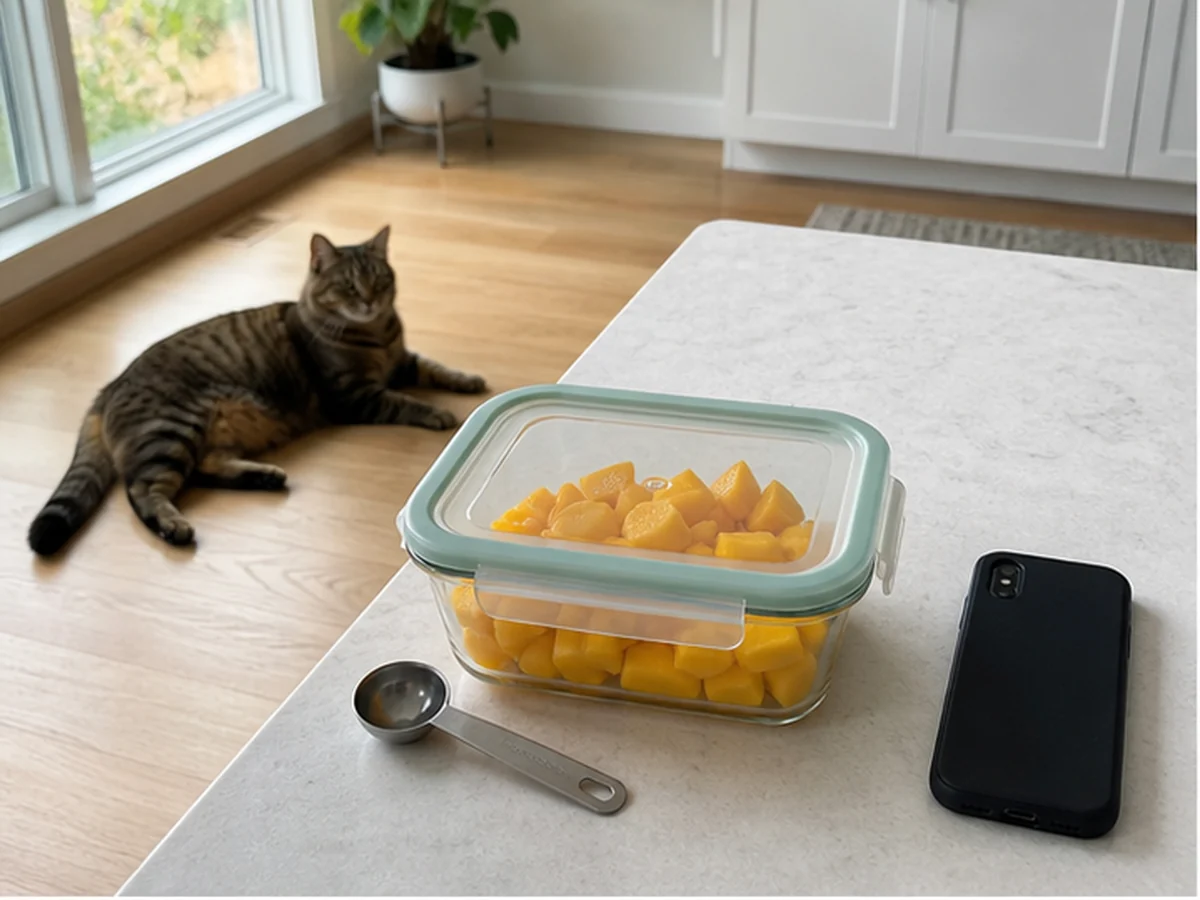
Choose ripe fresh fruit, wash it, remove peel and pit, and cut one pea-sized cube from the clean flesh. Offer it plain in a dish, supervise, and discard what is not eaten.
The Cornell Feline Health Center recommends complete balanced food and restrained extras. If the cat sniffs mango and walks away, accept the review; culinary criticism is a core feline service.
Allergy and mouth irritation are uncommon but possible
Any new food can provoke an individual reaction, even when most cats tolerate it. Stop offering mango if you see itching, facial swelling, hives, repeated vomiting, drooling, or obvious mouth discomfort.
Breathing difficulty, collapse, or rapidly increasing facial swelling is an emergency. A photo of the fruit label and any skin or mouth changes can help the veterinary team.
The fruit bowl may contain the bigger hazard
A mango often shares space with grapes, raisins, cherries, stone fruit, citrus, avocados, or decorative plants. Identify everything disturbed rather than counting only mango pieces.
Stems, pits, stickers, net bags, elastic bands, and plastic produce sacks can be swallowed during enthusiastic counter exploration. Inspect the floor and hiding places before concluding an object is inside the cat.
Green mango and pickled mango
Unripe mango is firmer, more acidic, and commonly served with salt, chili, lime, sauces, or seasoning blends. It offers no advantage over a soft plain ripe cube and is more likely to irritate digestion.
Pickled mango may be extremely salty and can contain garlic, onion, mustard, oil, or hot spices. Call after a substantial theft, particularly for a cat with kidney, heart, blood-pressure, or urinary concerns.
Mango powder and flavor concentrates
Dried mango powder can be intensely flavored and may be mixed with chili, salt, sugar, or other fruit acids. A cloud of powder also presents an inhalation and eye-irritation problem during spills.
Move the cat away, ventilate the room, and wipe exposed fur with plain water. Persistent coughing, squinting, breathing changes, or distress needs veterinary advice.
Monitoring after a low-risk taste
For a healthy adult that ate one plain cube, monitor normal appetite, drinking, activity, and litter-box use. Mild soft stool can occur when a cat encounters an unfamiliar fibrous food.
Repeated vomiting, diarrhea that continues, blood, pain, weakness, dehydration, or refusal of food is not a reason to keep waiting. Mention any other foods or objects that were accessible at the same time.
Make fruit preparation cat-proof
Move peel, pit, stickers, and knife waste straight into a secured bin as you cut. Do not leave a slippery pit on the board for later, because it is exactly the sort of fragrant object a bored cat may relocate.
Close smoothie blenders, rinse glasses, and refrigerate cut fruit promptly. A short cleanup routine prevents most exposures without requiring the cat to develop better kitchen manners.
Frequently asked questions
Can cats eat mango skin?
It is best removed because it is tough and unnecessary. A small accidental nibble may only cause digestive upset, but a large strip or symptoms warrants a call.
Can cats eat frozen mango?
A thawed pea-sized piece of plain peeled fruit can be offered, but a hard frozen cube may be difficult to bite. Avoid sweetened packaged versions.
Can cats drink mango juice?
Skip it. Juice concentrates sugar, removes much of the fiber, and may include other fruit, sweeteners, flavorings, or preservatives.
The bottom line
A tiny cube of ripe peeled mango flesh is generally low risk for a healthy adult cat, but it is purely optional. Keep peel, pit, mixed recipes, spoiled fruit, and packaging out of reach, and call for concerning ingredients or symptoms.