Can Cats Eat String Cheese? Portions, Sodium, Lactose, and Packaging
A healthy adult cat may tolerate one tiny shred of plain string cheese, but it is not needed. Lactose, sodium, fat, long cheese strings, gulped chunks, flavored varieties, hot stuffed foods, plastic wrappers, wax, medication hiding, food allergy trials, and repeated calories make the familiar lunchbox snack less simple than it looks.
The smallest sensible answer
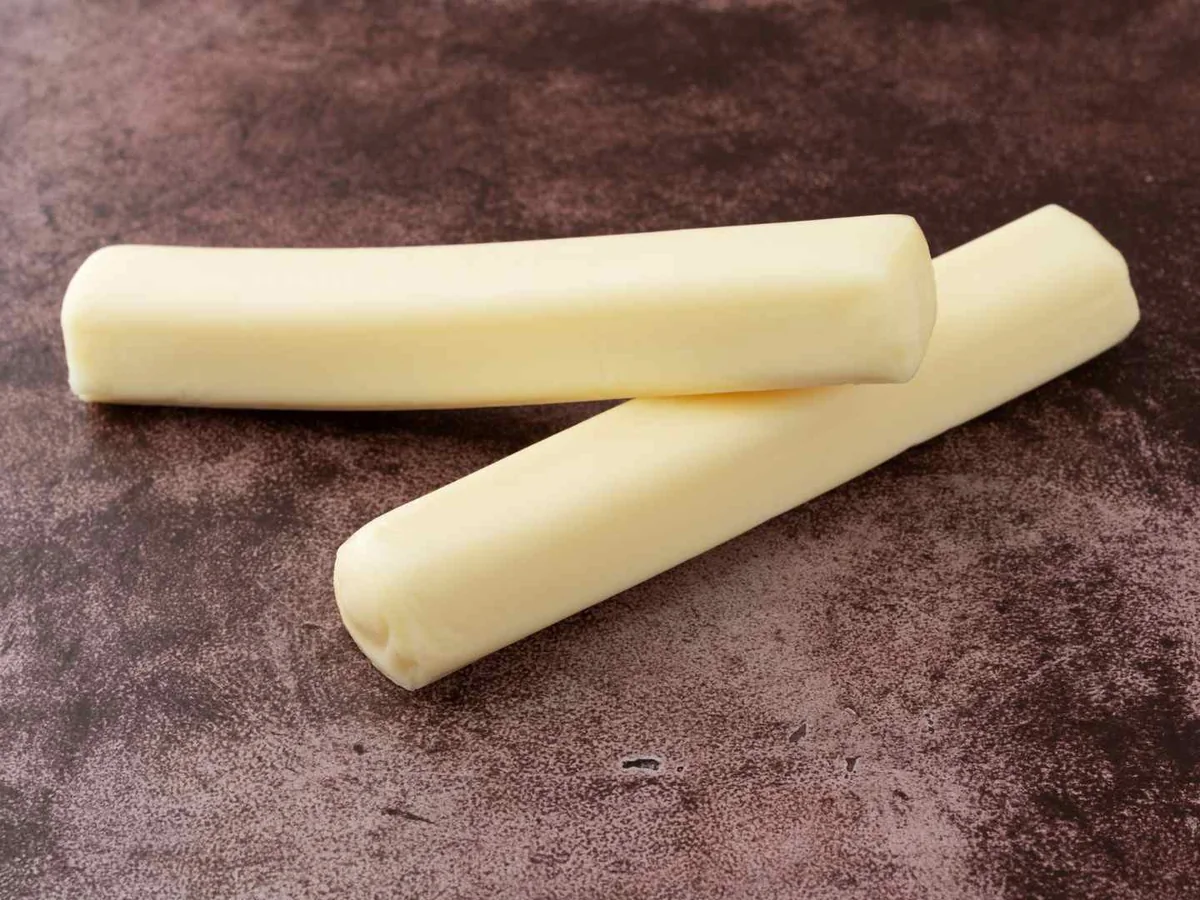
A pinhead-sized shred from plain pasteurized mozzarella is the lower-concern form. This matters for cats because a whole stick adds unnecessary dairy calories, sodium, and a dense gulpable shape.
Cool the shred, break it crosswise, supervise the taste, and remove the remaining stick Keep the product, recipe, amount, and time available if veterinary advice is needed.
String is a shape warning
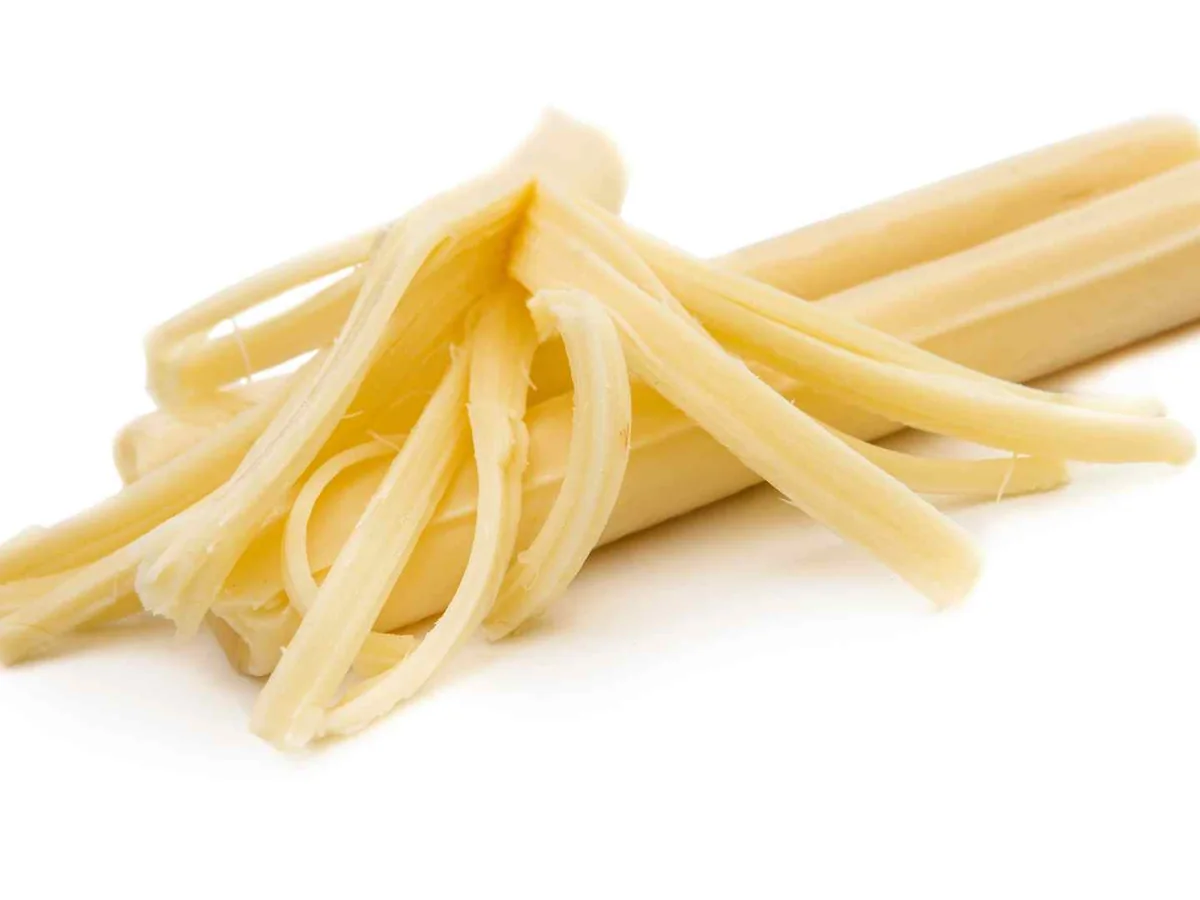
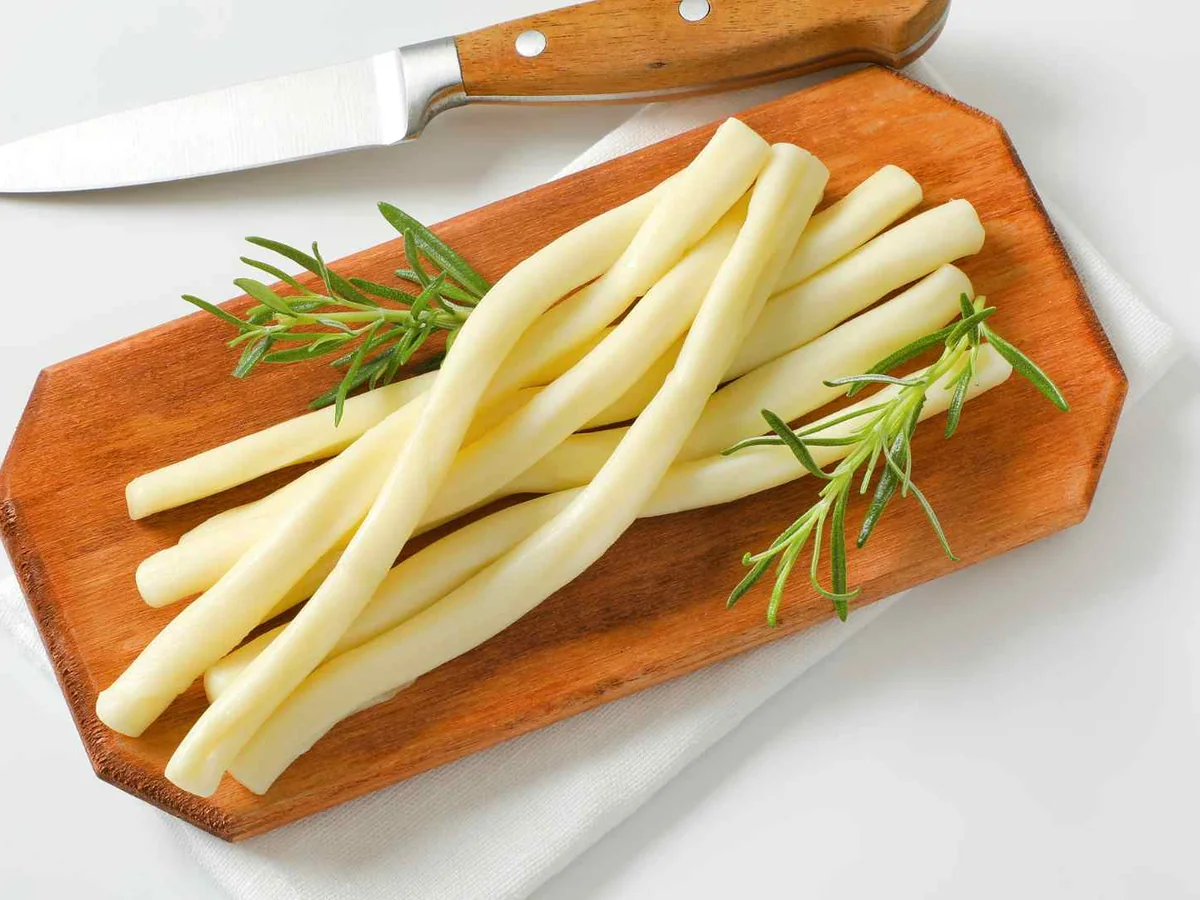
Pulling cheese into long ribbons makes a playful moving target. The practical concern is a cat can swallow a strand without chewing or inhale it during a fast grab.
Cut any approved taste into a tiny irregular fleck rather than offering a dangling string A normal first hour does not erase a swallowed object, concentrated ingredient, or delayed sign.
Lactose varies by cat
Many adult cats digest lactose poorly, although cheese often contains less lactose than milk. For a cat, individual tolerance cannot be predicted from enthusiasm or one uneventful lick.
Stop sharing after gas, diarrhea, vomiting, nausea, or appetite change and discuss persistent signs Use the actual label and the cat’s current condition instead of a broad food-category assumption.
Sodium is easy to overlook
String cheese is packaged for people and commonly contains added salt. That scene changes when kidney, heart, urinary, and blood-pressure plans may depend on controlled sodium intake.
Ask the treating veterinarian before giving any cheese to a cat on a medical diet Record what is missing before cleanup makes the estimate harder.
Fat and calorie creep
One human stick looks small beside a sandwich but can be calorie-dense for a cat. This matters for cats because daily pulls from several family members can quietly undermine weight or diabetes plans.
Count every dairy extra and keep the complete meal unchanged Keep the product, recipe, amount, and time available if veterinary advice is needed.
Whole sticks and choking
A cat may bite off a thick rubbery section or steal an entire unwrapped stick. The practical concern is dense cheese can lodge, trigger gagging, or be swallowed as a large mass.
Seek prompt care for repeated swallowing, retching, breathing difficulty, vomiting, or pain A normal first hour does not erase a swallowed object, concentrated ingredient, or delayed sign.
Wrappers keep the smell
Individual plastic sleeves, tear strips, multipack film, and cardboard retain cheese residue. For a cat, swallowed plastic can obstruct after the dairy itself has been digested.
Count each wrapper edge and do not induce vomiting when film may be involved Use the actual label and the cat’s current condition instead of a broad food-category assumption.
Flavored cheese sticks
Pepper, garlic, onion, smoke, chili, herbs, and processed-cheese blends appear in snack sticks. That scene changes when Alliums can damage feline red blood cells and spicy residue can irritate.
Read the exact ingredient panel and call after meaningful onion or garlic exposure Record what is missing before cleanup makes the estimate harder.
Pasteurization and storage
Refrigerated cheese can support microbial growth when left warm or contaminated. This matters for cats because odor and appearance cannot guarantee safety after poor storage.
Follow the FDA cold-storage guidance and discard questionable sticks Keep the product, recipe, amount, and time available if veterinary advice is needed.
Cheese is not a protein plan
String cheese provides human nutrients but does not supply a complete feline nutrient profile. The practical concern is a dairy snack cannot balance homemade food or replace life-stage nutrition.
Use the FDA adequacy explanation when evaluating the real diet A normal first hour does not erase a swallowed object, concentrated ingredient, or delayed sign.
Dairy context
The cat cheese guide compares other cheeses, sauces, and portions. For a cat, mozzarella shape and wrapper risks still deserve their own review.
Use the exact product rather than assuming every cheese behaves identically Use the actual label and the cat’s current condition instead of a broad food-category assumption.
Yogurt is not the same product
The cat yogurt guide covers cultured dairy and sweetened cups. That scene changes when lactose, fat, additives, and texture differ across dairy foods.
Assess each stolen dairy item independently Record what is missing before cleanup makes the estimate harder.
Bacon-wrapped snacks
String cheese can be wrapped in bacon, breading, or deli meat for appetizers. This matters for cats because salt, grease, raw meat handling, toothpicks, and hot oil join the exposure.
The cat bacon guide helps identify the cured-meat portion Keep the product, recipe, amount, and time available if veterinary advice is needed.
Medication hiding
A soft cheese piece can conceal a tablet but may also let the cat eat around it. The practical concern is some medicines must stay whole, avoid dairy, or follow precise meal timing.
Use cheese only when the prescribing clinic approves the product and method A normal first hour does not erase a swallowed object, concentrated ingredient, or delayed sign.
Food allergy trials
A cheese taste introduces dairy proteins during an elimination diet. For a cat, one unplanned shred can confuse weeks of diagnostic feeding.
Contact the treating team before restarting or extending the trial Use the actual label and the cat’s current condition instead of a broad food-category assumption.
Kittens and growth
A kitten has little stomach capacity and high nutrient needs. That scene changes when cheese displaces complete growth food while adding a choking-size texture.
Choose measured kitten food or an approved commercial treat instead Record what is missing before cleanup makes the estimate harder.
Hot cheese hazards
Mozzarella sticks, pizza, and stuffed breads can hold heat beneath a cooled surface. This matters for cats because melted cheese can burn the mouth and stretch into long sticky strands.
Seek advice for drooling, red tissue, blisters, or sudden food refusal Keep the product, recipe, amount, and time available if veterinary advice is needed.
A useful dairy call
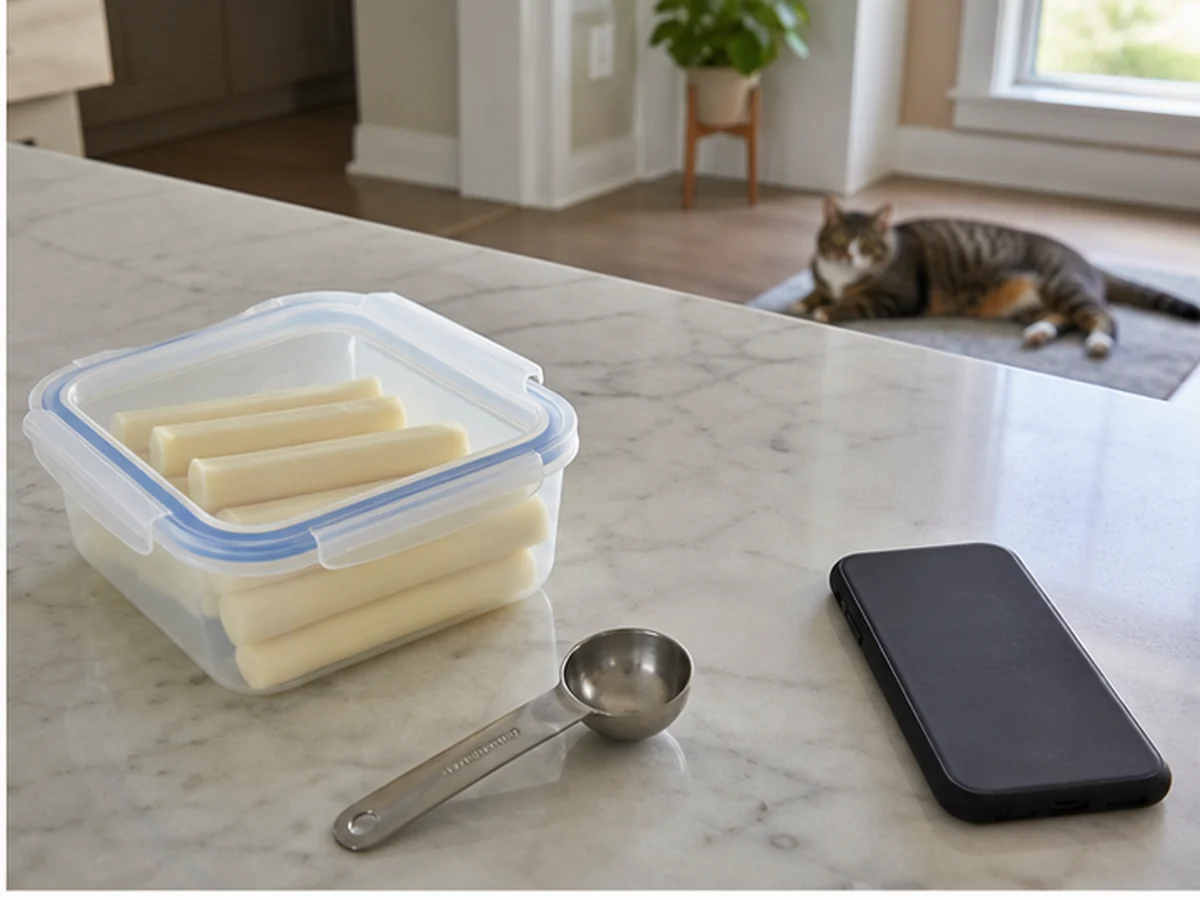
Brand, stick weight, flavor, amount, wrapper count, time, and symptoms make triage specific. The practical concern is the phrase “some cheese” hides the details that determine concern.
Photograph both package panels and the remaining stick beside a ruler A normal first hour does not erase a swallowed object, concentrated ingredient, or delayed sign.
Frequently asked questions
Can kittens eat string cheese?
Skip it because complete growth food is more useful and the dense, salty dairy shape can choke.
Can cats eat string cheese every day?
No; repeated dairy calories and sodium can displace balanced food and aggravate individual intolerance.
What if my cat ate the wrapper?
Call promptly with the missing dimensions and symptoms, and do not induce vomiting or feed bulky food.
Is low-fat string cheese better?
Lower fat does not remove sodium, lactose, additives, wrapper risk, or diet displacement.
Bottom line
String cheese can be a tiny optional taste only when it is plain, pasteurized, cool, wrapper-free, and cut into a pinhead-sized fleck. The cat loses nothing by skipping it, while long strands, whole chunks, flavored sticks, hot dishes, and plastic deserve firmer boundaries.
Part-skim, whole-milk, low-moisture, smoked, organic, lactose-free, and processed string-style products are not interchangeable, and the nutrition panel may show meaningful differences in sodium, fat, and serving weight. Lactose-free labeling addresses one carbohydrate without removing calories, milk protein, seasoning, choking texture, or the wrapper, so the exact stick still belongs in the assessment.
A cheese stick left in a backpack, lunchbox, car, or warm grocery bag can have an uncertain temperature history even when it still looks smooth. The USDA leftovers guidance reinforces prompt refrigeration principles, and questionable dairy should be discarded rather than handed to a cat to avoid waste.
Fried mozzarella sticks add breading, raw-batter history, oil, salt, garlic, marinara, hot cheese, paper liners, and takeout plastic, while their long elastic center can stretch from mouth to plate. Do not pull a cheese strand from a struggling cat; prevent another bite and seek immediate help for gagging, repeated swallowing, breathing difficulty, oral burns, or a missing wooden pick.
Cheese-stuffed meat, pizza crust, and snack rolls absorb ingredients during heating, so peeling away the outside cannot guarantee a plain dairy center. Onion and garlic in sauce or seasoning deserve timely veterinary advice, and bacon, sausage, raw meat, bones, toothpicks, foil, and hot pans should be counted as independent parts of the incident.
In a multicat home, separate animals after a stolen multipack so appetite, vomiting, diarrhea, stool, and wrapper passage are not assigned to the wrong cat. Preserve the carton and remaining sleeves through the clinic’s monitoring window, write down who handled the snack, and call again if the missing-stick or plastic count changes.
String cheese should never be used as a calcium supplement for kittens, nursing cats, or cats with fractures because nutrient balance and medical treatment cannot be reduced to one dairy mineral. A veterinarian can recommend a complete growth, maintenance, or therapeutic food whose calcium, phosphorus, calories, and other nutrients were designed to work together.
Cheese sticks carried in a backpack, warm car, or forgotten lunchbox can have an uncertain temperature history even when the wrapper is sealed and the cheese looks smooth. Discard questionable dairy rather than turning the cat into a food-waste solution, and save the outer carton if illness might involve a product lot.
Fried mozzarella sticks add breading, garlic, oil, salt, marinara, stretchy hot cheese, paper liners, and takeout plastic to the dairy question. Do not pull a cheese strand from a gagging cat, and seek prompt care for oral burns, breathing difficulty, repeated swallowing, vomiting, or a missing wooden pick.
Cheese-stuffed meat and pizza distribute salt, sauce, Alliums, fat, and heat beyond the visible mozzarella center. Peeling the outside away cannot restore a plain stick, so set aside any veterinarian-approved fleck before cooking begins and keep the finished family dish off the cat’s route.