Can Cats Drink Gatorade? Electrolytes, Sugar, Heat, and Dehydration Care
Do not use Gatorade as a home dehydration or heat treatment for cats. One small lick of ordinary prepared sports drink may cause no obvious harm, but product lines differ, sodium and sugar are unnecessary, and a sick, overheated, vomiting, or dehydrated cat needs diagnosis and species-appropriate fluid care.
Name the bottle before judging the sip
Save the exact bottle, powder sachet, frozen product, supplement, or fountain label and note flavor, product line, serving size, and ingredients. Thirst Quencher, Zero, Gatorlyte, Endurance, Fast Twitch, and water products are not interchangeable.
Estimate teaspoons or container fraction and check caffeine, sweeteners, vitamins, sodium, potassium, flavor concentrates, and anything mixed into the drink. Count caps, tamper rings, straws, film, and packets.
Collapse, panting, breathing trouble, repeated vomiting, seizures, profound weakness, confusion, or suspected heatstroke is an emergency. Do not delay care by trying sports drink first.
Human exercise claims do not map to cats
Gatorade is formulated and marketed for people losing fluid and electrolytes during activity. Cats do not sweat across their skin like human athletes, and their illness-related fluid needs cannot be calculated from a sports label.
The official Thirst Quencher page describes sodium, potassium, and carbohydrate for working human muscles. It does not recommend the product for pets.
A calm healthy cat with normal water access has no need for a sports drink tasting flight. Fresh water and complete food are the ordinary plan.
Dehydration has a cause
Reduced drinking, vomiting, diarrhea, kidney disease, diabetes, fever, urinary illness, pain, and many other problems can reduce total body water. Adding a flavored drink can hide worsening thirst without treating the cause.
Cornell’s feline hydration guide explains that clinical dehydration may require intravenous or subcutaneous fluids. Home electrolyte guessing is not equivalent.
Contact a veterinarian for dry or tacky gums, marked lethargy, sunken eyes, persistent vomiting, food refusal, or reduced urine. Do not rely on skin tenting alone.
Heat illness cannot wait for a beverage
Panting, drooling, vomiting, diarrhea, weakness, confusion, collapse, and very hot surroundings can indicate heatstroke. Cats can deteriorate rapidly.
Cornell’s heat-safety guidance recommends moving the cat to a cool area, gently wetting fur with cool water, and contacting a veterinarian immediately.
Do not use ice water, force liquid into the mouth, or wait to see whether blue sports drink restores energy. Transport and professional cooling take priority.
Sugar belongs to the human formula
Traditional sports drink supplies carbohydrate for human exercise. Sugar does not make an ill cat stronger and can add calories, stomach upset, or disruption to diabetes management.
One ordinary lick is not a diabetes diagnosis, while repeated access can become a meaningful dietary addition. Cats do not need a recovery drink after playing with a feather wand.
The cat sugar guide separates an accidental taste from routine high-sugar feeding.
Sodium and potassium require context
Electrolytes are essential, but both deficiency and excess can be dangerous. Kidney, heart, adrenal, urinary, and gastrointestinal disease can alter the appropriate fluid and electrolyte plan.
The FDA label guide helps read human sodium and serving size, not choose a feline dose. More electrolytes is not automatically better hydration.
Marked thirst, vomiting, weakness, abnormal walking, tremors, seizures, or collapse after a concentrated or major exposure deserves urgent care.
Gatorade Zero needs the current label
Zero-sugar sports drinks may use sucralose, acesulfame potassium, or other sweeteners depending on product and market. Read the exact container rather than assuming every Zero formula matches.
Xylitol causes established severe dog toxicity, while the same response has not been demonstrated in cats. FDA says xylitol does not seem as dangerous for cats, which is not proof that unknown mixtures are safe.
Do not transfer canine dose thresholds. Call with the label when a sugar-free or imported product contains an unfamiliar sweetener.
Powder creates a different exposure
Concentrated powder can be licked before dilution, inhaled, tracked on paws, or mixed at the wrong strength. Its sodium, sugar, acids, and flavor are more concentrated than prepared drink.
Move a coughing cat away without sweeping dust upward, prevent grooming, and call for eye pain or breathing changes. Do not wash powder into the eyes with improvised solutions.
Save the packet and mixing ratio. A teaspoon of dry powder cannot be assessed as a teaspoon of finished beverage.
Gatorlyte and endurance products
Higher-electrolyte or specialized human products can differ substantially from standard Thirst Quencher. Product names such as rapid hydration or endurance describe human use cases.
Check sodium, potassium, magnesium, calcium, sugar, sweeteners, and vitamins on the exact version. Do not substitute one product’s web page for another packet.
A veterinarian selects fluid composition from the cat’s exam, history, and sometimes laboratory results. The most electrolyte-heavy bottle is not the safest shortcut.
Caffeine changes urgency
Some sports-performance products and energy-adjacent drinks contain caffeine, even when familiar brand colors make them look like ordinary hydration. Caffeine can cause restlessness, rapid heart rate, vomiting, tremors, seizures, and collapse.
Use the cat coffee guide for caffeine context, then report milligrams per serving and amount missing. Do not wait for agitation.
The word Gatorade alone is not enough. Read the complete product title every time.
Flavors and colors are not the main question
Fruit Punch, Cool Blue, lemon-lime, orange, grape, and other names describe flavor systems, not servings of those fruits. Color does not measure toxicity or hydration quality.
Individual sensitivity is possible, but one episode of vomiting after a mixed drink cannot diagnose a dye allergy. Product amount and health status remain more useful.
Persistent facial swelling, hives, or breathing difficulty is urgent regardless of which ingredient is suspected.
Frozen drinks and ice cubes
Frozen sports drink can form hard chunks that injure teeth or choke before melting. Sticky thawed liquid coats fur and prompts grooming.
Do not freeze Gatorade as a cat enrichment treat. Plain ice can also be too hard for dental patients, so ask the veterinarian about safe cooling options.
A small surface spill on fur may be wiped with a damp cloth, while a large powder or concentrate spill needs product-specific cleaning advice.
Bottles, caps, and tamper rings
Plastic caps, tamper rings, shrink sleeves, straws, foil seals, and powder packets retain flavor and may be chewed. A missing cap is an urgent foreign-object question.
FDA’s pet-hazard guidance supports securing food packaging and small objects. Count every component after a spill.
Do not pull plastic protruding from the mouth or anus. Material can be anchored internally.
Cats with diabetes, kidney, or heart disease
These cats may have strict plans for water, sodium, potassium, calories, and medication. Sports drinks can confuse thirst and glucose monitoring while adding unapproved ingredients.
Never mix medicine into Gatorade unless the prescriber directs it. The cat may reject the drink, receive an incomplete dose, or consume an inappropriate fluid.
Sudden increased thirst is itself a reason to contact the treating team. Do not mask it with a more appealing beverage.
After one tiny conventional lick
For a healthy adult that licked a small amount of ordinary caffeine-free prepared drink, continue normal food and fresh water while watching vomiting, diarrhea, thirst, appetite, energy, gait, and comfort. Keep the bottle.
Call if signs appear, the amount grows, or the label reveals caffeine, concentrated electrolytes, or an unfamiliar sweetener. Kittens and medically fragile cats deserve quicker advice.
Wipe counters and close bottles promptly. A cat does not need sideline hydration, no matter how athletic the leap onto the refrigerator looked.
Why oral syringes require veterinary direction
Syringing fluid into an unwilling cat can send liquid into the lungs, create stress, and produce an inaccurate intake estimate. Weak or nauseated cats may swallow poorly.
Do not force Gatorade, water, or homemade electrolyte solution by syringe unless a veterinarian has examined the situation and taught the exact method. Coughing after forced liquid needs immediate advice.
A prescribed oral rehydration plan will specify fluid, volume, frequency, and stopping points. Human sports-drink directions cannot fill those blanks.
Vomiting and diarrhea need more than replacement
Ongoing fluid loss can disturb acid-base balance and electrolytes in ways that a fixed sports formula cannot diagnose. Intestinal obstruction, toxins, infection, and chronic disease may all look similar at home.
The cat water guide covers ordinary access and abnormal drinking. A cat unable to keep water down needs prompt veterinary help.
Bring a timeline of vomiting, stool, food, water, urine, medications, and possible exposures. That history is more valuable than the color of the drink offered.
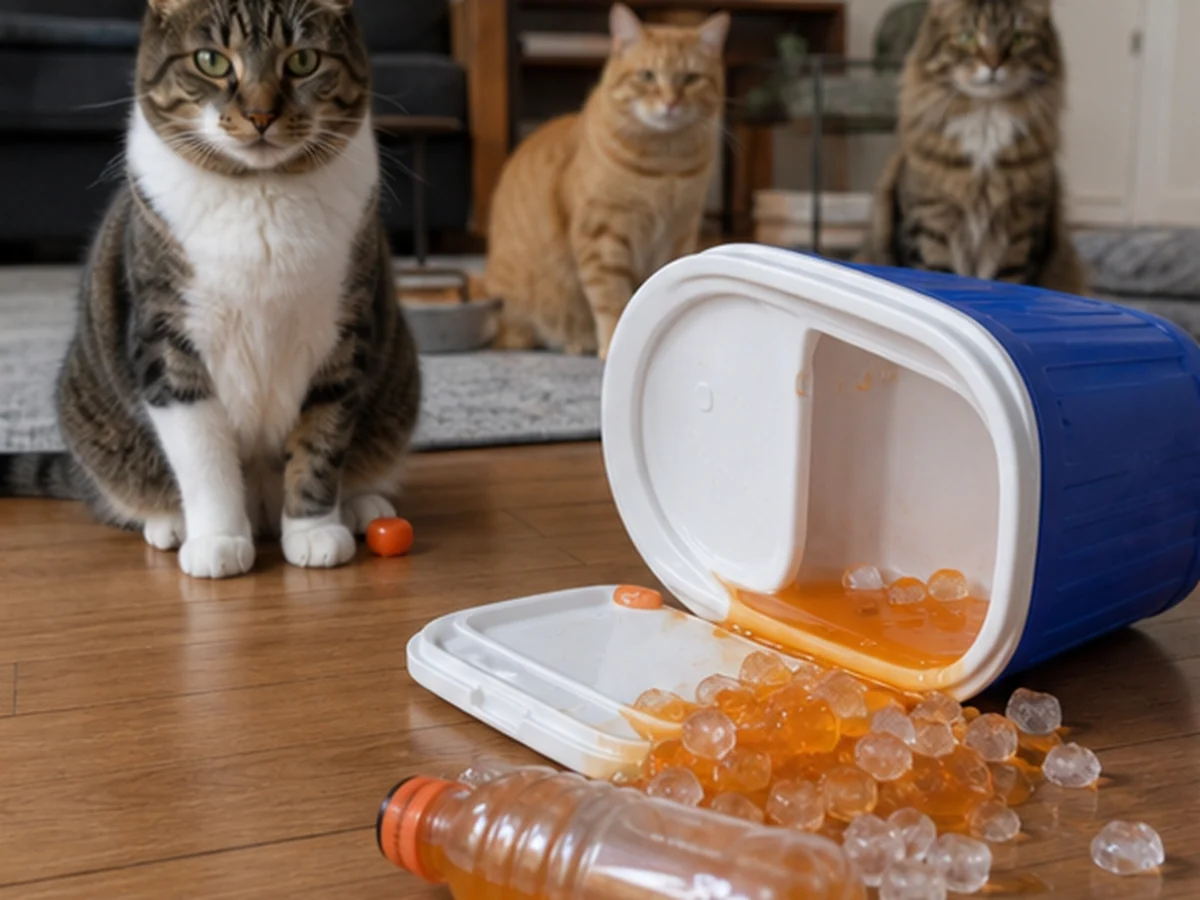
Several pets and one spilled cooler
If multiple cats enter a spilled cooler, separate them and track each animal’s thirst, vomiting, appetite, gait, and behavior. Ice, bottle caps, alcohol mixers, medication, and food scraps may share the liquid.
Photograph the cooler contents and preserve labels. Do not divide the missing volume equally without witnessing who drank.
Clean sticky floors with a pet-safe method after moving animals away. Residual sweetness can prompt repeated licking later.
FAQ
Can cats have a sip of Gatorade?
One tiny sip of ordinary prepared drink may be low risk, but it is unnecessary and should not replace fresh water or veterinary fluid care.
Can Gatorade treat a dehydrated cat?
No. Dehydration has a cause and may require examination plus precisely chosen intravenous or subcutaneous fluids.
Should I give Gatorade during heatstroke?
No. Move the cat to a cool area, use cool water on fur as directed, and contact an emergency veterinarian immediately.
Is Gatorade Zero safe for cats?
Do not offer it. Verify the exact sweeteners and electrolytes, and do not transfer dog xylitol doses to cats.
Bottom line
Gatorade is a human exercise product, not feline first aid. Fresh water supports healthy cats, while dehydration, vomiting, diarrhea, heat illness, or abnormal thirst needs diagnosis and a veterinarian-selected fluid plan.