Can Cats Eat Sugar? Granules, Syrups, Sweeteners, and Real Risks
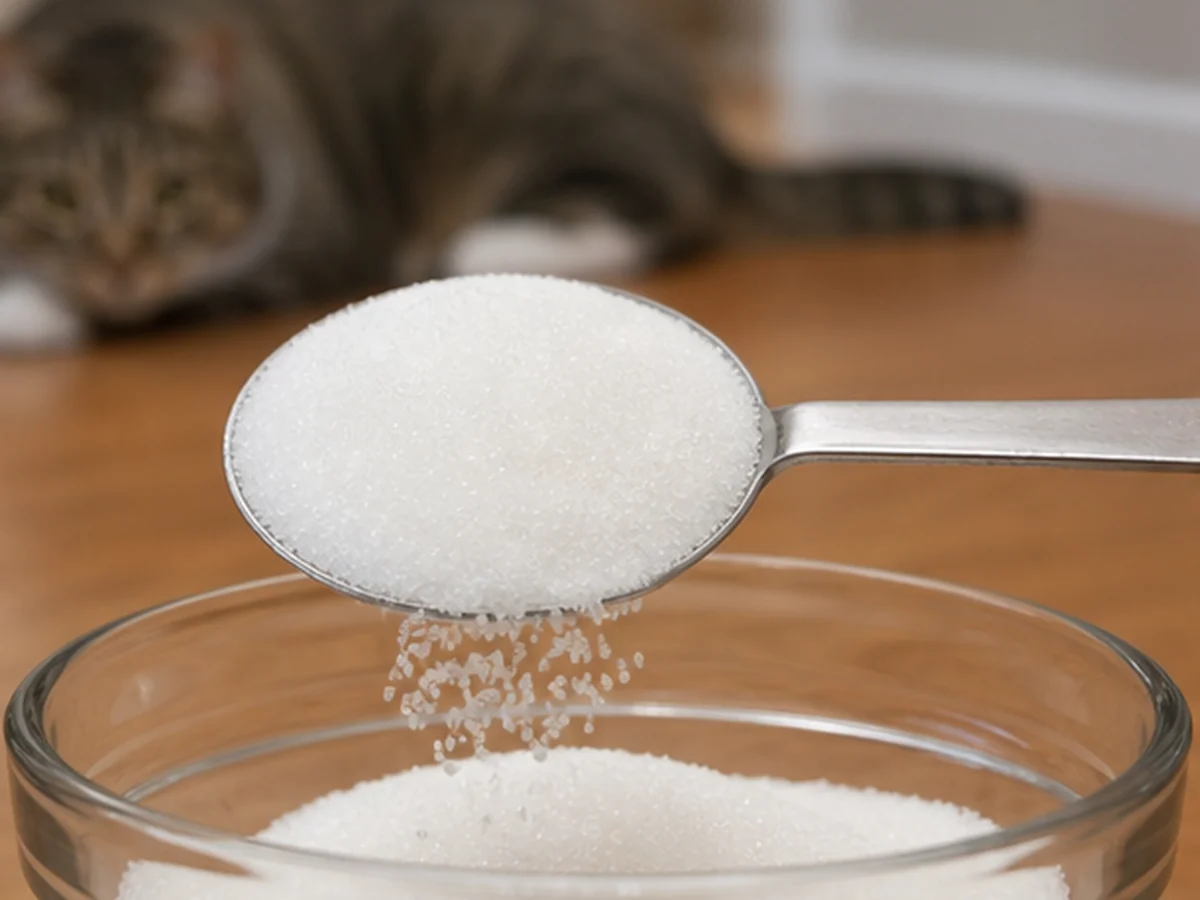
Cats do not need added sugar. One lick of ordinary table sugar is unlikely to cause severe poisoning, but bowls, syrups, powdered spills, desserts, chocolate, caffeine, alcohol, medications, diabetes, sugar-free sweeteners, sticky packaging, and repeated empty calories require a product-specific answer instead of panic or permission.
Table sugar is not a feline poison story
Ordinary sucrose is primarily a calorie and gastrointestinal concern. The practical concern is a large raid can cause vomiting or diarrhea without proving organ poisoning.
Remove access and estimate grams from the missing container weight A normal first hour does not erase a swallowed object, concentrated ingredient, or delayed sign.
Cats and sweetness
Cats lack the typical mammalian sweet-taste response. For a cat, interest may reflect fat, texture, rolling crystals, or attention rather than craving.
Redirect curiosity to a complete-food treat Use the actual label and the cat’s current condition instead of a broad food-category assumption.
Powdered sugar clouds
Confectioners sugar can become airborne and may contain starch. That scene changes when dust can irritate eyes and airways before ingestion.
Move the cat to clean air and call for coughing, wheezing, or squinting Record what is missing before cleanup makes the estimate harder.
Brown sugar and molasses
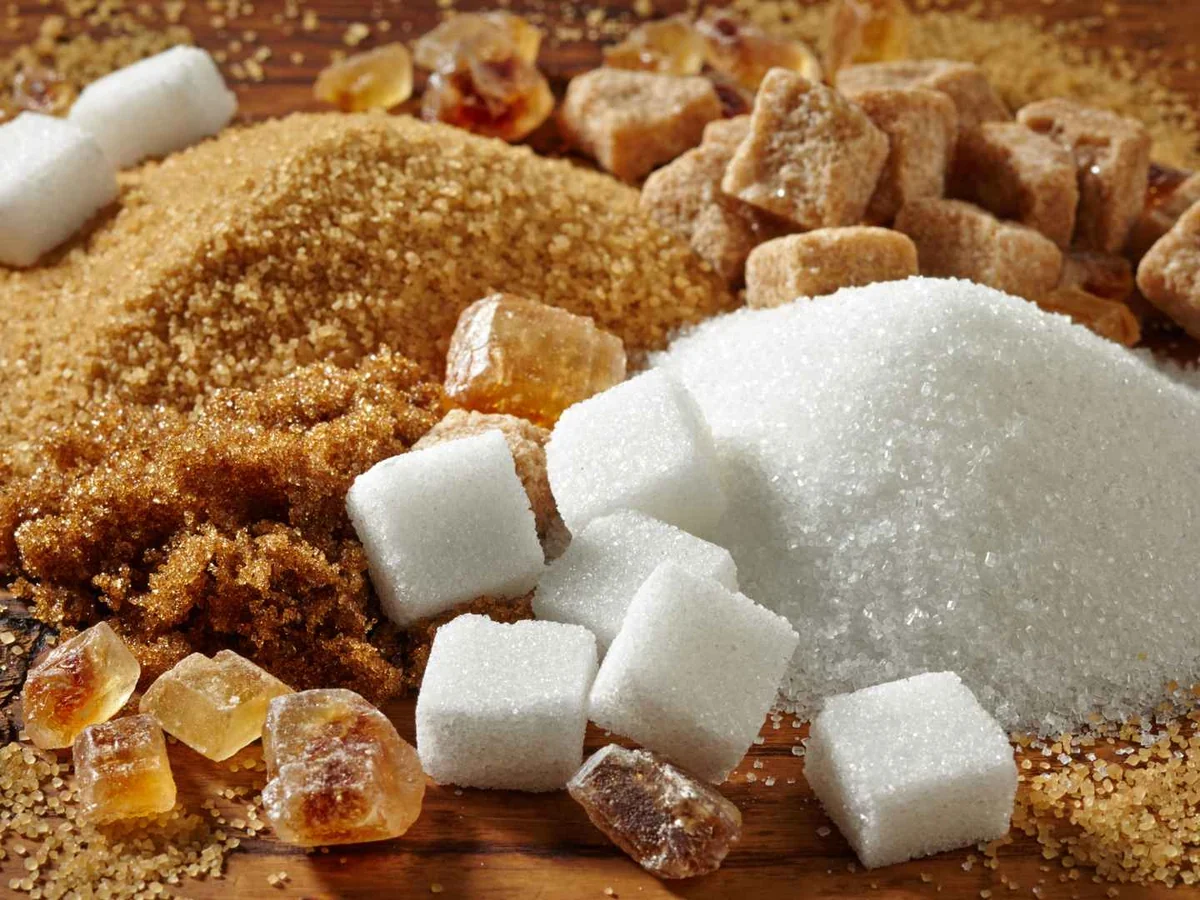
Brown sugar carries molasses and forms dense sticky clumps. This matters for cats because a lump can cling in the mouth and wrappers add obstruction risk.
Do not force water or scrape painfully at the palate Keep the product, recipe, amount, and time available if veterinary advice is needed.
Syrups pour quickly
Simple syrup and dessert sauces allow rapid consumption. The practical concern is flavors may add cocoa, coffee, alcohol, fruit concentrate, or supplements.
Save the bottle and report the maximum liquid volume A normal first hour does not erase a swallowed object, concentrated ingredient, or delayed sign.
Honey is separate
The cat honey guide covers a natural sweetener. For a cat, natural branding does not establish a feline benefit.
Do not use honey as routine energy or immune support Use the actual label and the cat’s current condition instead of a broad food-category assumption.
Chocolate desserts
The cat chocolate guide becomes urgent when cocoa is present. That scene changes when theobromine and caffeine change the exposure beyond sugar.
Report cocoa type, product weight, and wrappers Record what is missing before cleanup makes the estimate harder.
Ice cream and frosting
The cat ice cream guide adds lactose, fat, cold, and flavors. This matters for cats because sweet dairy can cause digestive upset and easy calorie excess.
Assess the complete dessert instead of isolating sugar Keep the product, recipe, amount, and time available if veterinary advice is needed.
Diabetes needs consistency
Sugary theft can disrupt calorie and glucose records. The practical concern is home insulin changes can create a second emergency.
Call the treating team rather than adjusting medication A normal first hour does not erase a swallowed object, concentrated ingredient, or delayed sign.
Xylitol stays in the canine lane
The FDA documents severe xylitol risk in dogs. For a cat, that evidence does not establish the same feline dose-response.
Read the exact cat exposure label and obtain product-specific advice Use the actual label and the cat’s current condition instead of a broad food-category assumption.
Other sugar substitutes
Erythritol, sorbitol, stevia, sucralose, and blends vary. That scene changes when digestive effects and co-ingredients cannot be guessed from sugar-free.
Photograph the current formula and serving strength Record what is missing before cleanup makes the estimate harder.
Complete food remains central
The FDA explains pet-food nutritional adequacy. This matters for cats because sugar cannot balance homemade food or improve a complete diet.
Keep the measured feline meal unchanged Keep the product, recipe, amount, and time available if veterinary advice is needed.
Raw batter
Cookie and cake batter can contain raw flour, egg, chocolate, raisins, or yeast. The practical concern is microbial and dough risks outrank ordinary sugar.
Secure bowls, beaters, and plastic wrap A normal first hour does not erase a swallowed object, concentrated ingredient, or delayed sign.
Packaging and jars
Paper sacks, clips, syrup caps, foil seals, and glass retain sweetness. For a cat, a missing object can obstruct or cut.
Count every package component before cleanup Use the actual label and the cat’s current condition instead of a broad food-category assumption.
Dental myths
One theft does not guarantee a cavity. That scene changes when sticky repeated sweets remain unnecessary around painful teeth.
Seek examination for bleeding, swelling, drooling, or food refusal Record what is missing before cleanup makes the estimate harder.
Kittens
Growth requires nutrient-dense complete food. This matters for cats because sugar fills limited stomach space without needed nutrition.
Keep candy, batter, and packets inaccessible Keep the product, recipe, amount, and time available if veterinary advice is needed.
Monitoring
A minor plain-sugar exposure may only need observation after advice. The practical concern is repeated vomiting, weakness, tremors, collapse, or altered behavior changes urgency.
Record appetite, gait, breathing, and litter-box use A normal first hour does not erase a swallowed object, concentrated ingredient, or delayed sign.
The useful call
Product, sweetener, grams, time, cat weight, companions, and objects guide triage. For a cat, the word sugar is not enough when a recipe disappeared.
Preserve labels and avoid home vomiting methods Use the actual label and the cat’s current condition instead of a broad food-category assumption.
Frequently asked questions
Is sugar toxic to cats?
Ordinary sucrose is not a classic feline poison, but it is unnecessary and larger amounts can upset digestion.
Can diabetic cats eat sugar?
Do not offer it; call the treating team after a meaningful theft and never change insulin without direction.
Is sugar-free safer?
No blanket answer exists because sweeteners and other ingredients vary, and canine xylitol certainty should not be transferred.
Should I induce vomiting?
No; peroxide, salt, and other home methods can worsen the situation.
Bottom line
Ordinary sugar is mainly an unnecessary-calorie and stomach issue for cats, but the product carrying it may introduce far greater hazards. Read the whole label, keep feline sweetener evidence honest, secure packaging, and let complete food supply the calories that count.
A pantry raid can spread granules into flour, baking chocolate, raisins, yeast, spices, clips, and torn paper, making cleanup evidence-sensitive rather than routine. Photograph the shelf before sweeping, keep the cat from grooming dusty paws, and identify every open container because several ingredients may require different timelines and emergency thresholds.
Granulated sugar spilled beside coffee can be mixed with caffeine, cocoa, artificial sweetener packets, broken ceramic, spoons, stirrers, and hot liquid, so a white-crystal trail is not automatically a sugar-only event. Count every packet color and cup fragment, preserve the beverage recipe, and seek urgent help for tremors, abnormal heart rhythm, seizures, collapse, or a thermal burn.
Caramel, toffee, fudge, and brittle transform sugar into sticky or hard products with butter, cream, chocolate, nuts, salt, hot syrup, wrappers, and sometimes alcohol. A cooled caramel can lodge around teeth or be gulped, while active candy-making syrup can cause severe burns; do not pry painfully at the mouth or apply ice, butter, or ointment to injured tissue.
Fermenting sugar in yeast dough creates a different hazard because expanding dough can distend the stomach and generate alcohol. The CDC raw-dough guidance also explains microbial concerns from uncooked flour and eggs, so secure mixing bowls and call promptly after a meaningful dough exposure.
Sweetened medicines, gummies, electrolyte powders, protein products, and supplements can contain pharmacologically active ingredients far more important than their sugar. Report the drug or supplement name, strength per unit, maximum missing count, sweetener panel, child-resistant cap, desiccant, and time rather than describing the exposure as candy.
Sugar water is not an appropriate routine hydration drink, appetite stimulant, neonatal formula, or home treatment for weakness. A sick, hypoglycemic, overheated, or food-refusing cat needs diagnosis and case-specific instructions, because forcing sweet liquid can delay care or enter the airway.
Urine attracting insects, weight loss despite appetite, excessive thirst, and increased urination are not reasons to test dietary sugar tolerance; they are signs that deserve veterinary evaluation. Cats can develop diabetes, but a single sugar lick does not diagnose it and long-term disease cannot be managed by improvised restriction or insulin changes.
In multicat households, separate animals long enough to identify who vomited, stopped eating, or used the litter box after a pantry raid. Preserve receipts and lot numbers for specialty sweeteners, keep ordinary complete food available unless directed otherwise, and write down the clinic’s callback threshold instead of repeatedly offering treats to test appetite.
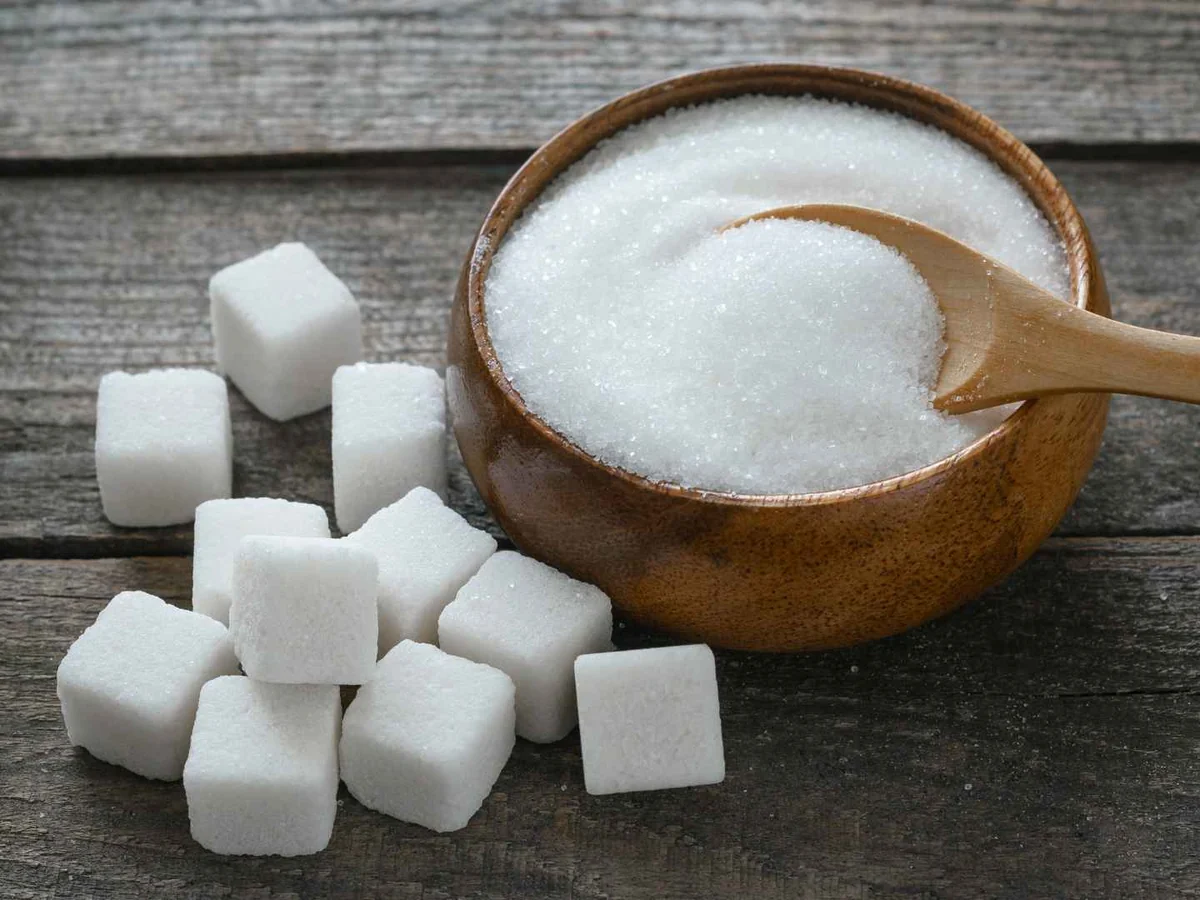
Sugar cubes and decorative crystals can be batted beneath appliances or swallowed with cocktail picks, drink residue, and paper packets. A cube from a coffee bar may carry caffeine, cocoa, or alcohol, making the setting and neighboring items more informative than the white color.
Caramel, brittle, toffee, and fudge add butter, cream, chocolate, nuts, salt, hard shards, hot syrup, and sticky wrappers. Do not pry painfully at candy stuck in the mouth, and treat drooling, burns, broken teeth, repeated retching, or a missing wrapper as reasons for prompt examination.
Sweetened medicines and gummies can contain active drugs, vitamins, cannabis, caffeine, or electrolytes that dwarf ordinary sugar risk. Report the product name, strength per unit, missing count, child-resistant cap, and time, then keep remaining tablets available for identification without delaying care.
Sugar water is not a routine hydration drink, kitten formula, appetite stimulant, or home treatment for collapse. A weak, overheated, hypoglycemic, or food-refusing cat needs diagnosis and exact instructions because forcing sticky liquid can enter the airway or postpone effective treatment.