Can Cats Eat Bread? Plain Slices, Raw Dough, Mold, and Mix-Ins
A tiny crumb of plain, fully baked bread is unlikely to harm most healthy cats, but bread is not a useful routine treat. Raw yeast dough is an emergency concern because it can expand and produce alcohol, while raisins, garlic, onion, mold, toppings, and packaging may be riskier than the loaf.
The baked-bread verdict
If your healthy adult cat stole one plain bread crumb and is acting normal, remove the loaf and observe. Call sooner for raw dough, a meaningful amount, a medically vulnerable cat, unsafe mix-ins, mold, or a missing bag, twist tie, foil, string, toothpick, or wrapper.
Cats are obligate carnivores, not tiny bakery critics. Bread adds carbohydrate and calories without supplying the balanced animal-based nutrition a cat needs from its main food.
Raw yeast dough is the urgent exception
Unbaked yeast dough can keep fermenting in the warm stomach. The dough expands, stretching the stomach, while yeast produces ethanol that can be absorbed into the bloodstream.
The Merck Veterinary Manual bread dough review describes gastrointestinal obstruction and alcohol toxicosis as the two major hazards. Although dogs are exposed more often, the review states that any species is susceptible.
Call a veterinarian, emergency clinic, or animal poison control service immediately after a raw yeast-dough exposure, even before symptoms. The amount, recipe, yeast type, timing, cat’s size, and current behavior all guide treatment.
Raw dough warning signs
- Unproductive retching, repeated vomiting, or a swelling or painful abdomen.
- Lethargy, weakness, wobbliness, disorientation, or unusual sleepiness.
- Low body temperature, slow or difficult breathing, collapse, or coma.
- Tremors, seizures, agitation, or inability to stand.
- Drooling, repeated swallowing, or distress after dough or package ingestion.
Do not induce vomiting or force cold water because the dough is sticky and treatment decisions depend on the cat’s condition. Merck discusses cold-water use under veterinary management, not as a home recipe with a reliable volume.
The ASPCA also warns that yeast dough can rise in the digestive system and produce alcohol. Prompt care matters because alcohol is rapidly absorbed and severe signs can progress.
Plain baked bread is low risk, not good nutrition
Once dough is fully baked, active fermentation is no longer the issue. A tiny plain crumb is generally a dietary question rather than a poisoning event, provided the loaf contains no hazardous ingredients.
Bread can still cause vomiting, loose stool, gas, or appetite change when a cat eats too much or reacts poorly to an ingredient. Large soft pieces can form a sticky mouthful, while hard crust can be awkward for a cat with sore teeth.
The Cornell Feline Health Center recommends complete and balanced food for cats and explains that treats are not complete nutrition. There is no feline reason to create a daily bread allowance.
Our published bread guide for dogs provides a useful map of plain slices, dough, mix-ins, toppings, mold, and bags. Use it for product identification, but keep cat portions and care species-specific.
Raisin bread needs immediate attention
Raisin, currant, cranberry, cinnamon-swirl, and fruit breads must be identified by the full ingredient list. Grapes, raisins, and currants are established dog kidney hazards, while feline toxicity is less clearly characterized, so exposure still deserves prompt professional advice rather than an experiment.
Dried fruit is easy to miss in dense slices, and bakery loaves may include mixed fruit, alcohol-soaked pieces, nuts, chocolate, or sweeteners. Save the wrapper or recipe and count the missing slices as accurately as possible.
Do not wait for vomiting, appetite loss, thirst changes, or lethargy before calling about a raisin-containing loaf. A poison specialist can address the uncertainty using the actual cat and product.
Garlic bread and savory loaves
Garlic bread may contain garlic powder, fresh garlic, onion, chives, butter, oil, cheese, and heavy salt. Cats are particularly susceptible to red blood cell damage from alliums, and cooking does not reliably make them safe.
Allium signs can be delayed and may include vomiting, weakness, pale gums, rapid breathing, fast heart rate, dark urine, or collapse. Call with the ingredient list instead of waiting for anemia to become visible.
Our garlic bread guide helps locate alliums, fat, cheese, raw dough, and packaging. Its dog dose discussion does not replace feline toxicology advice.
Sourdough, rye, wheat, white, and gluten-free bread
A plain fully baked slice from any of these categories is usually less concerning than its raw dough or add-ins. The grain name alone does not tell you whether the loaf contains raisins, caraway, onion, garlic, seeds, nuts, chocolate, alcohol, or sweeteners.
Sourdough starter and fermenting dough can produce alcohol before baking, so keep starter jars, discard, and rising bowls inaccessible. Our sourdough guide separates the baked loaf from starter and raw dough.
Rye loaves often include caraway and may include raisins, onion, garlic, seeds, or molasses. The rye bread guide offers a label checklist for dough, mix-ins, mold, and bags, while the feline response still belongs here.
Gluten-free does not mean cat-safe, low-calorie, or ingredient-free. These loaves may contain gums, starches, seeds, nuts, dairy, egg, sweeteners, and other additions that require the same inspection.
Moldy bread belongs in a secure bin
Do not trim mold from bread and offer the rest to a cat. Bread is porous, so contamination can extend beyond the fuzzy patch, and some molds can produce toxins that cause vomiting or neurologic signs.
Tremors, wobbliness, seizures, repeated vomiting, severe lethargy, or unusual agitation after moldy food needs urgent veterinary attention. Bring the loaf package and photograph the mold without delaying care.
Discard the entire item in a closed bin and clean crumbs from the toaster area. A cat that raids trash can eat the bread, plastic bag, and closure in one efficient but unfortunate sitting.
Toast toppings change the answer
Butter, bacon grease, cheese, cream cheese, avocado, jam, nut butter, chocolate spread, honey, tuna salad, and eggs each create their own ingredient and portion questions. A crumb of dry toast is not equivalent to half a loaded slice.
Check nut butter and sugar-free spreads for sweeteners, while remembering that xylitol’s severe hypoglycemia risk is well established in dogs but not clearly the same in cats. Unknown sweeteners and mixed products still deserve a call rather than confident extrapolation.
Jam can contain sugar, alcohol flavoring, grapes, currants, or mold, and tuna salad can contain onion or garlic. The safest shortcut is to inventory every topping and save the container.
Bread bags and closures are real hazards
Plastic bags can suffocate an animal, while twist ties, clips, rubber bands, foil, parchment, and paper wrappers can obstruct or injure the digestive tract. The FDA lists raw yeast products and alcohol among food hazards and also warns about food bags.
Breathing trouble is an emergency. If a closure or package piece is missing, call promptly and do not wait for vomiting or appetite loss to prove it was swallowed.
Bread is not a treatment for vomiting or diarrhea
Plain toast is a familiar human sick-day food, but it is not a veterinary treatment plan for cats. Vomiting and diarrhea can reflect dietary irritation, parasites, infection, toxin exposure, obstruction, pancreatitis, kidney disease, or many other problems that bread cannot diagnose or correct.
Do not replace a cat’s balanced food with bread and do not force a nauseated cat to eat it. Call for repeated vomiting, blood, black stool, dehydration, abdominal pain, marked lethargy, or inability to keep water down.
A cat that stops eating also deserves timely advice, even without vomiting. Cats can develop serious metabolic complications during prolonged poor intake, and sprinkling crumbs over the bowl may hide the pattern without fixing its cause.
Cats that should skip bread
- Kittens, because small meals need complete growth nutrition.
- Cats with diabetes, obesity, or a calorie-controlled plan.
- Cats with chronic gastrointestinal disease or pancreatitis.
- Cats on a prescription or elimination diet.
- Cats with dental pain, swallowing trouble, pica, or a history of foreign-body ingestion.
Bread does not become a toxin in every condition on this list. It is simply an optional carbohydrate that can complicate dietary targets, symptoms, or safe swallowing without providing a proven benefit.
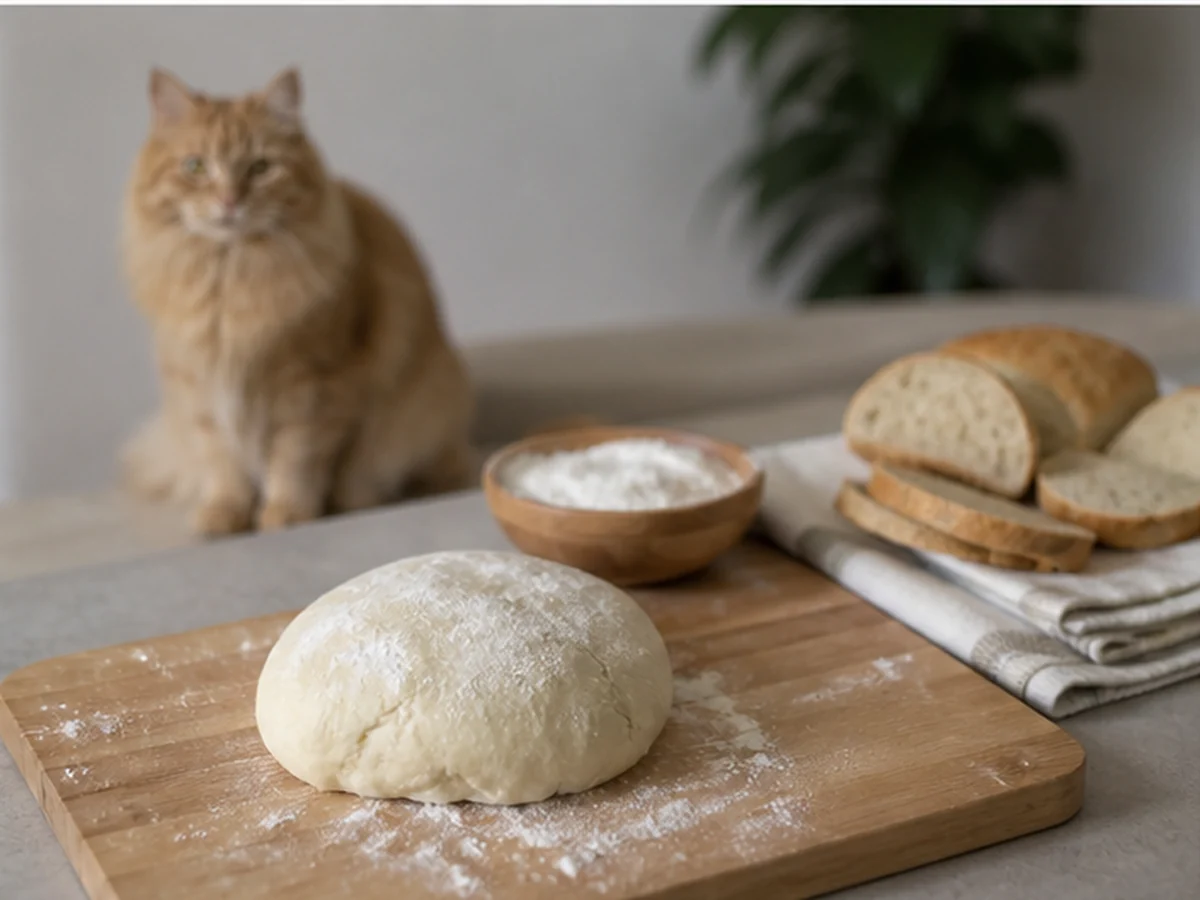
What to do if your cat ate bread or dough
- Remove the loaf, dough, starter, toppings, moldy food, and packaging.
- Check breathing, swallowing, alertness, coordination, and abdominal shape.
- Identify fully baked bread versus raw yeast dough and list every mix-in.
- Estimate the amount and time, then save the recipe or label.
- Call immediately for raw yeast dough, alcohol, raisins, alliums, mold, missing packaging, a large amount, or any symptom.
Do not induce vomiting or give hydrogen peroxide, salt, oil, milk, cold water, or charcoal unless a veterinary professional directs you. Raw dough can be difficult to remove and symptomatic patients need stabilization, so home treatment can lose valuable time.
Frequently asked questions
Can kittens eat bread?
Kittens do not need bread, and soft wads or hard crust can be awkward for a small mouth. Feed complete kitten food and appropriately sized treats instead.
Can cats eat toast?
One tiny plain crumb of fully baked toast is low concern for most healthy adult cats. Burned bread, large hard crusts, and unsafe toppings should be avoided.
My cat licked bread dough. What now?
Call immediately with the recipe, yeast status, amount, and time because even an uncertain exposure deserves professional assessment. Do not wait for bloating or wobbliness.
Can I hide a pill in bread?
Ask the prescribing clinic because some medicines should not be crushed or given with certain foods. A veterinary pill treat or clinic-approved food is easier to portion consistently.
The bottom line
A tiny plain baked bread crumb is unlikely to hurt most healthy adult cats, but bread offers little value. Raw yeast dough is urgent, and raisins, alliums, alcohol, mold, toppings, and packaging can quickly become the real story, so identify the whole product and call promptly when those hazards appear.