Can Cats Have Vinegar? Food, Cleaning Concentrate, and Skin Risks
Do not give cats vinegar as a remedy, although one lick of ordinary food vinegar is likely to cause nothing worse than brief mouth or stomach irritation in most healthy adults. Cleaning concentrates, pickling brine, vinegar powder, hot mixtures, eye exposure, soaked fur, and products with essential oils need separate decisions.
The exposure route writes the first chapter
Did the cat lick salad dressing, drink from a bowl, step in cleaner, inhale a spray, get splashed in an eye, or chew a tablet? The product concentration and route tell a veterinarian far more than “it was vinegar.”
Find the original container, photograph every label panel, and keep it nearby. Homemade cleaner recipes matter too, particularly when vinegar was mixed with detergent, fragrance, essential oil, alcohol, or another chemical.
A vinegar incident matrix
| Scene | Main concern |
| Tiny lick of 5% food vinegar | Sour irritation and possible stomach upset |
| Pickle or dressing | Salt, garlic, onion, oil, spices, recipe |
| Cleaning vinegar or concentrate | Greater acidity and tissue irritation |
| Eye splash | Pain and surface injury |
| Wet coat or paws | Dermal exposure followed by grooming |
| Mixed cleaning product | Chemical reaction and inhalation risk |
Ordinary food vinegar is dilute acetic acid
White, cider, wine, rice, and malt vinegar vary in source and flavor, yet retail food products are commonly dilute rather than glacial acetic acid. That helps explain why a tiny accidental taste is usually an irritation question, not proof of systemic poisoning.
It does not make drinking a bowl appropriate, and flavored varieties may introduce other ingredients. Acid concentration, amount, contact time, and tissue involved determine the practical concern.

Cleaning vinegar is not a condiment
Products marketed for cleaning may have a higher acetic-acid concentration than table vinegar and can be more irritating to eyes, mouth, skin, and airways. Some include surfactants or fragrance despite a familiar word on the front.
Call a veterinarian or animal poison service after ingestion, eye exposure, a substantial spill, or symptoms. Do not neutralize the acid with baking soda in or on the cat, because a chemical reaction is not controlled first aid.
Concentrated acetic acid can burn
Industrial, laboratory, horticultural, or specialty descaling products may be far more concentrated than kitchen vinegar. Treat those as corrosive chemical exposures, not natural wellness products.
The Cornell veterinary pharmacy warns that household acids can cause tissue damage according to concentration and says not to induce vomiting after acid exposure. Contact an emergency clinic immediately with the product and route.
The eyes require speed and professional guidance
Squinting, tearing, redness, cloudiness, rubbing, or keeping an eye closed after a splash can signal painful surface injury. Prevent rubbing and telephone a veterinarian while preparing to rinse as directed.
Do not put baking soda, milk, oil, ointment, or human eye drops into the eye. Bring the bottle because food vinegar, cleaning spray, and concentrated acid lead to different triage.
Fur exposure can continue through grooming
A wet paw or coat becomes an oral exposure when the cat starts cleaning. Block licking if possible without risking a bite, move the animal away from the spill, and ask which rinse or detergent is safe for that formulation.
Avoid essential oils, solvents, and harsh degreasers, and never mix additional chemicals on the coat. Persistent redness, pain, drooling, vomiting, coughing, or unusual behavior needs examination.
Spray changes the route again
Aerosolized droplets can irritate the nose, throat, and eyes, especially in an enclosed room or for a cat with airway disease. Move the cat into clean air without exposing yourself and ventilate the area when safe.
Coughing, wheezing, open-mouth breathing, or blue-gray gums is an emergency. Report every ingredient in a commercial cleaner because fragrance and surfactants may matter as much as acetic acid.
Never mix vinegar with household cleaners
Mixing acids with chlorine bleach can release toxic chlorine gas, and vinegar can also react undesirably with other cleaning agents. Keep pets and people away, leave the area, and contact emergency or poison professionals rather than trying to investigate the smell.
The CDC warns never to mix household bleach with other cleaners on its chlorine emergency fact sheet. A gas exposure is not managed by bringing the cat closer to an open window inside the contaminated room.
Pickling brine is primarily a recipe
Pickle liquid may contain large amounts of salt plus garlic, onion, chili, dill, sugar, and preservatives. The vinegar does not cancel those additions, and a soaked vegetable carries brine into every bite.
Our pickle guide covers brine and jar hazards in detail. Glass, lids, rings, and tiny forks should be checked even when only a puddle is visible.
Salad dressing has left the vinegar category
Vinaigrette can include oil, salt, mustard, garlic, onion, shallot, herbs, cheese, honey, and sweeteners. A creamy dressing may add egg and dairy, while a restaurant formula may rely on a proprietary seasoning blend.
Use our mustard article for that condiment and the honey guide for a sweetened recipe. Still assess the entire dressing rather than declaring it safe because two ingredients are individually low concern.
Apple cider vinegar is not feline medicine
Online claims promote apple cider vinegar for fleas, ears, urinary health, digestion, weight, skin, infection, and glucose control. None of those broad uses establishes a reliable feline dose, benefit, or safe route.
A cat with urinary signs, itchy skin, ear pain, diarrhea, or obesity needs the cause identified. Acidifying an unmeasured diet or applying vinegar to inflamed tissue can add pain and delay effective care.
Urinary symptoms deserve an emergency lens
Straining, repeated litter-box visits, crying, genital licking, vomiting, or producing little to no urine may indicate obstruction, especially in a male cat. Vinegar in food or water cannot safely open a blocked urethra.
Seek urgent veterinary care rather than waiting for a home remedy to change urine pH. Prescription urinary diets are formulated and tested for specific goals, unlike a splash measured from the pantry.

Do not put vinegar in ears
Ear debris can result from mites, yeast, bacteria, allergy, polyps, foreign material, or other disease, and an injured eardrum changes which liquids are safe. Acetic acid can sting ulcerated skin and does not diagnose the cause.
Head tilt, loss of balance, severe pain, swelling, discharge, odor, or repeated scratching deserves veterinary examination. Use only an ear product selected for the cat after the canal and eardrum have been assessed.
Flea control needs a product that works
Vinegar is not a dependable way to kill a household flea population or protect a cat from flea-associated disease. The life cycle includes stages in bedding, flooring, and furnishings, so a sour-smelling coat does not solve the infestation.
Ask a veterinarian for a cat-labeled preventive that fits age, weight, and health. Never use a canine flea product containing permethrin on a cat, and treat all household pets according to professional advice.
A sour additive can make water less appealing
Adding vinegar to the bowl may cause a cat to drink less, exactly the opposite of a hydration goal. Cats should have freely available fresh water and a complete diet suited to their life stage and health.
Cornell’s feeding overview emphasizes complete feline nutrition and veterinary assessment when a cat refuses food. Do not disguise appetite or thirst changes with an increasingly flavored bowl.
Vinegar tablets and gummies are supplement exposures
Apple cider vinegar capsules, gummies, and powders can contain concentrated acid, sugar, sweeteners, vitamins, botanicals, and flavoring. Count the missing units, check the supplement facts, and inspect whether the cap, packet, or desiccant was disturbed.
A gummy is also a chewy foreign object for a small cat and may stick to teeth or packaging. Human supplement marketing does not establish a feline dose, so call with the exact product rather than converting the human serving by body weight.
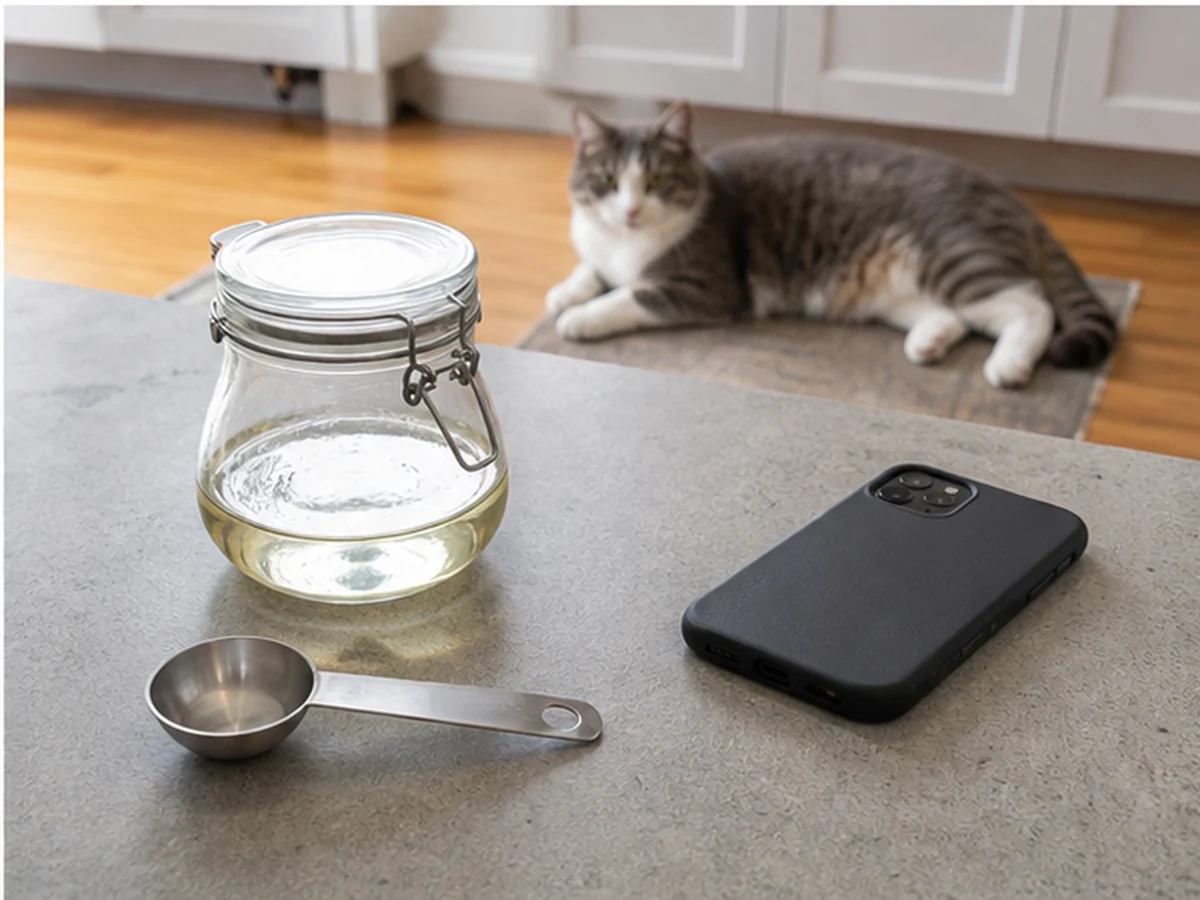
After one lick of ordinary food vinegar
- Remove access and identify the vinegar concentration.
- Check whether it was plain or part of dressing, brine, sauce, or cleaner.
- Inspect the mouth only if the cat allows it without force.
- Leave normal water available but do not syringe liquids.
- Watch for persistent drooling, vomiting, coughing, pain, appetite loss, or breathing changes.
Do not induce vomiting, and do not give baking soda to neutralize the acid. A brief grimace after a tiny taste may pass, but persistent signs, a larger amount, or an unusual formulation deserves a call.
Frequently asked questions
Can cats drink apple cider vinegar?
It should not be offered as a drink or daily supplement because benefit and dose claims are unsupported and the taste may reduce intake. A tiny accidental lick is different from intentional repeated feeding.
Is vinegar safe for cleaning around cats?
Food vinegar used with ventilation and kept off the cat is different from concentrated or fragranced cleaner. Let surfaces dry, follow the product label, and never mix vinegar with bleach.
Can vinegar kill fleas on cats?
It is not a reliable flea-control treatment and can irritate skin. Ask a veterinarian for an effective cat-specific preventive and an environmental plan.
What if vinegar splashed in my cat’s eye?
Call a veterinarian immediately for rinse instructions and evaluation, especially for concentrated cleaner. Do not add neutralizer or human eye medication.
Can vinegar treat a cat’s urinary problem?
No home vinegar remedy should delay care for straining, pain, or reduced urine. Urinary obstruction can be fatal and requires emergency treatment.
Bottom line
A kitchen-vinegar lick, salty brine, dressing, cleaning concentrate, spray, and chemical mixture are different exposures. Keep vinegar out of treatment plans, protect eyes and fur, never mix cleaners, and let the product label and the cat’s symptoms determine how quickly to call.