Can Cats Eat Chicken? Safe Cooking, Portions, Bones, and Seasoning
Yes, most healthy cats can eat a small amount of fully cooked, plain, boneless chicken. Remove the skin, bones, heavy fat, sauces, and seasoning, then treat the meat as an occasional extra rather than a homemade replacement for complete cat food.
The safest way to offer chicken
Choose fresh boneless chicken and cook it without salt, oil, butter, breading, marinade, onion, garlic, or spice rub. Poaching, baking, or roasting works well when the pan and utensils have not held seasoned food.
Use a food thermometer rather than color or texture to judge doneness. The USDA Food Safety and Inspection Service recommends cooking all poultry to a minimum internal temperature of 165°F, measured in the appropriate thickest areas.
Let the meat cool, inspect it under good light for bone fragments, and shred or dice it into pieces smaller than a pea. A neat chicken cube designed for a human fork can be surprisingly ambitious for a cat who prefers to swallow first and consider geometry later.
How much chicken can a cat have?
For a first taste, offer one tiny piece and wait until the next day before offering more. Vomiting, diarrhea, itching, or reduced appetite means chicken should come off the experimental menu until your veterinarian advises you.
If tolerated, a teaspoon of finely chopped meat is plenty for many average adult cats as an occasional treat. Your cat’s veterinarian can give a more suitable limit based on body weight, daily calories, health conditions, and the rest of the diet.
Extras should remain a small minority of daily intake. The Cornell Feline Health Center notes that treats are not complete and balanced and should be given only occasionally.
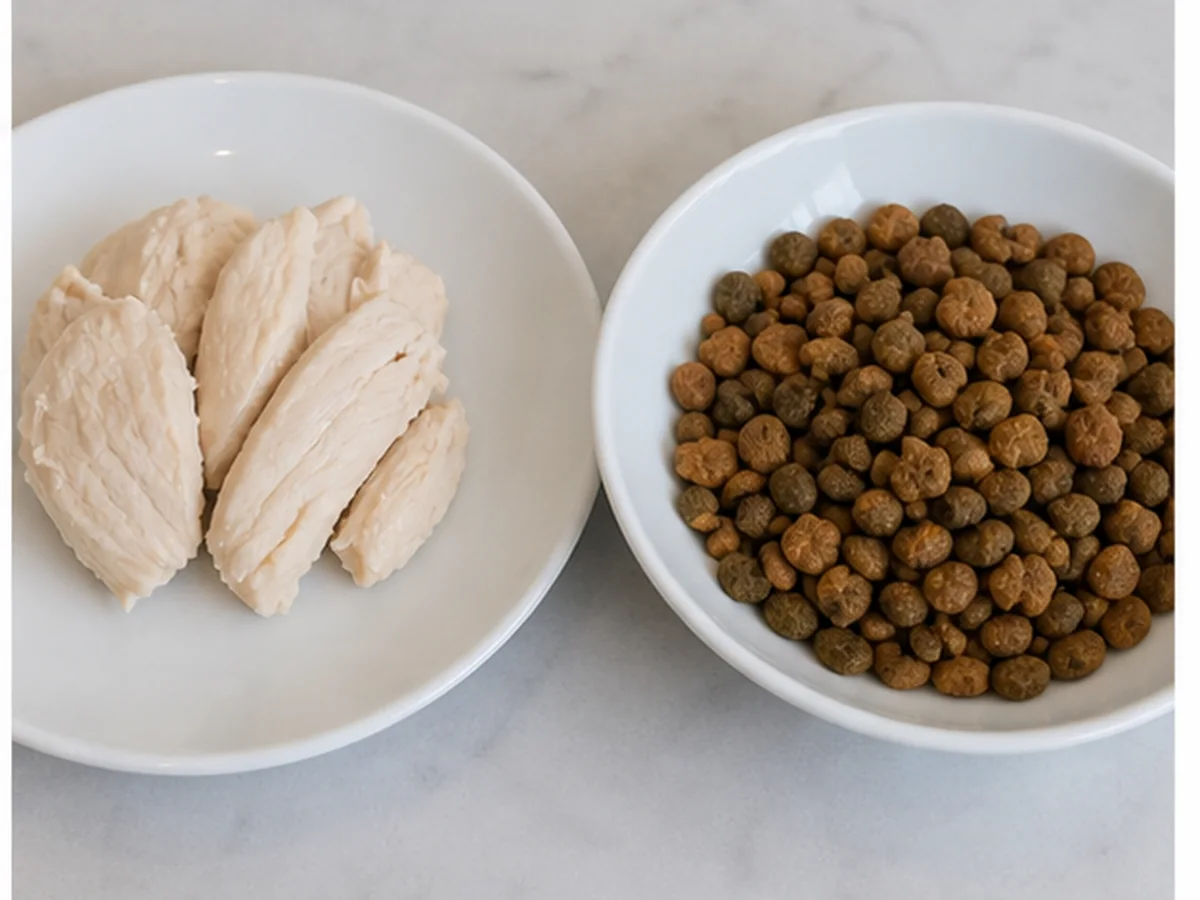
Chicken is nutritious, but chicken alone is not a diet
Cats require protein and specific animal-derived nutrients, so chicken sounds like an obvious dietary centerpiece. The catch is that plain muscle meat does not supply every nutrient in the correct amount or proportion for long-term feline health.
A chicken-only diet can be deficient or imbalanced in calcium, vitamins, fatty acids, trace minerals, and other essentials. Adding liver, bone powder, oil, or a human multivitamin by guesswork can create excesses while leaving different gaps untouched.
Commercial foods labeled complete and balanced are formulated for a stated life stage and should provide the nutritional foundation. If you want to cook your cat’s full diet, ask your veterinarian for referral to a board-certified veterinary nutritionist who can formulate and periodically reassess a precise recipe.
Raw chicken is not the more natural shortcut
Raw chicken can carry Salmonella, Campylobacter, and other disease-causing organisms even when it looks and smells fresh. Cats can become ill, shed pathogens, or spread contamination from whiskers, paws, bowls, surfaces, and feces.
The CDC does not recommend feeding raw pet food or treats to dogs and cats. It also explains that freezing, freeze-drying, and dehydration reduce some germs but do not kill all of them.
Kittens, seniors, pregnant cats, immunocompromised cats, and cats with chronic illness may suffer more serious consequences. Raw diets also increase exposure for young children, older adults, pregnant people, and anyone in the home with a weakened immune system.
If a cat stole a small bit of raw chicken, remove the rest, clean the area, and call the veterinary clinic if your cat is vulnerable or develops vomiting, diarrhea, fever, marked lethargy, or appetite loss. Our raw chicken guide for dogs offers more household hygiene context, but cats still need species-specific triage.
Never hand over chicken bones
Cooked bones can become brittle and break into sharp pieces, while raw bones can still choke, lodge, obstruct, puncture, or fracture teeth. Neither form is a safe feline chew.
If a bone was swallowed, do not induce vomiting and do not feed bread, oil, pumpkin, or extra food to push it through. Call a veterinarian promptly, and use our detailed chicken bone action guide for the signs and information to gather.
Watch for drooling, gagging, repeated swallowing, vomiting, appetite loss, abdominal pain, lethargy, or reduced stool. Breathing difficulty, collapse, severe distress, or repeated unproductive retching requires emergency care.
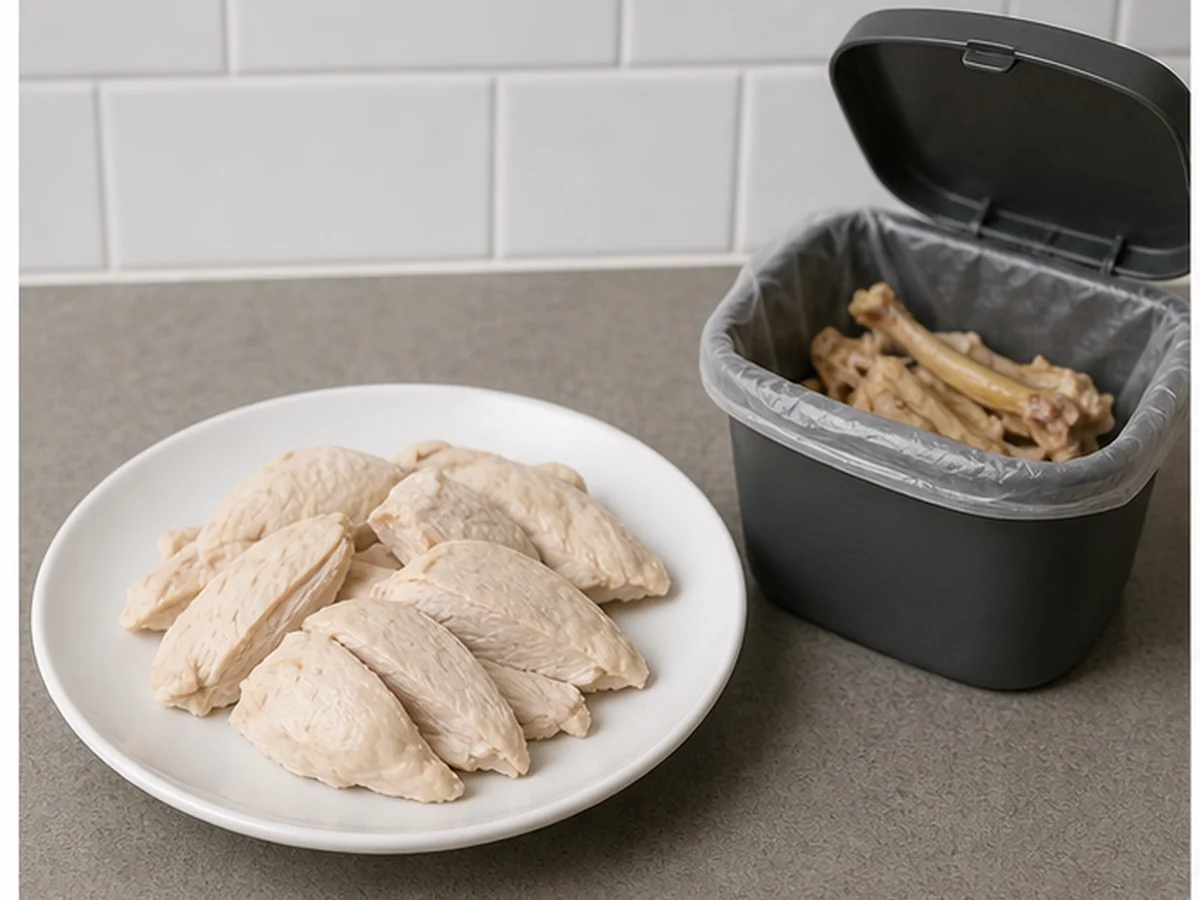
Skin, fat, cartilage, and organ meat
Chicken skin: It is fatty and usually carries the most seasoning, oil, smoke flavor, or sauce. Remove it before sharing a plain piece of meat.
Fat and drippings: Greasy pan juices can trigger vomiting or diarrhea and are easy to overconsume. Do not pour drippings over cat food to tempt a picky eater without veterinary approval.
Cartilage and gristle: Tough chunks can be difficult to chew and may be gulped. Trim them rather than assuming a soft end of a bone is harmless.
Liver and other organs: Small amounts may appear in balanced cat foods, but repeated servings of liver can unbalance nutrient intake, including vitamin A. Do not build a homemade organ-meat schedule from percentages found in a recipe without veterinary nutrition expertise.
Rotisserie, fried, smoked, and grilled chicken
Rotisserie chicken is often injected, brined, rubbed, or seasoned with onion, garlic, and substantial sodium. Meat from beneath the skin is not necessarily plain because the solution and juices can penetrate throughout.
Fried chicken adds oil, batter, salt, and seasonings, while smoked chicken may contain concentrated sodium and spice rubs. Grilled chicken can be suitable only when it was cooked completely plain on a clean surface and all charred, fatty, and bony portions are removed.
Chicken nuggets and tenders are processed mixed foods, not simply small chicken breasts. They may contain breading, sodium, onion or garlic powder, sauces, and a surprising amount of fat, as our chicken nugget ingredient guide illustrates.
Broth, soup, deli chicken, and baby food
Packaged chicken broth and soup commonly contain onion, garlic, leek, salt, yeast extract, flavor blends, or bones. A low-sodium claim compares the product with its regular version and does not certify that it is appropriate for a cat.
Deli chicken may be cured, smoked, seasoned, or high in sodium. Baby food can occasionally be a veterinary-approved short-term feeding aid, but only after checking that the exact jar contains no onion, garlic, or other unsuitable ingredient.
If you need a liquid topper, ask the veterinary team about a cat-specific product or use a little warm water with the usual wet food. Our guide to chicken broth labels shows where risky ingredients hide, while the serving decision for a cat belongs with feline guidance.
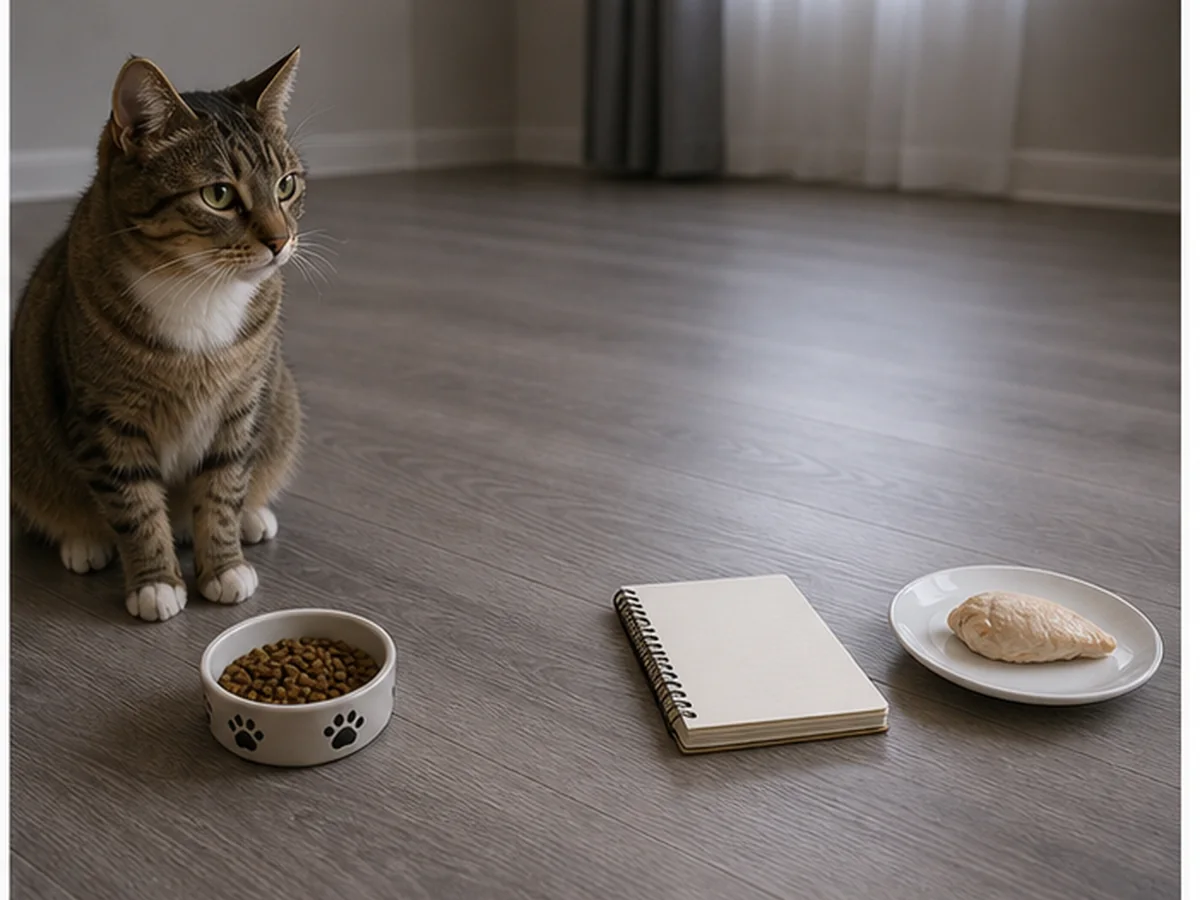
Food allergy versus an upset stomach
Chicken protein can be involved in food allergy, but a single vomit after greasy seasoned chicken does not prove an immune reaction. True adverse food reactions may cause recurring itch, skin lesions, ear trouble, vomiting, or diarrhea and require a structured veterinary workup.
Diagnosis usually relies on a strict elimination diet and controlled food challenge, not a mail-order sensitivity panel or casual ingredient rotation. During a diet trial, chicken-flavored treats, broths, supplements, and medications can invalidate the results.
If your cat has chronic symptoms, record every food, treat, flavored medicine, and stolen bite. That diary is far more useful to a veterinarian than declaring chicken guilty based on one suspicious Tuesday.
Can chicken help a sick cat eat?
Aromatic warm chicken may tempt some cats, but appetite loss in cats can become medically serious and deserves prompt attention. Do not spend days testing meats while a cat eats little or nothing.
Plain chicken is not a complete recovery diet, and a sick cat may need a prescription food with specific nutrient, fat, fiber, or mineral targets. Call the veterinarian the same day for a meaningful appetite change, especially if it accompanies vomiting, pain, jaundice, weakness, breathing changes, or dehydration.
Never force chunks into a reluctant cat’s mouth because aspiration and food aversion are real concerns. The veterinary team can address nausea, pain, hydration, diagnosis, and safe nutritional support.
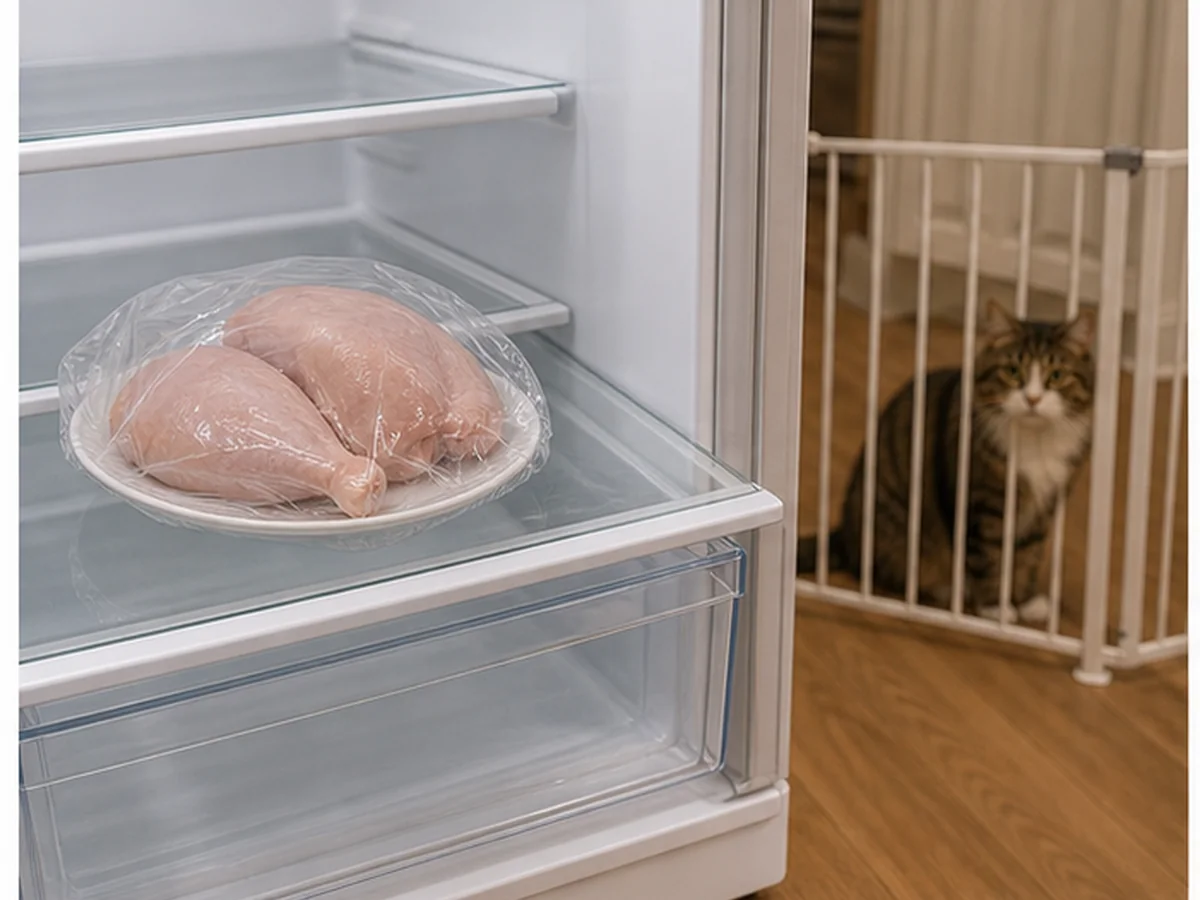
Kitchen safety protects cats and people
Keep raw poultry and its juices away from cat bowls and ready-to-eat food. Wash hands, utensils, boards, counters, and sink areas with appropriate soap and cleaning methods after handling it.
Do not wash raw chicken because splashing can spread germs around the kitchen. Cook it thoroughly, refrigerate leftovers promptly, and discard meat that has been sitting out too long or smells spoiled.
Secure absorbent meat pads, plastic wrap, foam trays, butcher string, skewers, and bones. A cat may follow the chicken scent straight to packaging that can obstruct or injure the digestive tract.
Frequently asked questions
Can cats eat chicken every day?
They can eat a complete and balanced cat food that uses chicken as an ingredient. Plain cooked chicken should not become a large daily add-on or the whole diet unless a veterinary nutritionist formulated the plan.
Can kittens eat chicken?
Weaned kittens can usually taste a tiny shred of fully cooked plain boneless meat, but growth makes balanced kitten food especially important. Ask a veterinarian before adding extras to a kitten’s meals.
Can cats eat canned chicken?
Human canned chicken may be high in sodium and packed in broth containing other ingredients. Choose plain home-cooked meat instead, or check the exact label with your veterinarian.
Is chicken breast better than thigh?
Skinless breast is generally leaner, while thigh contains more fat, but either must be plain, thoroughly cooked, boneless, and offered sparingly. The cat’s health and total diet matter more than crowning one cut the winner.
When cooking a separate feline piece, label it before seasoning the family meal and use clean utensils to prevent mix-ups. Refrigerate it in a covered container, discard spoiled leftovers, and warm only the tiny portion you plan to serve.
A food thermometer, a bone check, and an ingredient-free pan do more for safety than any special cooking trend. If your cat needs chicken often for medication or appetite support, ask the veterinary team how to count those calories and protect the diet’s balance.
Bottom line
A small amount of fully cooked, unseasoned, boneless, skinless chicken can be a reasonable occasional treat for many healthy cats. Keep raw meat, bones, skin, drippings, seasoned products, and nutritionally incomplete chicken-only diets off the menu, and involve your veterinarian when illness, allergy, or prescription nutrition changes the answer.