Can Cats Eat Clams? Plain Meat, Raw Risks, Shells, and Chowder
Cats can eat a small amount of plain fully cooked clam meat, but I would skip raw clams and never offer the shell. The plain meat can be fine. Chowder, garlic butter, salt, fried coating, and shell fragments are where the seafood story gets much less simple.
The quick clam verdict for cats
Plain fully cooked clam meat can be an occasional treat for many healthy cats. Clams provide animal protein plus iron, vitamin B12, selenium, zinc, and other nutrients.
I cook clams thoroughly, remove every shell fragment, skip seasoning, let the meat cool, and offer a tiny bite. Complete cat food should remain the nutritional foundation.
The safest version is plain cooked meat only. Chowder, fried clams, stuffed clams, garlic-butter clams, canned products, and restaurant dishes all need separate ingredient checks.
Plain cooked clam meat is the easiest version
Plain clam meat is relatively lean compared with fried or creamy preparations. One or two tiny pieces can add variety without turning the treat into a second meal.
Cats are small enough that a human appetizer portion is enormous by feline standards. I would keep the serving tiny and count it as an extra.
If a cat is on a prescription kidney, heart, gastrointestinal, allergy, urinary, or weight-management diet, I would check before adding shellfish regularly.
Raw clams add avoidable food-safety risk
Raw shellfish can carry harmful bacteria, viruses, and other pathogens. Cooking reduces risk for the cat and lowers the chance of spreading contamination around bowls, counters, hands, and utensils.
A tiny accidental raw bite does not guarantee illness, but repeated vomiting, severe diarrhea, bloody stool, fever, lethargy, dehydration, or abdominal pain deserves veterinary attention.
Kittens, seniors, pregnant cats, immunocompromised cats, and medically fragile cats deserve extra caution around raw shellfish.
Freezing does not make raw clams sterile
Frozen raw clams can still carry foodborne pathogens. Freezing helps with storage but should not be treated as a universal kill step.
If I buy frozen clam meat for a cat, I cook it according to package directions and check for added salt, sauces, garlic, onion, or seasoning.
Clam shells are a mechanical hazard
Clam shells are hard and can break into sharp pieces. They can cut the mouth, damage teeth, lodge in the throat, injure the esophagus, or damage the gastrointestinal tract.
If shell fragments were swallowed, call your veterinarian for case-specific advice. I would not induce vomiting at home because sharp shell can cause additional injury.
Gagging, drooling, repeated swallowing, regurgitation, vomiting, abdominal pain, bloody or black stool, refusal to eat, or breathing difficulty deserves urgent evaluation.
Clam chowder is not plain clams
Chowder can contain cream, butter, bacon, onion, garlic, salt, potatoes, and stock concentrates. Cats are particularly sensitive to alliums, so onion and garlic are much more concerning than the clam meat itself.
I would not pick clams out of a heavily seasoned chowder and assume the surface ingredients disappeared. The broth has already coated the seafood.
Cats with pancreatitis, obesity, kidney disease, heart disease, or sodium restrictions have especially little room for chowder.
Garlic butter is not a cat-friendly sauce
Steamed clams are often served with garlic butter, wine, or herb sauce. Enough garlic or onion can damage feline red blood cells, while butter adds a concentrated fat load.
A tiny taste is not the same as drinking the pan sauce, but a meaningful exposure deserves a recipe check. The sauce can matter more than the seafood.
Powdered garlic and onion can be concentrated even when no visible pieces remain.
Wine-steamed clams are not a cat treat
Cooking can reduce alcohol depending on time and method, but it does not guarantee every trace disappears. Cats do not benefit from wine sauce.
If a cat drinks a meaningful amount of recently prepared alcohol-containing broth, save the recipe and call with the amount and type of alcohol used.
Fried clams are richer than a cat needs
Frying adds oil, breading, salt, and seasoning. A tiny bite of inner meat may be low risk, but fried coatings can cause vomiting or diarrhea and are unnecessary for cats.
Cats with pancreatitis, obesity, or gastrointestinal disease deserve extra caution. Plain cooked seafood is the simpler option.
Stuffed clams are another multi-ingredient food
Stuffed clams can contain breadcrumbs, butter, cheese, bacon, sausage, garlic, onion, herbs, and seasoning. The shellfish is only one component.
I would assess the entire stuffing recipe rather than remove one clam and assume it is plain.
Canned clams need a sodium check
Canned clams may be packed in salty liquid or seasoned sauces. Read the label before using a spoonful as a topper.
Cats with kidney disease, heart disease, high blood pressure, or sodium restrictions deserve additional caution. Plain fresh cooked clam meat is easier to control.
If using a plain low-sodium product, drain the liquid and check carefully for shell fragments.
Smoked and marinated clams can be too salty
Smoked, pickled, or marinated clams can contain substantial sodium, oil, garlic, onion, vinegar, sugar, spices, or preservatives.
I would not use salty preserved clams as routine cat treats, especially in cats with kidney or heart disease.
Shellfish allergy or protein sensitivity is possible
Cats can react adversely to many proteins, including clams, although most first small exposures are more likely to cause gastrointestinal upset than a dramatic allergy.
Facial swelling, repeated vomiting, collapse, or breathing difficulty after clams deserves urgent veterinary care.
Clams should stay a small extra
Complete cat food provides taurine, essential fatty acids, vitamins, minerals, and amino acids in the correct balance. Clams add variety but do not replace that nutritional foundation.
A few tiny pieces are enough for a treat. A bowl of clams every day is not a complete homemade diet no matter how enthusiastically the cat votes for it.
What to do if your cat ate clams
- Identify whether the clams were plain, raw, fried, canned, smoked, stuffed, or served in sauce.
- Estimate the amount and time.
- Count missing shell fragments.
- Save the recipe, package, or restaurant ingredient information.
- Check for garlic, onion, high salt, heavy fat, alcohol, and raw shellfish exposure.
- Call promptly after shell ingestion, significant symptoms, a large raw exposure, or meaningful allium exposure.
How I would serve clams on purpose
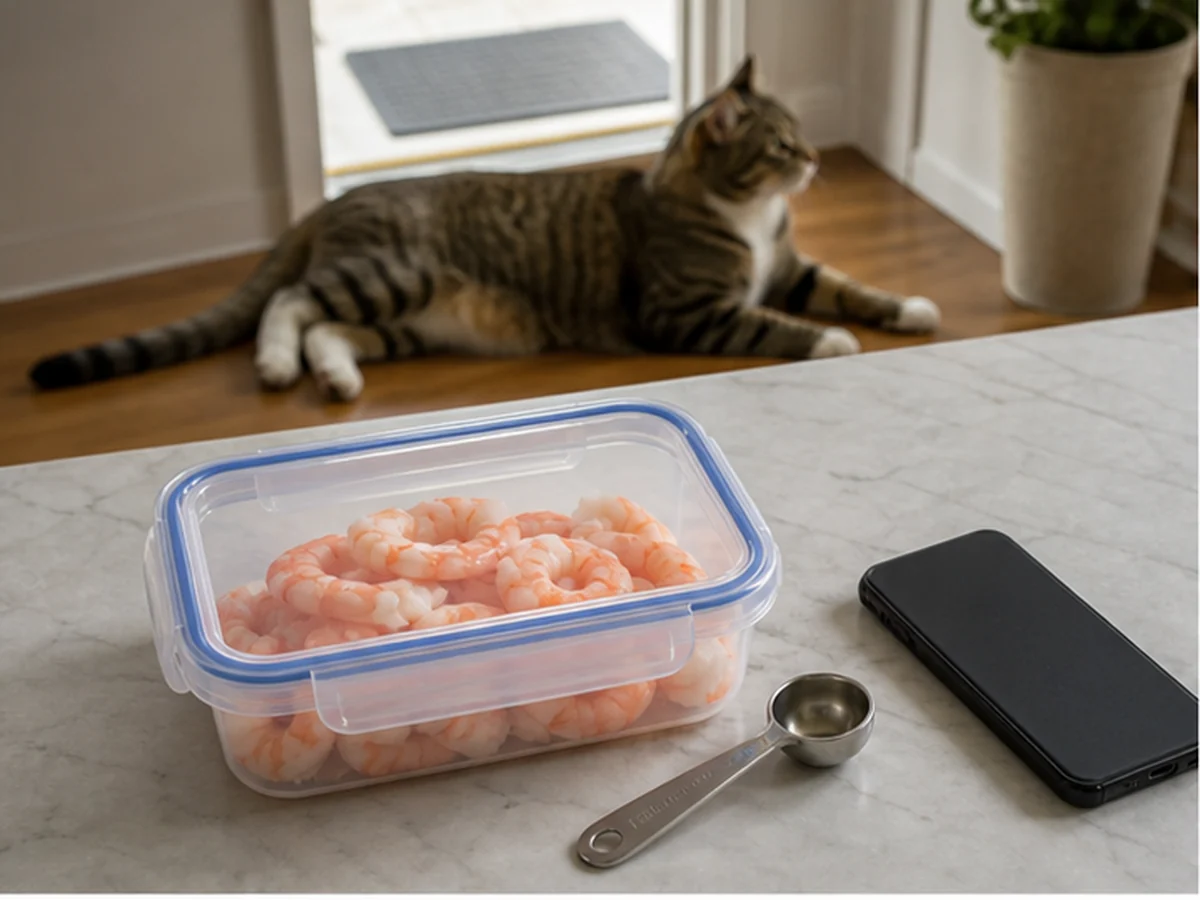
I would use plain fully cooked clam meat, remove every shell fragment, cut large pieces smaller, and skip butter, salt, garlic, onion, wine, sauce, and breading.
I would not use clam chowder, fried clams, stuffed clams, or garlic-butter restaurant clams as cat treats.
Frequently asked questions
Can cats eat raw clams?
I would avoid them because raw shellfish can carry harmful bacteria and other pathogens. Cooking thoroughly is safer.
Can cats eat clam chowder?
I would avoid it because chowder is often rich in dairy, fat, salt, onion, and garlic. Plain cooked clam meat is a better choice.
Can cats eat clam shells?
No. Shells can cut the mouth, break teeth, cause choking, or injure the gastrointestinal tract.
Can kittens eat clams?
A tiny piece of plain cooked clam meat can fit as an occasional treat, but it should not displace complete kitten food during growth.
Bottom line
Plain fully cooked clam meat can be an occasional cat treat. I would skip raw clams, remove every shell fragment, avoid chowder, garlic butter, fried, stuffed, and salty preserved preparations, and keep the serving tiny.