Can Cats Eat Imitation Crab? Surimi, Sodium, Allergens, and Labels
Imitation crab is not a good cat treat. It is a formulated surimi product, not plain crab meat, and can contain fish, starch, egg, sugar, sodium, flavoring, color, oil, preservatives, and allergens, while seasonings, raw handling, long strips, sushi, packaging, and cold storage create additional questions.
What surimi actually is
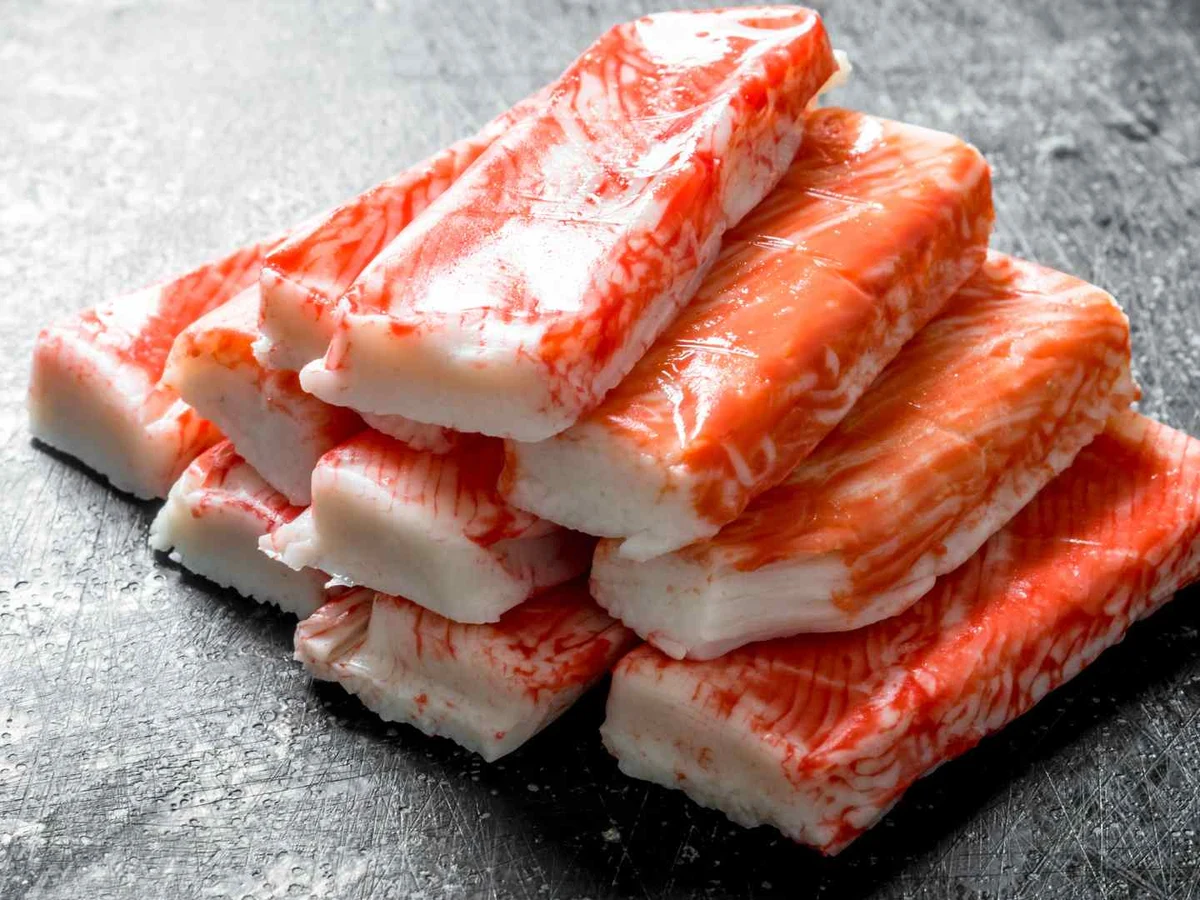
Surimi is washed, minced fish protein shaped and flavored into sticks, flakes, chunks, or seafood-style products. Alaska pollock is common, but species, binders, flavor sources, and processing vary by manufacturer and market.
The word crab may describe flavor and appearance rather than the primary animal ingredient. Some products contain real crab extract or shellfish-derived flavor, while others rely on fish and flavorings.
Read the exact package for fish species, shellfish statements, egg, wheat, soy, starch, sugar, sodium, color, preservatives, and cooking status. A red-and-white stick from a restaurant cannot be assessed accurately by color alone.
Why being made from fish does not make it cat food
Cats require animal-derived nutrients, but they also require a complete profile in correct amounts and ratios. Surimi is engineered for human taste, texture, price, and shelf life rather than feline nutrition.
The FDA explains the complete-and-balanced claim on pet foods. Imitation crab carries no feline nutritional-adequacy statement and should not replace fish-based cat food.
The cat salmon guide provides context on cooked plain fish, bones, raw risk, and portions. Surimi remains a multi-ingredient product rather than a plain flake from a fillet.
A label tour from fish to color
| Component | Why manufacturers use it | Feline consideration |
|---|---|---|
| Fish protein | Forms the surimi base | Species and allergy history matter. |
| Starch | Binds water and creates texture | Adds carbohydrate and may include wheat or other sources. |
| Egg white | Improves gel structure | An allergen and extra protein during diet trials. |
| Sugar | Flavor and texture | Unnecessary calories. |
| Salt and sodium ingredients | Flavor and processing | Can be substantial for a small cat. |
| Flavoring | Creates crab-like taste | May include real shellfish or proprietary blends. |
| Color | Mimics shell color | Color does not identify ingredients or safety. |
| Preservatives or phosphates | Shelf life and texture | Medical diets may need ingredient review. |
Sodium is often the practical nutrition problem
Surimi can receive sodium from salt, flavoring, phosphates, broth, seasoning, and sauces. The human serving size on the package may represent several sticks, which is far more than a feline taste.
One tiny shred is unlikely to cause salt poisoning in a healthy cat, but a package raid, concentrated seasoning, limited water, or sodium-sensitive illness deserves advice. Marked thirst, vomiting, weakness, tremors, poor coordination, seizures, or abnormal behavior is concerning.
Provide normal access to fresh water without forcing it. Cats with kidney, cardiac, urinary, or blood-pressure disease may have individualized sodium limits.
Sugar, starch, and fillers are not automatically toxins
Starch and sugar make imitation crab nutritionally less useful to cats without turning one tiny piece into a poisoning event. A larger unfamiliar serving can cause vomiting, diarrhea, gas, abdominal discomfort, or appetite change.
Do not use the word filler as a substitute for risk assessment. Ingredient source, amount, allergy history, medical diet, and how the finished product was handled offer more useful information.
Diabetic or overweight cats should not receive surimi as a protein shortcut. Its carbohydrate and calorie contribution belongs within a veterinarian-directed feeding plan.
Allergens can include more than shellfish
Fish, crab or other crustacean flavor, egg, wheat, and soy may appear in the same product. A cat on an elimination diet should not receive imitation crab unless the supervising veterinarian approves every ingredient.
Recurring itch, ear inflammation, skin lesions, vomiting, or diarrhea may suggest an adverse food response but do not diagnose a specific allergen. Controlled elimination and challenge under veterinary guidance is more reliable than repeated home tastes.
Facial swelling, wheezing, breathing difficulty, collapse, or rapidly worsening signs after eating is an emergency. Do not give human antihistamines without approval of the product and dose.

Long strips can be swallowed badly
Crab sticks tear into elastic strands that can bunch in the mouth or be gulped lengthwise. A whole stick is an oversized, springy object for a cat.
If a veterinarian permits an accidental-taste follow-up, cut one tiny crosswise flake rather than pulling a long ribbon. There is no reason to establish a routine serving.
Gagging, repeated swallowing, drooling, regurgitation, coughing, or mouth-pawing after a stick disappears needs prompt attention. Airway distress, abnormal gum color, or collapse requires emergency care.
Is imitation crab raw? Read the preparation statement
Many commercial crab sticks are fully cooked during manufacture, but products labeled ready to cook, frozen seafood mix, or restaurant-prepared require confirmation. “Previously frozen” and pink color do not prove ready-to-eat status.
Raw fish ingredients and cross-contamination can expose pets and people to pathogens. The CDC recommends avoiding raw pet food and washing hands around raw animal ingredients because germs can spread even when a pet looks healthy.
Use separate utensils for raw and ready-to-eat seafood, clean counters, and prevent cats from licking thawing liquid. The cat raw-fish guide gives more detailed household hygiene and symptom context.
Sushi rolls are not plain surimi
California rolls and seafood rolls add rice, vinegar, sugar, salt, seaweed, avocado, cucumber, sesame, mayonnaise, soy sauce, wasabi, pickled ginger, and sometimes spicy sauce. The surimi is only one layer.
Soy sauce adds sodium, spicy mayonnaise can irritate, and wasabi-like products may cause mouth and stomach discomfort. Bamboo mats, plastic grass, chopsticks, packets, and toothpicks also belong in the exposure inventory.
Our cat rice guide separates a plain cooked grain from seasoned sushi rice and mixed dishes. Picking surimi out of a roll cannot remove sauce and rice stuck to it.
Seafood salad, dips, and casseroles
Imitation-crab salad may include mayonnaise, onion, garlic, celery, lemon, salt, mustard, herbs, and hot sauce. Casseroles add dairy, cheese, butter, breadcrumbs, and seasoning.
Onion and garlic can damage feline red blood cells even after cooking. The Merck Veterinary Manual notes feline susceptibility and delayed anemia, so call after a known Allium recipe.
A rich mayo-heavy serving can cause vomiting or diarrhea without proving pancreatitis. Persistent abdominal pain, repeated vomiting, weakness, pale gums, or dark urine needs veterinary evaluation.
Cold storage and spoilage
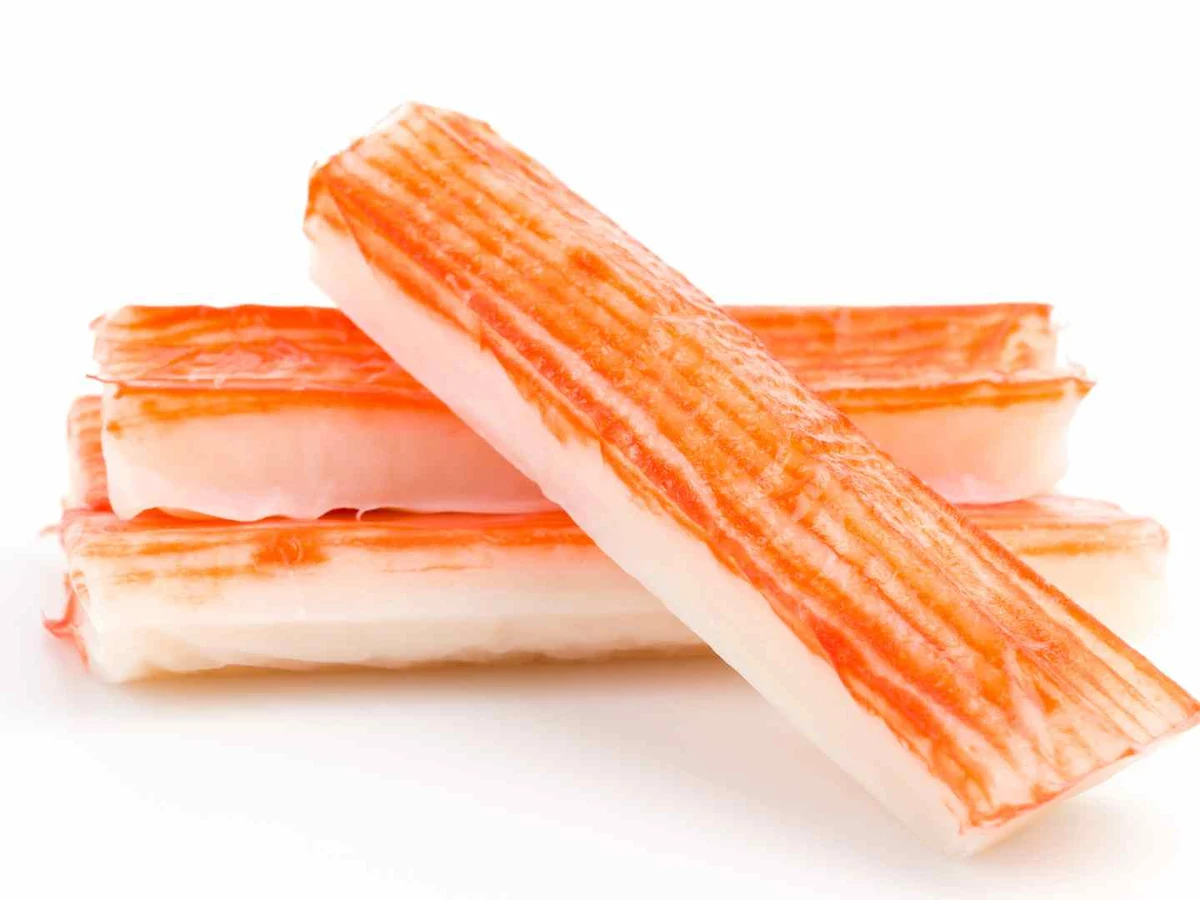
Imitation crab is perishable once thawed or opened. Follow the package instructions, keep it refrigerated, and discard product left warm for an uncertain period.
The FDA recommends keeping refrigerators at or below 40°F. Reject sour, ammonia-like, fermented, slimy, moldy, or leaking seafood products.
Cooking again does not guarantee that mishandled seafood becomes safe, because contamination and some microbial products may persist. A cat’s interest in the smell is not a freshness test.
Plastic sleeves and freshness packets
Individually wrapped sticks, vacuum film, trays, absorbent pads, clips, labels, and outer bags retain fish odor. A cat may swallow packaging while licking residue.
Repeated vomiting, appetite loss, abdominal pain, reduced stool, straining, or lethargy after plastic disappears needs veterinary assessment. Save an identical packet or wrapper when possible.
Never pull strip material from the mouth or rectum and never induce vomiting after a rigid tray edge or clip may be involved.
A practical raid report
- Name the product: brand, fish species, cooking status, ingredients, allergens, sodium, date, lot, and storage history.
- Measure the amount: distinguish one shred from several sticks or an entire seafood salad.
- List companions: report onion, garlic, sauces, rice, avocado, mayonnaise, hot pepper, and alcohol.
- Count objects: locate film, tray, pad, packet, chopstick, skewer, and plastic garnish.
- Call promptly: seek advice for raw product, Alliums, a large amount, packaging, allergy signs, spoilage, or a medically fragile cat.
Cats who need stricter boundaries
Kittens have small airways and need balanced growth food, while seniors may have dental or swallowing trouble with elastic strips. Cats with kidney, cardiac, urinary, diabetic, or gastrointestinal disease may also need tighter sodium, calorie, or ingredient control.
A cat with known fish, shellfish, egg, wheat, or soy allergy should not receive a label experiment. Keep surimi out of reach during elimination trials and tell guests that seafood appearance does not make sharing harmless.
If the cat refuses regular food but begs for imitation crab, call the veterinarian rather than using processed seafood as an appetite plan. Cats can develop serious complications from inadequate intake, especially when overweight.
Shopping and kitchen habits that help
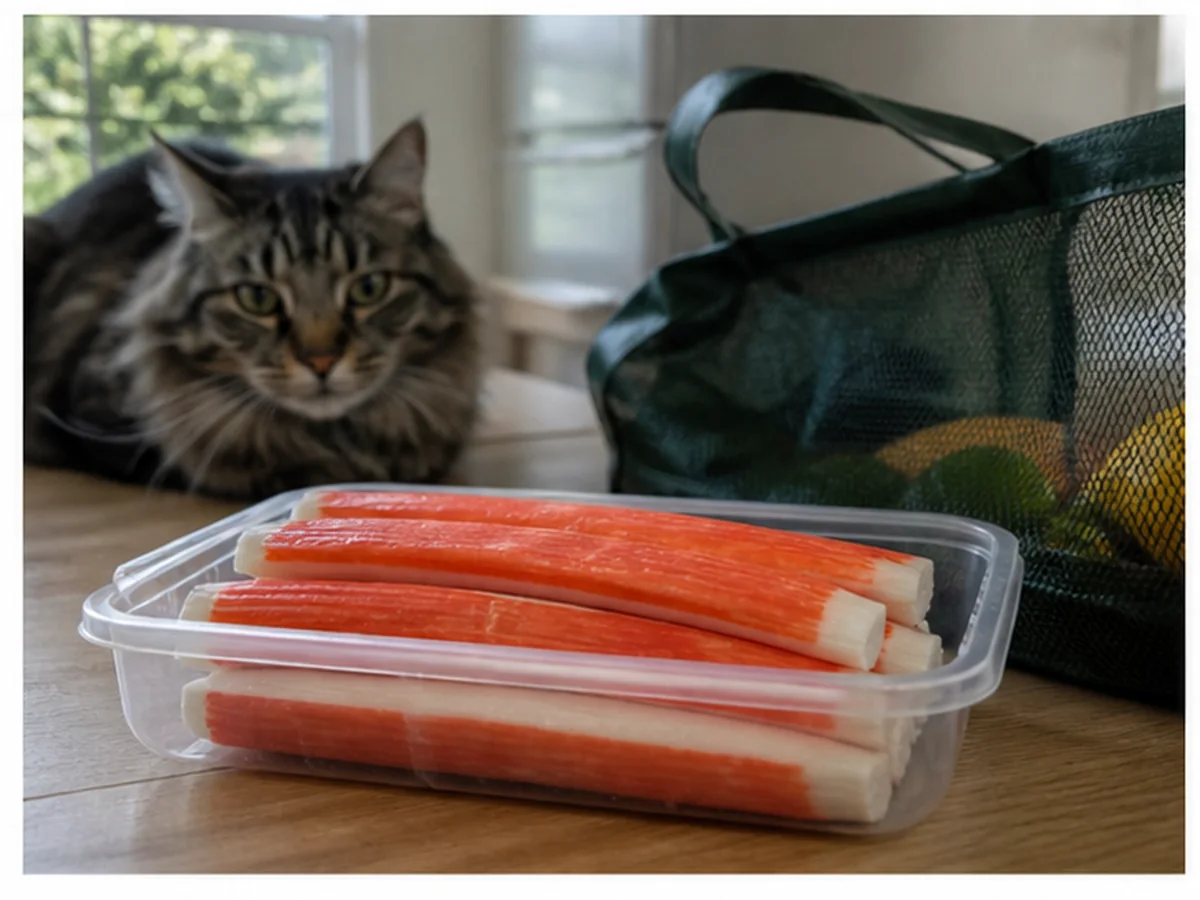
Store opened sticks in a sealed refrigerator container and move wrappers immediately to covered trash. Inspect the floor after pulling sticks apart because thin pieces of plastic and fish can both become nearly invisible.
Use a dedicated clean utensil rather than letting the cat lick the package. That protects household food from saliva and prevents a whiskered face from meeting a sharp tray edge.
Frequently asked questions
Is imitation crab toxic to cats?
It is not a single classic toxin, but it is a salty, processed, multi-ingredient human food and poor treat. One tiny piece may be low risk after label review, while larger or flavored exposures need context.
Can cats eat cooked crab sticks?
Cooking resolves only the raw-food question. Sodium, starch, egg, allergens, flavoring, strip texture, and medical-diet compatibility remain.
Does imitation crab contain real crab?
Some products use crab or shellfish-derived flavor and others do not. Read the ingredient and allergen statements on the exact package.
Can kittens eat surimi?
Kittens need complete growth food and have small airways, so processed seafood sticks offer no advantage. Use kitten food or a veterinarian-approved kitten treat.
Bottom line
Imitation crab is clever food engineering, not a feline seafood upgrade. Read beyond the red stripe, respect sodium and allergens, verify cooking and storage, cut no long strips for cats, and secure every fish-scented wrapper before it becomes the main emergency.