Can Cats Eat Nutmeg? Baked Crumbs, Powder, Oil, and Toxic Signs
Keep nutmeg away from cats. A tiny baked crumb containing a trace of spice is different from licking loose powder, chewing a whole seed, or contacting concentrated oil or extract, and no dependable feline toxic dose supports home calculations, so identify the exact form and call after meaningful exposure.
The form matters before the amount makes sense
| Nutmeg form | Typical exposure | Why it changes triage |
|---|---|---|
| Trace in baked food | Cookie, pie, cake, sauce | Low concentration, but other ingredients may dominate. |
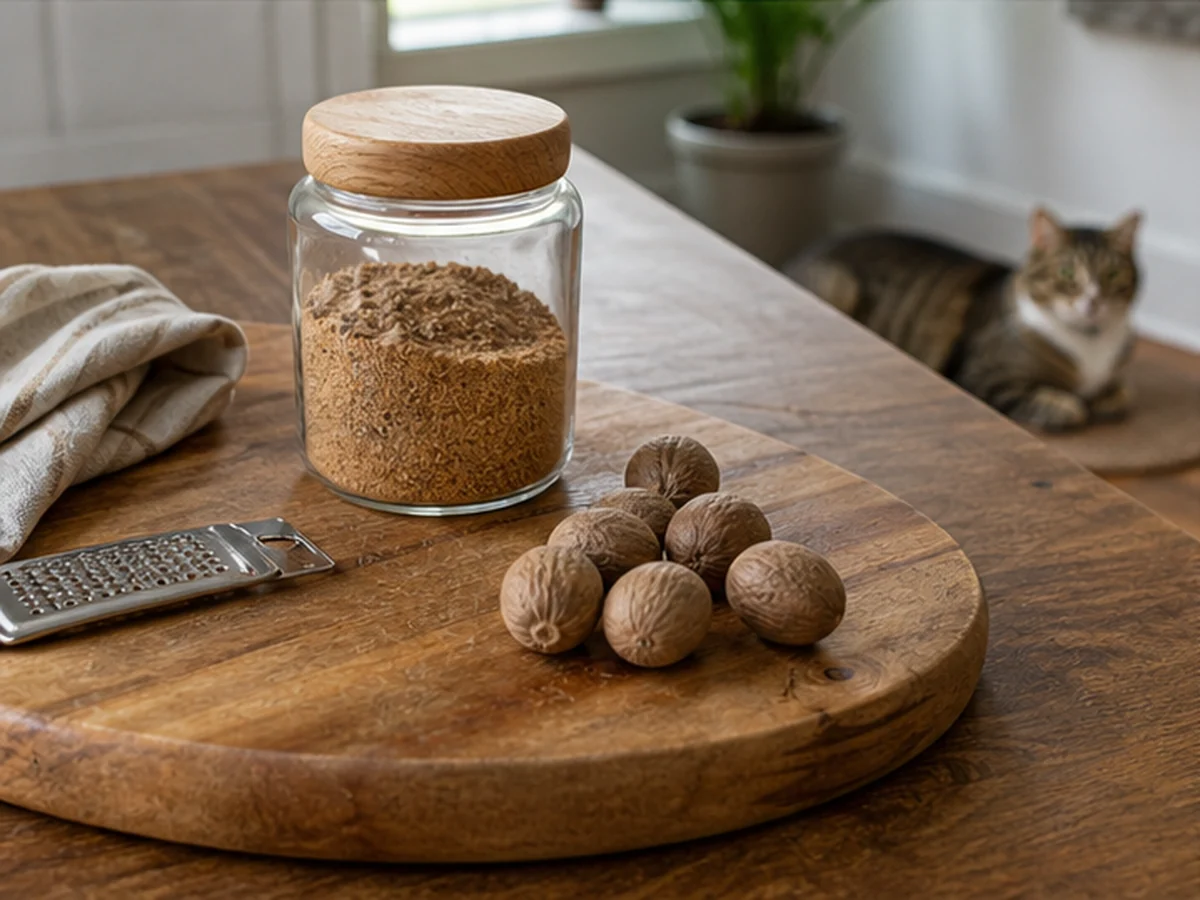
| Loose ground powder | Spice spill or jar raid | More concentrated ingestion plus eye and airway dust. |
| Whole seed | Chewed pantry spice | Large concentrated piece and foreign-object texture. |
| Essential oil | Aromatherapy, flavor concentrate, spill | Very high concentration and coat exposure. |
| Extract or tincture | Supplement or bakery bottle | Carrier alcohol and unknown strength may matter. |
| Spice blend | Pumpkin spice, curry, holiday mix | Cocoa, caffeine, salt, Alliums, or other spices can appear. |
Why nutmeg can affect the nervous system
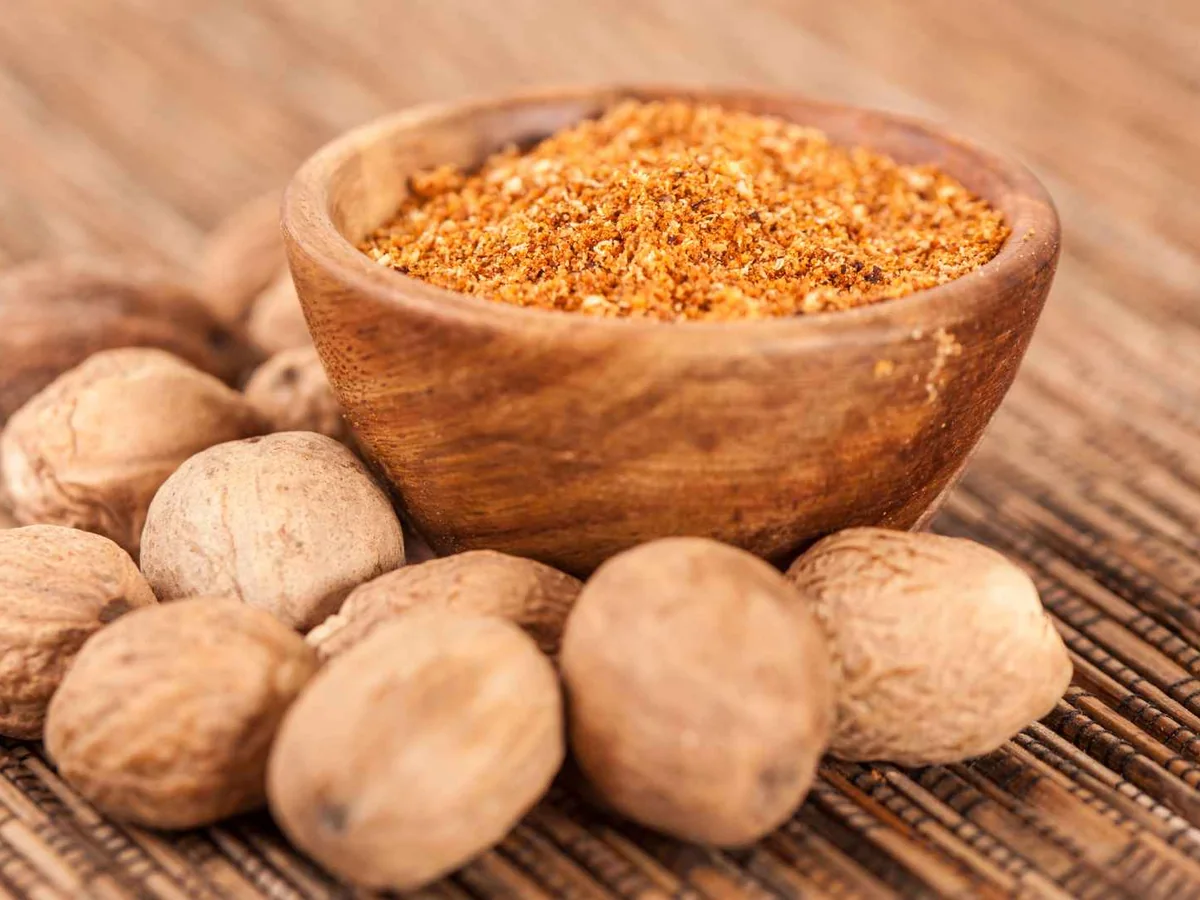
Nutmeg contains myristicin and other aromatic compounds that can produce neurologic and cardiovascular effects at sufficiently high exposure. Product concentration, route, amount, and species influence the response.
Published human and animal information does not create a reliable cat threshold for a household spice jar. Avoid confident claims that one precise teaspoon or body-weight dose predicts feline poisoning.
Possible concerning signs include vomiting, disorientation, agitation, unusual sleepiness, weakness, tremors, seizures, abnormal heart rate, dry mouth, or collapse. Call promptly after concentrated exposure rather than waiting for a full list to appear.
The Merck Veterinary Manual discusses food hazards in animals and supports product-specific veterinary assessment instead of pantry dose experiments.
One bakery crumb is usually the lower-concern scene
A small crumb from a fully baked product containing a faint amount of nutmeg may cause no illness in a healthy adult cat. That reassurance applies to the spice dose only after the full recipe and wrapper are reviewed.
Pumpkin pie can add sugar, dairy, fat, eggs, salt, other spices, raw batter, foil, and whipped topping. Eggnog adds dairy, sugar, alcohol, and sometimes caffeine or chocolate accompaniments.
The cat cinnamon guide helps separate a neighboring spice from nutmeg, since pumpkin-spice blends contain multiple ingredients. One safe-sounding name on the front is not a complete formula.
A large amount of rich dessert may cause vomiting or diarrhea without proving nutmeg toxicity. Report amount, recipe, time, packaging, and all symptoms.
Loose powder can irritate before it is swallowed
Ground nutmeg becomes airborne when a jar drops or a cat lands beside a measuring spoon. Dust can irritate the eyes, nose, throat, and lungs, particularly in an asthmatic cat.
Move the cat to clean air, avoid sweeping powder into a cloud, and prevent grooming from a heavily coated face or coat. Do not blow toward the nose or force water into the mouth.
Squinting, persistent coughing, wheezing, open-mouth breathing, repeated vomiting, or marked distress warrants urgent advice. Save the spice container and any blend label.
Whole nutmeg is a concentrated object
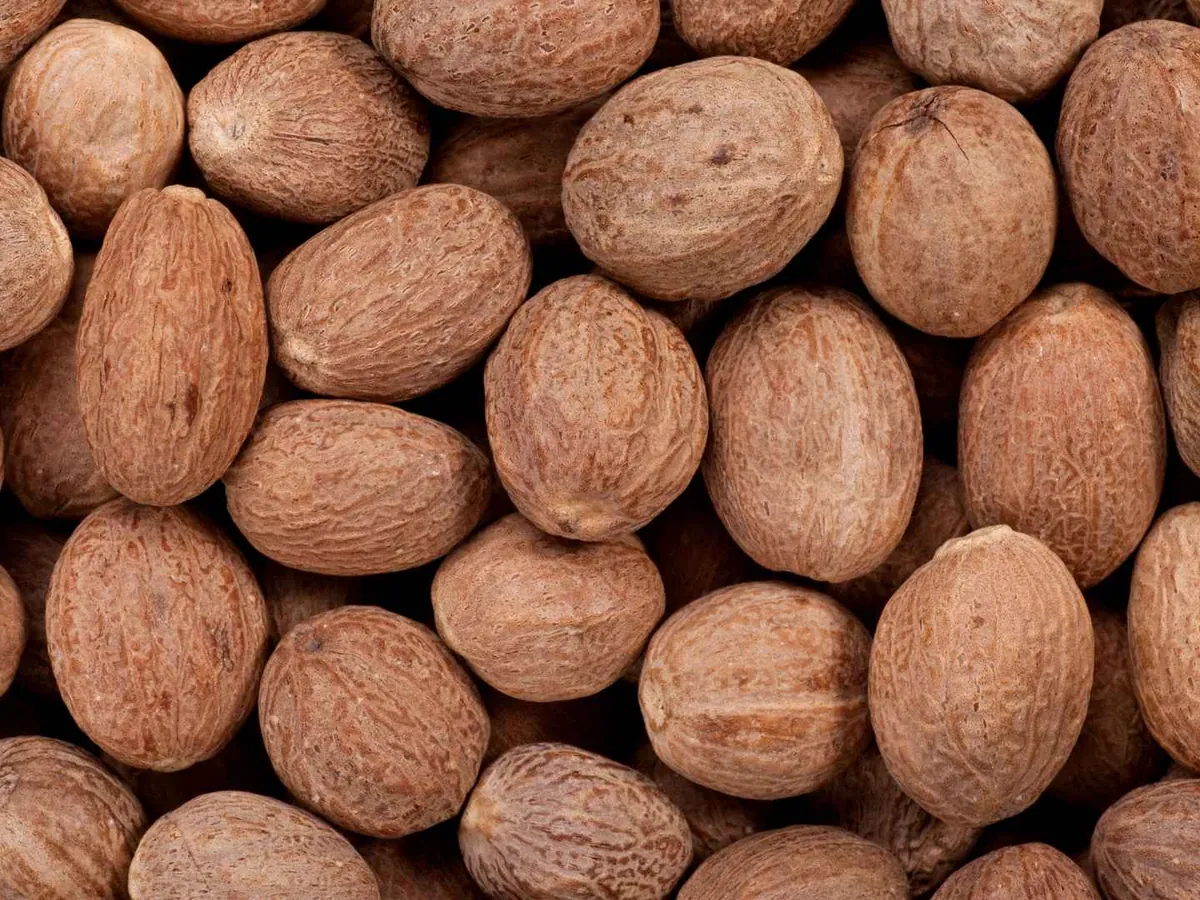
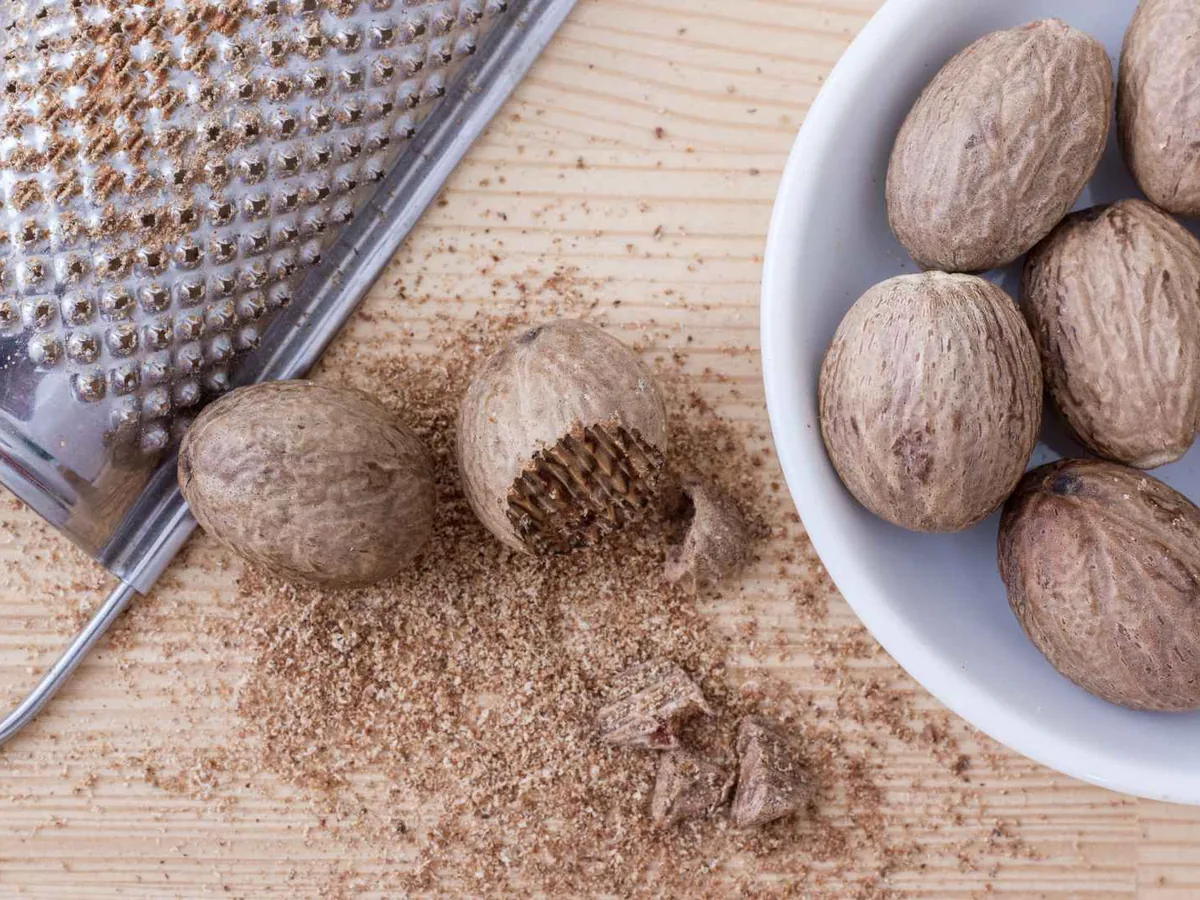
A whole nutmeg seed is hard enough to damage teeth and large enough to choke or lodge. Chewing also releases concentrated spice compounds from a single compact object.
Gagging, drooling, repeated swallowing, regurgitation, blood in the mouth, vomiting, or appetite loss after a seed disappears needs assessment. Do not induce vomiting or push food behind it.
Bring an identical seed or photograph beside a ruler. The clinic needs approximate dimensions and evidence of bite marks.
Essential oil is not culinary seasoning
Nutmeg essential oil is a concentrated volatile extract. Direct ingestion, skin application, diffuser liquid, and fur contamination deserve prompt professional guidance even before obvious signs.
The ASPCA advises caution with concentrated essential oils around pets, particularly after swallowing or direct application. Cats groom oil from fur and can inhale droplets.
Never use nutmeg oil for pain, fleas, fragrance, dental care, anxiety, or appetite. Prevent grooming, preserve the bottle, and do not apply another oil or solvent during cleanup.
Extracts, supplements, and carrier ingredients
A nutmeg extract may use alcohol, glycerin, or oil and may be combined with herbs or vitamins. Human supplement directions do not establish feline safety or therapeutic benefit.
The FDA explains that dietary supplements are regulated as food rather than approved as drugs before sale. A capsule label is not a cat prescription.
Do not convert an adult serving by body weight or use nutmeg as a digestive, sleep, pain, or mood remedy. Call with the complete Supplement Facts panel after access.
Holiday foods bring recurring companion hazards
Nutmeg commonly appears in pie, custard, cookies, bread pudding, French toast, sweet potatoes, cider, eggnog, and creamy sauces. Each can introduce dairy, sugar, alcohol, chocolate, raisins, nuts, raw dough, or hot liquid.
Use the cat bread guide when the recipe includes dough, because a finished crumb and fermenting raw yeast mixture pose different problems. Spoiled loaves introduce an additional mold question.
Coffee drinks dusted with nutmeg add caffeine, while cocktails add ethanol. Tremors, abnormal heart rhythm, seizures, profound weakness, or collapse after a mixed drink needs emergency care.
The dessert name cannot answer the safety question
A “nutmeg cookie” may contain only a pinch spread through an entire batch, while a custard can carry a heavier dusting on every serving. Ask for the actual recipe, number of servings, and amount left on the plate instead of estimating from the food name.
Commercial bakery labels can change, and café staff may use seasonal toppings that never appear on a menu board. Photograph the ingredient panel or ask the maker to preserve it for the veterinary call.
Chocolate chips, cocoa glaze, espresso, raisins, and sugar-free frosting each create a separate decision. The cat chocolate guide explains why cocoa percentage and product weight matter when a mixed dessert disappears.
Spice blends are not predictable from color
Pumpkin pie spice can include cinnamon, ginger, cloves, allspice, mace, and nutmeg. Curry and savory blends may add onion, garlic, chili, salt, mustard, or pepper.
Allium exposure may injure a cat’s red blood cells whether the onion or garlic was fresh, heated, dried, or ground. Preserve the blend label and call even when nutmeg appears to be the main concern.
Mace comes from a different part of the same plant as nutmeg and should not be assumed identical in concentration. Report it by name when present.
Packaging and spice-rack hazards
Glass jars can shatter, while plastic caps, shaker inserts, foil seals, desiccants, and measuring spoons can be swallowed. Restrict paw traffic around broken glass.
Repeated vomiting, abdominal pain, appetite loss, reduced stool, or lethargy after packaging disappears calls for veterinary evaluation. Never induce vomiting after sharp material may be involved.
Store spices in a latched cupboard instead of a magnetic tin or open rack above a landing surface. Prevention beats identifying brown powder from paw prints.
Cleaning a spill without spreading it
Confine the cat before picking up glass or dry spice, then wipe hard surfaces with a damp disposable cloth after the bulk powder is collected. Vacuuming or vigorous brushing can launch fine particles toward eyes and airways.
If powder settled on paws, keep the cat from licking until a veterinary professional advises how to remove it. A small amount on one dry paw is not equivalent to a coat soaked with essential oil.
For eye contact, do not add soap, vinegar, baking soda, or another kitchen chemical. Persistent squinting, redness, tearing, rubbing, or cloudiness deserves prompt examination.
What monitoring at home actually means
When a veterinarian advises observation after a trivial baked crumb, keep the cat indoors and note appetite, walking, behavior, vomiting, urination, and resting comfort. Monitoring is an active plan, not permission to ignore a worsening cat.
Write down the advised observation window and callback triggers because neurologic changes can be subtle at first. A cat that seems unusually vacant, wobbly, restless, or difficult to wake should be reassessed.
A fact-focused call checklist
- Form: baked trace, loose powder, whole seed, oil, extract, capsule, blend, drink, or spoiled food.
- Amount: estimate maximum missing by container weight, recipe, serving count, and spill location.
- Companions: report alcohol, caffeine, chocolate, raisins, Alliums, other spices, dairy, and sweeteners.
- Route: swallowed, inhaled, in the eye, on fur, or exposed through diffuser liquid.
- Objects: count glass, lids, packets, wrappers, spoons, and bottle droppers.
Do not induce vomiting, force water, give milk, or administer a home sedative. Breathing difficulty, collapse, seizures, repeated retching, or profound neurologic change requires emergency care.
Cats with less margin
Kittens, seniors, pregnant cats, and cats with liver, kidney, heart, respiratory, neurologic, or digestive disease should not be used to test spice tolerance. Prescription diets also need strict ingredient control.
If a cat refuses food after exposure, do not mask the problem with richer desserts. Persistent poor intake warrants timely assessment.
Frequently asked questions
Is a little nutmeg in baked food toxic to cats?
A trace in one tiny fully baked crumb may be low risk, but the recipe and amount matter. Call after larger servings, loose powder, whole seeds, oil, extracts, or symptoms.
How much nutmeg is toxic to a cat?
A dependable feline toxic dose is not established for home use. Identify the form and concentration and obtain professional advice rather than applying human or dog numbers.
What if nutmeg powder got on my cat?
Move to clean air, prevent grooming, and call for cleaning advice if coverage is substantial. Eye pain, coughing, wheezing, or breathing effort needs prompt care.
Can nutmeg calm a cat?
No safe, proven feline dose supports that use. Anxiety or sleep changes deserve veterinary and behavior guidance rather than a neuroactive pantry spice.
Bottom line
Nutmeg moves from minor recipe detail to serious concern as concentration rises from crumb to powder, seed, oil, and extract. Keep the dose language honest, inventory the whole holiday recipe, and call with the actual product instead of relying on folklore.