Can Cats Eat Persimmons? Ripe Flesh, Seeds, Skin, and Prepared Fruit
A thumbnail-size taste of ripe, seedless persimmon flesh is unlikely to poison a healthy cat, but persimmon is not a useful feline snack. Seeds, a large mouthful, tough skin, dried fruit, sweetened products, and an unripe fruit each change the practical risk, so first work out what disappeared from the counter.
The kitchen clue that matters most
A soft orange smear beside a licked spoon is one story; a missing seed or a chewed produce bag is another. Persimmons vary in size, seed content, ripeness, and preparation, which makes the object and the recipe more informative than the word persimmon alone.
| What your cat reached | Main concern | Sensible next move |
| One lick of soft, ripe flesh | Sugar, fiber, possible mild stomach upset | Remove it and observe |
| Seed, stem, calyx, or a large skin strip | Choking or digestive obstruction | Call a veterinary clinic promptly |
| Firm, unripe fruit | Astringency and gastrointestinal irritation | Ask for advice if more than a nibble was eaten |
| Dried persimmon or fruit leather | Concentrated sugar, sticky texture, extra ingredients | Read the package and estimate the missing amount |
| Cake, pudding, salad, salsa, or smoothie | The whole recipe, not just the fruit | Check every ingredient before deciding |
| Wrapper, skewer, pit bag, or oxygen absorber | Foreign-object injury | Treat the packaging as its own exposure |
What is actually known about cats and persimmons
There is no strong feline evidence showing that a small piece of ripe persimmon flesh is inherently toxic. That modest statement is more accurate than calling the fruit either a health food or a poison, because published cat-specific feeding and dose data are sparse.
Human reports connect persimmons, especially substantial amounts, with hard plant-fiber masses called phytobezoars, but those reports do not establish that a tiny feline taste will do the same. A recent human persimmon phytobezoar case report is useful context for evidence restraint, not a feline prediction or dose rule.
Ripe flesh is the lowest-concern form
If someone insists on offering a taste, use washed, fully ripe, soft flesh with every seed, leaf, stem, and tough piece removed. Keep the portion smaller than the cat’s front paw pad, and do not repeat it if vomiting, diarrhea, gas, or appetite loss follows.
Cats are obligate carnivores, so colorful fruit does not fill a nutritional gap that a complete cat food leaves open. The FDA explains what a complete and balanced pet food claim means, which is a better foundation for daily feeding than rotating human produce.
A ripe fruit can still be a poor match for a particular cat
Skip persimmon for cats with diabetes, a weight-loss plan, chronic intestinal disease, swallowing trouble, or a prescription diet unless their veterinarian approves it. A kitten, frail senior, or very small cat also has less room for a chewy chunk or a disruptive extra.
Even a healthy adult may react badly to a sudden fiber-rich bite, and individual tolerance cannot be predicted from another cat’s experience. If your cat already has diarrhea or refuses normal food, adding fruit turns a simple problem into a muddier one.
Seeds, leaves, and the leafy cap do not belong in the bowl
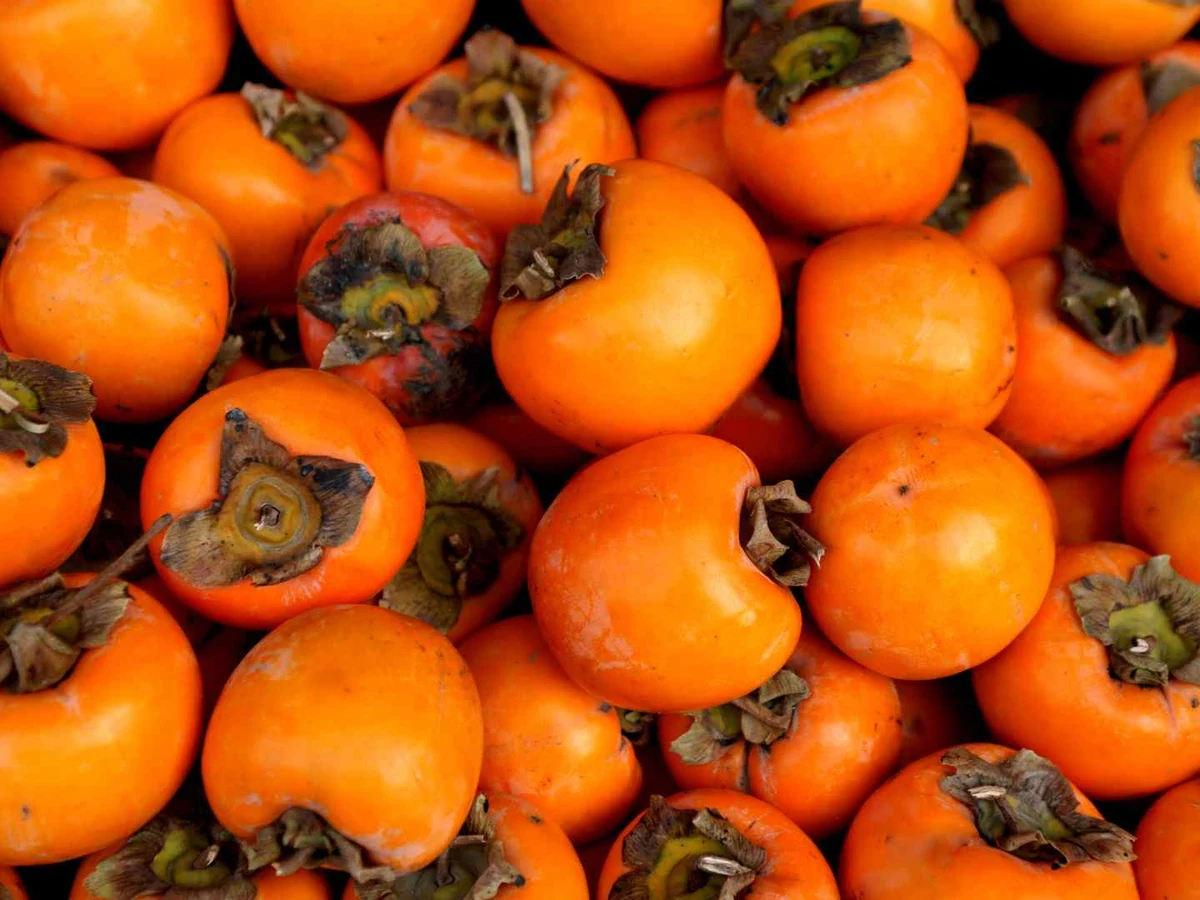
Persimmon seeds are smooth enough to slide around the mouth yet large enough to become a choking or intestinal foreign-body concern, particularly in a small cat. Do not rely on stomach acid to dissolve one, and do not try to make a cat vomit at home.
The leathery calyx, stem, leaves, and garden cuttings offer no benefit and create tougher material to chew and swallow. If a seed or nonfruit plant part is missing, call with the cat’s weight, the estimated number, the time, and any signs rather than waiting for certainty.
Skin and ripeness change the texture
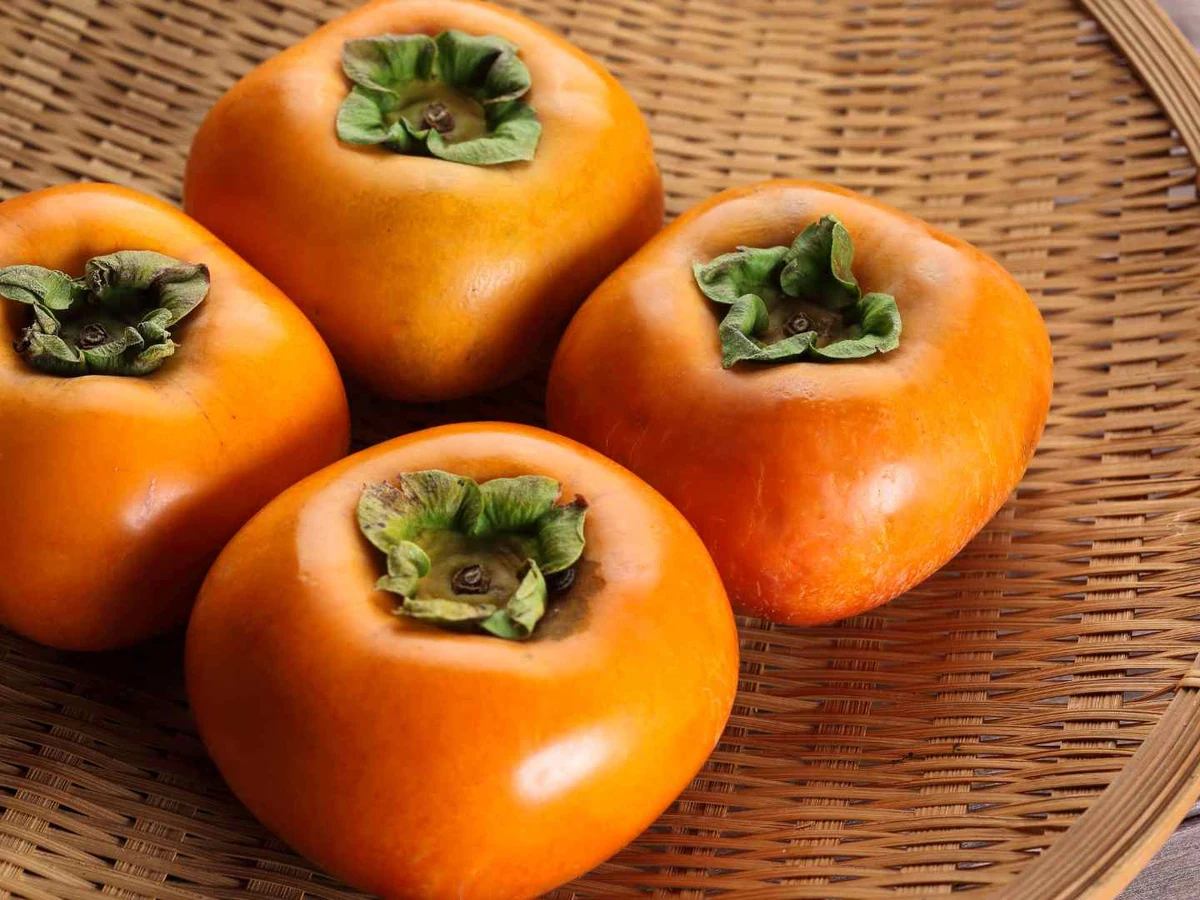
Washed persimmon skin is edible for people, but a wide strip can fold into a slippery wad in a cat’s mouth. Peeling removes that avoidable texture problem and also makes it easier to see hidden seeds or spoiled areas.
Unripe persimmons can be remarkably astringent, leaving the mouth dry and puckered because of tannins. A cat that bites one may drool, paw at the mouth, or refuse the next bite, but persistent drooling also warrants a check for a stuck fragment or another irritant.
Dried persimmon is not merely a smaller fresh slice
Drying removes water and produces a denser, chewier, sweeter piece by weight. A strip can stick to teeth, be gulped as a plug, or deliver far more fruit than its size suggests, so dried persimmon is best kept in the human snack drawer.
Check labels for added sugar, syrup, spices, chocolate, or mixed dried fruits before judging a stolen piece. If the bag contains raisins or grapes, contact a veterinarian or animal poison service rather than extrapolating from the persimmon itself.
Dessert recipes require a second investigation
Persimmon bread, cookies, pudding, jam, and ice cream may bring butter, cream, salt, alcohol, chocolate, raisins, or sugar substitutes into the picture. Save the recipe or photograph the ingredient panel because the veterinarian needs the actual formula, not the product’s front label.
A lick of plain purée is different from batter that contains raw egg or flour, and it is different again from a dessert sweetened with an unfamiliar product. For a broader way to sort mixtures, the site’s guide to fruit for cats keeps portion and recipe hazards separate.
Wash first, then cut on a clear board
Rinse fresh fruit under running water before peeling or slicing, and discard bruised or moldy portions. The FDA’s produce-cleaning advice recommends running water rather than soap, detergent, or commercial produce wash.
Cutting on an uncluttered board helps you count seeds before a curious paw redistributes them. Put the knife, stem, seed pile, and produce sticker away immediately, since an adhesive label can be more attractive to a bored cat than the fruit.
When a swallowed piece becomes urgent
Seek urgent care for repeated unproductive retching, breathing difficulty, collapse, a swollen or painful abdomen, repeated vomiting, severe lethargy, or inability to keep water down. Those signs are not a cue to offer oil, bread, milk, peroxide, or another home remedy.
A possible obstruction may begin quietly, then show as vomiting, reduced appetite, hiding, straining, or fewer stools. A cat that swallowed a seed or large tough piece deserves veterinary guidance even while acting normal, because early decisions can differ from decisions made after symptoms start.
A calm home check after a tiny flesh taste
- Take away the fruit and any loose seeds, stems, stickers, knives, or packaging.
- Look at the remaining fruit so you can estimate whether the cat licked it or removed a piece.
- Photograph the variety label and ingredient panel if the persimmon was dried or prepared.
- Offer the cat’s usual water and regular food, without forcing either.
- Watch appetite, energy, vomiting, stool, and litter-box use over the period your veterinary team recommends.
Call sooner if the amount is unknown, the fruit contained seeds, the cat has a relevant medical condition, or anything about the behavior feels wrong. A precise description such as “one soft cube, no skin or seed” gets a clearer answer than “some fruit.”
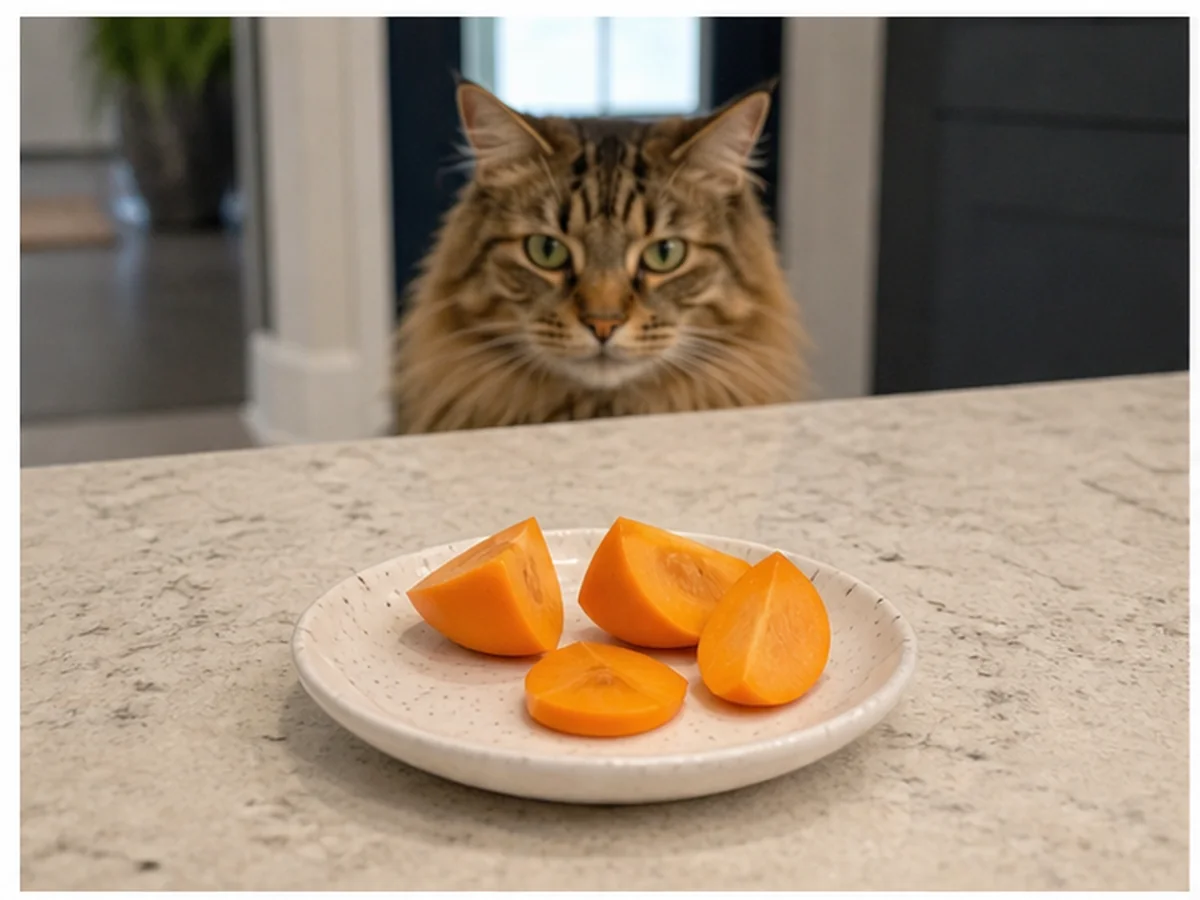
Better ways to share the counter moment
A piece of the cat’s complete wet food, a measured commercial cat treat, or a few kibbles reserved from the daily ration is more species-appropriate. For a fruit-curious cat, scent and attention may be the real prize, so a lick of moisture from a clean fingertip can end the negotiation.
If your cat already enjoys soft orange foods, compare the different evidence and serving rules in the guides to peaches and mango. Similar color does not make fruits nutritionally or physically interchangeable.
Frozen, canned, and fermented fruit need fresh questions
A frozen persimmon cube can be hard enough to challenge teeth or lodge in the throat, so thawing changes the physical risk but does not make a serving necessary. Canned fruit may sit in heavy syrup, artificial sweetener, juice, or a mixed-fruit blend, and the discarded lid can be sharp.
Overripe fruit that smells alcoholic, fizzy purée, homemade wine, and fermented persimmon vinegar are not equivalent to fresh flesh. Alcohol exposure, concentrated acidity, bottle caps, glass, and recipe additions deserve a prompt call based on the actual product.
Fruit cups may also contain cherries with pits, grapes, plastic film, or a tiny fork, while baby-food pouches add caps and ingredient blends. Put the full product beside the phone rather than reporting only the orange ingredient on the front.
Frozen purée made for a smoothie may include yogurt, protein powder, caffeine-containing additions, or supplements that never appeared in the original fruit. If the container is homemade, ask the person who prepared it to write the formula down while memory and measuring spoons are still available.
Frequently asked questions
Can cats eat Fuyu persimmons?
A minute piece of ripe, washed, peeled, seedless Fuyu flesh is unlikely to be toxic, but it is still an optional extra with sugar and fiber. Firm texture makes careful cutting especially important.
Can cats eat Hachiya persimmons?
Only fully ripe Hachiya flesh should even be considered, because an unripe fruit is intensely astringent and unpleasant. Its jelly-soft stage still needs seed, skin, stem, and calyx removal.
Can persimmon help a constipated cat?
Do not use persimmon as a constipation remedy without veterinary direction. Constipation can involve dehydration, pain, medication effects, obstruction, or chronic disease, and adding fruit may delay the assessment the cat needs.
What if my cat ate one persimmon seed?
Call your veterinarian promptly for case-specific advice, even if the cat seems comfortable. Report the seed size, when it went missing, the cat’s weight, and any gagging, vomiting, appetite change, or abdominal discomfort.
Bottom line
Ripe, peeled, seedless persimmon flesh is a low-priority treat, not a dietary need. A tiny taste may pass uneventfully, while seeds, large skin pieces, unripe fruit, prepared products, and packaging call for a more careful response.