Can Cats Eat Sourdough Bread? Starter, Raw Dough, Baked Loaves, and Inclusions
A tiny crumb of fully baked, cooled, plain sourdough bread is unlikely to harm most healthy cats, but raw sourdough dough is an urgent veterinary exposure. Fermenting dough can expand and produce ethanol in the stomach, while finished loaves may contain garlic, onion, raisins, seeds, cheese, mold, salt, hard crust, and packaging.
Find the loaf’s place in the fermentation timeline
Starter, discard, mixed dough, proofing loaf, par-baked bread, and fully baked slice do not share one risk. The useful question is not whether the dough tastes sour; it is whether active yeast and uncooked flour remain and whether the mass can keep fermenting.
| Sourdough form | Main response |
| Active starter | Call promptly; fermenting mixture and raw flour |
| Raw proofing dough | Urgent veterinary call for expansion and ethanol risk |
| Discard in raw batter | Raw flour plus recipe ingredients |
| Fully baked plain crumb | Low concern, nutritionally unnecessary |
| Flavored or fruit loaf | Ingredient-led assessment |
| Moldy or packaged bread | Spoilage or foreign-object assessment |
Raw proofing dough is the hard stop
Warm stomach conditions can support yeast activity, dough expansion, and ethanol production. The Merck Veterinary Manual’s bread-dough review describes abdominal distention, unproductive retching, lethargy, disorientation, poor coordination, weakness, low body temperature, seizures, coma, and other severe effects.
Call a veterinarian or emergency clinic immediately after credible raw sourdough ingestion, even if the cat looks normal. Report starter activity, dough weight, ingredients, proofing time, temperature, cat’s weight, and timing.
Do not perform bakery treatment at home
Do not induce vomiting, feed a bulky meal, massage the abdomen, or pour cold water into the cat. Veterinary professionals decide decontamination and supportive care based on neurologic status, dough consistency, timing, expansion, ethanol effects, and examination.
Transport promptly when directed and keep the remaining dough for measurement. Unproductive retching, swollen abdomen, weakness, wobbliness, unusual sleepiness, collapse, or seizures are emergency signs, not a reason to finish the call later.
Starter is alive enough to need respect
A mature starter contains flour, water, yeasts, and bacteria, while feeding produces fresh gas and fermentation activity. Hydration and vigor vary widely, so one spoon of thin discard cannot be assumed equivalent to one spoon of recently fed, vigorously rising starter.
Keep jars closed but vented according to safe baking practice, away from cats and ledges. Glass jars, elastic covers, rubber bands, clips, spatulas, and temperature probes can become part of the incident.
Raw flour adds a separate food-safety question
Most flour is raw, and the CDC warns that uncooked flour and dough can carry harmful germs. A sour smell, long fermentation, or organic label does not prove all organisms have been eliminated.
Clean hands, counters, bowls, and tools after flour handling and keep raw dough away from pet dishes. Report vomiting, diarrhea, feverish behavior, lethargy, or appetite loss, particularly in young or immunocompromised cats.
A finished plain loaf is mostly an optional starch
Complete baking stops the live dough problem and creates bread, so one cooled plain crumb is generally a dietary issue rather than a poison emergency. The bread still offers little that a cat needs and can displace protein-rich complete food when shared regularly.
The FDA’s nutritional adequacy guidance explains how staple cat food declares its role. Fermentation does not turn a human loaf into complete feline nutrition.
Hard crust can be a poor dental surprise
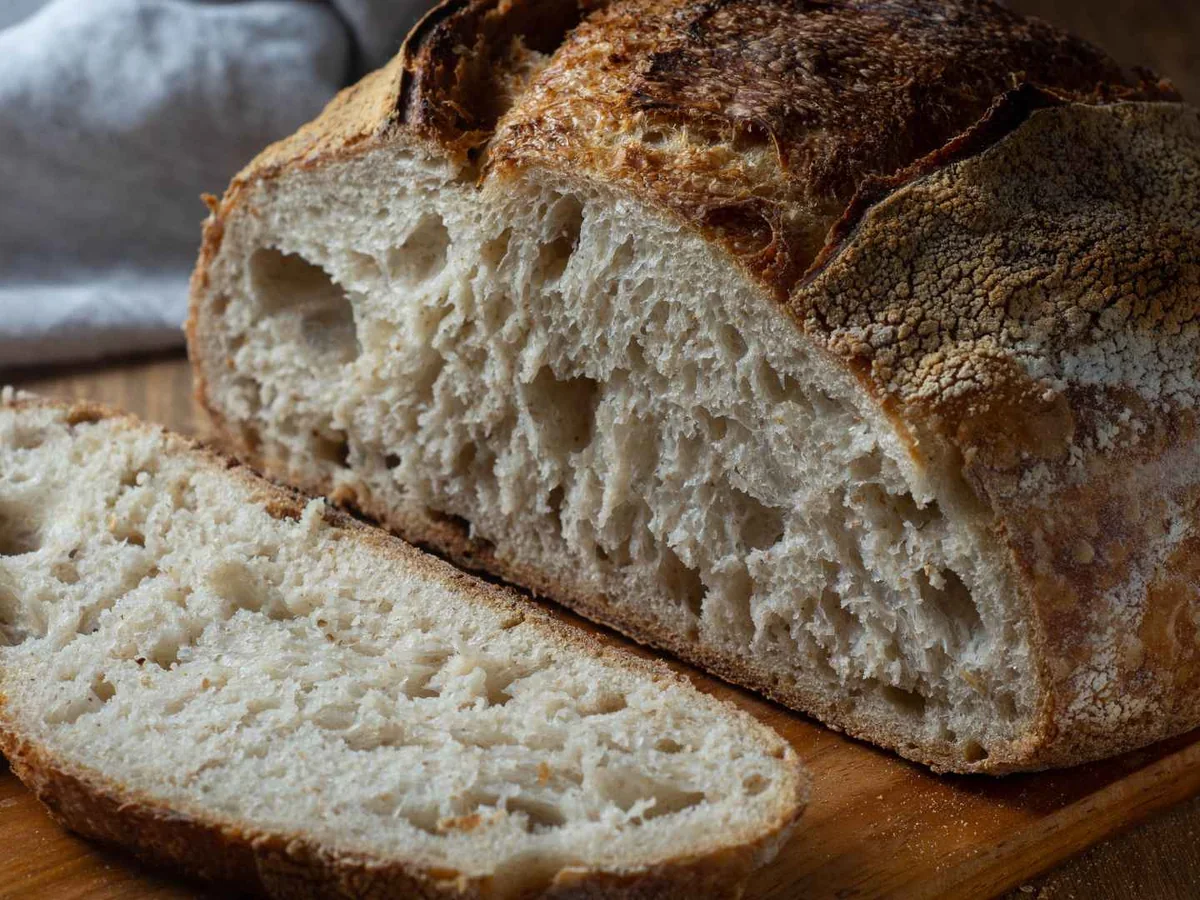
Artisan sourdough crust may be thick, sharp, and difficult to break, especially for kittens, seniors, or cats with resorptive lesions, missing teeth, or oral pain. A dry heel can fracture into a wide plug or scrape sore gums.
Offer no crust as a dental chew. Gagging, drooling, mouth pawing, bleeding, repeated swallowing, or food refusal warrants advice.
Salt varies from bakery to bakery
Salt controls flavor and fermentation in bread, and specialty loaves may add salted butter, cheese, olives, cured meat, or coarse crystals. One crumb is not salt poisoning, but a large loaf raid or very salty inclusion matters, particularly without water access.
Call for marked thirst, repeated vomiting, weakness, poor coordination, tremors, seizures, or a substantial unknown amount. Do not force water or use salt to induce vomiting.
Garlic and onion can be baked all the way through
Garlic sourdough, onion loaves, everything seasoning, focaccia-style breads, soup-dip loaves, and savory inclusions may contain Allium pieces or powders. Cooking does not make garlic or onion safe for cats.
Save the bakery label and call promptly for a meaningful or uncertain Allium exposure. The site’s garlic bread guide covers delayed anemia signs and practical ingredient reconstruction.
Raisin and grape loaves need feline uncertainty stated clearly
Raisin-walnut sourdough and fruit loaves can contain genuine Vitis ingredients. Severe grape and raisin kidney injury is well established in dogs, while feline evidence is sparse, so do not transfer a canine dose or declare cats immune.
Call with fruit type, number, loaf weight, amount, time, and cat’s condition. Nuts, sugar, spices, and hard fruit stems can add separate concerns.
Seeds and nuts change both texture and formula
Multiseed loaves may include sesame, sunflower, flax, pumpkin, poppy, or whole grains, while walnut and olive loaves contain larger inclusions. A tiny seed-studded crumb may pass uneventfully, but whole nuts, stale fat, or a dense seeded crust are poor cat treats.
Cats on elimination diets should avoid unapproved grain, seed, nut, egg, or dairy ingredients. The physical loaf label matters more than the bakery’s general allergen board.
Discard becomes muffins, pancakes, crackers, and more
Sourdough discard recipes may add raw egg, milk, butter, oil, sugar, chocolate, raisins, cheese, onion, garlic, or baking mixes. Raw discard batter keeps the flour question, while a fully cooked product inherits every addition.
Identify the final recipe instead of applying bread advice to a brownie or pancake. The site’s pancake guide helps with batter and topping variants.
Moldy bread should not be trimmed for pets
Sourdough acidity does not guarantee mold immunity, and soft porous bread can be affected beyond the visible spot. Discard moldy, ropey, oddly colored, wet, or off-smelling loaves in a secured bin.
Tremors, poor coordination, seizures, repeated vomiting, or abnormal behavior after moldy food needs emergency care. Do not toast or microwave a questionable slice to rescue it.
Bread bags and proofing tools need an inventory
Flexible bread bags can seal around a pet’s face, while twist ties, clips, parchment, razor blades, lame covers, banneton liners, string, and plastic dough scrapers can be swallowed. A flour-coated tool may attract investigation after the bread is gone.
FDA warns about food-bag suffocation. Remove a bag immediately, call after head entrapment, and seek advice for missing sharp or string-like material.
The sourdough incident card
- Identify starter, discard, raw dough, par-baked loaf, or finished bread.
- Save the recipe and measure missing dough, bread, inclusions, and package pieces.
- Record fermentation stage, temperature, time, weight, conditions, and signs.
- Call immediately for active dough and promptly for starter, Alliums, raisins, mold, or objects.
- Follow veterinary instructions without home vomiting, forced water, or improvised feeding.
For a fully baked plain crumb, the clinic may recommend ordinary observation. Serve the normal diet and track appetite, vomiting, stool, energy, swallowing, and abdominal comfort.
Par-baked and underbaked loaves sit in the uncomfortable middle
A browned surface does not prove the center reached a finished crumb, especially in a very wet loaf or frozen bake-at-home product. A gummy raw center may retain active yeast and uncooked flour, so report internal texture, package directions, bake time, and amount rather than calling the whole loaf cooked.
If the cat reached a proofing basket after a short oven start, use the raw-dough response and call promptly. Do not rebake the remaining evidence before photographing or weighing it.
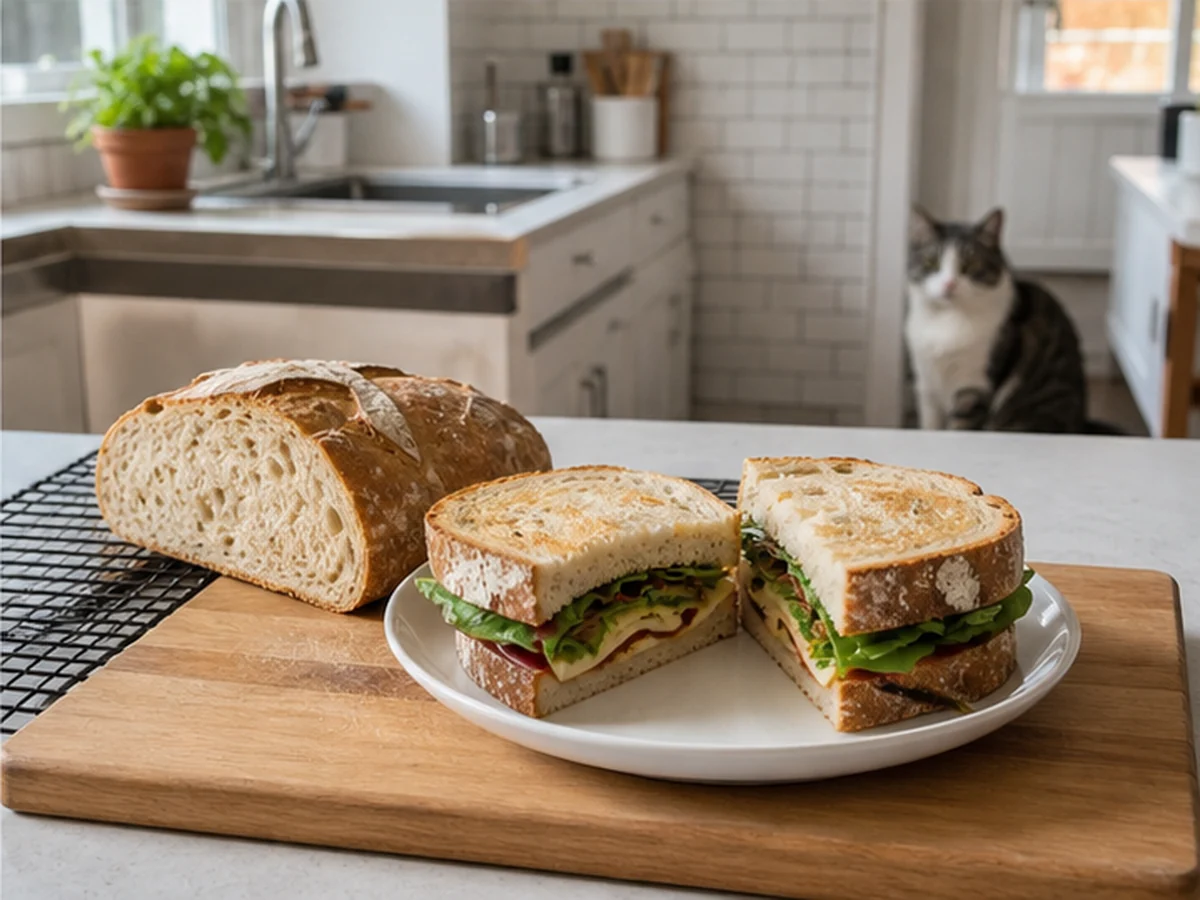
Toast and sandwiches inherit what touches them
Toasting makes bread drier and harder without improving feline nutrition, while butter, avocado, garlic spread, nut butter, jam, deli meat, cheese, tuna salad, and toothpicks add their own hazards. A dropped crust from a sandwich is rarely still plain.
Use the site’s bread guide for other finished loaves, but inventory the exact topping and package here. Burned toast and hot melted filling can also injure oral tissue.
Home fermentation attracts non-food equipment
Proofing boxes, warming mats, glass weights, thermometers, razor blades, cloth covers, and elastic bands can remain accessible long after mixing. Electrical cords dusted with flour or butter may also attract chewing.
Unplug equipment before cleanup, count blades and covers, and keep the cat out until flour and dough are removed from paw level. Burns, electrical injury, glass, or a missing sharp tool should be reported as its own emergency.
Bakery loaves can also arrive warm in paper nested inside plastic, trapping condensation that shortens storage quality. Let human bread cool safely out of feline reach, then store it as the bakery directs rather than leaving a fragrant bag open on the counter.
If several pets accessed a dough bowl, estimate each animal separately from paw residue, flour tracks, vomiting, and location. Do not divide the missing weight evenly or assume the pet nearest the bowl ate the most active dough.
Frequently asked questions
Can cats eat baked sourdough bread?
A tiny cooled crumb of fully baked, plain bread is generally low concern, but it is nutritionally unnecessary. Avoid hard crust, seasoning, inclusions, and routine sharing.
What if my cat ate raw sourdough dough?
Call an emergency veterinary clinic immediately because dough can expand and produce ethanol in the stomach. Do not wait for bloating or wobbliness and do not attempt home vomiting.
Is sourdough starter safe for cats?
No deliberate amount is appropriate because starter contains raw flour and active fermentation varies with feeding stage. Save the jar and call with the amount and timing.
Can cats eat sourdough discard crackers?
Only a tiny fully baked plain crumb would be low concern, and the recipe may add salt, oil, cheese, garlic, onion, seeds, or other ingredients. Read the finished formula.
Bottom line
Fully baked plain sourdough is a low-value occasional crumb, while active starter and raw dough require prompt or emergency veterinary guidance. Fermentation stage, inclusions, mold, crust, storage, and bakery tools decide the real response.