Can Dogs Eat Garlic Bread? Allium Toxicity, Dough, and Packaging
Dogs should not be fed garlic bread because cooking does not make garlic safe, and the actual dose is hard to judge from a slice. Butter, oil, cheese, salt, onion, raw yeast dough, mold, foil, and bags add separate risks, while red blood cell damage from garlic can be delayed.
Call with the recipe, not a guess
- A crumb with uncertain garlic: save the recipe and call a veterinarian or animal poison service for proportionate advice.
- One or more slices, garlic-heavy spread, or garlic powder: call promptly even if the dog looks normal.
- Raw garlic-bread dough: treat garlic, expanding yeast dough, and ethanol production as urgent concerns.
- Weakness, pale gums, fast breathing, dark urine, collapse, repeated vomiting, or abdominal pain: seek urgent care.
- Foil, plastic bag, tie, tray, or skewer missing: report the foreign-object exposure.
Record the recipe or brand, garlic form, spread amount, slice count, loaf weight, time, dog weight, symptoms, medical history, recent Allium exposures, and missing packaging. “A piece” can mean a dry corner or a thick restaurant slice soaked with garlic butter.
Garlic remains an Allium after cooking
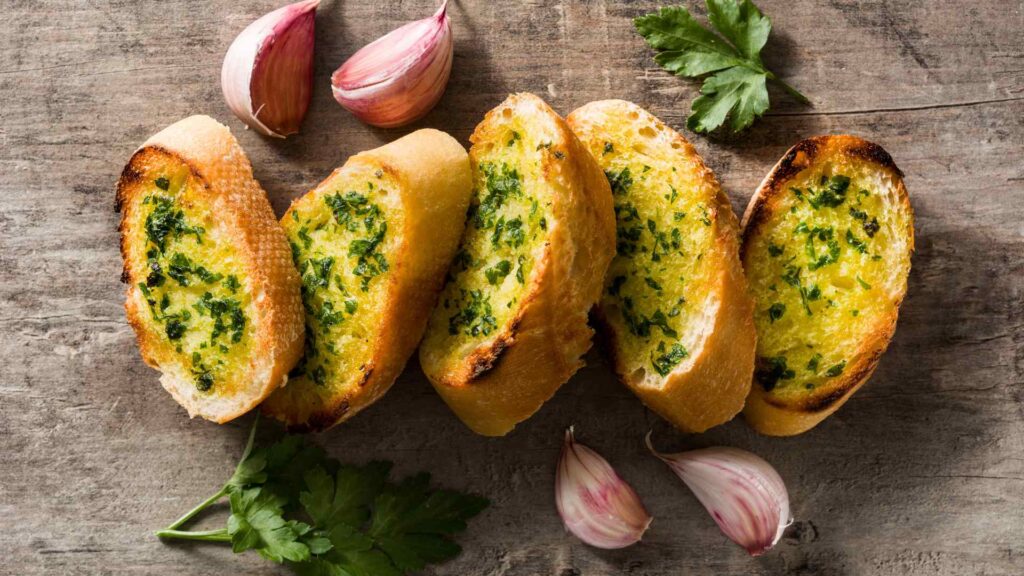
Garlic belongs to the Allium group with onion, leek, and chive. Its sulfur-containing compounds can cause oxidative damage to canine red blood cells, leading to Heinz body formation and hemolytic anemia.
The Merck Veterinary Manual Allium toxicosis review states that raw, cooked, dried, and concentrated forms can be hazardous. Baking garlic into bread is not a detoxification method.
Garlic powder and granulated garlic are concentrated compared with fresh garlic by weight, while roasted cloves and infused spreads distribute unevenly. A visible fleck count cannot reliably reconstruct the dose in a stolen slice.
Onion powder, chives, scallions, or mixed Italian seasoning may be present alongside garlic. Add the entire Allium exposure rather than assessing each ingredient as if the dog ate it on a different day.
Signs can be delayed
Vomiting, diarrhea, drooling, or reduced appetite may occur earlier, but red blood cell injury can take several days to become obvious. A dog acting normal tonight is not proof that a meaningful exposure is over.
Possible anemia signs include weakness, pale or yellow-tinged gums, rapid breathing, rapid heart rate, exercise intolerance, dark or reddish urine, collapse, and reduced appetite. These signs require urgent veterinary care.
A veterinarian may recommend examination, blood testing, repeat bloodwork, or treatment based on dose, timing, dog size, health, and clinical signs. Follow the case-specific monitoring window rather than choosing an arbitrary number of symptom-free hours.
Our garlic-powder guide explains concentrated Allium exposure and delayed hemolysis in more detail. It intentionally avoids a universal teaspoon table because formulations and dogs vary.
Recipe uncertainty is the reason to call
Homemade garlic bread may use fresh cloves, jarred garlic, garlic powder, garlic salt, compound butter, infused oil, or several forms together. Restaurant and frozen products can change formulas or apply spread unevenly.
Ask the cook for the exact garlic amount and loaf yield, or photograph the ingredient label and nutrition panel. Report a minimum and maximum slice amount when nobody knows precisely what was on the plate.
Do not use smell, visible flecks, browning, or the dog’s lack of mouth irritation as a dose test. Garlic toxicity is not the same as capsaicin heat, and a mild-tasting bread can still contain concentrated powder.
Repeated small Allium exposures may matter in the history. Tell the clinic about recent onion gravy, garlic seasoning, baby food, broth, leftovers, or supplements rather than reporting only today’s bread.
Garlic bread comes in more forms than one slice
A frozen baguette may use a measured manufactured spread, while restaurant knots can be brushed again after baking and homemade toast may receive spoonfuls unevenly. Slice count alone cannot compare those exposures.
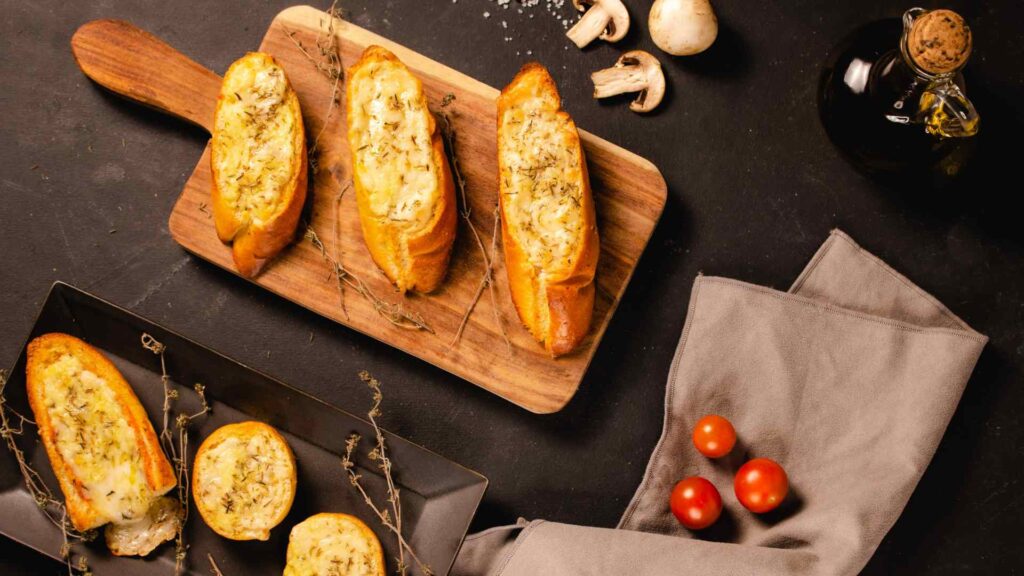
Garlic knots, cheesy breadsticks, pull-apart loaves, naan, focaccia, pizza crust, and garlic croutons can carry different amounts of garlic, butter, oil, cheese, and salt. Identify the exact food instead of borrowing advice for plain sandwich bread.
A dog may lick spread from foil without eating much bread, or swallow dry bread after another pet gets the buttery center. Estimate garlic spread and bread separately when the evidence allows.
Imported products and restaurant recipes may use ingredient names or blends that are not obvious from the menu. Ask for the ingredient statement or recipe rather than accepting “seasoning” as a complete answer.
Butter, oil, cheese, and salt add practical problems
Garlic bread is often brushed or soaked with butter or oil, and cheese bread adds more fat and calories. A large rich theft can cause vomiting, diarrhea, abdominal discomfort, or pancreatitis in a susceptible dog.
The Merck Veterinary Manual pancreatitis overview describes vomiting, weakness, abdominal pain, dehydration, and diarrhea among possible signs. Those signs after a buttery loaf deserve prompt assessment.
Garlic salt, parmesan, salted butter, and restaurant seasoning can raise sodium. Do not force water to flush the meal or restrict normal water unless a veterinarian gives case-specific instructions.
Dogs with pancreatitis history, heart or kidney disease, diabetes, obesity, gastrointestinal disease, food allergy, or a prescription diet require more conservative advice. The bread is not an appropriate recovery or weight-gain food.
Our parmesan guide covers sodium, fat, calories, dairy reactions, chunks, rind, mold, and packaging when cheesy garlic bread is involved.
Raw garlic-bread dough is a second emergency
Raw yeast dough can expand in the warm stomach while fermentation produces ethanol. Garlic bread dough can therefore combine Allium toxicity, gastric distention, alcohol poisoning, and swallowed plastic wrap in one exposure.
The Merck Veterinary Manual bread-dough review lists abdominal distention, unproductive retching, lethargy, weakness, abnormal walking, collapse, low body temperature, and seizures among possible signs. Call promptly after known or possible raw dough ingestion.
Do not force cold water, feed extra bread, massage the abdomen, or induce vomiting unless a veterinary professional directs it. Expanding sticky dough and developing neurologic impairment make home procedures risky.
Our rye-bread guide explains raw yeast dough, alcohol, raisins, xylitol, mold, gluten concerns, and bags. The same dough principles apply regardless of the flour used.
Mold and spoilage do not cancel the garlic problem
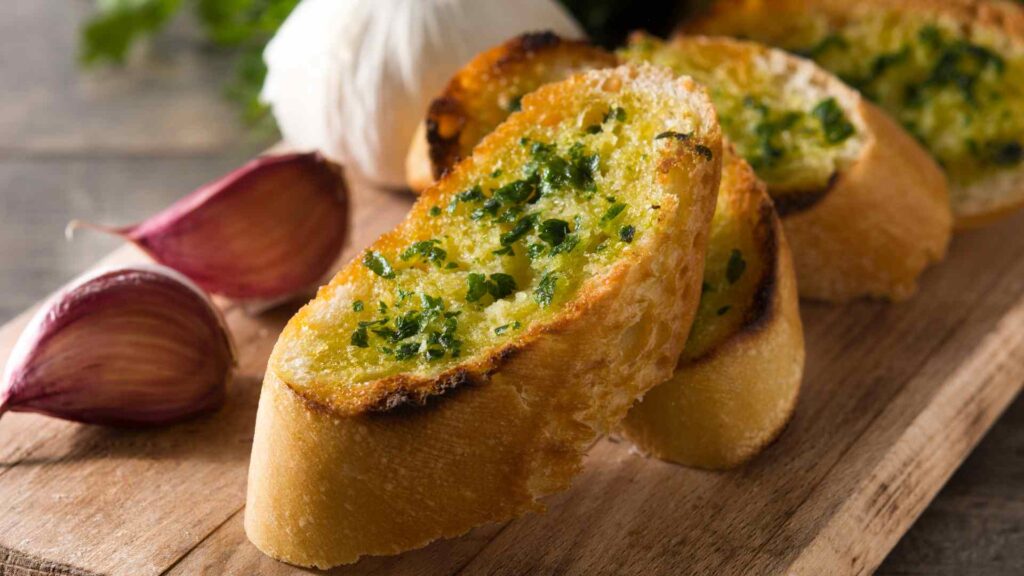
Old garlic bread may be moldy, rancid, or contaminated after unsafe room-temperature storage. Cutting off a fuzzy corner does not make porous bread suitable for a dog.
The United States Department of Agriculture mold guide recommends discarding moldy bread and baked goods. Do not sniff a moldy loaf because airborne spores can irritate the respiratory tract.
Some moldy foods can cause vomiting, agitation, abnormal walking, tremors, overheating, or seizures. Call promptly after a meaningful moldy-bread or compost exposure and urgently for neurologic signs.
Reheating, toasting, scraping, or adding fresh butter does not reliably make spoiled bread safe. Secure it in a lidded bin rather than feeding it to prevent waste.
Foil, bags, ties, and trays may obstruct
Garlic bread commonly arrives in aluminum foil, plastic film, a paper sleeve, a bakery bag, or a foil tray. Sharp foil wads, bag clips, twist ties, skewers, and absorbent pads can choke, cut, or obstruct.
A large bread chunk can also lodge in a dog that gulps, has dental disease, or has swallowing trouble. Breathing difficulty, blue or gray gums, continuous gagging, frantic mouth pawing, or collapse is an emergency.
Repeated vomiting, inability to keep water down, abdominal pain, refusal to eat, lethargy, or straining after missing packaging needs prompt assessment. Do not pull string or material from the mouth or rectum.
The Merck Veterinary Manual obstruction review explains that foreign objects can cause partial or complete blockage and may require endoscopic or surgical removal.
What to do after garlic bread is eaten
Remove the remaining loaf and packaging, separate pets, photograph labels, and estimate the maximum amount. Call a veterinarian, emergency clinic, or animal poison service promptly with the recipe and timeline.
Do not wait for anemia signs after a meaningful or uncertain exposure. Early professional advice is useful because decontamination decisions depend on timing, symptoms, aspiration risk, garlic dose, dough, and missing objects.
Do not give peroxide, salt, oil, milk, charcoal, antacids, or human medicine unless a veterinarian specifically directs it for this dog. Never use salt or mustard to make a dog vomit.
If monitoring is advised, write down appetite, vomiting, stool, energy, gum color, breathing, heart rate if instructed, and urine color. A short video can help document weakness or abnormal walking, but do not delay care to record one.
Garlic bread has no canine health role
Garlic bread does not treat fleas, ticks, worms, immunity, appetite, digestion, or cardiovascular health. A tasty human recipe is not evidence of a safe or effective canine dose.
Use part of the dog’s measured complete food or a veterinary-approved treat instead. Dogs on prescription diets may need rewards drawn only from that diet.
Plain bread is not an antidote after garlic ingestion and does not absorb Allium compounds safely. Feeding more food can complicate professional plans without reducing red blood cell risk.
Bottom line
Garlic bread requires prompt professional risk assessment because garlic remains hazardous after cooking and anemia can be delayed. Report the exact recipe, amount, timing, dog, recent Allium exposures, butter, salt, cheese, raw dough, mold, symptoms, and every missing package piece, and do not induce vomiting at home.