Can Cats Eat Pizza Crust? Raw Dough, Baked Edges, Seasoning, and Stuffing
A crumb from a cooled, fully baked, plain pizza edge is unlikely to harm most healthy cats, but raw yeast dough is an urgent veterinary exposure. Garlic butter, stuffed crust, sauce, mold, a hot slice, and delivery debris can matter more than the baked bread, so inspect the scene before deciding this was “just crust.”
Name the crust your cat found
Pizza crust changes from a living yeast dough into a baked bread, then often becomes a handle soaked with toppings. Those stages do not share the same hazards, and the distance from the sauced center tells you very little when garlic oil was brushed across the entire pie.
| Crust situation | Main question |
| Raw yeast dough | Could it expand and ferment in the stomach? |
| Plain baked rim | How much, how hard, and was it cool? |
| Garlic or herb crust | Does the seasoning contain garlic, onion, chive, or shallot? |
| Cheese-stuffed crust | How much cheese, fat, salt, and seasoning came with it? |
| Sauce-stained handle | Which toppings and condiments migrated onto the bread? |
| Old or moldy crust | Is spoilage visible or is the storage history poor? |
| Crust plus box debris | Are foil, plastic, cardboard, a toothpick, or a pizza saver missing? |
Raw yeast dough is the hard stop
In the warm stomach, yeast can keep fermenting while the dough mass expands and produces ethanol. The Merck Veterinary Manual’s bread-dough review describes abdominal distention, unproductive retching, lethargy, disorientation, poor coordination, weakness, low body temperature, seizures, and worse outcomes.
Call a veterinarian or emergency clinic immediately after raw yeast pizza dough is swallowed, even if the cat currently looks normal. Do not wait for a belly to swell, and do not attempt home vomiting, feed a bulky meal, or pour cold water into the cat based on treatment details written for veterinary professionals.
Raw flour adds another reason not to sample dough
Most flour is a raw agricultural product that has not been treated to kill every disease-causing germ. The CDC includes pizza dough in its warning about uncooked flour and batter, which also reinforces cleaning bowls, utensils, hands, and counters after preparation.
Foodborne-infection risk is not the same mechanism as yeast expansion, and heat-treated flour does not neutralize active yeast dough’s fermentation hazard. Report the entire formula, including yeast type, flour, eggs, alcohol, seasonings, and the missing amount.
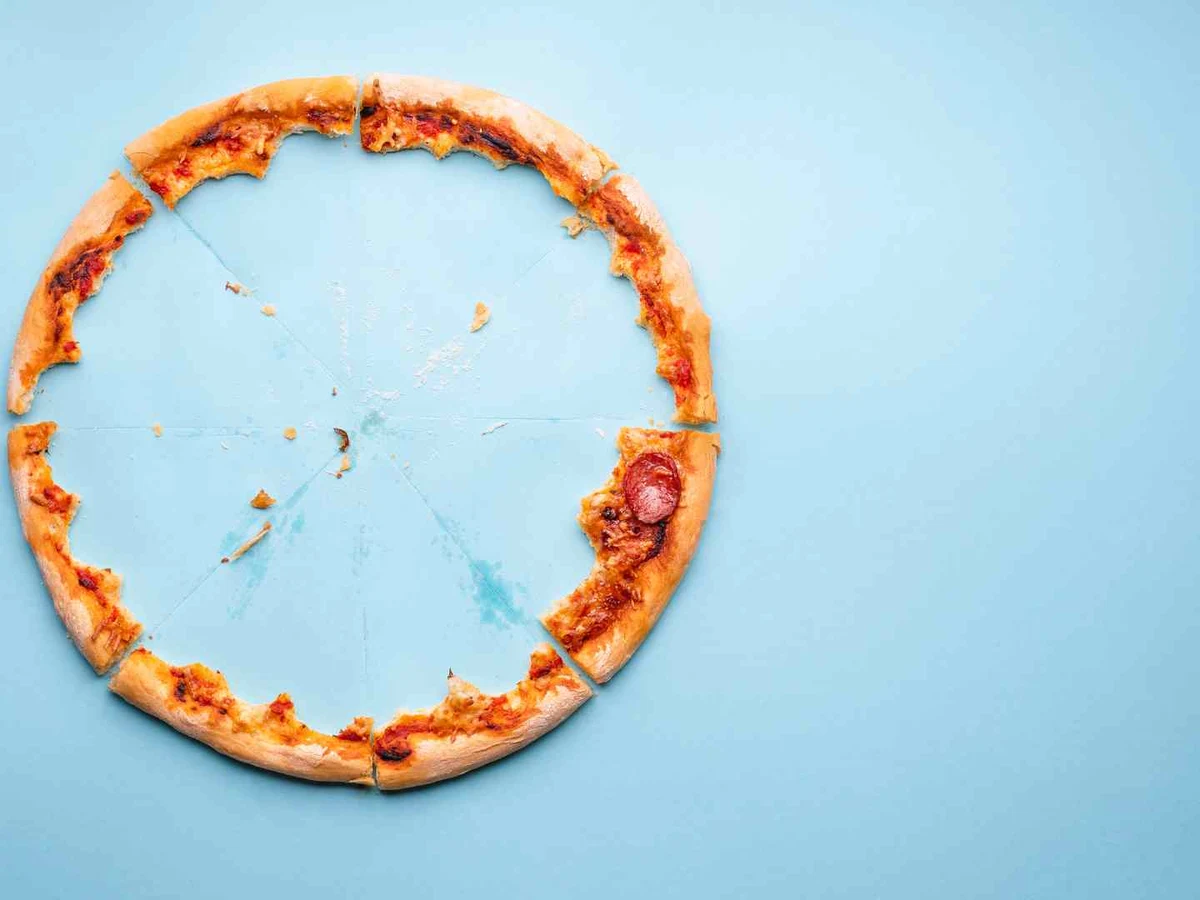
The plain finished edge is mostly a portion problem
Once pizza crust is fully baked, cooled, and genuinely plain, a small soft crumb is not a recognized feline toxin. It is still starch-heavy people food that contributes little to an obligate carnivore’s diet and may cause stomach upset when a cat steals a large, greasy handle.
Hard, blistered edges can be awkward for cats with dental pain, missing teeth, or swallowing problems. Tear nothing off for a kitten or senior just to test the theory; a piece of regular cat food offers the same shared-snack ceremony without a bread plug.
A “plain” restaurant crust may already be seasoned
Pizzerias may mix garlic powder, onion powder, cheese, herbs, sugar, or extra salt into dough, then brush the rim with flavored oil after baking. Stuffed, pan, hand-tossed, sourdough, gluten-free, cauliflower, and high-protein crusts all require their own ingredient lists.
Ask the restaurant or check the manufacturer rather than judging by visible flecks. The site’s guide to bread for cats covers plain baked bread, but a branded crust can be a much more complicated recipe.
Garlic knots in crust clothing
Garlic butter and garlic powder can turn the outer ring into the most concerning part of a slice. Garlic and onion can cause oxidative damage to feline red blood cells, and clinical anemia may not be obvious immediately after exposure.
Call promptly if an Allium appears on the label or the amount is unknown, then watch for the delayed signs the professional specifies. The dedicated garlic article explains pale gums, weakness, appetite loss, faster breathing, dark urine, and collapse without pretending every crumb produces the same outcome.
Stuffed crust hides richness inside a bread tube
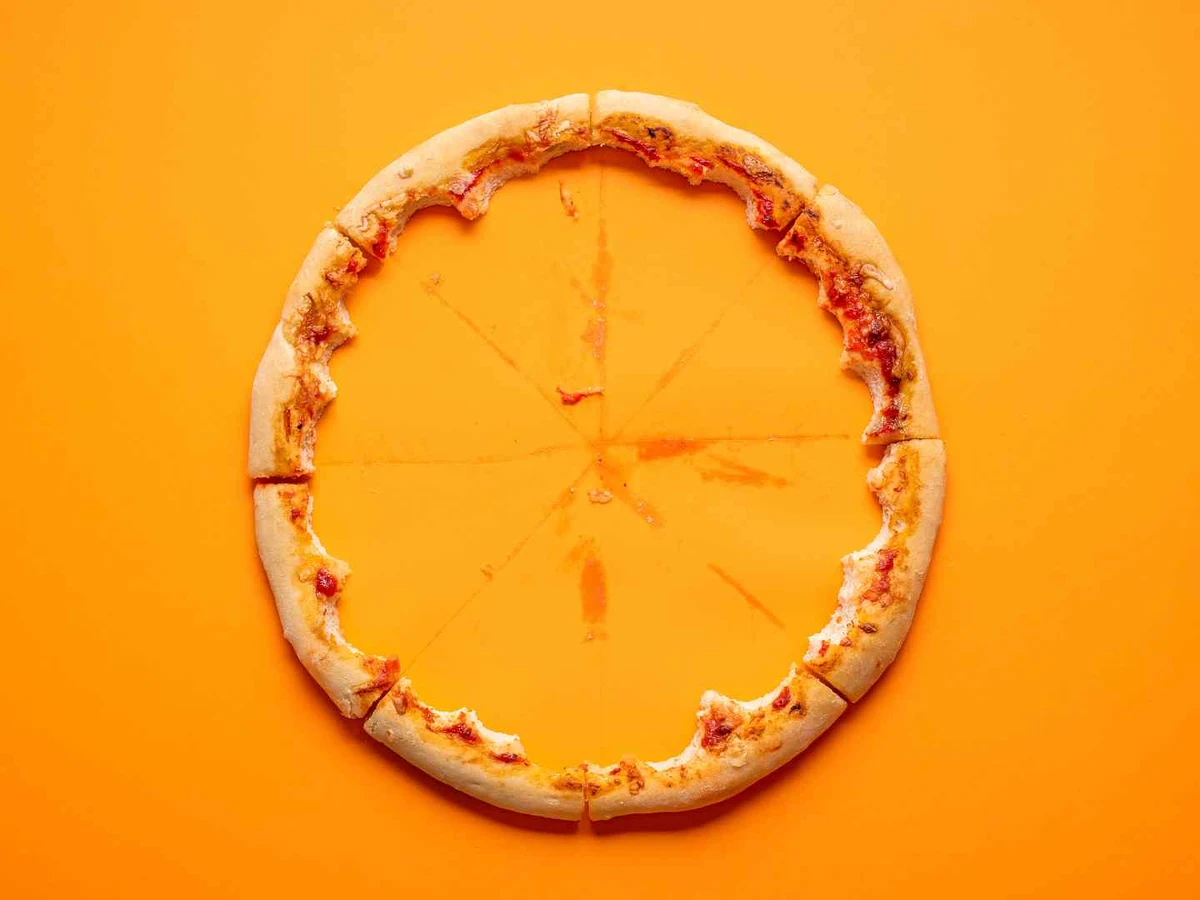
Cheese-stuffed edges add fat, sodium, and dairy, while meat-stuffed versions can include pepperoni, sausage, garlic, onion, and preservatives. A cat may swallow several soft bites quickly because the filling smells far more appealing than plain dough.
One bite does not let anyone diagnose future pancreatitis, but repeated vomiting, marked lethargy, abdominal pain, or refusal to eat needs veterinary attention. Cats with previous pancreatitis, heart or kidney disease, obesity, dairy intolerance, or a therapeutic diet should skip stuffed crust entirely.
Sauce and toppings travel farther than you think
Tomato sauce can soak into the underside, and a folded slice may press cheese, cured meat, onion, mushrooms, or hot chile directly against the rim. A crust left on the plate is not automatically topping-free just because the visible pieces were eaten.
Blotting the grease does not remove dissolved seasoning. For a full-slice theft, use the broader pizza guide for cats and keep the menu description or frozen-pizza box available for the call.
Heat is a hazard with a short clock
Fresh pizza can burn the lips, tongue, palate, and esophagus, while melted cheese clings and keeps transferring heat. Drooling, pawing at the mouth, vocalizing, repeated swallowing, or suddenly refusing food after grabbing a hot crust warrants prompt veterinary advice.
Do not put ice, butter, ointment, or human oral-numbing gel in the mouth. Prevent the problem by closing the box and letting a slice cool where a cat cannot leap onto the tray.
Old crust is not a safe chew
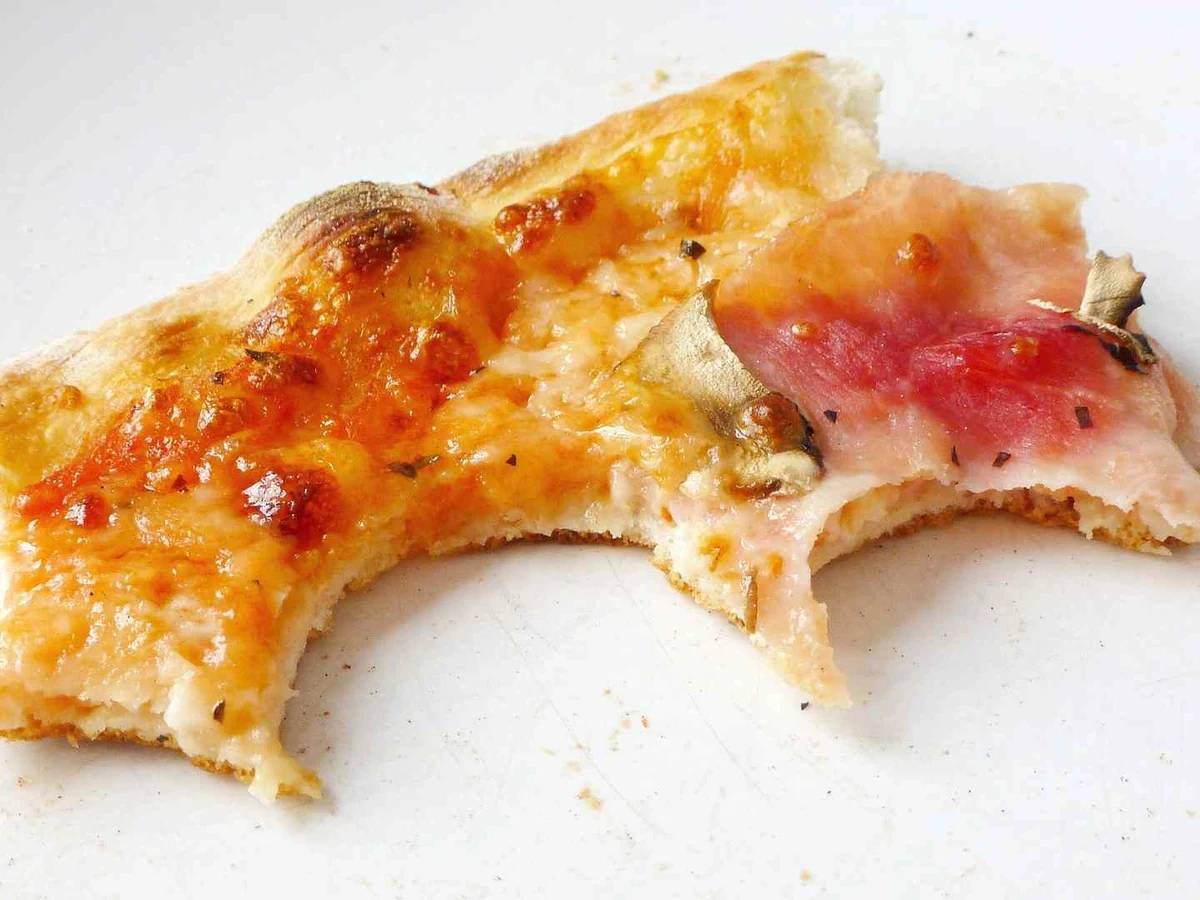
A stale edge becomes harder without becoming a dental tool, and chewing it can hurt diseased teeth or break off a gulpable chunk. A moldy piece should be discarded because mold type and toxin production cannot be identified by color or smell at home.
The FDA overview of mycotoxins explains why some molds on foods can produce toxins, but it does not supply a home dose calculator for cats. Contact a veterinarian for a moldy-crust ingestion, especially if tremors, vomiting, weakness, or abnormal behavior develops.
The delivery box has its own cast of characters
Greasy cardboard may tear into strips, and the small plastic table in the box can become a batting toy and foreign body. Foil, waxed liners, dipping-cup lids, toothpicks, skewers, sauce packets, staples, and condiment wrappers all deserve a count after a cat raids the leftovers.
A missing sharp or string-like object is a reason to call rather than wait for it to appear in the litter box. Never pull string from the mouth or anus, because resistance can mean it is anchored internally.
Dipping cups can make the abandoned edge more complicated
Ranch, garlic sauce, cheese dip, hot honey, barbecue sauce, and spicy oil can soak deeply into a crust before it reaches the trash. Each cup brings its own Alliums, dairy, fat, salt, chile, sugar, or sweetener question, plus a foil lid that can curl into a sharp little object.
Keep the labeled cup or restaurant order and estimate how much sauce is missing, not merely how much bread remains. A cat licking pooled dip needs an ingredient-led assessment even if the crust itself was fully baked.
A practical response for a crust heist
- Move the cat away from the pizza, dough bowl, oven, cutter, and packaging.
- Decide whether the material was raw dough, partly baked dough, or fully finished crust.
- Read the crust seasoning, toppings, dipping sauce, and stuffing ingredients.
- Measure what remains and note the time, cat’s weight, health conditions, and current signs.
- Call immediately for raw yeast dough, confirmed Alliums in a meaningful or unknown amount, a foreign object, mold, burns, or abnormal behavior.
For a single cooled crumb of verified plain crust, a veterinary team may advise simple home observation. Follow their timeframe and serve the cat’s normal diet rather than adding milk, oil, bread, or another food to “soak up” the first bread.
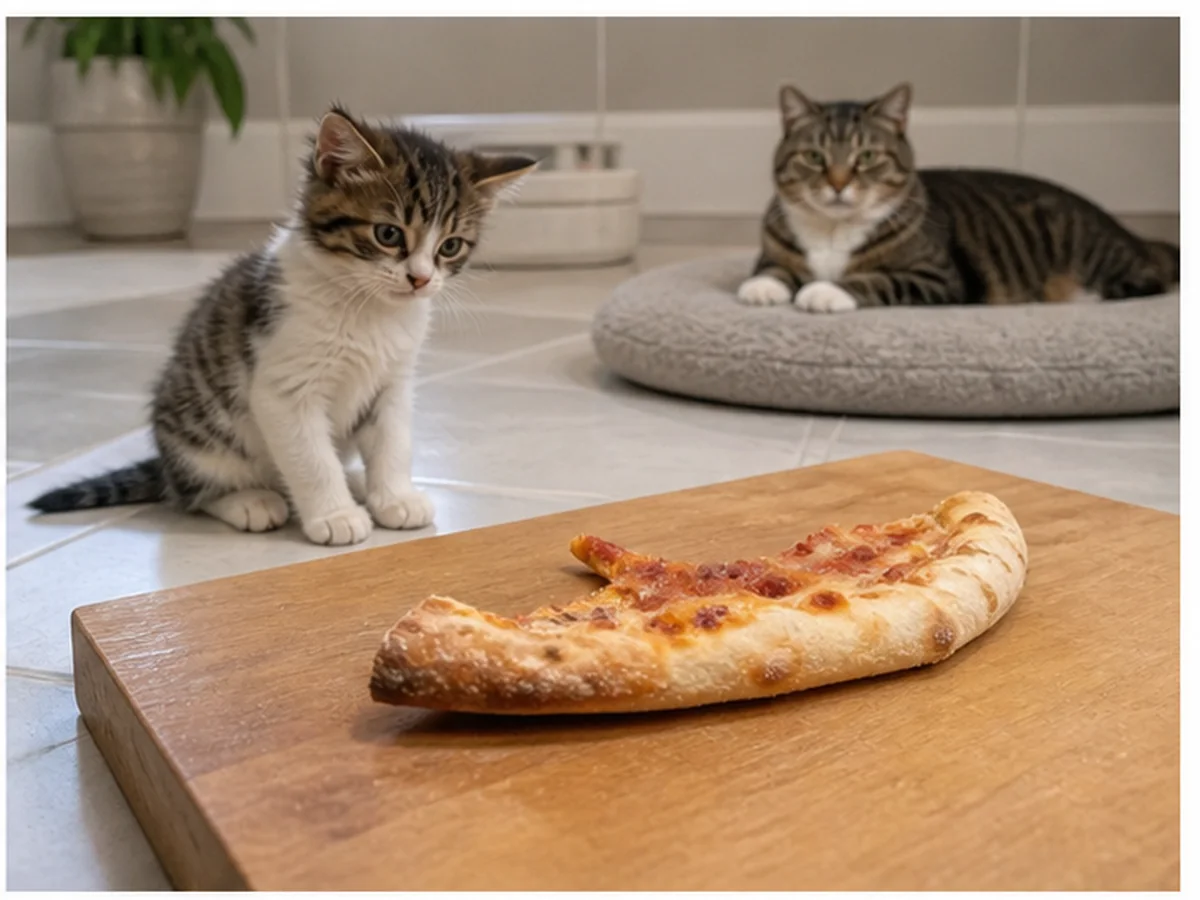
Who gets less room for experimentation
Kittens, frail seniors, cats with swallowing trouble, and cats with diabetes, inflammatory bowel disease, pancreatitis history, food allergy, heart disease, or kidney disease deserve a lower threshold for advice. Prescription diets can be undermined by small but frequent table extras even when no acute poisoning occurs.
Pizza crust cannot function as a meal because it is not formulated to meet feline nutrient needs. The FDA’s explanation of complete and balanced labeling is the useful standard, not the fact that a crust contains a little protein.
Frequently asked questions
Can cats eat thin crust or deep-dish crust?
Thickness does not decide safety; ingredients, baking status, topping contact, texture, and amount do. A plain cooled thin-crust crumb may be low concern, while a garlic-brushed edge or underbaked deep-dish dough needs a different response.
What if my cat ate pizza crust with garlic butter?
Save the label or restaurant recipe and call your veterinarian or an animal poison service promptly. Garlic concentration is often unclear, and delayed red-cell effects mean a cat’s current normal appearance is not the whole assessment.
Can sourdough pizza crust be shared after baking?
A tiny piece of fully baked, cooled, unseasoned sourdough crust is generally a low-concern accident, but it offers no feline benefit. Raw sourdough starter or fermenting dough is not equivalent and should prompt an immediate veterinary call.
Can cats eat cauliflower or gluten-free pizza crust?
Those names do not guarantee a simple recipe, since products may use egg, cheese, garlic, onion, gums, salt, or other flours. Review the label and remember that gluten avoidance only matters if a veterinarian has identified a specific dietary need.
Bottom line
Fully baked plain crust is usually more pointless than poisonous when the stolen piece is tiny, but raw yeast dough is an emergency. Seasoning, stuffing, sauce, heat, mold, hard texture, and pizza-box debris are the details that turn a casual crumb into a call.