Can Dogs Eat Pecan Pie? Pecans, Mold, Xylitol, and Rich-Food Risks
One small pecan-pie crumb is usually a monitoring situation for a healthy dog, but a slice or whole-pie raid can become a rich-food, toxin, or foreign-object problem. The recipe matters: fresh pecans, mold, shells, fat, sugar, xylitol, chocolate, alcohol, raisins, spices, raw batter, crust, foil, and pans need separate decisions.
Start with a fast pie inventory
- One ordinary crumb from a known recipe: remove the rest and monitor for digestive upset.
- A slice, several slices, or an unknown amount: call for portion advice, especially for a small or medically vulnerable dog.
- Sugar-free, chocolate, bourbon, rum, raisin, or specialty pie: identify the exact recipe immediately.
- Moldy pecans, tremors, wobbliness, repeated vomiting, severe pain, or collapse: seek urgent veterinary care.
- Shells, foil, plastic, pan liner, knife, skewer, or glass missing: report every object, not just the dessert.
Save the box, ingredient panel, recipe, sweetener package, and leftovers, then record the maximum amount, time, dog weight, conditions, medications, usual diet, symptoms, and missing objects. Bakery, homemade, frozen, vegan, keto, bourbon, chocolate, and sugar-free pies are not interchangeable.
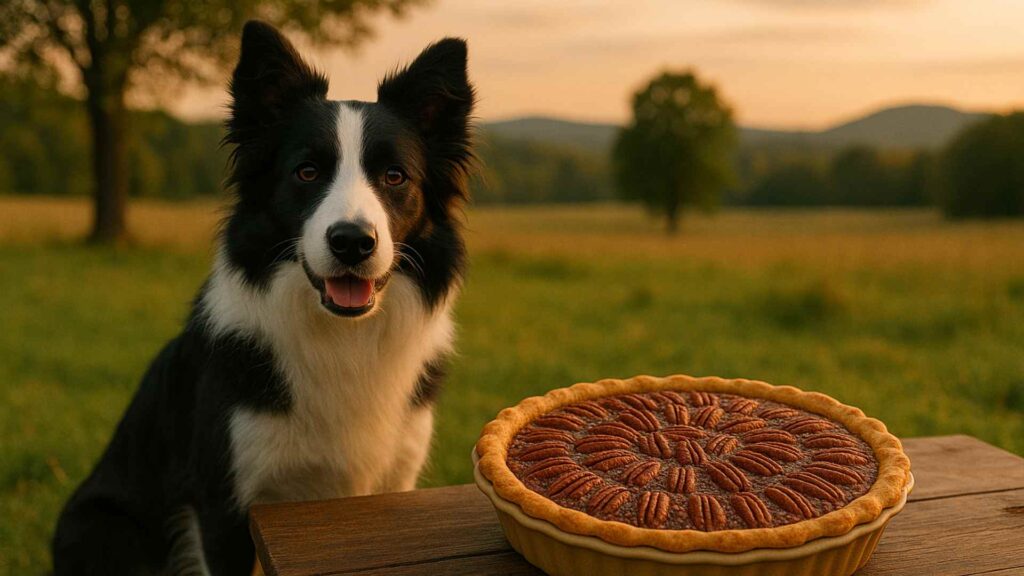
Plain pecans versus pecan pie
A fresh shelled pecan kernel is not known for the characteristic canine neurotoxic syndrome associated with macadamia nuts. That does not make pecans a useful dog treat, and it does not make a sticky pie safe.
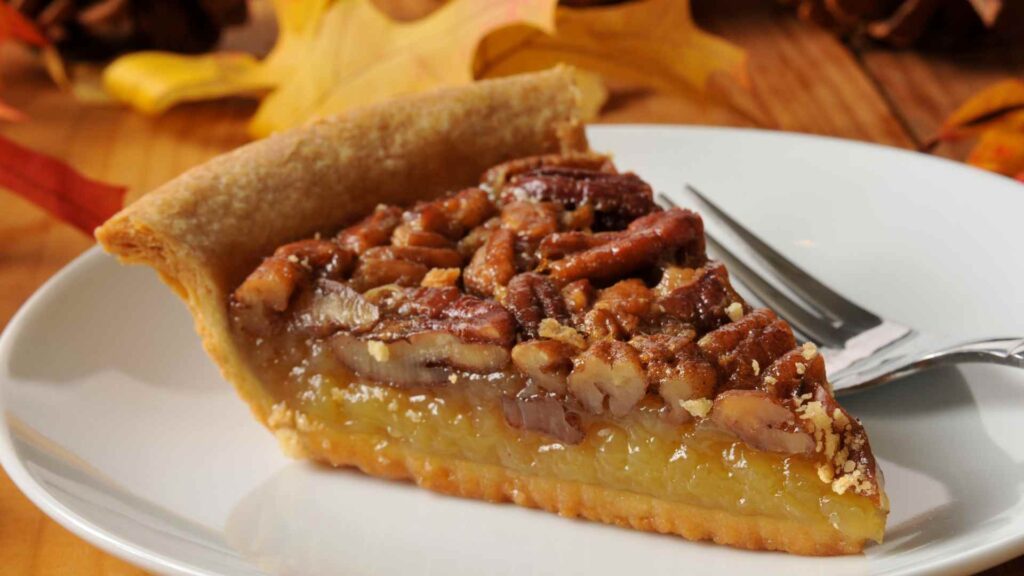
Pecan pie typically combines a dense layer of nuts with corn syrup or sugar, eggs, butter, salt, and pastry. Variants may add chocolate, bourbon, rum, maple syrup, condensed milk, cream, raisins, coffee, spices, or sugar substitutes.
Our nut-by-nut guide helps separate plain kernels, shells, mold, salt, and mixed nuts. A pie needs that nut assessment plus a complete recipe review.
Fresh pecans are fatty, calorie-dense extras
Pecans concentrate fat and calories into a small volume. A crumb is unlikely to transform a healthy dog’s diet, while a stolen slice or pan can cause vomiting, diarrhea, abdominal discomfort, and a large calorie load.
Do not advertise pecans as brain food, heart support, coat care, antioxidants, or a mineral supplement for dogs. A complete canine diet already balances required nutrients, and dessert displaces that food without delivering a therapeutic dose.
The WSAVA dog treat guide recommends keeping treats to no more than 10 percent of daily calories. Pecan pie can spend that allowance in a few bites, especially for a small dog.
Pancreatitis risk should be proportionate
A rich combination of nuts, butter, eggs, and pastry is more concerning than one dry crumb. Dogs with previous pancreatitis, obesity, diabetes, gastrointestinal disease, high blood fats, or a prescribed low-fat diet should not receive pecan pie intentionally.
The Merck Veterinary Manual pancreatitis guide notes that table scraps or trash exposure can be associated with some cases, while many causes remain unknown. It does not support claiming that every rich bite causes pancreatitis or offering a universal fat threshold.
Repeated vomiting, marked lethargy, a hunched or painful posture, refusal to eat, or inability to keep water down needs veterinary evaluation. Do not diagnose pancreatitis from a pie theft alone, and do not wait out severe pain at home.
Mold changes pecans into an urgent neurologic concern
Fresh pecans and moldy nuts are different exposures. Mold may grow on old, damp, poorly stored nuts or pie, and visible growth is not the only reason to distrust a rancid or spoiled batch.
The Merck Veterinary Manual tremorgenic mycotoxin review links moldy foods, including nuts and food waste, with vomiting, tremors, heightened sensitivity, wobbliness, rapid heart rate, and seizures in dogs. Mold species and toxin production vary, so no home inspection can calculate a safe amount.
Call urgently after meaningful moldy-nut or moldy-pie ingestion, and seek emergency care for tremors, seizures, abnormal walking, extreme agitation, vomiting, or collapse. Keep a sample sealed away from pets for possible identification, but do not handle visible mold more than necessary.
Pecan shells are not fiber or chews
Pecan shells are hard, angular, and difficult to digest. Fragments can cut the mouth, lodge in the throat, damage teeth, or contribute to gastrointestinal obstruction or perforation.
Breathing trouble, continuous gagging, repeated swallowing, blue or gray gums, or collapse is an emergency. Repeated vomiting, abdominal pain, appetite loss, or inability to pass stool after missing shell pieces also needs prompt care.
Do not induce vomiting or feed bread, pumpkin, or bulky food to cushion sharp shell. Report the shell size, whether it was cracked, the amount missing, and any symptoms so a veterinarian can choose imaging or monitoring appropriately.
Sugar and corn syrup are not the toxic headline
Ordinary sugar and corn syrup mainly add calories and can worsen gastrointestinal upset after a large serving. They are not the reason to label one tiny crumb a poisoning emergency, but the dessert remains inappropriate for diabetes and weight-management plans.
Sticky filling can coat teeth and cling to wrappers, yet pecan pie is not a dental-cleaning issue to solve at home. Return to the normal dental routine after the immediate exposure is assessed, and do not brush a painful or injured mouth.
A dog that ate a large sugary portion may drink more or have loose stool, but forced water and homemade electrolyte mixtures are not helpful. Keep ordinary water available unless medically restricted and call for repeated vomiting, weakness, tremors, or a significant salt exposure.
Sugar-free pie requires an immediate xylitol check
Traditional pecan pie usually uses sugar or corn syrup, so the words “pecan pie” do not automatically mean xylitol. Keto, low-carb, diabetic-friendly, or sugar-free recipes may use alternative sweeteners, and the exact ingredient and quantity must be identified.
The FDA xylitol warning explains that xylitol can trigger dangerous hypoglycemia and liver injury in dogs. Call immediately for confirmed or possible xylitol exposure and do not wait for weakness, vomiting, loss of coordination, collapse, or seizures.
Save the sweetener bag or recipe and do not rely on the pie’s taste. Do not give syrup, honey, or food as a substitute for professional direction, and do not induce vomiting unless a veterinary professional specifically instructs it.
Chocolate, raisins, and alcohol can change urgency
Chocolate-pecan pie, chocolate chips, cocoa crust, and chocolate drizzle require a methylxanthine assessment based on chocolate type, amount, time, and dog weight. Our chocolate guide explains why dark, baking, milk, and white chocolate are not equivalent.
Raisins, sultanas, or Zante currants may appear in holiday pies, mincemeat, toppings, or mixed-nut crusts. Our raisin guide explains why any canine exposure merits prompt professional contact and why a universal safe dose is not responsible.
Bourbon, rum, brandy, liqueur, and alcohol-rich vanilla can add ethanol exposure, particularly in uncooked fillings, sauces, or soaked fruit. Weakness, wobbliness, unusual sleepiness, low body temperature, slow breathing, collapse, or seizures is urgent.
Nutmeg and other spices need dose and form
Nutmeg may appear in some recipes, but a tiny amount distributed through one baked crumb is different from raiding a spice jar, eating a whole nutmeg seed, or contacting essential oil or concentrate. Do not turn every ordinary pie crumb into a nutmeg emergency.
Veterinary toxicology guidance from Pet Poison Helpline describes disorientation, increased heart rate, high blood pressure, dry mouth, abdominal pain, and seizures after very large nutmeg exposure. Call with the recipe and amount when the exposure is more than incidental.
Cinnamon, clove, and allspice can irritate in concentrated powder or oil forms, and inhalation or eye contact needs separate attention. Wipe loose powder from fur, avoid forced liquids, and call for persistent coughing, drooling, vomiting, eye pain, or neurologic signs.
Raw batter creates food-safety questions
Baked pie is different from uncooked filling or crust dough. Raw eggs can carry Salmonella, and raw flour can contain harmful bacteria even though flour looks dry and shelf-stable.
The FDA raw flour guidance explains that processing grain into flour does not kill harmful bacteria and that cooking is the safety step. Keep dogs away from mixing bowls, utensils, flour bags, and spilled batter, then clean contaminated surfaces.
Pecan-pie crust is not usually yeast dough, so do not invent a fermentation emergency unless the actual recipe includes yeast. If raw yeast dough from another baked item is missing, report it as a separate exposure because expansion and alcohol production change the risk.
Crust, toppings, and sides add more richness
Pastry adds butter or shortening, flour, salt, and calories, while a hard crust edge can choke a tiny dog. Whipped cream, ice cream, caramel, custard, and cheese toppings add dairy, sugar, fat, flavorings, and packaging.
Our whipped-cream guide covers one plain lick versus flavored topping, xylitol, coffee, chocolate, alcohol, and aerosol-can risks. The topping should never be assumed harmless because the pie recipe was ordinary.
A small lick of plain filling and a whole plated dessert are different events. Inventory garnish, sauce, toothpicks, candles, napkins, and utensils before deciding how much disappeared.
Foil, pans, knives, and packaging can become the emergency
Foil tins, aluminum sheets, plastic wrap, bakery windows, cardboard, pan liners, clips, and serving utensils often smell like dessert after the food is gone. Sharp foil can cut, plastic can choke or obstruct, and broken glass or ceramic can injure anywhere along the digestive tract.
Do not induce vomiting when a sharp or bulky object may have been swallowed. Inventory every missing piece and report dimensions, material, sharp edges, chewing damage, gagging, vomiting, pain, and appetite change.
Flexible food bags can also seal around a dog’s face and cause suffocation. Move cooling pies into a closed room or secured appliance and place leftovers in a rigid lidded container.
What to do after a pecan-pie raid
Secure the pie, ingredients, spice containers, sweetener, raw batter, toppings, and packaging, then estimate the maximum amount. Compare what remains with the pie’s total weight or serving count rather than guessing from crumbs.
Call immediately for xylitol, raisins, significant chocolate, alcohol, mold, tremors, seizures, a large rich serving, medical vulnerability, missing shells or packaging, repeated vomiting, severe pain, weakness, or collapse. A small known crumb from an ordinary recipe in a healthy symptom-free dog usually calls for label review and monitoring.
Do not induce vomiting or give charcoal, peroxide, salt, oil, milk, bread, pumpkin, antacids, or human stomach medicine unless a veterinarian or poison specialist directs it. Keep the dog calm and follow transport instructions.
The bottom line on dogs and pecan pie
Pecan pie is unnecessary dessert, not a canine health food. One ordinary crumb is usually low risk, while a slice or whole-pie theft can deliver enough fat, sugar, nuts, and packaging to deserve closer assessment.
Fresh pecans, moldy nuts, shells, xylitol, chocolate, alcohol, raisins, nutmeg, raw batter, crust, toppings, foil, and pans are separate questions. The exact recipe and the amount missing determine the response better than a dramatic universal toxin label.