What Human Food Can Cats Eat? A Useful, No-Drama Guide
Healthy cats can eat tiny portions of several plain, fully cooked human foods, including unseasoned chicken, turkey, lean beef, pork, egg, or boneless fish. Some cats can also sample a little plain pumpkin, green bean, carrot, cucumber, blueberry, melon, or cooked rice, but none of these extras should replace complete cat food.
The useful question is not simply “Is chicken safe?” It is “Which part, cooked how, with what seasoning, in what amount, for which cat?”
The easiest safe choices
| Food | Offer it this way | Skip these versions |
|---|---|---|
| Chicken or turkey | Fully cooked, boneless, skinless, unseasoned, finely cut | Raw meat, bones, skin, gravy, deli slices, fried or smoked meat |
| Lean beef or pork | Fully cooked, plain, lean bite with visible fat removed | Raw or rare meat, bacon, sausage, ham, jerky, barbecue sauce |
| Egg | Fully cooked and plain, in a tiny piece | Raw egg, shell fragments, butter, cheese, onion, garlic |
| Fish or shrimp | Cooked, boneless or shell-free, plain, occasional | Raw fish, bones, shells, brine, smoke, garlic butter |
| Pumpkin or green bean | Plain, cooked, soft, and unsalted | Pie filling, casserole, butter, onion, garlic, sweeteners |
| Carrot or cucumber | Soft cooked carrot or finely cut cucumber | Large coins, pickles, dressing, seasoned vegetable trays |
| Blueberry or melon | Washed, seedless, rind-free, pea-size piece | Grapes, raisins, pits, syrup, chocolate coating |
| Rice or oatmeal | Fully cooked, plain, tiny spoonful | Raw dough, raisins, xylitol, chocolate, flavored packets |
Human food is a treat, not a homemade nutrition plan
Cats need a precise mix of amino acids, fatty acids, vitamins, and minerals. Cornell’s cat-feeding overview explains their obligate-carnivore biology and why casually assembled home diets can miss essential nutrients.
The nutritional adequacy statement on a pet-food label matters more than an appealing ingredient list. The FDA explains that “complete and balanced” means the food is intended to provide required nutrients for the listed species and life stage through an AAFCO profile or feeding trial.
A plate of chicken breast is protein-rich but not a balanced feline diet. Use people food as a tiny extra unless a veterinarian or board-certified veterinary nutritionist has formulated the entire recipe for your individual cat.
Plain cooked meat and poultry
A small bite of fully cooked, boneless chicken or turkey is one of the simplest options for many healthy cats. Remove skin, visible fat, pan drippings, breading, sauce, and seasoning, then cut across any stringy fibers.
“Rotisserie” is not another word for plain. Store-bought birds may be heavily salted and seasoned with garlic or onion, and the elastic truss, absorbent pad, foil, bones, and plastic lid all add non-food hazards.
Lean cooked beef or pork can also be an occasional bite. Skip bacon, ham, sausage, pepperoni, salami, and jerky because cured meats tend to bring sodium, fat, spices, smoke flavor, preservatives, and sometimes allium ingredients.
For more detail on processed-meat labels and casings, read our salami safety guide. The package can matter as much as the meat when a cat steals an entire wrapped stick.
Cooked eggs
Plain scrambled, hard-boiled, or poached egg can work in a small amount if it is cooked through. Leave out butter, oil, salt, cheese, cream, hot sauce, onion, garlic, and shell fragments.
Egg is nutrient-dense and therefore calorie-dense for a small animal. Our boiled egg guide gives practical cutting, storage, and portion advice without pretending an egg is a multivitamin in an oval coat.
Raw egg carries a pathogen risk and should not be a routine treat. A cat that steals a lick of batter may also encounter raw flour, chocolate, raisins, xylitol, alcohol flavoring, or rising yeast dough, so assess the whole recipe.
Cooked fish and shellfish
Plain, fully cooked, boneless fish can be an occasional treat, not a daily menu. Remove every bone and avoid smoked, salted, pickled, canned-in-brine, breaded, fried, sauced, or garlic-butter versions.
Human canned fish is not automatically complete cat food and can be high in sodium. Cornell notes that some cats fed canned fish products intended for people have developed serious neurologic problems, which is one reason variety and nutritional completeness matter.
Cooked shrimp meat can be offered after removing shell, tail, and vein, provided it has no seasoning. The shell and tail are sharp choking or digestive-tract hazards, while cocktail sauce may contain onion, garlic, horseradish, and a heroic quantity of salt.
Raw fish combines pathogen, parasite, bone, and species-dependent thiaminase concerns. Our raw fish guide explains why freezing and the word “sushi-grade” do not create a balanced, risk-free cat meal.
Vegetables a cat may sample
Cats do not need vegetables to prove they are sophisticated diners, but a few plain forms are generally low-risk in tiny amounts. Soft cooked pumpkin, green beans, peas, broccoli, or carrot may be acceptable for a healthy cat that actually wants them.
Use plain pumpkin puree, not pumpkin pie filling, and plain vegetables rather than casserole. Butter, cream, cheese, gravy, stock, onion, garlic, seasoning blends, and sugar can turn a simple vegetable into an entirely different product.
Cut vegetables finely and cook hard pieces until soft, especially carrot and broccoli stem. Large rounds, fibrous strings, corn cobs, and tough stalks can choke or obstruct regardless of whether the plant itself is considered toxic.
Cucumber flesh is mostly water and can be offered in a thin, small piece. A pickle is a brined, seasoned product, so consult our pickle guide before treating those two green cylinders as interchangeable.
Fruit, grains, and dairy
A pea-size piece of washed blueberry, strawberry, banana, apple flesh, cantaloupe, or seedless watermelon is generally a treat option for a healthy cat. Remove pits, seeds, cores, stems, tough peels, and rind, and never offer grapes or raisins.
Plain, fully cooked rice or oatmeal is not known to be toxic, but it is nutritionally unnecessary and can displace a cat’s balanced food. Flavored packets may add salt, sugar, raisins, chocolate, xylitol, or spices.
Many adult cats digest lactose poorly, so milk, cream, ice cream, and whipped toppings may cause gas or diarrhea. Cheese is also rich and salty; our cashew guide makes the same larger point about foods that are not classic poisons but still make clumsy treats.
Cooking and food handling still matter
Raw animal foods can carry Salmonella, Listeria, and other pathogens. The CDC does not recommend raw pet food or treats, and notes that freezing, freeze-drying, and dehydrating do not reliably kill all germs.
Cook meat to a safe internal temperature measured in its thickest part with a food thermometer. The USDA safe-temperature chart lists 165°F for poultry and leftovers, 160°F for ground meats and egg dishes, and 145°F with a three-minute rest for whole cuts of beef, pork, lamb, and veal.
Those are household food-safety targets, not instructions to serve food piping hot. Let the plain portion cool, refrigerate it promptly, and discard food that smells off, has visible mold, or has sat out too long.
Wash hands and any boards, knives, bowls, and counters that touched raw meat. Do not let a cat lick the raw-meat tray, absorbent pad, sink, or cutting board while you cook.
Ingredients that make a familiar food unsafe
Onion, garlic, leek, chive, and shallot can damage feline red blood cells in raw, cooked, or concentrated forms. The Merck Veterinary Manual specifically includes cats and warns that concentrated products count.
Chocolate, cocoa, coffee, tea, matcha, energy products, alcohol, raw yeast dough, grapes, and raisins also warrant avoidance. Products labeled sugar-free deserve a complete label read for xylitol and for other hazards, although feline xylitol sensitivity is not established the way canine poisoning is.
Watch for physical hazards too: cooked bones, skewers, corn cobs, fruit pits, string, foil, plastic wrap, wrappers, snack bags, and pouch caps. A chicken bone does not need a chemical toxin to cause an emergency.
How to serve a human-food treat
- Start with your cat. Skip extras during vomiting, diarrhea, poor appetite, or a diet trial, and ask first for chronic disease.
- Choose one plain ingredient. A cooked chicken shred is easier to assess than a bite of casserole.
- Remove hazards. Take away bones, skin, fat, shells, pits, seeds, rind, skewers, and packaging.
- Make it tiny. Begin with a pea-size bite and do not keep refilling the tasting plate.
- Serve it cool and fresh. Store leftovers safely and discard rejected food.
- Count the calories. Reduce other treats rather than quietly adding a second snack budget.
If your cat declines the food, let the verdict stand. Repeatedly mixing enticing human food into meals can teach a cat to hold out, while sudden appetite loss can signal illness and deserves veterinary attention.
Cats who should not share your plate without veterinary input
Kittens, pregnant or nursing cats, seniors, and cats with diabetes, kidney disease, heart disease, pancreatitis, food allergy, inflammatory bowel disease, urinary disease, obesity, or weakened immunity need individual advice. A “safe” ingredient may conflict with a therapeutic diet or medication plan.
Cats on elimination diets should receive only approved foods because one unplanned bite can muddy weeks of diagnostic work. Ask the prescribing clinic for treat options that preserve the purpose of the diet.
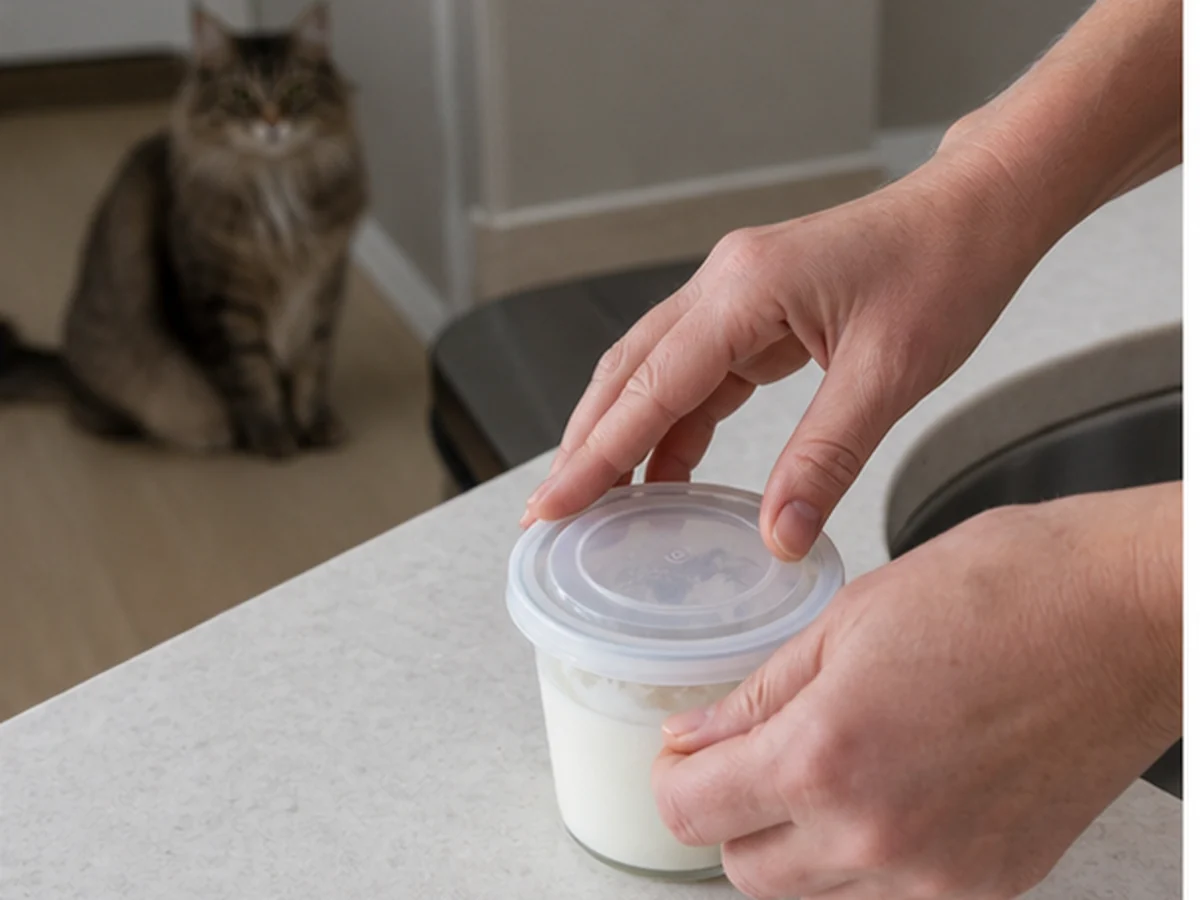
What to do after a kitchen theft
Remove access and save the package, recipe, remaining food, lot code, and wrapper. Note what could be missing, when it happened, your cat’s weight, symptoms, and any medical conditions.
Call your veterinarian, an emergency clinic, or an animal poison service for known toxins, uncertain mixed foods, swallowed objects, or meaningful amounts. Do not induce vomiting or give milk, oil, salt, charcoal, hydrogen peroxide, or another home remedy unless the professional managing the case instructs you.
Seek emergency care for trouble breathing, collapse, seizures, tremors, repeated vomiting, pale or blue gums, severe weakness, a swollen or painful abdomen, inability to swallow, or suspected obstruction. Call ahead when possible and bring the packaging.
Frequently asked questions
Can cats eat food cooked with a little onion or garlic?
Cooking does not neutralize Allium compounds, and powder can be concentrated. Do not serve it; call after an exposure so a professional can assess the ingredient, amount, timing, repeated doses, and your cat’s size.
Can I rinse sauce off meat?
Rinsing cannot reliably remove absorbed seasoning, fat, salt, or toxic ingredients. Cut a separate plain portion before seasoning, or use the cat’s regular food as the treat.
How often can cats eat human food?
Occasional and tiny is the safe framework, but there is no universal schedule. Your veterinarian can translate your cat’s calorie needs and health conditions into a real treat allowance.
Is baby food safe for cats?
Some plain meat baby foods can help with short-term feeding under veterinary direction, but many contain onion or garlic powder and are not complete diets. Read every label each time because recipes change.
Bottom line
The best human-food treats are plain, fully cooked, boneless, unseasoned, and tiny. Let complete cat food cover nutrition, let your veterinarian guide medical exceptions, and remember that the ingredient list has the final word even when the front of the package is wearing a very wholesome chicken.