Can Dogs Drink Pineapple Juice? Sugar, Acid, and Cocktail Risks
Pineapple juice is not a useful drink for dogs, even when it is 100 percent juice. A small accidental lick is usually a monitor-at-home situation for a healthy dog, but the sugar and acidity can upset the stomach, and products containing xylitol, alcohol, caffeine, or other risky ingredients need a much faster response.
The quick answer
- Plain 100 percent pineapple juice: not considered a suitable treat, but a small lick is unlikely to poison most healthy dogs.
- Juice drinks, punches, and concentrates: check the complete ingredient list because added sugar, sweeteners, caffeine, flavorings, and other juices change the risk.
- Sugar-free products: check immediately for xylitol, which may also appear as birch sugar, wood sugar, or birch bark extract.
- Piña coladas, rum punches, and other cocktails: alcohol makes this an urgent veterinary call rather than an pineapple-juice question.
- Concentrate, canned syrup, drink mix, or flavor concentrate: save the label and report the undiluted amount swallowed.
The bottle, carton, recipe, and amount matter more than the words pineapple flavored on the front. Keep the container while you assess the exposure, since a veterinarian will want the ingredient list, concentration, time, and your dog’s weight.
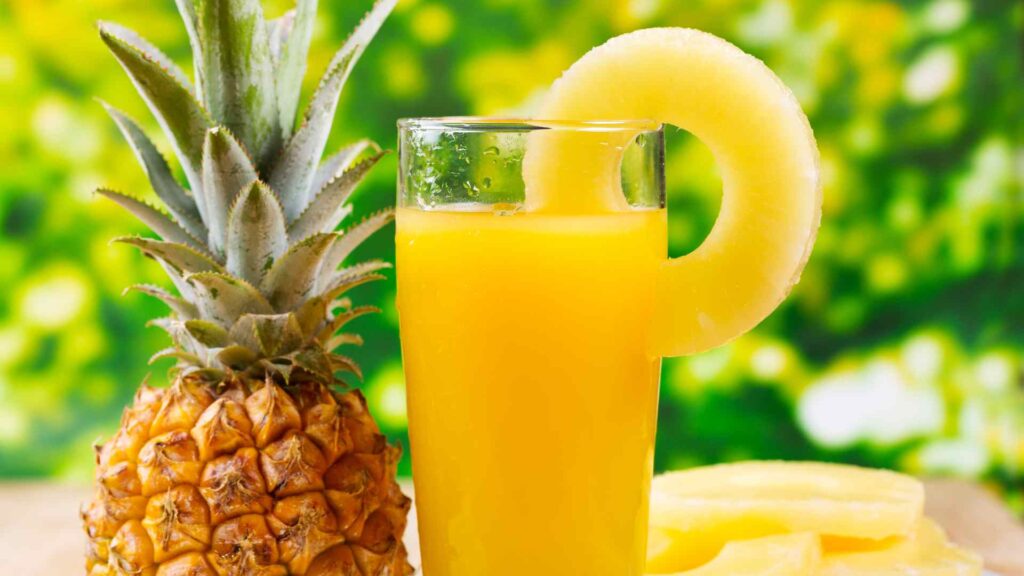
Why pineapple juice is different from a pineapple piece
Juicing separates much of the fruit’s structure and fiber from its liquid, so it becomes easy to swallow the sugar from a much larger fruit portion quickly. Even juice with pulp is still a concentrated drink, not the nutritional equivalent of chewing a ripe fruit piece.
That distinction matters because a dog does not need fruit juice to complete a balanced diet. A tiny ripe piece with rind and hard core removed is easier to portion than juice.
Our grapefruit guide shows the same whole-fruit-versus-juice distinction while covering that fruit’s different risks.
Pineapple juice also contains organic acids that give it its tart flavor. A small taste is not the same as a corrosive exposure, but more juice can contribute to nausea, lip licking, drooling, vomiting, abdominal discomfort, or diarrhea in a sensitive dog.
The sugar is not a reason to predict instant diabetes after one spill, and it is not accurate to say every sip causes a blood-sugar emergency. The practical concerns are unnecessary calories, a possible digestive upset, and poor suitability for dogs with diabetes, obesity, pancreatitis history, or a veterinary diet.
Does pulp make the juice safe?
Pulp is edible pineapple flesh, so a few soft pieces floating in ordinary juice are not a special poison. It adds only a modest amount of texture and fiber to the drink, however, and does not remove the sugar or acidity.
Very thick pulp, large fibrous pieces, or fruit membranes may be harder for a tiny dog to handle if gulped. If you want to share pineapple at all, offer a tiny ripe, rind-free, core-free piece of flesh instead of pouring juice into the bowl.
Read the label before deciding how worried to be
A carton labeled 100 percent juice should contain fruit juice, but blends may include apple, grape, pineapple, or other juices. Pineapple beverage, pineapple drink, breakfast drink, punch, nectar, and cocktail can indicate a different formula with water, added sugar, sweeteners, colors, preservatives, or flavorings.
Added calcium or vitamin D in a fortified pineapple juice does not automatically make one accidental lick toxic. It also does not make the product a canine supplement, and a dog with kidney disease, urinary disease, or a prescribed mineral restriction should not receive it without veterinary approval.
Extra sugar, corn syrup, or fruit-juice concentrate raises the calorie load without creating a health benefit for the dog. Large amounts can worsen diarrhea or vomiting, and repeated servings can displace calories from complete dog food.
Preservatives and food acids used at normal label levels are not all interchangeable hazards, so do not panic over every unfamiliar chemical name. Call with the package in hand when the formula is unusual, the amount was large, or your dog has symptoms or a relevant medical condition.
Xylitol changes the situation immediately
Ordinary 100 percent pineapple juice is not expected to contain xylitol, but sugar-free drink mixes, flavored water enhancers, syrups, homemade recipes, and specialty low-sugar products deserve a label check. Do not assume sugar free means dog safe.
The U.S. Food and Drug Administration’s xylitol guidance warns that dogs can experience a rapid insulin release, profound low blood sugar, and sometimes liver injury after ingesting xylitol. The agency advises calling a veterinarian, emergency clinic, or animal poison-control center immediately when exposure is suspected.
Possible signs include vomiting, weakness, reduced activity, staggering, poor coordination, collapse, tremors, or seizures. Do not wait for those signs, calculate a home antidote, or give sugar unless a veterinary professional specifically instructs you.
Rind, core, canned syrup, and concentrate are different
Pineapple rind is tough and spiky, while the dense core can become a choking or obstruction concern when swallowed in a large piece. Ordinary filtered juice does not contain those structures, so inventory the discarded rind, core, can lid, and cutting tools after a raid.
Canned pineapple packed in heavy syrup adds more sugar than fruit packed in juice, and the syrup can disappear quickly from an open can. A tiny lick is usually a digestive-monitoring question, while a large amount deserves advice for a small dog or a dog with diabetes or dietary restrictions.
Frozen juice concentrate, drink syrup, flavor concentrate, and powdered mix cannot be compared with ready-to-drink juice by spoonful. Read the dilution directions and ingredient panel, then report the concentrated amount actually swallowed.
Pineapple contains bromelain, but juice should not be used to treat inflammation, pain, poor digestion, stool eating, blood clots, or injury. Processing changes enzyme activity, product concentrations vary, and a beverage is not a veterinary medication.
Our vinegar guide explains why a food-level acidic taste differs from concentrated acid or a supplement. The same concentration-first reasoning applies to juice, syrups, cleaners, and extracts.

Pineapple-juice cocktails are an alcohol exposure
A piña colada, rum punch, sangria, punch, or frozen cocktail must be assessed for every ingredient, not merely its pineapple juice. Alcohol is rapidly absorbed and can cause vomiting, poor coordination, lethargy, low body temperature, low blood sugar, breathing problems, tremors, seizures, coma, or worse.
The Merck Veterinary Manual review of alcohol toxicosis describes rapid absorption and potentially serious nervous-system and metabolic effects. Call a veterinarian or emergency clinic immediately after more than a trivial lick, after any uncertain exposure in a small dog or puppy, or whenever signs appear.
Cocktails may also include grapes, raisins, chocolate liqueur, caffeine, macadamia flavoring, xylitol-containing mixers, or unknown sweeteners. Save the recipe, bottles, mixer labels, and an estimate of the missing volume.
What to do if your dog drank pineapple juice
- Move the drink out of reach and keep the packaging, ingredient list, and recipe.
- Estimate how much was available, how much remains, and when the exposure occurred.
- Record your dog’s weight, age, medical conditions, medications, and current symptoms.
- Check specifically for xylitol, alcohol, caffeine, grapes or raisins, chocolate, concentrate amount, and swallowed packaging.
- Call promptly if any urgent ingredient is present, the amount is substantial or unknown, the dog is vulnerable, or symptoms develop.
Do not induce vomiting with hydrogen peroxide, salt, mustard, fingers, or another home method unless a veterinarian or poison specialist directs you for this exact exposure. Vomiting can create additional risk in a drowsy, uncoordinated, or already-vomiting dog.
Do not force water, milk, bread, charcoal, oil, or food to dilute the drink. Keep ordinary drinking water available for an alert dog, but let the veterinarian decide whether anything else should be given.
When monitoring at home may be reasonable
A healthy adult dog that took one or two licks of plain 100 percent juice, has no symptoms, and had no access to the carton or cap can often be observed. Skip additional treats, keep the normal diet and water routine, and watch for vomiting, diarrhea, discomfort, appetite change, or unusual behavior.
That is general triage, not a guarantee for every dog. Call if you cannot identify the product, cannot estimate the amount, or simply are not comfortable monitoring without case-specific advice.
When to contact a veterinarian now
- The product contains or may contain xylitol, alcohol, caffeine, grapes, raisins, or chocolate.
- Your dog is weak, wobbly, unusually sleepy, trembling, collapsed, having a seizure, or struggling to breathe.
- Vomiting is repeated, there is blood, the abdomen is painful or swollen, or water will not stay down.
- A puppy, toy-size dog, elderly dog, pregnant dog, or dog with diabetes, kidney disease, liver disease, pancreatitis, or another significant condition drank more than a lick.
- A cap, straw, carton lining, glass, or other packaging may also have been swallowed.
For urgent poisoning questions in the United States, your veterinarian may direct you to ASPCA Animal Poison Control at 888-426-4435 or Pet Poison Helpline at 855-764-7661; fees may apply. If the dog is collapsing, seizing, unconscious, or having breathing trouble, go to an emergency veterinary hospital rather than waiting for an online answer.
How much pineapple can a dog have instead?
There is no health requirement to share pineapple, and dogs with sensitive stomachs or prescribed diets may be better off skipping it. For a healthy adult dog, start with one bite-size piece of ripe, rind-free, core-free flesh and stop if loose stool or vomiting follows.
Choose only ripe plain flesh, remove the rind and hard core, and cut one small piece that suits the dog’s size. Do not use fruit to treat dehydration, constipation, diarrhea, inflammation, or vitamin deficiency.
The World Small Animal Veterinary Association’s dog-treat guide explains that treats should fit within the dog’s limited daily treat-calorie allowance. Pineapple pieces, training treats, dental chews, table scraps, and pill foods all draw from that same allowance.
A measured food reward is easier to portion than a beverage, which can disappear from a glass in seconds. If your dog likes fruit, our apple-skin guide explains washing, piece size, core, seeds, and choking before sharing a small piece.

Frequently asked questions
Can dogs drink freshly squeezed pineapple juice?
Freshly squeezed juice avoids some commercial additives, but it still concentrates fruit sugar and acid while leaving much of the fruit structure behind. It is not a recommended dog treat.
Can dogs have diluted pineapple juice?
Dilution reduces the amount of juice in each sip but does not create a nutritional need or remove a hazardous additive. Plain water should remain the routine drink, and flavoring it with juice can encourage unnecessary sugar intake.
Is pulp-free juice safer than juice with pulp?
Neither is a good treat, and the pulp difference does not meaningfully solve the sugar or acidity issue. A little soft pulp is generally fruit material, while rind, hard core, or concentrated flavoring is a different concern.
Can puppies have pineapple juice?
Do not offer it. Puppies have small bodies, developing digestive systems, and tight nutritional needs, so their calories should come primarily from complete growth food.
Can pineapple juice help a sick or constipated dog?
Do not use it as treatment for illness, constipation, low appetite, or suspected low blood sugar. Those signs have many causes, and juice can worsen digestive upset or delay appropriate care.
What if my dog licked a few drops from the floor?
If it was plain juice and your healthy adult dog remains normal, wipe up the spill and monitor. Check the label first, because xylitol, alcohol, caffeine, or another hazardous ingredient changes that advice.
The bottom line
Pineapple juice is usually more of an unnecessary sugar-and-acid exposure than a poison when a healthy dog gets one small lick of plain juice. It still does not belong in the water bowl or regular treat rotation.
Check the actual product before relaxing, because xylitol, alcohol, concentrated flavorings, hard rind, core, and mixed-drink ingredients can make the situation urgent. When pineapple is appropriate for your dog, a tiny piece of ripe, core-free flesh is easier to assess and portion than a glass of juice.