Can Dogs Eat Apple Skin? Peel, Core, Seeds, and Mold Risks
Washed apple skin attached to a thin, seedless piece of fresh apple is generally safe for most healthy dogs. A whole apple, core, seeds, stem, large peel strips, moldy fruit, sweetened products, and packaging create different concerns.
Check what the dog actually ate
- One small washed skin-and-flesh piece: usually monitor for stomach upset.
- Large peel strips or a whole apple: assess choking, core, stem, seeds, and amount.
- Chewed seeds, leaves, or stems: call with the maximum plausible amount.
- Moldy, fermented, or fallen orchard fruit: contact a veterinarian or animal poison service promptly.
- Pie, cider, sauce, candy, or packaged snack: review sweeteners, spices, fat, alcohol, and wrappers.
Record the apple type, amount, time, dog weight, conditions, medicines, diet, symptoms, and whether the core or packaging is missing. If several dogs shared access, estimate the largest amount the smallest dog could have eaten.
The skin itself is not the toxic part
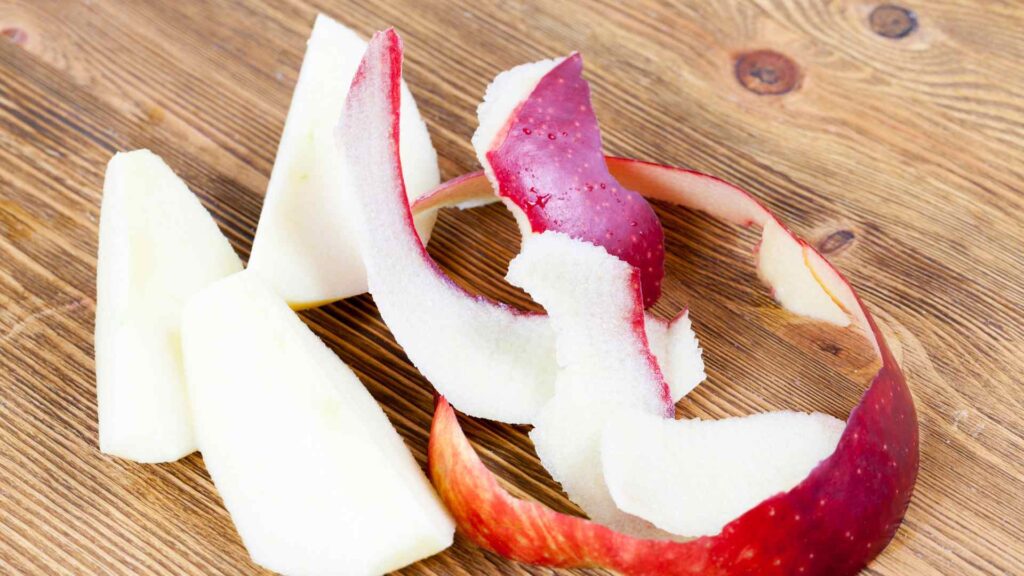
Fresh apple peel does not contain a special dog poison, and there is usually no need to remove a thin washed skin from a bite-size piece. The practical issues are texture, piece size, digestive tolerance, surface contamination, and what remained attached.
Skin adds fiber, but more fiber is not automatically better. Too much apple can cause gas, loose stool, urgency, vomiting, or abdominal discomfort, especially when a dog is not used to fruit.
Apple skin should not be used to treat constipation, diarrhea, anal-gland disease, obesity, dehydration, vitamin deficiency, or poor appetite. A symptom needs a cause and a complete plan, not an unmeasured handful of peel.
Our plain pumpkin guide explains the same fiber principle: food is not a universal digestive prescription. Persistent stool changes, pain, blood, vomiting, or weakness deserves diagnosis rather than a rotating series of home remedies.
Wash apples with running water
Wash the whole apple before cutting it, even if some skin will be removed, because a knife can move dirt and germs from the surface into the flesh. Gently rub it under plain running water and dry it with a clean towel.
The FDA produce-cleaning guidance advises plain running water and says soap or commercial produce wash is unnecessary. Washing reduces surface contamination but does not make damaged or rotten fruit wholesome.
Cut away bruised or damaged areas and discard fruit that looks rotten. “Organic” does not mean germ-free, pesticide-free, or ready to serve without washing.
Do not use dish soap, bleach, disinfectant, essential oil, or household cleaner on an apple. Residue from a cleaning product can create a new exposure that has nothing to do with the fruit.
Piece size matters more than peeling
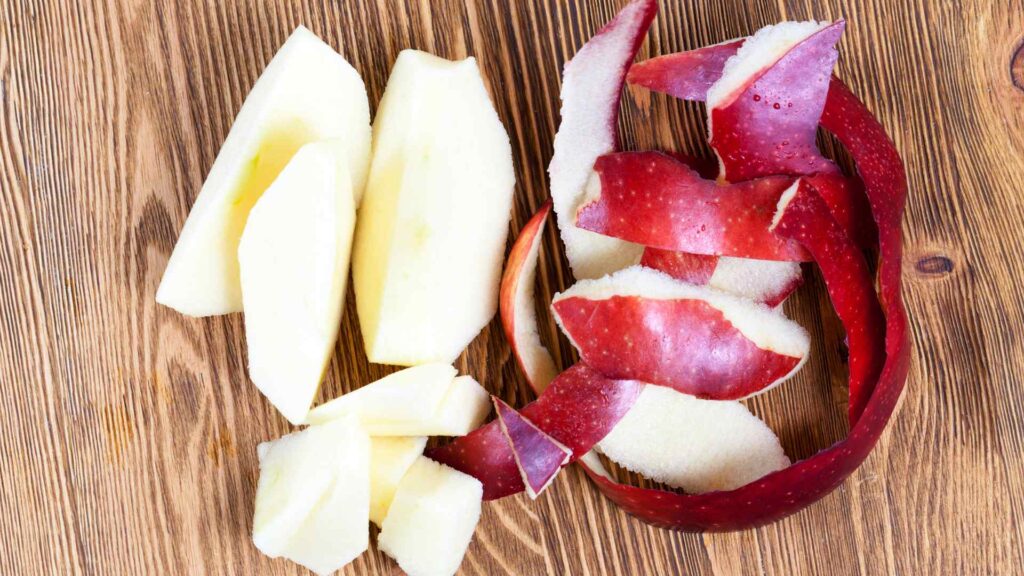
A broad peel ribbon can fold, stick to the roof of the mouth, or be swallowed as a slippery wad. Thin pieces with flesh attached are easier to chew and portion than loose strips from a spiral peeler.
Cut away the stem and core, then make pieces appropriate to the dog’s size and chewing style. Dogs that gulp, have dental disease, have trouble swallowing, or are recovering from oral surgery may need a different treat.
Breathing trouble, blue or gray gums, continuous gagging, or collapse is an emergency. Repeated swallowing, drooling, pawing at the mouth, vomiting, belly pain, or inability to keep water down also warrants prompt assessment.
Core and stem are foreign-object concerns
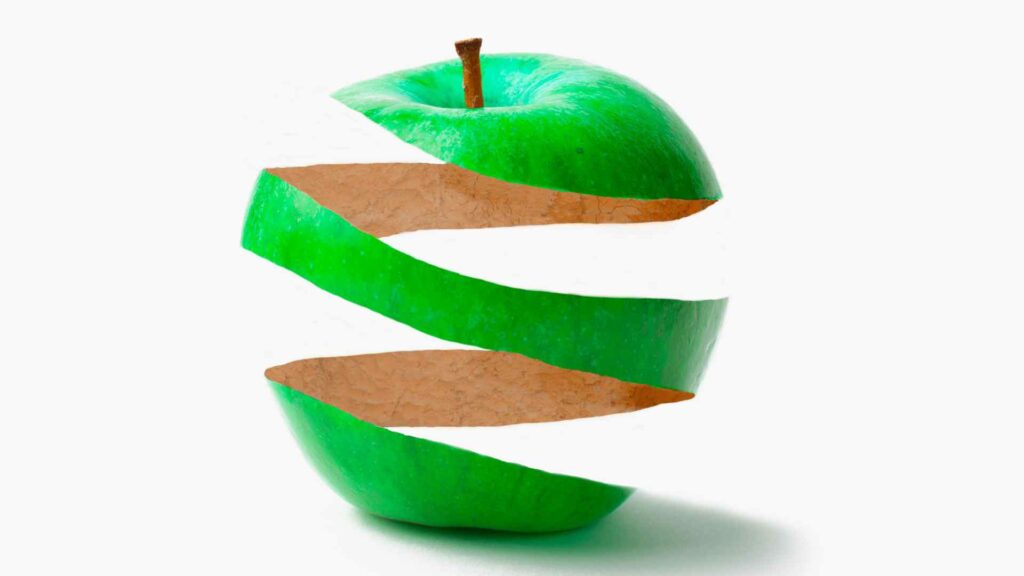
The tough fibrous core is harder to break down than flesh and can lodge in the throat or contribute to an obstruction, particularly in a small dog. The stem is also rigid and should be removed.
One swallowed core does not guarantee an obstruction, but the dog’s size, chewing, core size, and symptoms matter. Do not induce vomiting when a bulky core or another object may be present unless a veterinarian directs it.
Inventory stickers, produce bags, twist ties, foam trays, and plastic wrap after a raid. A scented bag can obstruct the gut or seal around the face and cause suffocation.
Apple seeds require proportion, not panic
Apple seeds contain cyanogenic glycosides, and chewing or grinding can release cyanide, but a few seeds from grocery fruit rarely create severe poisoning. The Merck Veterinary Manual notes that store-bought apple seeds contain very low levels and toxicity would be rare.
That reassurance is not permission to feed cores, collect seeds, or ignore a large uncertain exposure. Call when many seeds were chewed, orchard material was eaten, the amount is unknown, or the dog has breathing difficulty, weakness, collapse, dilated pupils, or unusually bright red gums.
Leaves and stems from an apple tree also contain cyanogenic compounds, with wilted plant material presenting more concern than a clean slice of supermarket fruit. Tell the professional whether the exposure came from a kitchen apple, an orchard, a crabapple tree, or yard debris.
Do not use an online seed-count formula or attempt home treatment with peroxide, salt, oil, milk, or charcoal. The plant part, chewing, amount, time, body size, and symptoms guide professional advice.
Moldy and fermented apples are a different hazard
Apples left under a tree, in compost, or in a forgotten bag can mold or ferment. Fermentation can create alcohol, while some molds can produce toxins that cause tremors or seizures.
The ASPCA Animal Poison Control Center warns that fallen fruit may ferment and that toxic molds on fruit can cause serious neurologic effects. Unsteadiness, unusual sleepiness, repeated vomiting, tremors, seizures, abnormal temperature, or collapse needs urgent care.
Do not cut away one visibly moldy patch and give the remainder to a dog because contamination may extend beyond what is obvious. Secure compost and clear fallen fruit before a curious dog turns yard cleanup into a buffet.
How much apple skin is reasonable
There is no universal peel serving based only on weight because calorie needs, health, diet, chewing, and tolerance differ. Start with one small piece if the veterinary team has no objection, then stop if stool or appetite changes.
The World Small Animal Veterinary Association treat guide recommends limiting treats to no more than 10 percent of daily calories. Apple still contains sugar and calories, even though it is fresh fruit.
Dogs with diabetes, digestive disease, a prescribed diet, food allergy, swallowing trouble, or a calorie-restricted plan may need a different choice. Do not add fruit during a veterinary elimination trial unless it is part of the written protocol.
Apple skin does not brush teeth
Crunching apple may wipe a little food debris from a tooth surface, but it does not clean below the gumline or prevent periodontal disease. Soft peel and fruit sugar are not substitutes for veterinary dental care and tooth brushing with dog-safe toothpaste.
Do not give a whole apple as a dental chew because the core adds choking and obstruction risk. Broken teeth, mouth pain, bad breath, bleeding gums, or difficulty eating needs a dental assessment.
Apple products need their own labels
Applesauce, apple butter, pie filling, dried apples, chips, gummies, cider, juice, pastries, and flavored supplements can add sugar, xylitol, fat, salt, spices, alcohol, or other fruit. “Made with real apple” says little about canine safety.
Sugar-free and keto products need an immediate xylitol check, while baked goods may contain raisins, macadamia nuts, chocolate, nutmeg, or raw dough. Our raisin guide explains why any raisin exposure deserves prompt professional contact.
Apple cider vinegar is concentrated acidity rather than apple skin and should not be used as a flea, digestion, urinary, or weight-loss treatment. Our vinegar guide covers food-level vinegar, cleaning products, supplements, and topical exposure.
Hard dried apple rings and chips can become tough choking pieces, while cinnamon-sugar coatings add calories and irritants. Check the ingredient panel for sweeteners, oils, seasonings, preservatives, and co-packed fruits.
Puppies and sensitive dogs
A weaned puppy can usually handle a tiny safe piece, but puppies have small airways and calorie allowances and may gulp unfamiliar food. Fruit should not replace growth food or be used to manage puppy diarrhea at home.
Older dogs with missing teeth may struggle with skin, while dogs with inflammatory bowel disease or other gastrointestinal conditions may react to an amount another dog tolerates. Individual response matters more than a blanket breed rule.
Vomiting once after a new food may be mild, but repeated vomiting, blood, pain, weakness, bloating, breathing changes, inability to drink, or persistent diarrhea warrants veterinary guidance. Mention core, seeds, mold, fermentation, and packaging rather than reporting only “apple.”
What to do after an apple raid
Remove remaining fruit and inspect the scene for core, seeds, stem, leaves, mold, stickers, bags, and product packaging. Estimate the maximum amount and note whether the seeds were crushed or simply swallowed.
Call promptly for a whole core in a small dog, many chewed seeds, plant material, moldy or fermented fruit, xylitol, raisins, packaging, or significant symptoms. For one small washed skin-and-flesh piece with no core or seeds, monitoring is usually enough.
Bottom line
Washed apple skin on a small seedless piece is generally fine for most healthy dogs, but it is an occasional food, not dental care or fiber therapy. Core, seeds, stem, choking, surface contamination, mold, fermentation, sweetened products, and packaging deserve separate decisions.