Cat Ate a Corn Cob? Obstruction Signs and What to Do Now
A swallowed corn cob can obstruct a cat’s digestive tract, so call a veterinarian now rather than waiting for it to pass. Cob is tough, indigestible plant material, and the practical questions are how much is missing, where it may be lodged, whether the cat can breathe, and what seasonings or skewers came with it.
Do these five things while you call
- Move the remaining cob, husks, skewers, foil, and trash out of reach.
- Check breathing without putting fingers blindly into the throat.
- Estimate the missing piece’s length, width, and shape.
- Photograph the food, recipe, and any matching cob segment.
- Call your veterinarian, emergency clinic, or animal poison service with the cat’s weight and time.
Do not wait for vomiting before making contact, because obstruction can begin with few signs. Early advice may differ from the plan after repeated vomiting or dehydration develops.
The cob is the emergency, not the corn kernels
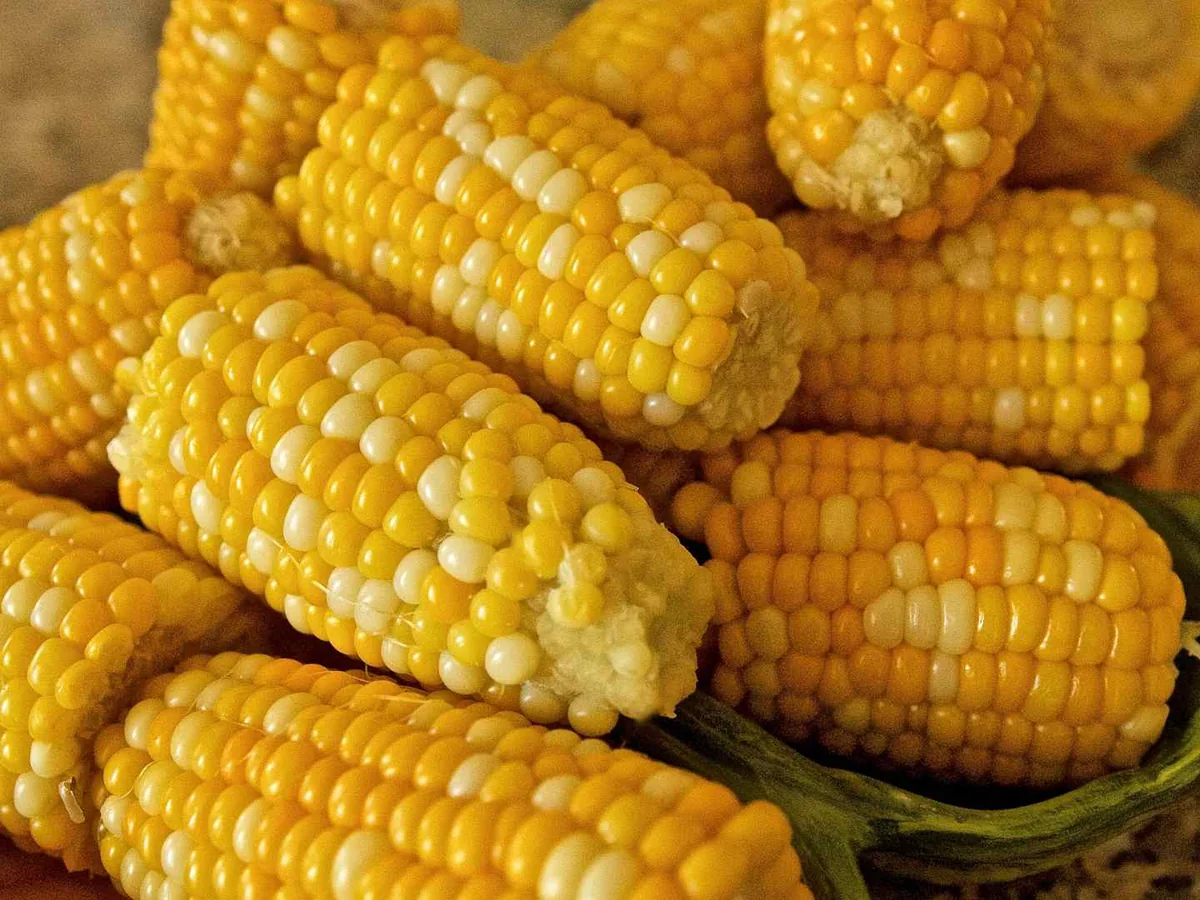
Plain cooked corn kernels are generally a low-priority dietary extra, but the woody central cob does not break down like a soft vegetable. The FDA specifically names corn cobs as objects that can block a pet’s esophagus, stomach, or intestines.
That mechanical danger exists even if the corn was organic, unsalted, or thoroughly cooked. Boiling softens the surface for dinner but does not reliably turn the core into digestible feline food.
Size alone cannot clear the cat
A small round can lodge in a narrow section, while a longer strip can fold or move unpredictably. Cat size, chewing, stomach contents, time, and location all affect the outcome, so no online ruler measurement proves safe passage.
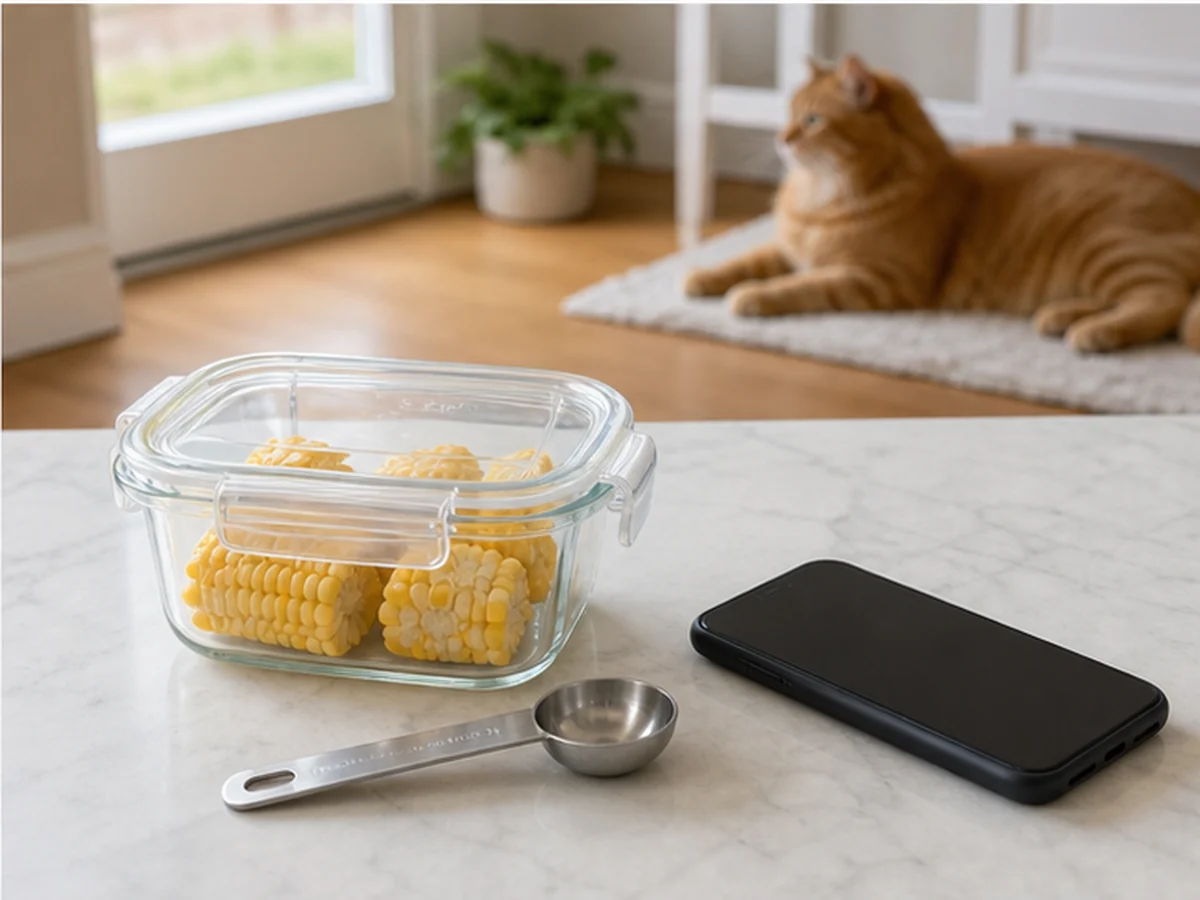
Tell the clinic the largest plausible piece rather than the size you hope was swallowed. A picture beside a coin or ruler can convey shape more reliably than “one bite.”

Choking and intestinal obstruction look different
| Sign | What it may mean |
| Open-mouth breathing, blue-gray gums, collapse | Airway emergency |
| Gagging, repeated swallowing, drooling | Mouth or esophageal material |
| Repeated vomiting, painful belly | Stomach or intestinal obstruction |
| Reduced appetite, hiding, lethargy | Possible developing illness |
| Straining or little stool | Lower digestive problem, but not proof of location |
Any breathing difficulty needs immediate emergency care. Keep the cat calm, minimize handling, and follow transport instructions from the clinic.
Do not pull on material with resistance
A strip of husk, silk, string, or cob protruding from the mouth or anus may be anchored inside. Pulling can injure the esophagus or intestines, especially when linear material has gathered tissue along its path.
Stop the cat from chewing more and call for instructions. Do not cut a visible strand shorter unless a veterinarian specifically directs it, because the visible clue may help the examination.
Home vomiting is unsafe for cats
Do not give hydrogen peroxide, salt, mustard, oil, butter, or fingers-down-the-throat first aid. Cats can be injured by home emetics, aspirate vomit, or bring an irregular object back through the esophagus with additional damage.
A veterinarian may choose imaging, endoscopy, surgery, observation, or another step based on timing and location. The correct option cannot be selected from a generic recipe online.
A normal first hour does not prove passage
Foreign material can remain in the stomach or move until it reaches a narrower point. Appetite may fade, vomiting may begin, and abdominal discomfort may become apparent later.
Follow the clinic’s monitoring window and feeding instructions precisely. Do not give a large meal to push the cob along, because more stomach contents do not dissolve an obstruction.
What the veterinarian may need to know
Report prior abdominal surgery, chronic bowel disease, constipation, recent vomiting, medications, and when the cat last ate normally. Mention whether multiple cats or a dog had access, since the wrong patient is sometimes blamed.
Imaging choices depend on the object and signs, and not every plant material is sharply visible on a plain X-ray. A negative-looking home observation cannot substitute for veterinary interpretation.

Butter, salt, and seasoning are the second file
Corn on the cob may be coated with butter, garlic, onion, chili, cheese, mayonnaise, or seasoned salt. Those ingredients deserve their own assessment without distracting from a possible obstruction.
Our butter guide addresses rich dairy fat, and the garlic guide covers delayed red-cell injury. Save the recipe so the clinic can handle both the object and the coating.
Skewers turn dinner into penetrating trauma
Grilled street corn may arrive on wood or metal, and broken wooden points can be hard to see. A missing skewer segment, blood, pain, gagging, or sudden reluctance to move requires urgent examination.
Do not probe a puncture or pull out a deeply embedded object. Stabilize transport as directed and bring a matching skewer or photo to show its material and diameter.
Husks and silk are not safer alternatives
Husk is fibrous and may be swallowed in sheets, while silk can behave like string. Neither belongs in the bowl or a homemade enrichment toy.
If silk protrudes, follow the no-pulling rule and call. Repeated retching, vomiting, appetite loss, abdominal pain, and lethargy warrant prompt reassessment even after an earlier normal conversation.
Trash raids are rarely one-item exposures
A garbage cat may also swallow foil, plastic wrap, napkins, floss, bones, grease, moldy food, or absorbent pads. Inventory the bin and report every missing item instead of stopping after you find tooth marks on a cob.
Our chicken-bone emergency guide shows why physical shape and preparation matter. A mixed trash exposure deserves a whole-scene reconstruction.
Constipation advice does not fit a suspected blockage
Do not give pumpkin, fiber, laxatives, enemas, or oil unless the examining veterinarian directs them. Cornell notes that foreign-body obstruction can contribute to constipation, which is why the cause matters.
Repeated litter-box straining may also reflect urinary obstruction, particularly in a male cat. Little or no urine, crying, genital licking, vomiting, or collapse is an emergency in its own right.
Food and water instructions should come from the clinic
The team may want an empty stomach for imaging, sedation, endoscopy, or surgery, or may give different guidance based on elapsed time. Ask before offering a snack after the call.
Never force water into a vomiting or distressed cat. Inability to keep water down, dry gums, profound weakness, or collapse suggests the situation has advanced beyond simple home observation.
Preventing the next cob chase
Clear plates directly into a lidded bin and move cobs out before the cat enters the dining area. Tie trash bags only after placing them inside a secure cabinet or can, since a tied bag can still be torn and can create suffocation risk.
Give guests a quick warning during cookouts, when skewers and buttery scraps multiply. A measured commercial cat treat offers a safer way to include the resident counter inspector.
Do not rely on stool searches to clear the case
Watching the litter box may be part of a veterinarian’s plan, but failing to find a cob does not reveal whether it remains inside or broke into unrecognized pieces. Finding one fragment also does not prove every swallowed portion has passed.
Use gloves when checking stool and wash your hands afterward, then report what you observed without squeezing the cat’s abdomen. A painful or tense belly should be assessed by a clinician rather than repeatedly palpated at home.
Vomiting can appear, stop, and return
A cat with a partial obstruction may have intermittent signs and occasional normal-looking moments. One kept-down meal does not guarantee that the pathway is open, especially if appetite, stool, or behavior remains abnormal.
Contact the clinic again when the pattern changes, even if the original advice was monitoring. New vomiting, hiding, pain, weakness, or reduced stool changes the evidence available to the veterinarian.
Transportation should protect a potentially painful cat
Use a secure carrier with a flat towel and minimize pressure on the abdomen. A painful cat may bite or scratch despite a normally gentle temperament, so keep children and other pets away during loading.
Bring the matching cob, photographs, recipe, and packaging in a separate sealed bag. The ASPCA advises contacting its Animal Poison Control Center for toxic exposures, while a suspected obstruction also needs a veterinary facility able to examine the cat.
After removal, prevention is part of recovery
If the object requires endoscopy or surgery, follow discharge instructions for food, medication, activity, incision care, and rechecks exactly. Do not add human pain medicine, laxatives, or rich treats to a recovering cat’s plan.
Ask what vomiting, appetite, stool, wound, or energy changes require an immediate return. A successful removal solves the obstruction, but careful recovery protects healing tissue and catches complications early.
Frequently asked questions
Can a cat pass a small corn cob piece?
Some foreign objects pass, but no home measurement can guarantee it, and cob is a recognized obstruction hazard. Call now for case-specific advice even while the cat acts normal.
Should I make my cat vomit?
No, do not induce vomiting at home. An irregular object can injure the esophagus on the way back up, and common home methods are unsafe for cats.
What if the cob was cooked?
Cooking does not make the woody core reliably digestible. Treat a swallowed cooked cob as a foreign-body exposure and contact a veterinarian.
Can I feed bread or pumpkin to push it through?
No food can be assumed to push a cob safely through a narrowing. Follow the clinic’s feeding instructions and avoid delaying imaging or removal.
How long until obstruction signs appear?
Timing varies with location, size, and the individual cat, and some animals look normal initially. Use the veterinarian’s monitoring window rather than waiting for a particular hour or symptom.
Bottom line
A corn cob is an indigestible object, not a fiber treat. Call promptly, do not induce vomiting or pull protruding material, keep food and water decisions with the clinic, and report seasonings, skewers, husks, silk, and trash debris alongside the missing cob.