Can Dogs Eat Skittles? Sugar, Xylitol, Wrappers, and Labels
One or two ordinary Skittles are unlikely to poison a healthy dog, but these candies are almost entirely an unnecessary sugar-and-calorie event. Product formulas vary, so sugar-free or special editions, large amounts, choking, wrappers, medical conditions, and whatever else was in the candy bag matter more than the rainbow colors.
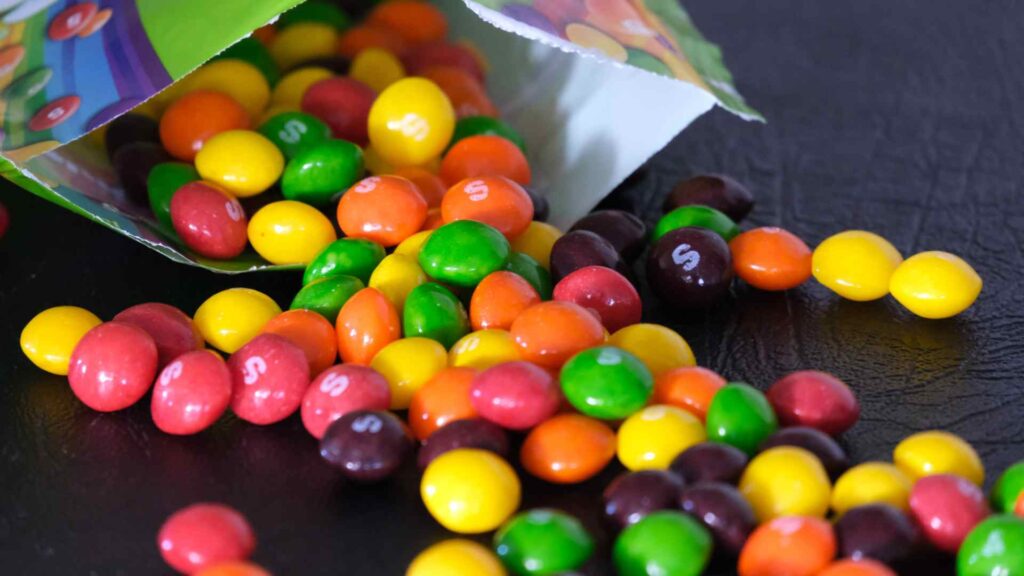
Check the current package before making assumptions
Candy recipes can change by variety, country, package size, and manufacturing update. Original, sour, tropical, gummy, drink-mix, freeze-dried, and promotional products should not be treated as one fixed formula.
FDA guidance on using Nutrition Facts labels explains serving sizes, calories, added sugars, fat, and sodium. The ingredient list, not an old screenshot online, is the evidence for the bag in your hand.
Photograph both panels and the lot information before discarding a torn package. Count missing candy and wrappers, then note the dog’s weight, health, symptoms, and possible time range.
A single dropped piece is not the same as an entire share-size bag. Product amount relative to body size is central to whether monitoring or a veterinary call makes sense.
Ordinary sugar candy is not a nutritional emergency
Regular Skittles are a poor treat because they add sugar and calories without balanced canine nutrition. One piece usually causes no sign, while a large amount may bring vomiting, diarrhea, gas, abdominal discomfort, or restless behavior.
Sugar itself does not cause a healthy dog to become instantly hyperactive, and it is not a classic poison in an ordinary candy-sized exposure. That proportionate framing should not become permission for routine feeding.
Repeated candy can undermine weight management and dental health. Sticky candy does not clean teeth, and a vitamin claim on a specialty product does not make sugar useful.
The WSAVA treat guide recommends keeping all extras below 10 percent of daily calories. Candy can use that allowance without offering a useful training texture or nutrient profile.
Sugar-free changes the question
Do not assume every sugar-free candy contains xylitol, because many use other sweeteners. Do immediately read the label for xylitol, birch sugar, wood sugar, or an unfamiliar active ingredient.
The FDA’s xylitol warning advises contacting a veterinarian, emergency clinic, or animal poison center after exposure. Xylitol can cause rapid hypoglycemia and possible liver injury in dogs.
A confirmed xylitol exposure is urgent before symptoms develop. Do not wait for vomiting, weakness, poor coordination, tremors, seizures, or collapse.
Other sweeteners are not automatically equivalent to xylitol, although some can cause digestive upset. Give the professional the exact ingredient rather than the vague phrase artificial sweetener.
Colors deserve facts, not alarm
Approved food colors are not the main concern after a few ordinary candies. There is no basis for claiming that one colorful piece predictably causes cancer, poisoning, or behavior change in a dog.
A dog could have an individual adverse response to almost any ingredient, but vomiting after a bag raid does not prove dye allergy. Sugar load, quantity, co-ingredients, and wrappers are more common practical explanations.
If skin or ear problems recur with food, ask a veterinarian about a controlled diagnostic plan. Randomly testing each candy color cannot diagnose allergy or intolerance.
Choking and sticky mouthfuls
Small candies can be swallowed whole, while multiple softened pieces can clump into a sticky mouthful. Toy breeds, puppies, flat-faced dogs, dental patients, and habitual gulpers deserve closer supervision.
Coughing, frantic pawing, blue or pale gums, inability to move air, or collapse is an emergency. Do not perform a blind finger sweep that could push candy deeper or cause a bite.
Freeze-dried or gummy versions can have different hardness and shape from standard pieces. Check the actual product before assuming the texture is familiar.
Wrappers and bags can be more dangerous
A dog may swallow individual wrappers, plastic film, resealable tracks, clips, cardboard, or a whole bag while chasing the candy smell. Snack bags can also create a suffocation hazard if a dog’s head becomes trapped.
The FDA’s pet household-hazards guide specifically warns that thin food bags can seal around the nose and mouth. Cut open discarded bags and secure trash.
Missing wrappers plus repeated vomiting, retching, abdominal pain, appetite loss, swelling, or inability to keep water down needs prompt veterinary assessment. Do not wait to see plastic in the stool when symptoms appear.
Mixed candy bowls are mixed exposures
Chocolate, coffee candy, raisins, macadamias, cannabis edibles, nicotine products, gum, medication, and sugar-free sweets may sit beside Skittles. Inventory the entire bowl, backpack, stocking, or trick-or-treat bag.
The marshmallow guide separates ordinary sugar from xylitol and chocolate products. The brown sugar guide explains why sugar is not a home energy treatment.
Packaged Fig Newtons raise the same label and wrapper questions but add flour, fruit filling, fat, and sticky texture. Human snacks should be assessed as their actual recipes, not as one candy category.
Do not let the recognizable Skittles package distract from an unwrapped unknown candy. Save matching pieces, labels, and purchase receipts when available.
Dogs who should not receive candy
Dogs with diabetes, obesity, pancreatitis, gastrointestinal disease, dental disease, swallowing trouble, or a prescription diet should not receive intentional candy. A veterinarian may want an earlier call after a substantial raid.
Puppies need balanced growth nutrition and readily chew wrappers. Seniors and very small dogs may be more affected by the same bag than a healthy large adult.
Never use Skittles to treat suspected low blood sugar unless a veterinarian specifically directs the product and amount. Weakness, tremors, collapse, or seizures can have many causes and require urgent care.
What to do after a Skittles raid
- Identify the exact variety, country label, package size, and regular or sugar-free status.
- Photograph ingredients and nutrition facts, highlighting xylitol and any special active ingredients.
- Estimate candy and wrappers missing, time, dog weight, symptoms, conditions, medications, and normal diet.
- Inventory other candy, gum, chocolate, raisins, cannabis, nicotine, medicine, and packaging within reach.
- Call immediately for xylitol or severe symptoms, and promptly for a large amount, medical restrictions, unknown candy, or missing packaging.
A healthy adult dog that ate one or two ordinary pieces, swallowed no wrapper, and remains comfortable can often be monitored. Keep normal water available and return to the complete diet.
Do not induce vomiting or give salt, oil, charcoal, insulin, sugar, antacids, or human medicine unless directed. The correct response depends on the current label and complete exposure.
Mouth, teeth, and dental care
Candy can adhere around teeth and gums, but a one-time exposure is not solved by aggressive brushing during a stressful raid. Check the mouth only if the dog is calm and breathing normally.
Do not use human toothpaste because some products contain xylitol or other unsuitable ingredients. Resume the dog’s veterinarian-approved dental routine after urgent concerns are addressed.
A cracked tooth, ongoing mouth bleeding, facial swelling, or refusal to chew needs examination. Hard specialty candy and chewed package clips can injure the mouth independently of sugar.
Storage and prevention without drama
Keep candy in a closed cabinet rather than on a coffee table, nightstand, or open backpack. Childproof containers are not always dog-proof when they still smell like food.
After parties or holidays, check under furniture and in coat pockets for dropped pieces. Secure trash before bed, especially when wrappers also contain chocolate, gum, or unknown candy residue.
Teach a reliable leave-it cue, but pair training with physical storage. Management protects the dog when guests, children, or delivery workers do not know the household routine.
What symptoms mean after ordinary candy
Mild loose stool after several regular pieces may resolve, but repeated vomiting, marked diarrhea, pain, or inability to keep water down deserves a veterinary call. Symptoms should not automatically be blamed on sugar if another exposure is possible.
Tremors, poor coordination, seizures, collapse, profound weakness, or unusual sleepiness are not expected from one ordinary piece. Recheck the bag for xylitol or mixed products and seek urgent help.
A swollen abdomen or repeated unproductive retching can signal a serious gastrointestinal emergency. Missing wrappers, clips, or packaging make prompt examination even more important.
Candy is not enrichment
A dog does not need human candy to experience variety or reward. Kibble from the measured daily ration, a veterinarian-approved low-calorie treat, play, sniffing, and social interaction are easier to use safely.
Avoid homemade rainbow candy made with supplement powders, cannabis, caffeine, essential oils, or concentrated flavors. A cheerful color does not disclose the active ingredient or dose.
Frequently asked questions
Are regular Skittles toxic to dogs?
A few ordinary pieces are usually a minor dietary mistake rather than classic poisoning. Quantity, formula, dog health, and wrappers still matter.
Do Skittles contain xylitol?
Do not rely on a universal answer because products change. Read the exact current ingredient list and call immediately if xylitol appears.
Are the dyes dangerous?
Food colors are not the primary concern in a small ordinary exposure. Avoid unsupported dye alarmism and focus on sugar, amount, special formulas, choking, and packaging.
The bottom line
Ordinary Skittles are unnecessary but one or two usually cause no major problem in a healthy dog. Large amounts can cause digestive upset and add substantial empty calories.
Current labels outrank memory. Treat xylitol or dangerous mixed-candy ingredients urgently, account for wrappers, and do not turn color or dye into the story without evidence.