Can Cats Eat Pepperoni? Salt, Fat, Alliums, Casings, and Triage
A healthy adult cat who steals one tiny pepperoni crumb will usually be fine, but pepperoni is a poor cat treat. It is concentrated in salt and fat, often seasoned with garlic or onion, and may bring spicy coatings, tough casing, spoilage, or packaging into the incident.
What to do after a pepperoni theft
Remove the food, offer fresh water, and save the label or restaurant ingredient information. Estimate the number and size of pieces, check for onion or garlic, and account for casing, plastic film, absorbent pads, skewers, and wrappers.
- One plain crumb: usually monitor for vomiting, diarrhea, thirst, or appetite change.
- Garlic, onion, unknown seasoning, or repeated servings: call your veterinarian or pet poison service promptly.
- Whole stick, several slices, or substantial casing: call because salt, fat, and obstruction concerns rise with amount.
- Breathing difficulty, collapse, repeated vomiting, severe weakness, pale or yellow gums, tremors, or seizures: seek urgent care.
Do not induce vomiting and do not force water. Cats need case-specific instructions, especially when a casing or wrapper may complicate vomiting.
Why meat does not make pepperoni cat food
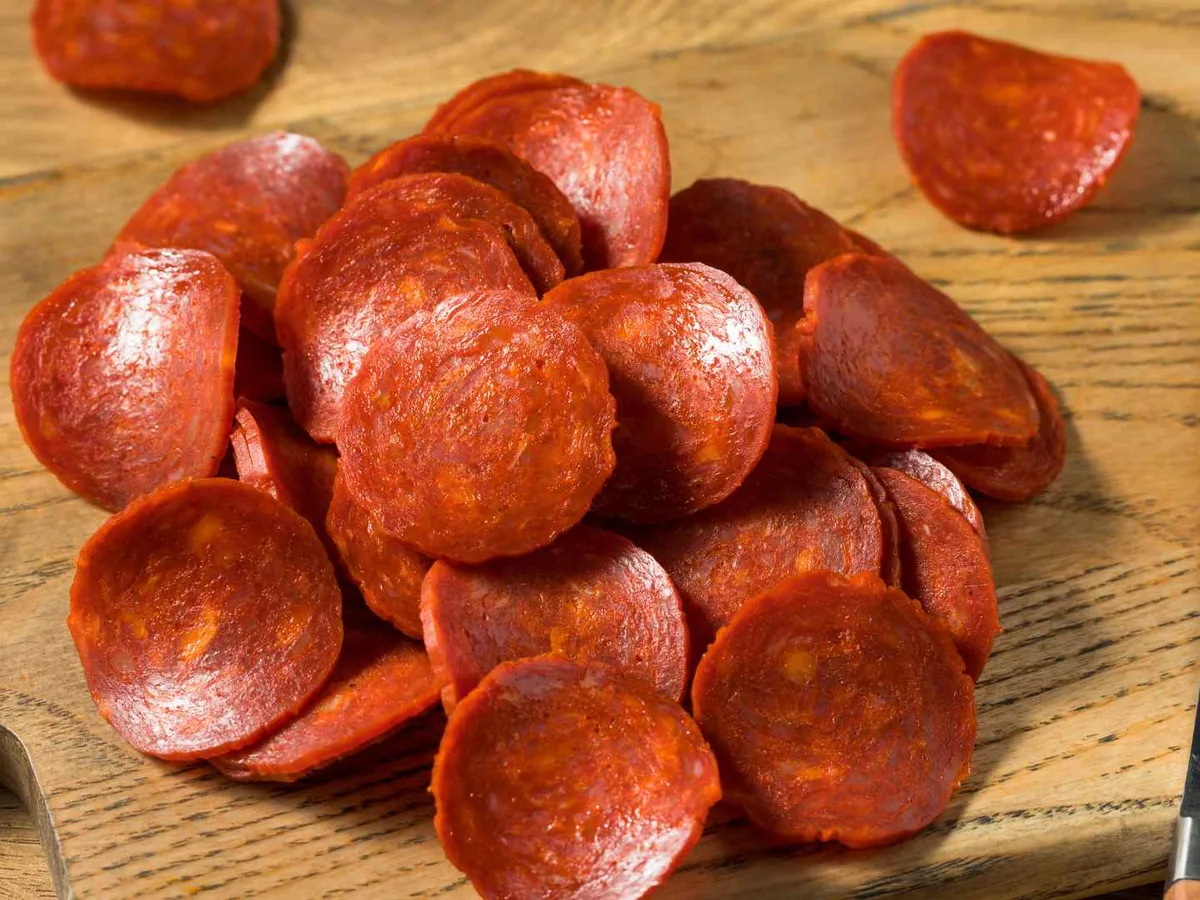
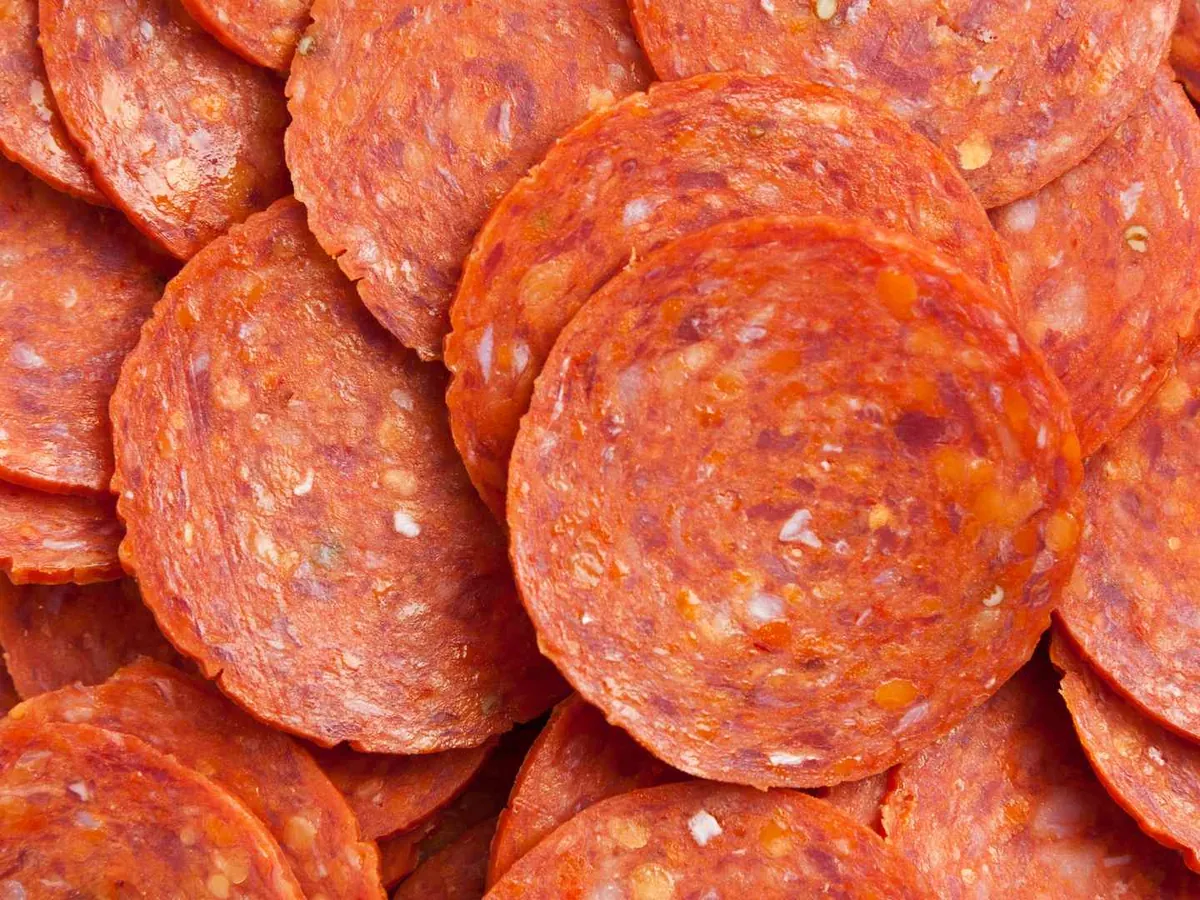
Pepperoni is a cured, fermented, dried meat product commonly made from pork and beef with salt, spices, starter cultures, and preservatives. Meat is feline-relevant, but curing transforms it into a calorie-dense, salty people food rather than a balanced protein portion.
Cats need a complete mix of amino acids, fatty acids, vitamins, and minerals, not simply an ingredient that began as meat. The Merck Veterinary Manual nutrient overview explains feline requirements for taurine, preformed vitamin A, arachidonic acid, arginine, and other essentials.
A pepperoni slice therefore cannot audition as dinner, however confidently the cat supervises pizza night. At most, a tiny accidental crumb is a minor dietary detour.
Salt is the first obvious mismatch
Curing relies on salt, and a little round slice can contain much more sodium than plain cooked meat. One crumb is not expected to cause salt poisoning in a healthy cat with water available, but several slices or a whole stick deserve prompt advice.
The Merck review of salt toxicosis describes thirst, salivation, vomiting, diarrhea, incoordination, tremors, seizures, and other serious signs after excess sodium exposure. Limited access to water and underlying disease can change risk.
Leave fresh water available but never syringe or pour it into a cat’s mouth. Forced water can be aspirated, and dangerously abnormal sodium needs carefully managed veterinary correction.
Garlic and onion can hide in the spice line
Some pepperoni contains garlic, garlic powder, onion powder, or a broad spice or natural-flavor listing that does not reveal the kitchen recipe. Restaurant staff may not know the subingredients in a supplier’s cured meat.
Garlic and onion are Allium plants whose sulfur-containing oxidants can damage feline red blood cells. The Merck Allium toxicosis review identifies cats as especially susceptible and notes that anemia signs may be delayed for days.
A cat that looks normal immediately after seasoned pepperoni has not ruled out meaningful Allium exposure. Call with the product, amount, and time instead of waiting for pale gums, weakness, rapid breathing, or dark urine.
Fat and calories matter before toxicity does
Pepperoni concentrates fat and calories as water is removed. Several small slices can occupy a surprising share of a cat’s daily energy allowance and displace complete food.
Rich unfamiliar food commonly causes vomiting, diarrhea, gas, or appetite disruption. It is inaccurate to promise that one slice causes pancreatitis, but cats with a pancreatitis history or fat-sensitive digestive disease should avoid it and receive individualized advice after a larger theft.
The Cornell Feline Health Center recommends complete balanced food as the foundation and treats only occasionally. Pepperoni spends the treat budget with astonishing efficiency and very little nutritional charm.
Spices, smoke, and heat
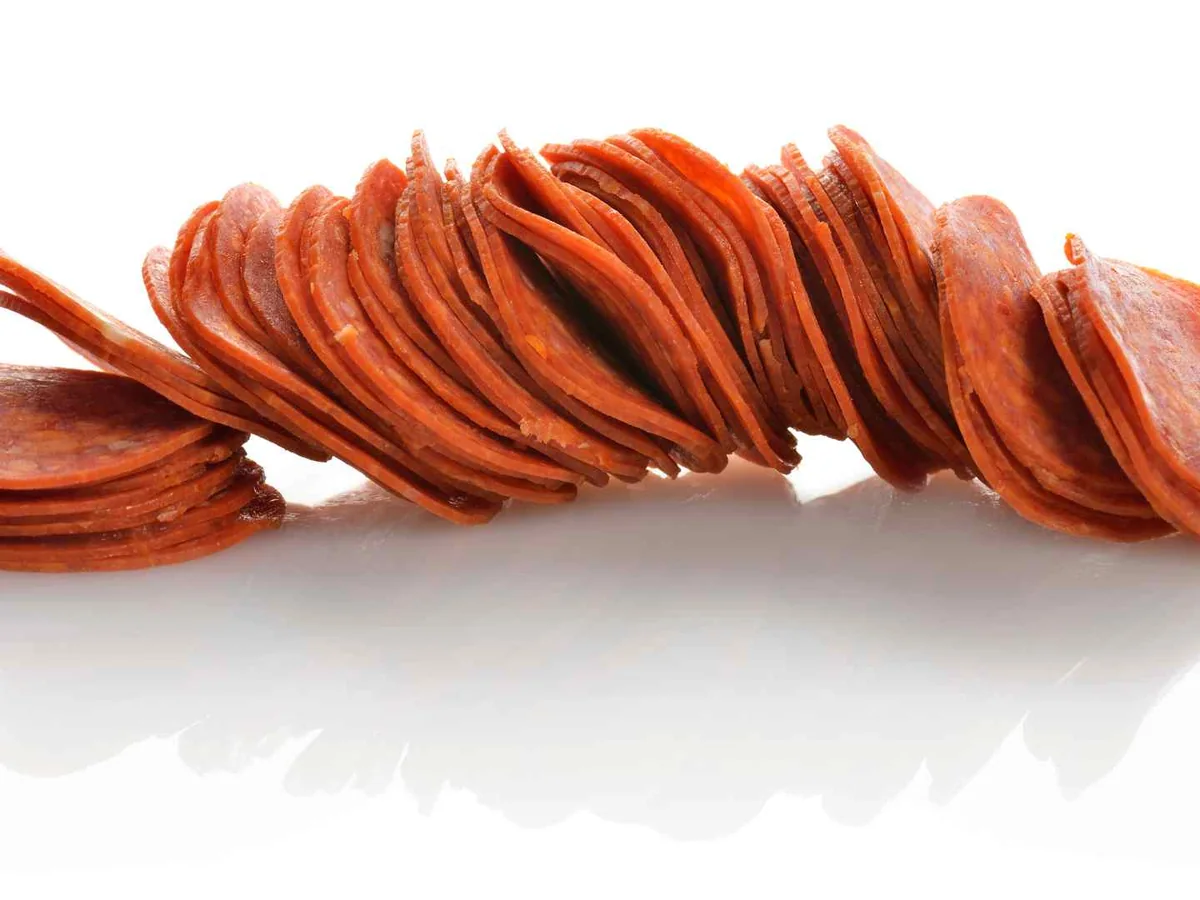
Paprika, chile, pepper, smoke flavor, fennel, and other seasonings can cause oral or gastrointestinal irritation, particularly in concentrated surface coatings. Drooling, lip licking, vomiting, and diarrhea may reflect irritation rather than systemic poisoning.
Hot pepperoni fresh from an oven can burn the lips and tongue. Let human food cool out of reach, but do not offer a replacement slice because the first one achieved a more cat-compatible temperature.
Sweet or novelty pepperoni can contain honey, maple, alcohol flavor, cheese, or other additions. Read every label rather than assuming all red circles share one formula.
Casing, string, clips, and packaging
Natural and synthetic casings may be edible for humans but tough for a cat to chew, especially when a long strip separates from a slice. String, netting, metal clips, oxygen absorbers, plastic film, and absorbent meat pads are foreign-body hazards.
Call for repeated vomiting, abdominal pain or swelling, inability to keep water down, refusal to eat, straining, reduced stool, or marked lethargy after packaging disappears. Do not pull string or plastic from the mouth or rectum because it may be anchored internally.
The FDA’s pet-proofing guidance notes that food bags themselves can endanger animals. A greasy wrapper may be more compelling to a cat than the tidy slice you placed on a plate.
Pepperoni pizza is a multi-ingredient exposure
Pizza adds sauce, cheese, crust, garlic, onion, grease, possible raw dough, and foil or box debris. Use our pizza and cats guide to assess the whole slice rather than isolating one topping.
Our salami guide covers a related cured meat, while pickles show how brine and Allium seasoning can change a seemingly simple snack. If butter or dairy-heavy dip was involved, the butter guide adds useful context.
Turkey pepperoni, vegan pepperoni, and pet treats
Turkey pepperoni may contain less fat in some formulas, but it remains cured, salty, seasoned meat. Vegan pepperoni avoids meat yet can contain garlic, onion, soy, wheat, pea protein, oils, spices, and substantial sodium.
A pet treat labeled pepperoni flavor should be judged by its species label and nutritional purpose. A cat treat from a reputable manufacturer is not the same product as deli pepperoni, while a dog treat is not automatically formulated or portioned for cats.
Check the adequacy statement because treats are typically not complete meals. The FDA explains how complete and balanced claims differ from supplemental products.
Spoilage, mold, and refrigeration
Curing reduces some microbial risks but does not make pepperoni immortal. Follow the package directions for refrigeration after opening and discard product that is slimy, rancid, moldy beyond an expected commercial culture, or left out too long.
Do not trim unexplained mold from a stick and feed the cleaner-looking center to a cat. Unknown mold and spoilage deserve disposal in a lidded bin.
Cats who need stricter boundaries
Kittens have tiny calorie budgets and need complete growth nutrition, while senior cats may have less reserve. Cats with kidney disease, heart disease, diabetes, obesity, pancreatitis history, gastrointestinal disease, food allergy, or prescription diets should skip pepperoni unless their veterinarian says otherwise.
A cat on an elimination diet should not receive cured meat because mixed animal proteins and flavorings can compromise the trial. A cat taking medication also should not use pepperoni as a pill wrap without approval, since salt, fat, and ingredients may conflict with the plan.
If symptoms develop
Stop access and record vomiting, diarrhea, thirst, urine, appetite, activity, breathing, and gum color. Call for repeated symptoms, blood, pain, worsening lethargy, appetite refusal, pale or yellow gums, or dark urine.
Do not compensate for stolen pepperoni by withholding meals, because extended inadequate intake creates its own serious feline risk, including hepatic lipidosis. Call the clinic promptly if pepperoni is followed by refusal of the cat’s usual meal.
How to prevent a repeat performance
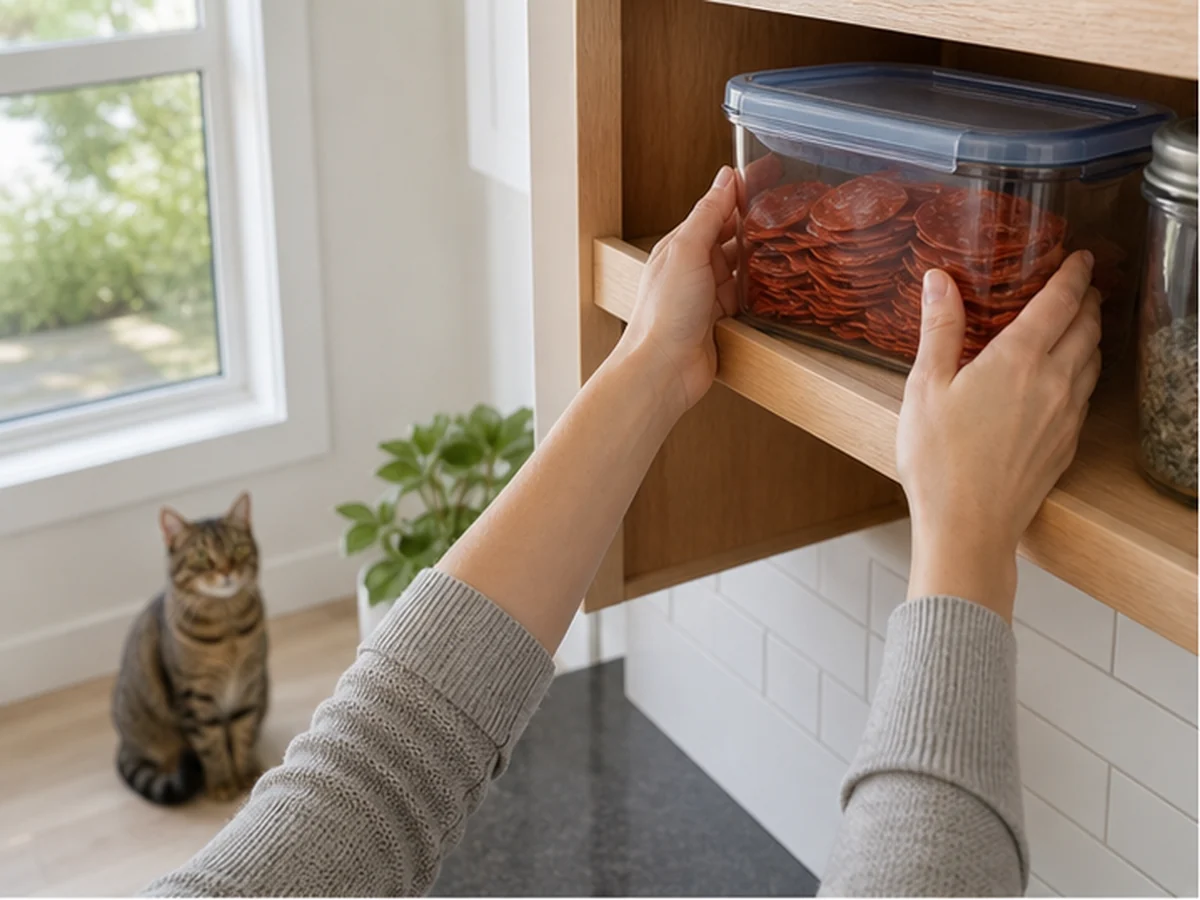
Refrigerate opened pepperoni in closed storage and move the serving board as soon as people finish eating. Put casings, strings, clips, foil, and pizza-box liners directly into a lidded bin rather than leaving them to perfume the kitchen overnight.
During parties, serve the cat a measured normal meal in a quiet room with water, litter, bedding, and a food puzzle. This reduces begging and door-dashing without requiring every guest to memorize a veterinary toxicology lecture.
Ask children and visitors not to share cured meat, even when the cat performs a convincing impression of starvation. Consistent household rules prevent repeated small exposures that no single person realizes are accumulating, and they keep greasy wrappers out of curious paws.
If food stealing is suddenly intense or accompanies weight loss, increased thirst, vomiting, or refusal of regular food, schedule a veterinary visit. A changing appetite can be a medical clue rather than a new appreciation for charcuterie.
A safer meaty treat
For many healthy cats, a pea-sized shred of plain, fully cooked, unseasoned lean meat is a more sensible occasional extra. Remove bones, skin, fat, gravy, onion, garlic, and packaging, and keep all extras modest.
Part of the regular complete ration is even easier and works well in a food puzzle. The cat receives payment for leaving pizza alone, while you avoid conducting a miniature deli-counter investigation.
Frequently asked questions
Can kittens eat pepperoni?
No useful reason supports it. Kittens need complete growth food and have small airways, digestive tracts, and calorie budgets.
Is one pepperoni slice an emergency?
Often not for a healthy adult, but check garlic, onion, salt, casing, and the cat’s medical history. Call when seasoning is concerning, the amount is larger, or symptoms develop.
Can cats eat turkey pepperoni?
It remains salty, cured, seasoned people food even when turkey replaces pork or beef. A tiny accidental crumb is usually minor, but do not make it a treat.
The bottom line
One pepperoni crumb is usually a small detour, while several slices, Allium seasoning, casing, and packaging deserve closer attention. Save the label, offer water, call when ingredients or symptoms raise concern, and give the cat plain complete food instead of cured-meat confetti.