Can Dogs Eat Cooked Eggs? Plain Portions, Raw Risks, and Shells
A small amount of fully cooked plain egg is usually low risk for a healthy dog, but it is optional food rather than a protein, coat, or muscle treatment. Raw or runny egg, repeated raw whites, butter, oil, salt, shells, allergy, spoilage, portion size, and medical-diet restrictions require separate decisions.
The safest egg is cooked, plain, and modest
Eggs can be useful as an occasional treat or medication helper, but they are not required when a dog eats a complete and balanced diet. One egg also represents a very different calorie share for a toy dog than for a large active dog.
Preparation changes the answer more than the shell color, yolk color, or marketing label. Brown, white, free-range, organic, and conventional eggs all need safe handling and thorough cooking.
Breakfast plates add extra questions, so see our guides to bacon and cheese before sharing anything beside plain egg.
How to prepare an egg for a dog
- Use a clean, intact egg that has been refrigerated and is within date.
- Cook until the white and yolk are firm, or until an egg dish reaches a safe internal temperature.
- Set the dog’s portion aside before adding salt, butter, oil, dairy, sauce, onion, garlic, or pepper.
- Let it cool and cut it into small pieces rather than serving a gulpable whole egg.
- Begin with one small bite and stop if vomiting, diarrhea, itching, swelling, or discomfort appears.
The CDC safer-food guidance recommends eggs with firm whites and yolks and egg dishes cooked to 160°F when they contain no meat or poultry. A food thermometer is more dependable than guessing from color.
Hard-boiled egg
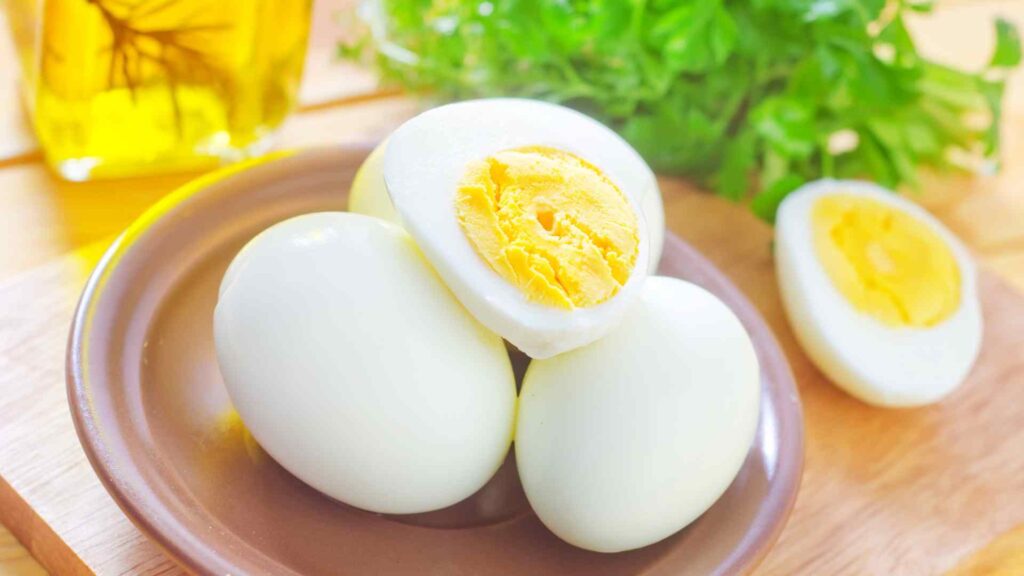
A fully hard-boiled egg is easy to inspect and portion. Remove the shell, cool the egg, and chop a small amount without salt or seasoning.
Scrambled egg
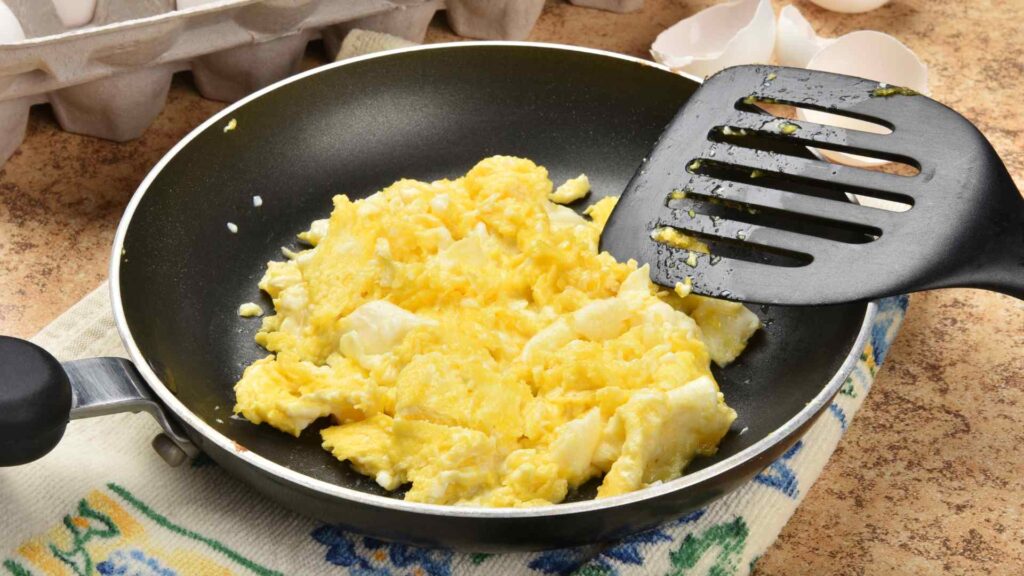
Scramble it in a clean nonstick pan without butter, oil, milk, cheese, salt, or seasoning. Soft or wet curds may be undercooked, so cook the dog’s portion through.
Poached or fried egg
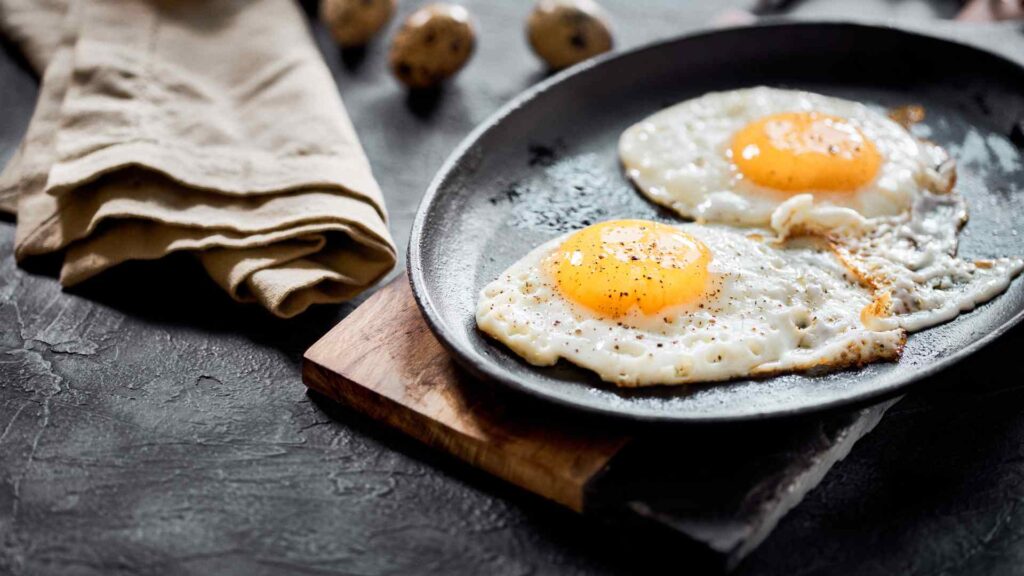
A poached egg is suitable only when both yolk and white are cooked firm. Fried eggs usually bring oil, butter, salt, crisp edges, and a runny yolk, making plain hard-boiled or scrambled egg simpler.
Baked egg dishes
Quiche, frittata, casserole, breakfast sandwiches, and egg bites commonly contain cheese, cream, bacon, sausage, onion, garlic, salt, and pastry. The egg does not make the whole recipe dog-safe.
Why raw egg is an avoidable risk
Raw and undercooked eggs can contain Salmonella, and contamination can spread to hands, counters, bowls, fur around the mouth, and feces. A dog may carry and shed bacteria even without looking dramatically ill.
The FDA Salmonella guide includes raw or undercooked eggs among possible sources and explains that pets can spread bacteria in the household. Young, elderly, pregnant, and immunocompromised people deserve particular protection from cross-contamination.
Freezing an egg does not make it pathogen-free, and a clean-looking shell cannot prove the contents are safe. Cooking is the straightforward control for a treat that provides no special benefit when raw.
What if a dog steals one raw egg?
One raw egg does not guarantee illness in a healthy adult dog, so avoid predicting catastrophe. Clean the spill, wash hands and surfaces, prevent face licking, and monitor the dog.
Call the veterinarian for repeated vomiting, bloody diarrhea, fever, marked lethargy, weakness, dehydration, or illness in a puppy, senior, pregnant dog, or dog with another medical problem. Tell a human healthcare professional about the exposure if a household member develops compatible illness.
The raw-egg-white and biotin story needs proportion
Raw egg white contains avidin, a protein that binds biotin and can reduce its absorption. That does not mean one stolen raw egg instantly creates biotin deficiency.
The Merck Veterinary Manual nutrition review identifies feeding raw egg whites as a way biotin deficiency can occur, while also noting that naturally occurring deficiency is rare. The concern is repeated nutritional imbalance, not a magical toxin in one egg.
Cooking denatures avidin and also reduces pathogen risk, so there is little reason to design a raw-egg-white habit. A complete diet is more reliable than trying to balance egg white against yolk at home.
Eggshells are not a casual calcium plan
Eggshell is mostly mineral, but an unmeasured shell is not a safe prescription for calcium. Growing puppies and dogs with kidney, urinary, or other medical conditions can be harmed by mineral improvisation or by disrupting the balance of a complete diet.
Shell fragments can be sharp, fibrous inner membrane can clump, and a whole shell can be gulped. Raw shells also carry the same kitchen-hygiene concerns as raw eggs.
A veterinary nutritionist may use precisely processed and measured calcium in a formulated home-cooked diet. That is different from crushing breakfast shells over complete kibble because a social post called it natural.
Protein does not turn egg into a muscle treatment
Eggs contain highly digestible protein and useful nutrients, but a dog-sized portion does not repair muscle loss, cure weakness, improve a coat, or replace rehabilitation. A complete diet already supplies amino acids in planned quantities.
Unplanned weight loss, muscle loss, poor growth, reduced appetite, exercise intolerance, or slow recovery needs diagnosis. Adding egg calories can mask how little normal food a dog is eating without treating the cause.
Egg should not replace a meal. It lacks the complete canine nutrient profile and can displace the food that supplies balanced vitamins, minerals, fatty acids, and trace nutrients.
Calories, fat, and pancreatitis
A whole egg can use a large share of a small dog’s daily treat allowance. Egg yolk contains most of the fat and calories, while butter, oil, cheese, bacon grease, and sausage make the dish richer still.
Dogs with current or previous pancreatitis, hyperlipidemia, obesity, or a prescribed low-fat diet should receive egg only with veterinary approval. Plain does not automatically mean compatible with a therapeutic plan.
The UC Davis veterinary treat guideline recommends that all treats and extras remain below 10 percent of daily calories. Egg shares that allowance with every chew, training reward, table scrap, and pill food.
Ten percent is a ceiling, not a goal or a recommendation to feed an egg daily. Start with a bite, and ask for an individual calorie target if egg will be used repeatedly.
Egg allergy is possible but cannot be guessed
Egg protein can be a food allergen for some dogs, yet itching, ear trouble, vomiting, and diarrhea each have many causes. One symptom after one meal does not prove an egg allergy.
The Merck Veterinary Manual food-allergy review identifies a strict elimination diet as the reference diagnostic method. Blood, saliva, hair, and other convenient tests cannot reliably replace a controlled trial and rechallenge.
Do not add egg during a veterinary elimination trial unless it is explicitly permitted. Egg in a treat, supplement, pill pocket, baked food, or flavored medicine can undermine the test.
Facial swelling, widespread hives, breathing difficulty, weakness, or collapse after eating is an emergency. Less dramatic recurring signs still deserve a veterinarian rather than endless ingredient swapping.
Common egg dishes that change the risk
- Omelets with onion, garlic, cheese, ham, or hot sauce.
- Deviled eggs with mayonnaise, mustard, seasoning, or relish.
- Egg salad with onion, garlic, salt, mayonnaise, or pickles.
- Breakfast sandwiches with bacon, sausage, cheese, butter, and wrappers.
- Raw batter or dough containing uncooked flour, chocolate, raisins, or xylitol.
- Eggnog containing alcohol, nutmeg, sugar, cream, or raw egg.
Raw egg inside bread dough does not make the dough safe. Unbaked yeast dough and raw flour introduce separate hazards, while pastries can contain chocolate, raisins, or sweeteners.
Plain egg mixed into oatmeal is still only suitable when both foods are fully cooked and the bowl contains no unsafe additions. Check the entire recipe.
What to do after an egg raid
- Remove access and identify raw, cooked, shell-on, seasoned, baked, or mixed-dish exposure.
- Estimate the number of eggs and save the recipe, package, or restaurant ingredient list.
- Check for onion, garlic, chocolate, raisins, xylitol, alcohol, raw dough, medication, and rich meat drippings.
- Inspect for missing carton pieces, plastic, foil, wrappers, skewers, or utensils.
- Call for unsafe additions, swallowed objects, a large rich amount, medical restrictions, or concerning symptoms.
A healthy adult dog who ate a small amount of plain fully cooked egg and feels normal can usually be monitored. Keep normal water available, skip more extras, and call if vomiting, diarrhea, itching, swelling, pain, or lethargy appears.
Frequently asked questions
Can puppies eat eggs?
A tiny amount of fully cooked plain egg may be tolerated, but puppies need nearly all calories from a complete growth diet. Do not add shells or use egg as a meal replacement.
Can dogs eat runny eggs?
Fully cooked egg is the safer choice because undercooking leaves an avoidable pathogen risk. Cook both white and yolk firm.
Can dogs eat eggs every day?
Most dogs have no need for a daily egg. Regular use must fit the calorie and nutrient plan and should be approved for dogs with medical conditions.
Can eggs improve a dog’s coat?
Egg is not a coat treatment. Hair loss, scaling, itch, or dull coat can reflect nutrition, parasites, allergy, endocrine disease, infection, or other problems that need diagnosis.
Are eggshells safe for dogs?
Do not feed shells casually. They can be awkward to swallow and add unmeasured calcium to a diet that may already be complete.
The bottom line on cooked eggs
A small amount of fully cooked, plain egg can be an occasional treat for many healthy adult dogs. Raw eggs add pathogen risk, shells are not a casual supplement, and breakfast dishes often bring fat, salt, dairy, Alliums, or unsafe mix-ins.
Keep the portion within the calorie budget and do not promote egg as miracle protein, coat therapy, or a balanced meal. Call a veterinary professional when symptoms, medical restrictions, swallowed packaging, or complicated ingredients enter the picture.