Can Cats Eat Sausage? Raw Meat, Alliums, Salt, Casings, and Portions
Sausage is a poor cat treat. Products vary from raw links to smoked, cured, precooked, plant-based, wild-game, stuffed, and fermented styles, while onion, garlic, salt, fat, casings, bones, skewers, pathogens, spoilage, and packaging can matter more than the meat named on the front.
There is no standard sausage recipe
Pork, beef, chicken, turkey, lamb, venison, and mixed-meat sausages can use different fat, salt, spices, binders, preservatives, and casings. “Sausage” is a product category, not a feline safety verdict.
Fresh sausage is typically raw and needs thorough cooking, while some smoked or cured links are ready to eat but remain salty and fatty. Never decide doneness from color alone.
The cat pork guide helps with one common meat base, yet it cannot clear a sausage recipe.
Raw links add foodborne risk
Raw sausage can carry pathogens and spreads contamination through hands, paws, tools, counters, and dishes. Ground meat distributes surface contamination throughout the mixture.
The USDA sausage safety guide explains cooking and handling distinctions. A cat should never receive raw link filling.
The cat raw chicken guide adds species-specific handling context when poultry sausage is involved.

Alliums can hide in every bite
Onion and garlic powders are common in breakfast, Italian, chorizo, bratwurst, kielbasa, and specialty links. Cooking does not neutralize their oxidative red-blood-cell risk.
The Merck review of garlic and onion poisoning notes the particular feline vulnerability. Weakness, pale gums, fast breathing, dark urine, or collapse may be delayed.
Casings and strings are mechanical hazards
Natural and manufactured casings can become tough, slippery strips, while butcher twine and metal clips may be swallowed with a link. Remove every casing before any approved taste.
Do not pull visible casing or string when unseen material might be anchored. Prevent chewing and seek urgent veterinary direction.
Salt, fat, smoke, and spice
A small sausage piece can carry substantial sodium and fat, plus chili, pepper, fennel, mustard, sage, sugar, alcohol, smoke flavor, cheese, or jalapeño. Cats with medical diets have little margin for guessing.
The cat bacon guide
Nutrition stays with complete food
The FDA explains complete-and-balanced pet-food claims. A sausage link cannot correct or replace a formulated feline meal.
A link-by-link kitchen check
Start with the meat species, then check whether the link is raw, partially cooked, smoked, dried, fermented, or ready to eat. Record the largest missing weight before separating the sausage from its package.
Look for bite marks in the casing and count metal clips, butcher string, skewers, foam, absorbent pads, and plastic film. A vanished object changes the call even when very little filling is gone.
Cooking temperature follows the meat
Poultry sausage and pork-beef blends do not necessarily share a safe endpoint, and browned casing can hide undercooked filling. Use a clean thermometer in the center according to the USDA guidance for that product.
Cooking lowers microbial risk but leaves sodium, fat, Alliums, and spice in place. A properly cooked link is still not a sensible routine feline treat.
Fresh Italian links
Italian sausage commonly contains fennel, pepper, garlic, salt, and substantial fat, while hot versions add chili. Removing the casing does not remove seasoning distributed through the mince.
Tomato sauce, pasta, cheese, bread, and cooked bones can join an Italian-sausage raid. Report the entire plate and any missing fork, foil, or bread-bag tie.

Bratwurst and beer
Bratwurst may be simmered in beer with onion before grilling, then served with mustard, sauerkraut, and a bun. Alcohol, Alliums, salt, condiments, and toothpicks require separate attention.
Rinsing a finished brat does not make the interior plain because cooking liquid and seasoning permeate the link. Set aside nothing for the cat once the recipe begins.
Chorizo and hot links
Fresh Mexican chorizo is often raw and heavily seasoned, while Spanish-style chorizo is usually cured; neither label alone clears it for a cat. Chili can irritate the mouth and gastrointestinal tract.
Drooling, face rubbing, vomiting, diarrhea, or distress after spicy sausage deserves advice, and milk should not be forced as an antidote. Preserve the brand and heat level.
Fermented and dried sausages
Salami, pepperoni, summer sausage, and similar products are dense in salt and fat, may contain garlic, and can be wrapped in peelable casing. Shelf stability does not equal feline suitability.
Mold coatings can be intentional on specific products, but household spoilage is different and cannot be identified safely from appearance alone. Keep the original manufacturer information.
Wild-game sausage
Venison, boar, bear, and home-processed links can carry source-specific pathogen and parasite concerns, particularly when undercooked. Tell the clinic the animal, harvest location, processing, freezing, and recipe.
Do not apply supermarket reassurance to an unlabeled freezer parcel. Unknown origin is useful information, not a reason to invent certainty.

After a raw-link counter raid
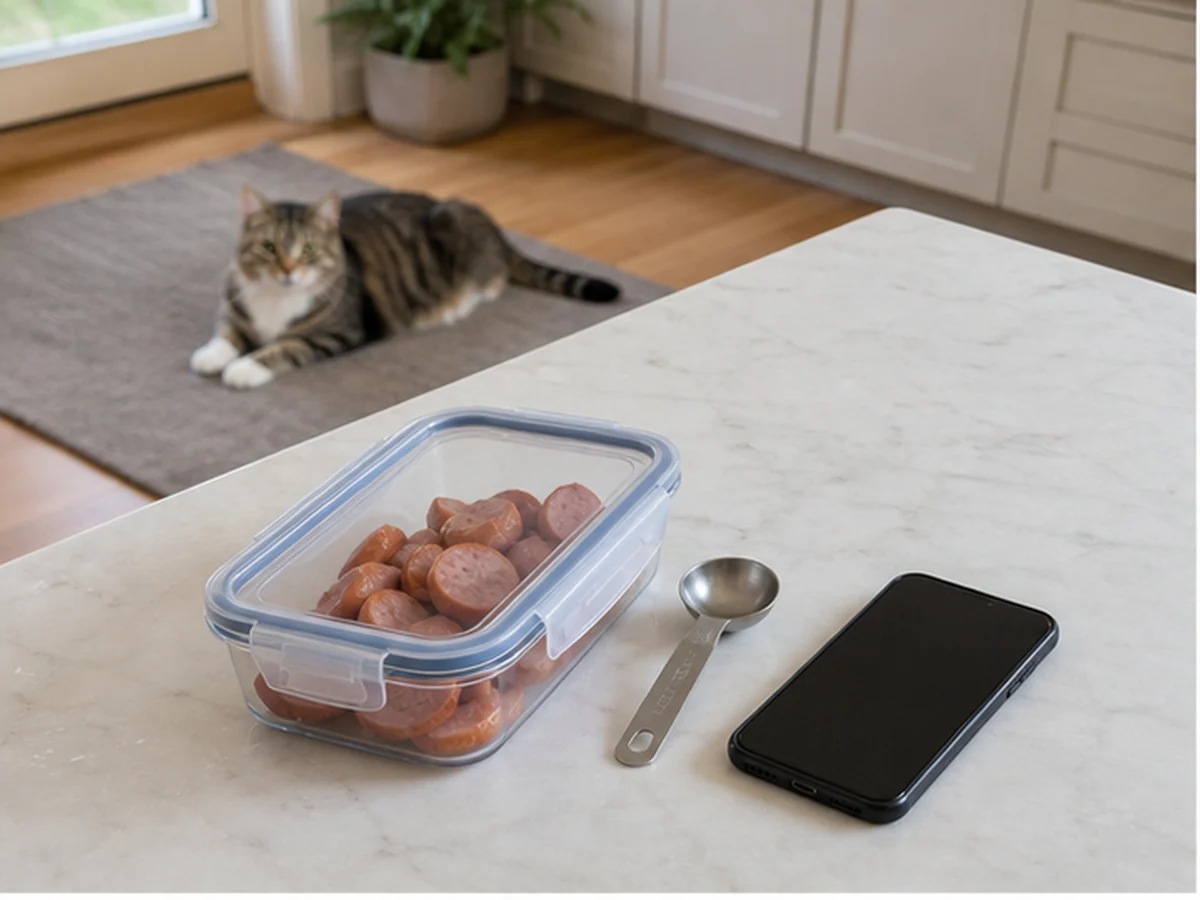
Confine the cat before wiping handles, floors, phones, paws, and cabinet edges touched by raw filling. Wash human hands and keep vulnerable household members away from the contaminated zone.
If raw sausage coated fur, stop grooming and request veterinary cleanup instructions rather than applying disinfectant. Litter-box hygiene may matter during the monitoring period.
Symptoms and timing
Vomiting, diarrhea, abdominal pain, appetite loss, feverish behavior, or lethargy can follow rich food or infection and may not begin immediately. Delayed pale gums, rapid breathing, dark urine, or weakness can fit Allium-related red-cell injury.
Breathing trouble, collapse, seizures, repeated unproductive retching, or profound weakness requires emergency care. Do not give peroxide, leftover antibiotics, antidiarrheals, or forced food.
Frequently asked questions
Can a kitten eat cooked sausage?
No planned serving is worthwhile because growth food should occupy the kitten’s limited stomach, and processed meat adds salt, fat, seasoning, and choking risks.
What if my cat swallowed sausage casing?
Call with casing material, length, time, cat size, and symptoms. Do not tug on visible material when an unseen portion might be lodged.
Is chicken sausage healthier for cats?
Not automatically, because poultry links can still contain raw meat, salt, fat, garlic, onion, casing, and flavorings. Read the exact formula.
Can sausage hide a pill?
Only with prescriber approval because some medicines must stay whole or avoid food, and a cat may eat the meat while leaving the dose behind.
Bottom line
Sausage earns its risk from the whole product, not merely its meat: raw filling, cure, Alliums, salt, fat, casing, and serving context all count. Choose a tiny plain cooked lean-meat flake if a veterinarian approves sharing at all.
Leftover sausage stuffing can contain bread, onion, garlic, celery, butter, broth, nuts, raisins, and poultry drippings, then remain warm during a long meal. Report the stuffing recipe and storage interval, check the roasting cavity for skewers or bags, and do not offer a rinsed meat crumb because dissolved seasoning has already reached it.
Sausage purchased from a deli case may lack a take-home ingredient panel, so request the product specification or photograph the case label before details are lost. Tell the clinic if the exact recipe cannot be confirmed, since uncertainty should narrow reassurance rather than invite a confident guess.
Sausage pizza spreads grease and seasoning across cheese, crust, tomato sauce, and cardboard, while a sliced link may be swallowed with an onion piece or sharp box staple. Count missing toppings and packaging, do not treat a sausage circle as plain meat, and use the linked bread guidance when raw dough or moldy crust was accessible.
Air fryers and grills create a tempting sausage smell alongside hot baskets, grease trays, cords, brush bristles, coals, and lighter products. Restrict the cooking zone, count bristles and skewers after a theft, and seek prompt care for oral burns, paw burns, smoke exposure, or any missing metal fragment.
Dogs may leave chewed sausage pieces where cats can find them, adding saliva, unknown bite size, and possibly medication hidden inside. Ask whether the dog’s link contained a pill, then verify the drug name and missing dose before assuming the cat encountered only food.
Sausage soup and casseroles spread rendered fat and seasoning through broth, beans, vegetables, and noodles, so lifting out one link does not create plain meat. Canned versions may be especially salty, while homemade stock can contain concentrated onion or garlic; record the whole pot recipe, serving size, time at room temperature, and any missing lid, ladle, can tab, or slow-cooker liner before calling.
Sausage rolls and kolaches add pastry, butter, salt, egg wash, cheese, sauce, raw dough, and paper or foil, while the filling can remain undercooked even when the crust is brown. The cat may swallow a compact cross-section without chewing, so estimate both dough and meat weight and seek prompt help for repeated swallowing, retching, vomiting, pain, or a wrapper that cannot be found.
Canned Vienna sausages and shelf-stable snack links are processed differently from raw butcher links but remain sodium-heavy, recipe-variable products. Their pull tabs, sharp can rims, plastic lids, brine, freshness packets, and small gulpable shape deserve a separate inventory, and rinsing does not remove salt and flavoring that already permeated the meat.
A sausage offered as a pill pocket can fail in two directions: the cat receives fatty seasoned food but spits out the medication, or a caregiver gives a second dose without realizing the first was swallowed. Ask the prescriber before using any processed meat, verify the tablet or capsule is gone, and never repeat a dose based only on an empty sausage fragment.
During veterinarian-directed observation, keep the cat indoors and record appetite, vomiting, stool, urine color, gum color, breathing rate, energy, and gait without adding new foods. Separate cats after a shared raid so signs can be assigned accurately, keep the package through the full monitoring window, and call again if the product is recalled or another exposed animal becomes ill.