Can Cats Eat Garlic? Forms, Symptoms, and What to Do Now
No, cats should not eat garlic in any form. Fresh cloves, cooked garlic, garlic powder, flakes, paste, juice, supplements, and garlic-seasoned foods can damage feline red blood cells, and symptoms may not appear until days after exposure.
If your cat ate garlic, do this now
Remove the food, keep the package or recipe, and call your veterinarian or an animal poison-control service promptly. Do not wait for symptoms and do not make the cat vomit unless a veterinarian specifically directs and supervises treatment.
Have the cat’s weight, age, health conditions, product name, ingredient list, estimated amount, and time of exposure ready. If the meal was homemade, list every ingredient and estimate how much of the finished dish the cat ate.
- Emergency signs: collapse, severe weakness, trouble breathing, pale or yellow gums, dark red or brown urine, tremors, or seizures.
- Call even when the cat looks normal: red blood cell damage and anemia can take time to become obvious.
- Do not use home emetics: hydrogen peroxide, salt, mustard, oil, and fingers in the throat can injure a cat or delay effective care.
- Do not guess from a dog dose: cats are especially susceptible to oxidative red blood cell injury.
The ASPCA Animal Poison Control Center can provide case-specific guidance at 888-426-4435, and a consultation fee may apply. In the United States, Pet Poison Helpline is another option at 855-764-7661, while your local emergency clinic remains the right destination for a cat with serious symptoms.
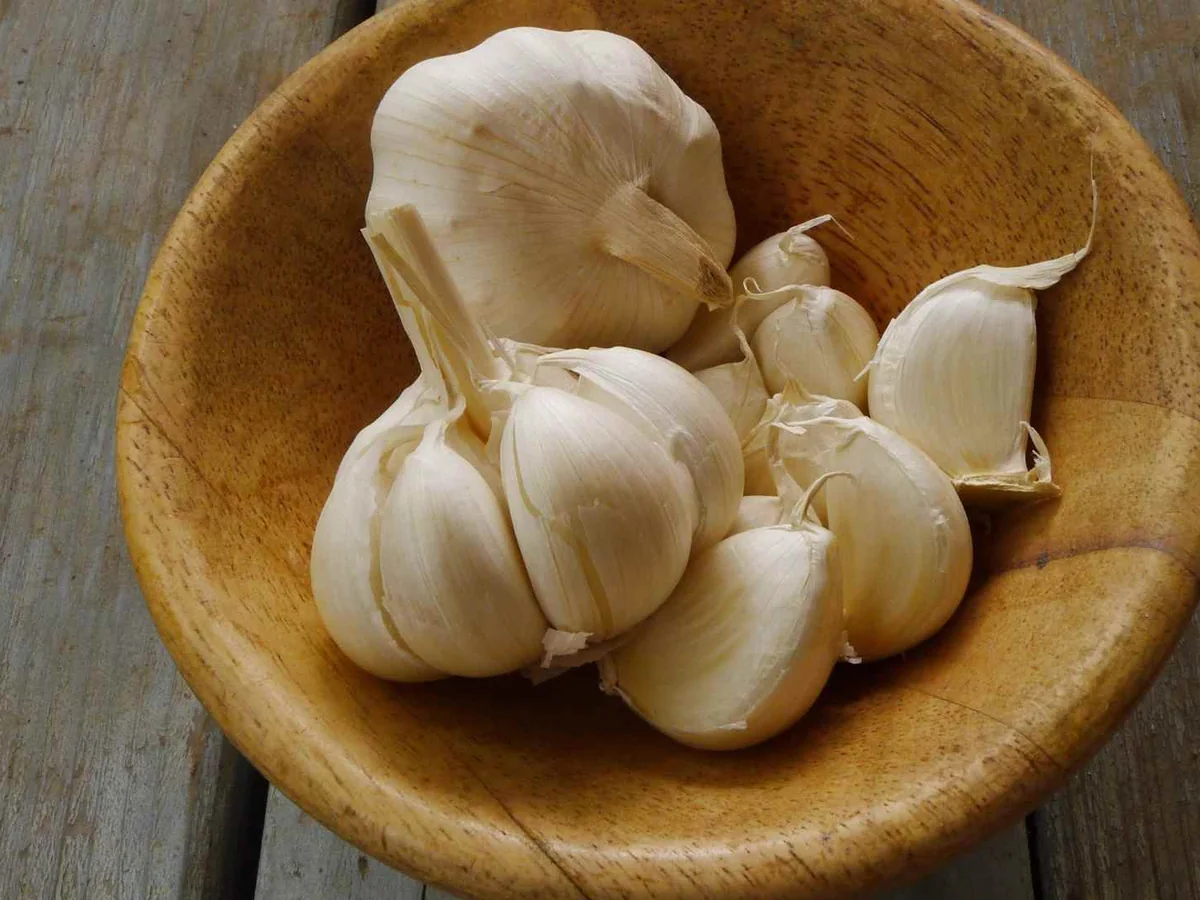
Why garlic is dangerous to cats
Garlic belongs to the genus Allium, alongside onion, chives, leeks, scallions, and shallots. When plant tissue is chopped, chewed, crushed, or otherwise disrupted, sulfur-containing compounds can produce oxidants that damage red blood cells.
That damage can create Heinz bodies, which are clumps of altered hemoglobin attached to red blood cells. The affected cells may be removed from circulation or rupture, producing hemolytic anemia and reducing the blood’s ability to carry oxygen.
The Merck Veterinary Manual review of Allium toxicosis, updated in 2024, identifies cats as the most susceptible domestic species and reports exposure from raw, cooked, dehydrated, and granulated products. It also explains why clinical anemia may emerge several days after the meal.
Garlic is not a spicy irritant that becomes harmless once the mouth stops tingling. Its main danger is systemic red blood cell injury, although vomiting, diarrhea, and abdominal discomfort may occur earlier.
There is no useful one-size-fits-all safe amount
Online claims that one exact fraction of a clove is safe oversimplify a variable exposure. Risk depends on the garlic form and concentration, the amount actually swallowed, repeated exposure, the cat’s size and health, and what else was in the food.
Garlic is reported to be more toxic than onion by weight, while powders and dehydrated products pack more plant material into a small volume. A dusting of powder cannot be compared visually with the same-sized piece of fresh clove.
Scientific evidence supports caution without supporting a casual kitchen dose calculator. The ASPCA’s garlic toxic-plant entry classifies garlic as toxic to cats and lists vomiting, hemolytic anemia, Heinz body anemia, blood in urine, weakness, rapid heart rate, and panting among potential signs.
If you cannot determine how much garlic was in a sauce or seasoning blend, say that clearly when you call. Uncertainty is information, and poison professionals can work with a range rather than a confidently invented number.
Every common form of garlic counts
- Fresh garlic: whole cloves, minced garlic, crushed garlic, and chopped bulbs all contain the relevant plant compounds.
- Cooked garlic: roasting, frying, simmering, or baking does not make it cat-safe.
- Garlic powder and flakes: concentrated dry forms can hide in spice blends, rubs, chips, crackers, soups, and sauces.
- Jarred paste and puree: these may contain a substantial amount of garlic plus salt, oil, acid, or preservatives.
- Garlic salt: adds a sodium concern but remains a garlic exposure even if the label emphasizes salt.
- Garlic oil and infused fat: avoid feeding the flavored oil, drippings, butter, or meat cooked in it.
- Supplements: concentrated tablets, powders, chews, and so-called natural flea remedies are not appropriate for cats unless a veterinarian has evaluated the exact product.
Do not scrape the visible garlic off and serve the food underneath. Sauces and fats spread flavoring compounds through a dish, and the remaining concentration cannot be judged by sight.
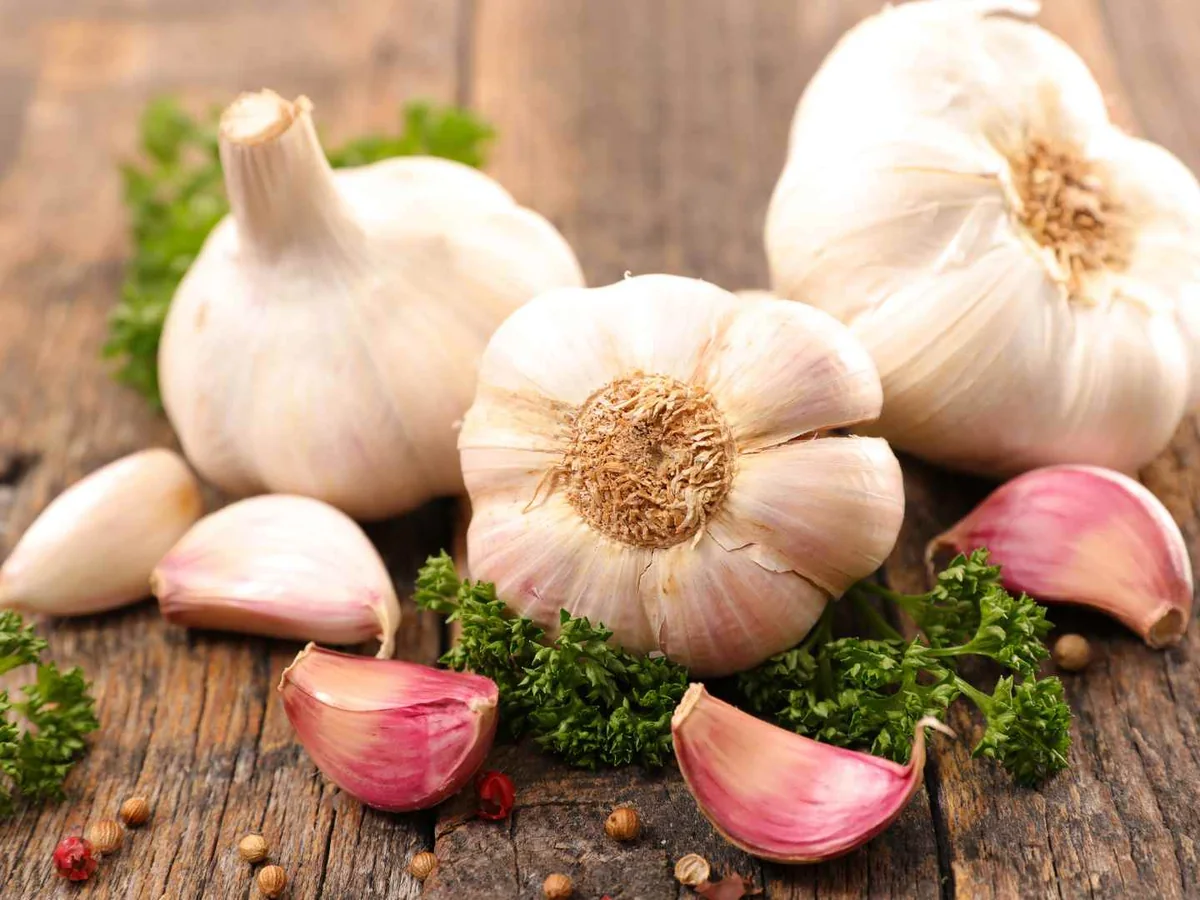
Foods where garlic likes to hide
The obvious clove is rarely the sneakiest exposure. Garlic may appear in broth, bouillon, stock, gravy, soup, pasta sauce, pesto, salsa, hummus, marinades, seasoning packets, rotisserie chicken, deli meat, meatballs, burgers, fried food, flavored tuna, and baby food.
Restaurant food is hard to assess because recipes change and staff may not know every component of a premade sauce. Treat an unknown savory seasoning as unknown, not as garlic-free.
Pizza can combine garlic with onion, rich cheese, cured meat, and packaging, so the cat and pizza guide separates those risks. The same label-reading habit applies to salami and pickles, where Allium seasonings can be less visible than the main ingredient.
Pet products deserve scrutiny too. A treat marketed as natural or shared between dogs and cats is not automatically suitable for a cat, and a dog supplement may contain ingredients or concentrations never intended for feline use.
Symptoms can arrive in two waves
Digestive signs such as drooling, nausea, vomiting, diarrhea, or abdominal discomfort may appear first. Some cats have no obvious early stomach trouble, which is why the absence of vomiting does not clear the exposure.
Oxidative changes to hemoglobin can begin before an owner can see them, while clinically important hemolysis may take several days. Later signs can include low appetite, hiding, weakness, unusual sleepiness, reduced stamina, rapid breathing, a fast heart rate, pale gums, yellow gums or skin, dark urine, collapse, or death in severe cases.
Gum color is useful context but not a home blood test, and normal-looking gums do not rule out early injury. Call based on the exposure, then let the veterinary team decide whether examination and blood testing are warranted.
What the veterinarian may do
Treatment depends on how recently the garlic was eaten, the form and amount, the cat’s condition, and laboratory findings. A clinician may recommend decontamination for a recent exposure, but the drugs and procedures appropriate for cats belong in veterinary hands.
The team may examine a blood smear for Heinz bodies, measure red blood cell parameters, assess bilirubin and urine, and repeat testing because anemia can be delayed. A single normal early result does not always end monitoring when the exposure was meaningful.
Supportive care can include intravenous fluids, oxygen, treatment for gastrointestinal signs, and close observation. Severe hemolytic anemia may require a blood transfusion, which is one reason early advice is more useful than waiting for dramatic weakness.
The prospective study Heinz body formation in cats fed baby food containing onion powder demonstrated dose-related oxidative red blood cell changes in cats exposed to a related Allium ingredient. It does not provide a home garlic threshold, but it supports avoiding onion-powder foods and recognizing feline susceptibility.
Cats who deserve an especially low threshold for care
Kittens have small bodies and need reliable nutrition, while senior cats and cats with kidney, liver, heart, respiratory, or blood disorders may have less reserve. Any cat already affected by anemia or another source of oxidative stress needs case-specific veterinary advice.
Repeated small exposures matter because damage can accumulate across meals. Mention yesterday’s meatball, today’s gravy lick, and any garlic supplement rather than reporting only the most recent incident.
Pregnant or nursing cats should not receive folk remedies or garlic-containing supplements. Ask the veterinarian to review every non-food product because safety and nutrient needs differ during reproduction and growth.
Garlic is not a safe flea treatment
Feeding garlic to repel fleas asks a cat to absorb a toxin in pursuit of an unreliable benefit. It also makes exposure harder to recognize because the amount may be repeated daily in powders, tablets, or homemade mixtures.
Use a flea product specifically labeled for cats of the correct age and weight, following veterinary guidance. Never apply a dog flea product to a cat unless a veterinarian confirms the exact product is feline-safe, because some canine permethrin products are dangerously toxic to cats.
A flea comb, regular laundering, and environmental control can support an effective plan, but they do not make an unproven garlic supplement safer. The cat should not have to audition as a salad dressing to avoid parasites.
How to prevent the next exposure
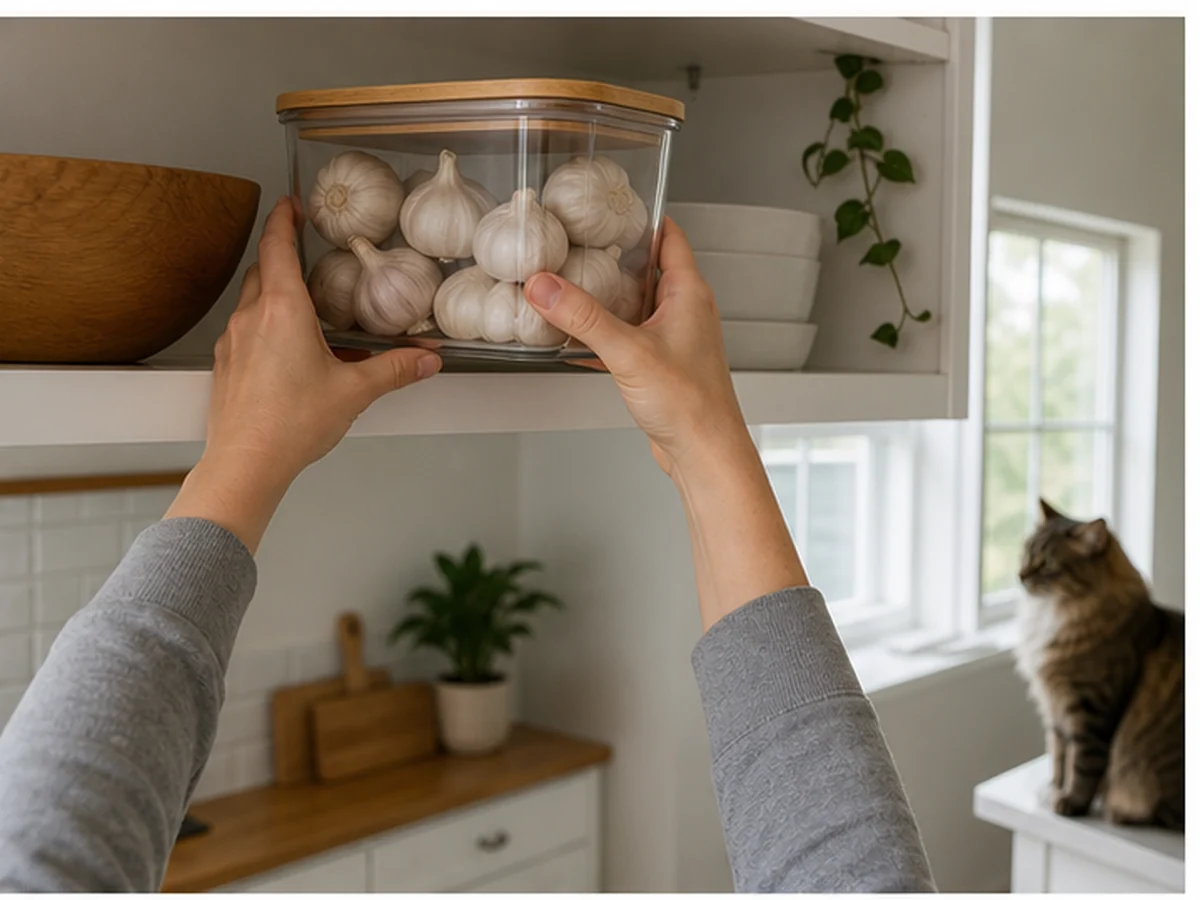
- Store bulbs, jars, powders, supplements, and spice blends in closed cabinets rather than on an open counter.
- Move scraps directly into a lidded bin, including skins, clove ends, takeout containers, and garlic-butter foil.
- Keep cats out of the kitchen while chopping, because minced pieces are easy to drop and hard to spot.
- Ask guests and children not to share savory table food, even when the cat presents a persuasive closing argument.
- Read every ingredient panel, including the seasoning packet and sauce, not only the front label.
- Keep the original package until the meal is finished so the recipe, lot code, and manufacturer contact remain available.
If the cat enjoys supervising meal prep, offer a food puzzle or a measured portion of normal cat food in another room. Prevention works better when it replaces the opportunity instead of relying on a last-second negotiation.
Safer ways to make a cat’s meal interesting
Most cats do not need human seasoning, and garlic does not supply a benefit worth its risk. Start with a complete and balanced feline diet that matches life stage and any medical needs.
For a healthy cat who tolerates it, a tiny amount of plain, fully cooked egg can be an occasional treat, as explained in our boiled egg guide. Keep all extras modest so they do not crowd out balanced food or add too many calories.
A sudden need for stronger-smelling toppers may signal dental pain, nausea, congestion, or another appetite problem. Contact the veterinarian if your cat stops eating, loses weight, or repeatedly rejects the usual food rather than covering the pattern with richer toppings.
Frequently asked questions
Can cats eat food cooked with garlic if the pieces are removed?
No. Cooking does not neutralize the relevant hazard, and garlic compounds may be distributed through sauce, fat, broth, or the rest of the dish.
Is garlic powder worse than fresh garlic?
Powder is concentrated, so a small spoonful can represent more garlic material than the same volume of fresh pieces. Both forms are unsafe, and the practical response is to call with the product and estimated amount rather than rank the exposure at home.
My cat licked garlic sauce but looks fine. Can I just watch?
Call a veterinarian or pet poison service for advice because the concentration may be unknown and anemia can be delayed. Provide the sauce label or recipe, the estimated amount, and the time of the lick.
Are onion, chives, leeks, and scallions safe substitutes?
No. They are also Allium plants capable of causing oxidative red blood cell damage, so treat them as hazards rather than flavor alternatives.
The bottom line
Garlic has no useful place in a cat’s bowl, whether it is fresh, cooked, powdered, infused, or tucked into a sauce. Remove access, save the label, and call promptly after exposure because a cat can look normal before delayed red blood cell damage becomes visible.