Can Cats Eat Watermelon? Flesh, Seeds, Rind, and Safe Portions
A tiny piece of plain, ripe, seedless watermelon flesh is generally safe for a healthy adult cat. Remove every bit of rind, keep portions small, and skip juice, candy, pickles, and mixed fruit dishes, because “just watermelon” has a habit of arriving with complications.
The melon map: which part are we discussing?
| Part or product | Practical answer | What matters |
|---|---|---|
| Red or yellow seedless flesh | One tiny occasional piece | Plain flesh is mostly water but still contains sugar and fiber. |
| Black mature seeds | Remove them | Hard seeds can choke or upset digestion, especially in quantity. |
| Soft white seed coats | Pick them out when practical | One accidentally swallowed is not usually a poisoning event. |
| Green and white rind | Do not offer | It is tough, poorly digestible, and can become a choking or obstruction problem. |
| Watermelon juice | Unnecessary | It concentrates an easy-to-lap serving and may contain added sweetener. |
| Pickled or seasoned rind | Avoid | Brine, salt, sugar, spices, and alliums may be present. |
| Candy or frozen bars | Read every label and usually skip | Sweeteners, chocolate, dairy, sticks, and wrappers change the risk. |
Watermelon is optional, even when it is safe
Cats do not need fruit to complete their nutrition, and watermelon is not a clever shortcut to feline wellness. Its moisture can make a cool nibble pleasant, but the cat’s formulated food and drinking water should carry the daily job.
A cat may investigate the wet texture, the scent of food on your hands, or the novelty of a bright cube. Others will sniff once and leave with the expression of a restaurant critic who has been personally inconvenienced.
Either response is normal. There is no reason to persuade a cat to eat melon, and a refusal does not reveal a vitamin deficiency.
For a wider look at cat-safe and cat-unfriendly produce, the fruit guide for cats separates flesh, pits, peels, seeds, dried fruit, and prepared products. Watermelon follows that same rule: the part and preparation matter.
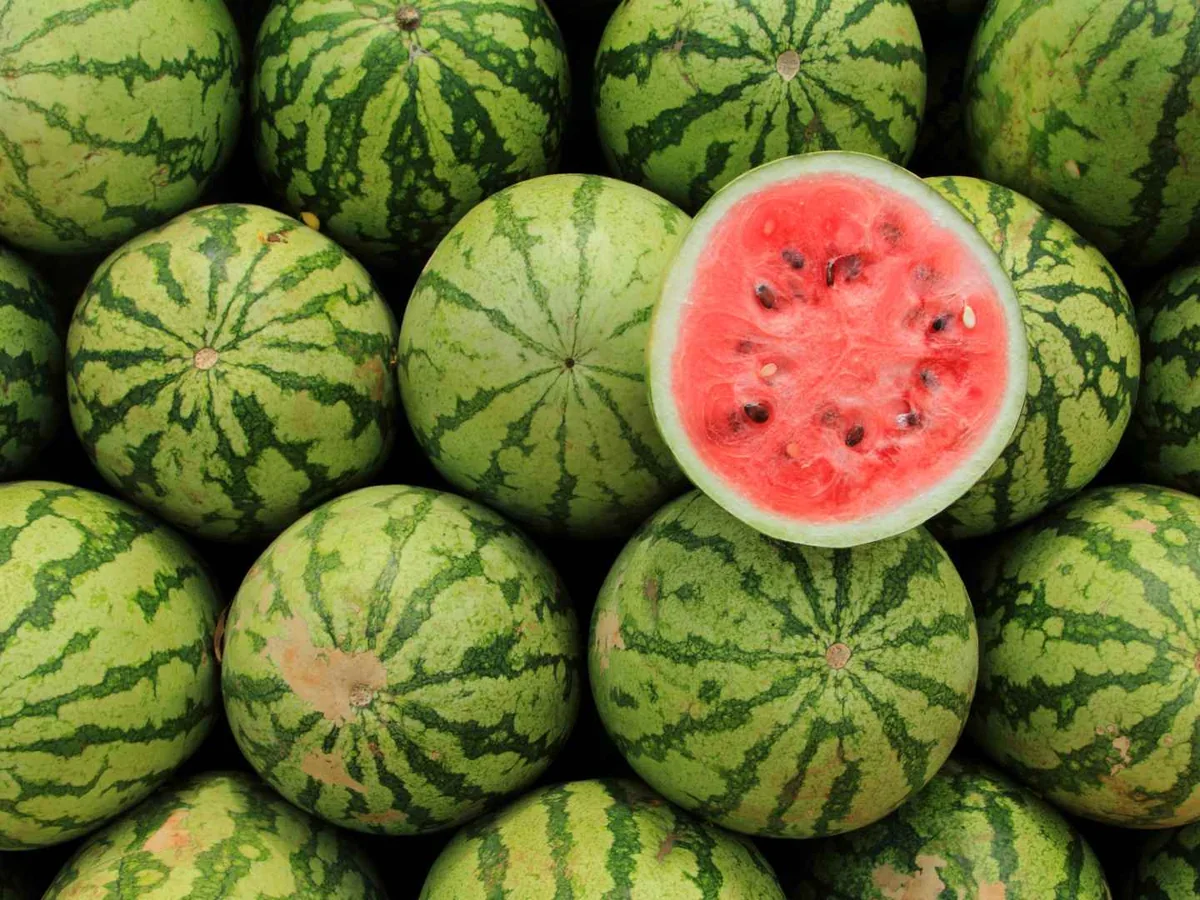
How much watermelon can a cat have?
Start with one soft piece about the size of a pea or a small fingernail, flattened so it cannot roll toward the airway. If the cat tolerates it, an occasional teaspoon of diced flesh is a generous ceiling for many adults, not a daily target.
Individual calorie needs vary widely, so a fixed serving cannot fit every kitten, senior, athlete, or couch supervisor. The safer habit is to count melon among all extras and keep the regular complete diet essentially intact.
Cornell advises that treats should remain only a small share of feline calories and emphasizes balanced commercial food. That guidance matters even for a fruit that feels light because it drips on the cutting board.
A large serving can cause loose stool, gas, vomiting, or appetite disruption through sheer water, sugar, and fiber load. More melon does not create better hydration if it also creates a miserable litter-box afternoon.
Seeds are more physical hazard than mystery toxin
Mature black seeds are hard and smooth, which makes them easy to swallow without chewing. One accidental seed in a healthy adult is unlikely to be catastrophic, but multiple seeds add choking and digestive concerns without offering a benefit.
Seedless watermelon can still contain thin, pale seed coats. They are softer than mature seeds, yet removing visible ones is an easy precaution when the intended serving is only a few tiny pieces.
Do not tell an owner that one watermelon seed has certainly poisoned a cat; that claim is not supported. Focus on the amount, the cat’s size, swallowing behavior, symptoms, and whether anything besides a seed was eaten.
Call a veterinarian after a large seed ingestion, repeated vomiting, abdominal pain, appetite loss, unusual lethargy, or trouble passing stool. Gagging, breathing difficulty, frantic mouth-pawing, or blue-gray gums requires emergency action.
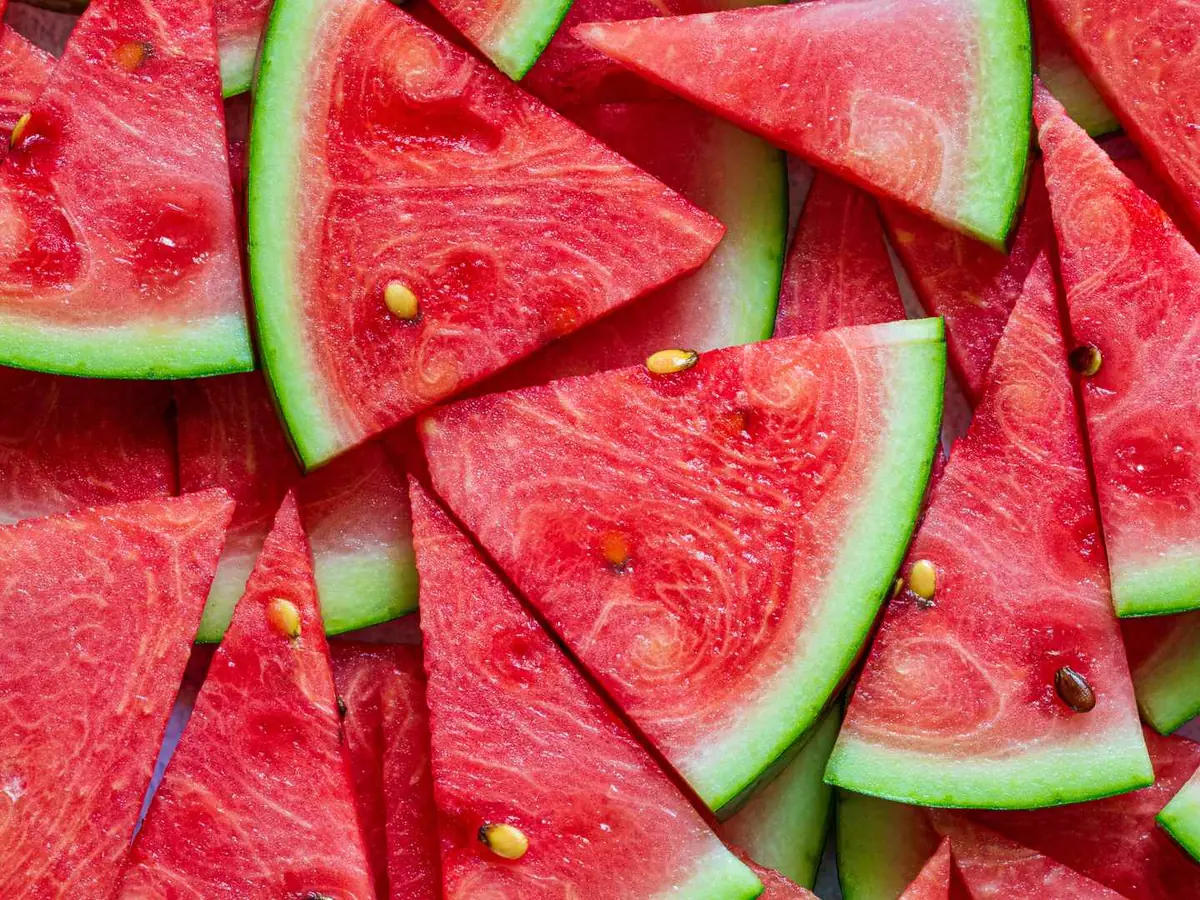
Why the rind stays out of the bowl
The firm green skin and dense pale rind are much tougher than the juicy center. Cats do not grind plant material efficiently, so a strip can be gulped, lodged, or passed through the stomach poorly.
Small chewed fibers may merely cause stomach upset, while a larger curved piece can behave like a foreign body. An obstruction may show up as repeated vomiting, refusal to eat, low energy, belly pain, hiding, or reduced stool.
Do not wait for a swallowed rind chunk to appear in the litter box if the cat is symptomatic. A clinic may recommend examination and imaging based on the size, timing, and current behavior.
Watermelon-rind pickles are a separate food entirely. Their brine can include salt, sugar, vinegar, garlic, onion, chili, and whole spices, much like the mixtures discussed in our pickle safety guide.
Preparation begins before the knife goes in
Wash your hands and rinse the whole melon under running water, even though the outer rind will be discarded. A knife can carry surface contamination through the cut and onto the flesh.
The FDA recommends scrubbing firm produce with a clean brush and advises against soap or commercial produce wash. Dry the melon, use a clean board and knife, then keep it away from raw meat and seafood work areas.
Cut out damaged or rotten sections, and discard fruit that smells fermented, has developed slime, or sat unrefrigerated for an unsafe period. Pre-cut melon belongs refrigerated, not left in a bowl for a cat to revisit throughout the afternoon.
Remove rind and visible seeds, then cut a soft, flat morsel. A melon baller makes charming round pieces for people but produces exactly the wrong shape for an animal inclined to gulp.
Watermelon does not replace a water bowl
Fresh flesh contains plenty of moisture, yet a bite contributes only a small quantity of fluid. It cannot correct dehydration caused by vomiting, diarrhea, fever, heat exposure, kidney disease, urinary problems, or inadequate drinking.
Provide clean water in accessible locations and wash bowls regularly. Some cats drink more from wide bowls, fountains, or water placed away from food and litter, but a sudden change in thirst deserves medical attention.
If a cat seems dehydrated, has tacky gums, weakness, sunken eyes, persistent stomach signs, or reduced urination, contact a veterinarian. Trying to solve a health problem with fruit can delay the care that actually matters.
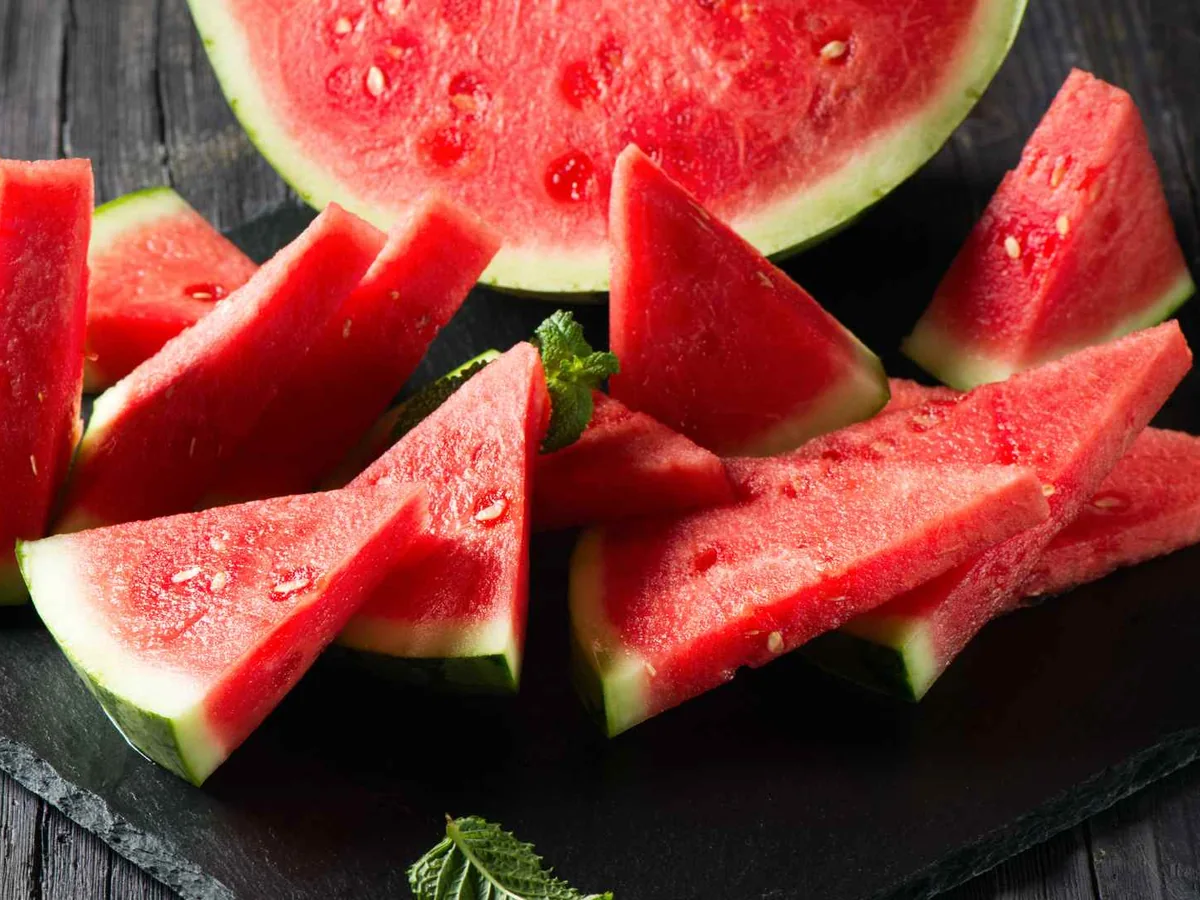
Sugar matters most in the feeding pattern
Watermelon naturally contains sugar, and the portion may look tiny to a person while being meaningful to a small animal. Regular sweet extras also add calories without the nutrient balance of the cat’s main food.
Obesity is a major risk factor for feline diabetes, according to Cornell’s feline diabetes overview. That does not make one cube a cause of diabetes, but it does make routine treat accounting worthwhile.
A cat with diabetes should follow the veterinarian’s meal, medication, and monitoring plan rather than receiving casual fruit. Timing and diet consistency can matter, and “natural sugar” is still part of the food intake.
Juice, smoothies, frozen treats, and candy
Fresh watermelon juice is easy to consume quickly and removes the useful portion cue of a solid bite. Bottled versions may add sugar, flavoring, another fruit juice, preservatives, or sugar substitutes.
Smoothies can contain yogurt, milk, protein powder, chocolate, caffeine, grapes, raisins, nut products, supplements, or concentrated sweetener. Read the complete recipe before making any reassurance based on the melon.
Frozen plain watermelon is not toxic, but a hard large cube can be uncomfortable to bite or swallow. Thaw a tiny piece until soft rather than handing over a frozen marble.
Watermelon candy and gummies may contain large amounts of sugar, acidic coatings, cannabis, or sweeteners, while sticks and wrappers create foreign-body risks. Call promptly for any cannabis product or an uncertain sugar-free confection.
Cats who should probably pass
Kittens need nutrient-dense growth food, and cats on therapeutic or elimination diets need consistency. Cats with diabetes, obesity, chronic diarrhea, inflammatory bowel disease, dental trouble, or a history of food sensitivity should receive treats selected with their veterinarian.
A cat who gulps rather than chews is also a poor candidate for slippery fruit. Offering a bit of normal wet food may deliver the appealing moisture with less uncertainty.
The same reasoning applies to other melons. Our cantaloupe article covers netted-rind cleaning and portion questions, while the strawberry guide handles leaves and mixed desserts.
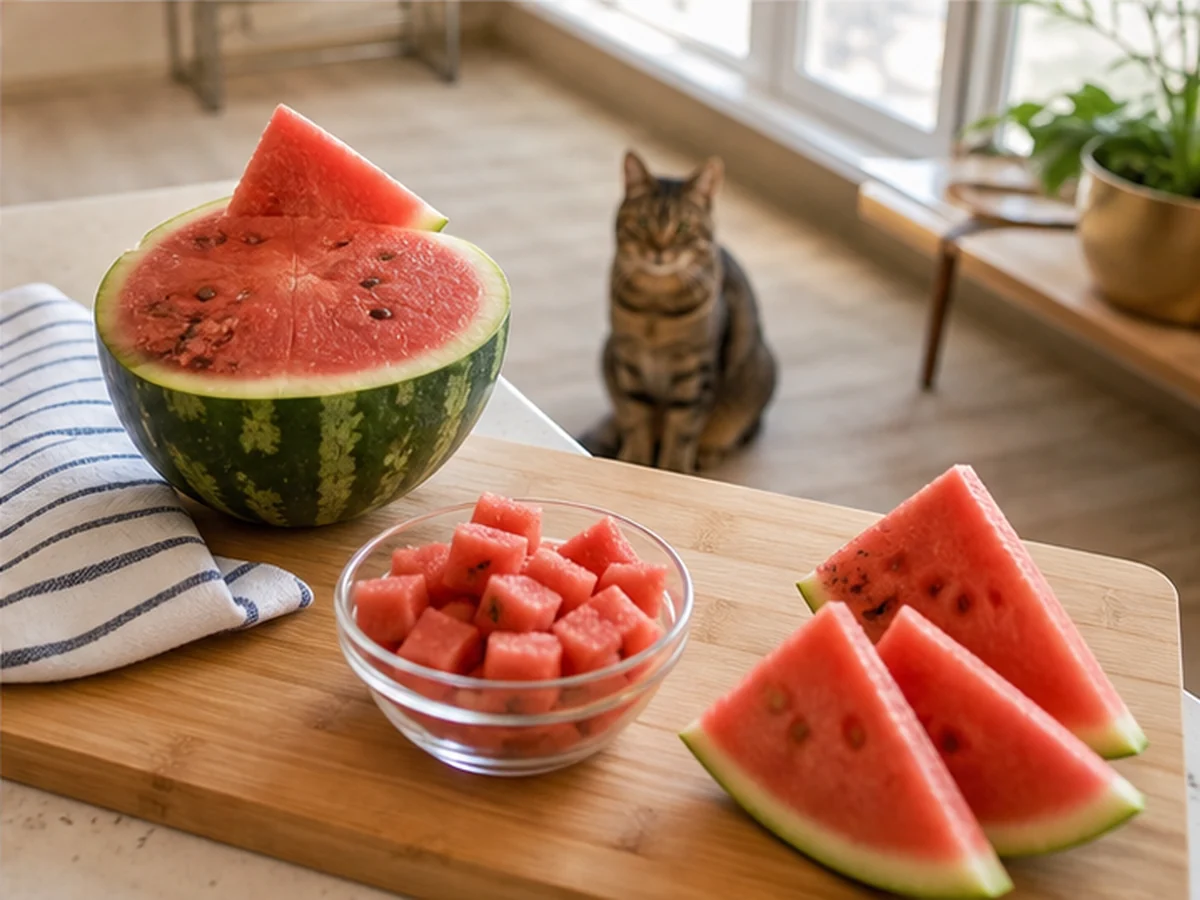
If your cat raided the watermelon
- Find the missing part. Distinguish soft flesh from black seeds, a rind strip, candy, juice, or packaging.
- Measure the likely maximum. Compare the remaining pieces and note when the snack disappeared.
- Review every added ingredient. Save labels for smoothies, pickles, frozen bars, gummies, and fruit salad.
- Watch behavior and digestion. Track vomiting, stool, appetite, energy, swallowing, and abdominal comfort.
- Ask for veterinary help when warranted. Large rind or seed exposures, missing wrappers, dangerous add-ins, or any concerning sign deserve a call.
Do not induce vomiting or force bulky food to “push the rind through.” Those home strategies can cause new problems and may delay appropriate assessment.
Frequently asked questions
Can kittens eat watermelon?
A trace of plain seedless flesh is unlikely to be toxic, but kittens have small stomachs and demanding growth needs. Use kitten food or a veterinarian-approved treat instead of teaching fruit as a regular snack.
Can cats eat yellow watermelon?
Ripe yellow-fleshed watermelon follows the same practical rules as the red kind. Serve only a tiny plain piece with the rind and all visible seeds removed.
What if my cat swallowed one black seed?
One seed will often pass without incident in a healthy adult, but no outcome can be guaranteed remotely. Monitor closely and call if choking, vomiting, pain, appetite loss, or abnormal stool develops.
Is watermelon good for a constipated cat?
It is not a reliable treatment, and constipation can reflect dehydration, pain, obstruction, medication effects, or chronic disease. Ask the veterinarian about safe hydration and fiber strategies tailored to the cause.
Bottom line
Watermelon flesh can be a tiny, cool novelty once the rind and seeds are gone, but a cat loses nothing by skipping it. Prepare it cleanly, flatten the piece, keep sugary products and tough scraps away, and use veterinary care rather than melon for health concerns.