Can Cats Eat Cantaloupe? Flesh, Rind, Seeds, and Food Safety
Cats can eat a tiny piece of ripe cantaloupe flesh, but the melon is optional and should be prepared carefully. Wash the outside before cutting, remove every seed and all rind, serve one soft pea-sized piece, and keep moldy fruit, sweet products, skewers, and packaging away.
The quick melon verdict
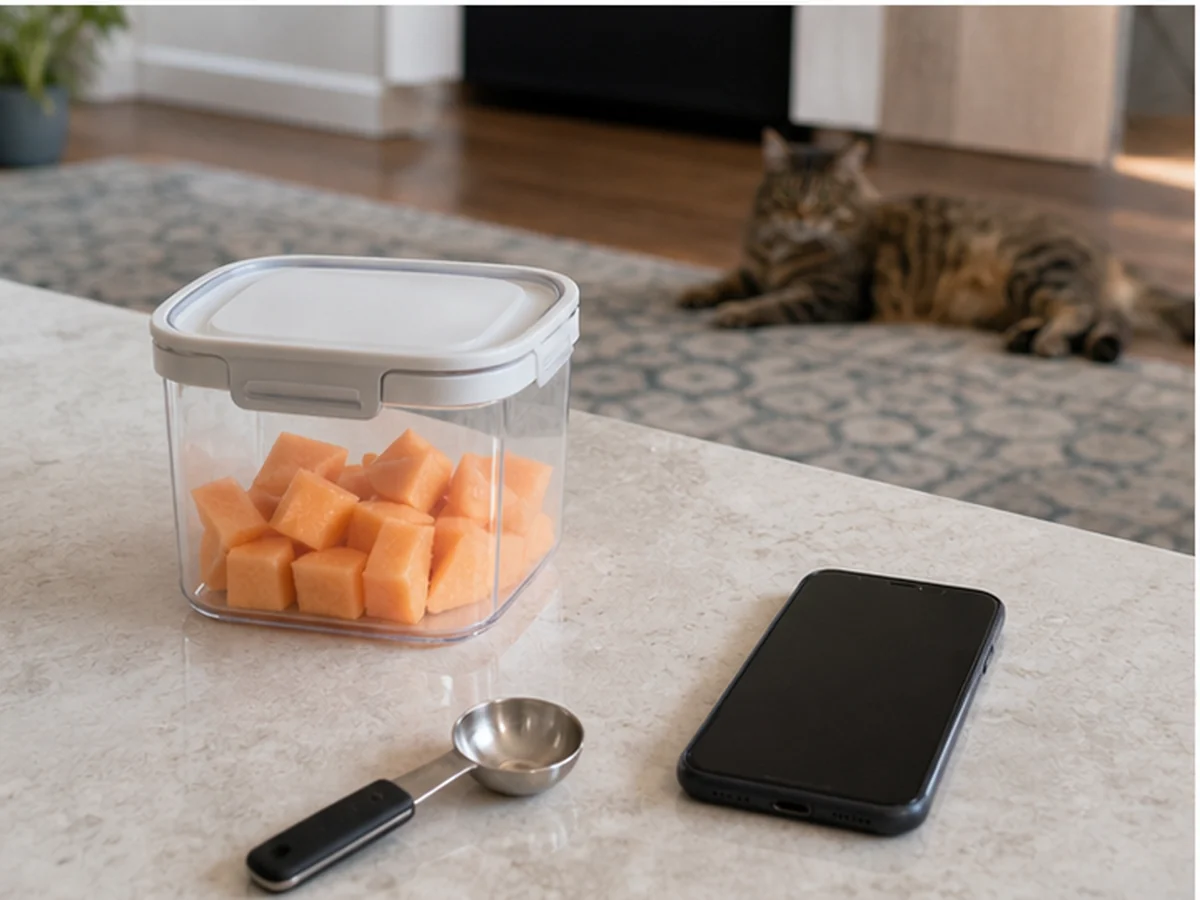
A healthy adult cat that wants a taste can have one pea-sized cube or a teaspoon-sized smear of plain ripe flesh. Cantaloupe has no special job in a feline diet, so the serving does not need to grow because the cat came back with persuasive eyes.
Many cats are interested in cantaloupe’s aroma, but attraction is not evidence of need. Complete cat food supplies the balanced animal-based nutrition that fruit cannot.
Flesh, seeds, and rind are different exposures
- Ripe flesh: Soft and non-toxic in a tiny plain amount for many healthy cats.
- Seeds: Not a useful food and easy to swallow in a slippery cluster, so remove them.
- Stringy seed pulp: Fibrous and capable of forming a wad, so scrape it away.
- Rind: Hard, tough, difficult to digest, and capable of becoming a foreign body.
- Rotten or fermented melon: Discard because fresh-fruit guidance no longer applies.
- Prepared melon: Syrup, dairy, alcohol, spices, sweeteners, and skewers change the decision.
The published cantaloupe guide for dogs also separates flesh, rind, seeds, storage, and products. Use its household checklist, then keep feline portions and medical decisions on this page.
Wash the rind even though the cat will not eat it
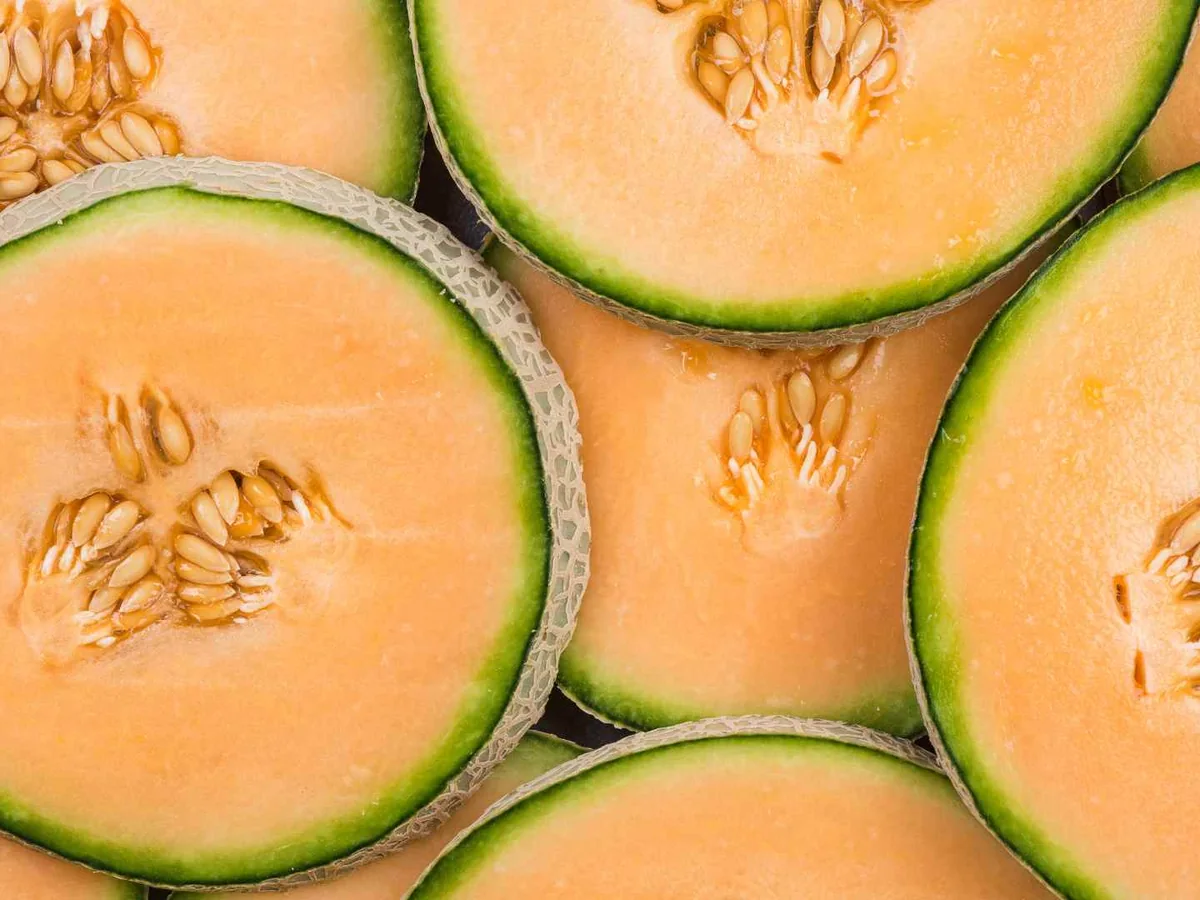
Cantaloupe has a netted surface that can hold dirt and microbes. A knife can carry surface contamination through the flesh when it cuts from the outside to the center.
The FDA recommends washing produce under running water, keeping it separate from raw meat, refrigerating cut produce, and discarding rotten items. Soap, detergent, bleach, and commercial produce wash are not recommended for washing fruit.
Use clean hands, a clean brush reserved for produce, a clean knife, and a clean board. After cutting, refrigerate the melon promptly rather than leaving cubes on a party tray where a cat and several bacteria can conduct parallel investigations.
Rind is the main mechanical concern
Cantaloupe rind is dense and fibrous, and chewing does not reliably break it into digestible pieces. A strip or chunk can lodge in the esophagus, stomach, or intestines, especially in a kitten, small cat, or animal with pica.
The Merck Veterinary Manual obstruction review lists vomiting, appetite loss, abdominal pain, lethargy, diarrhea, and shock among possible signs. Those findings are not specific to melon rind, but a witnessed ingestion makes them much more actionable.
Signs that should not wait
- Do not wait when melon is followed by choking, open-mouth breaths, blue or pale gums, collapse, or profound distress.
- Rind or a slippery melon chunk becomes urgent when the cat repeatedly gags, drools heavily, paws at the mouth, or cannot swallow normally.
- Call promptly for continuing vomiting, inability to hold down water, or abdominal swelling after melon or rind.
- Food refusal, marked lethargy, reduced stool, or straining after rind ingestion.
- Tremors, wobbliness, seizures, or unusual agitation after spoiled or fermented fruit.
Do not push rind down with food or water and do not induce vomiting unless a veterinary professional directs you. Breathing trouble is an emergency, while a swallowed rind chunk deserves prompt advice even before symptoms.
How much cantaloupe can a cat have?
One pea-sized piece is enough for a first taste, and there is no health reason to make it a daily ritual. Cantaloupe contains natural sugar and carbohydrate that can quietly add calories when cubes become spoonfuls.
The Cornell Feline Health Center explains that treats are not complete and balanced nutrition and should remain occasional. A few pieces of the cat’s normal kibble often make a more diet-friendly reward.
Too much melon can cause vomiting, diarrhea, gas, abdominal discomfort, or appetite change. Introduce only one new food at a time and stop after the first small portion.

A safe preparation method
- Choose a firm melon without cracks, mold, leaking juice, or a fermented smell.
- Wash and scrub the rind under running water, then dry it.
- Use a clean knife and board to cut the melon.
- Remove seeds, stringy pulp, and every trace of rind from the cat’s portion.
- Cut one pea-sized piece, serve it plain, and refrigerate the rest.
Serve the piece at refrigerator or room temperature, not frozen solid and not hot from a cooked dish. Mash it for a kitten-sized mouth, although kittens are better served by complete kitten treats.
What about cantaloupe seeds?
Cantaloupe seeds are not a recognized feline poison, but they offer no benefit and arrive in slippery, stringy pulp. Removing them prevents gulping, coughing, digestive irritation, and confusion with seeds from other plants.
Roasted melon seeds can be salty, oily, spicy, or hard, and seed mixes may contain nuts, raisins, chocolate, garlic, or unknown seasoning. A snack mix must be assessed as a complete product, not as cantaloupe.
Frozen, dried, and canned cantaloupe
A frozen cube is hard and slippery, so thaw it completely and cut it small. Freezing does not make spoiled fruit safe or reliably eliminate every microorganism.
Dried cantaloupe concentrates sugar and calories, may be sticky or tough, and often contains added sugar or preservatives. It offers no advantage over one tiny piece of fresh fruit.
Canned fruit commonly sits in syrup or sweetened juice and may contain flavorings or preservatives. Drain-and-rinse does not erase absorbed sugar, so skip it in favor of fresh plain flesh.
Melon bowls, fruit salad, and smoothies
Fruit salad can include grapes, raisins, cherries with pits, citrus peel, sweetener, alcohol, yogurt, whipped cream, or skewers. Inventory the entire bowl because the orange cube may not be the ingredient that decides urgency.
Smoothies can hide chocolate, coffee, protein powder, supplements, avocado, dairy, sweeteners, or alcohol. A lick of plain blended cantaloupe and water is a different exposure from drinking a café smoothie.
Melon wrapped in prosciutto adds salt, fat, toothpicks, and cured meat. Keep the skewer count honest because a missing wooden pick is an urgent foreign-body concern.
Honeydew, watermelon, and other melons
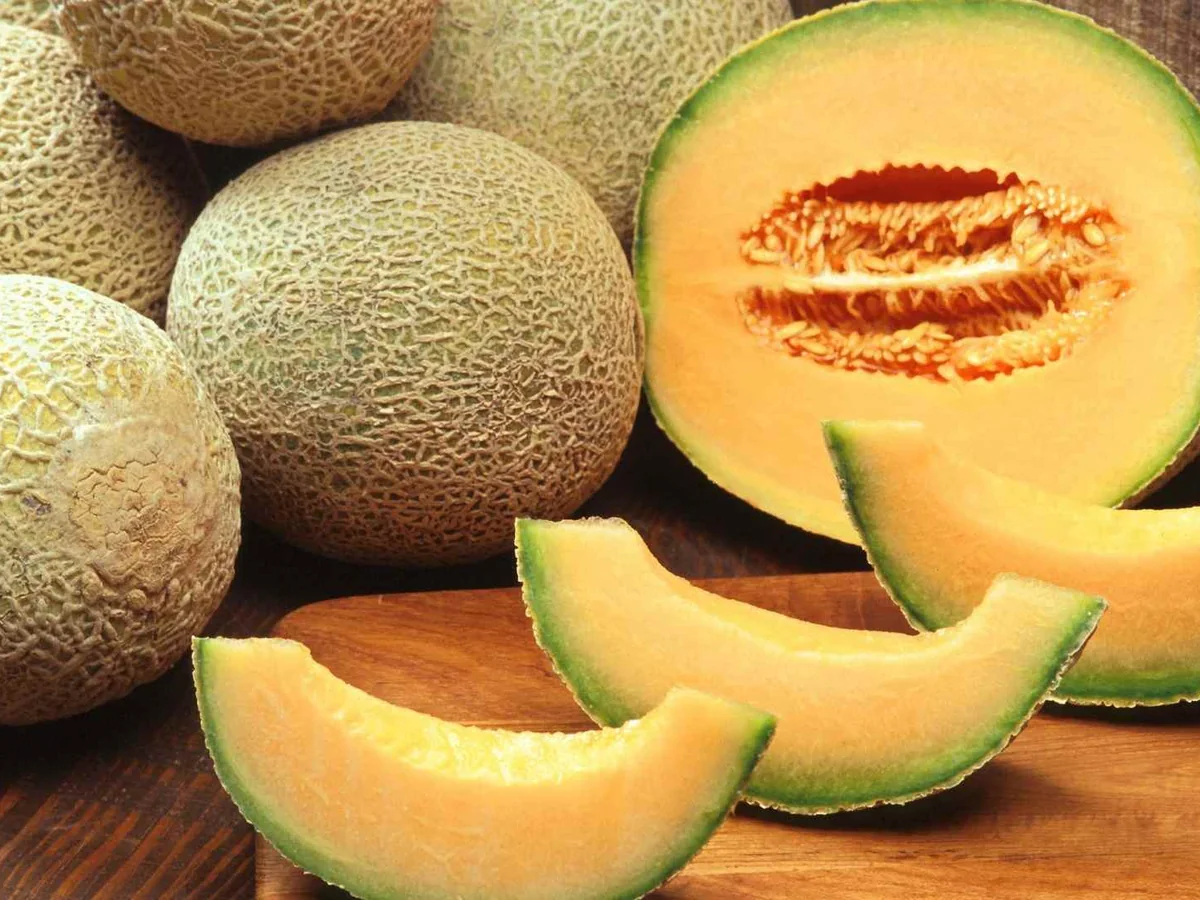
Different melons share a flesh-versus-rind pattern but differ in seeds, texture, sugar, and products. Our melon overview helps identify common types without implying that every wild or ornamental fruit is edible.
The honeydew guide covers its smooth rind, seeds, storage, and sweet products. Keep cat tastes tiny regardless of the melon color.
Can cantaloupe help hydration or constipation?
Cantaloupe contains water, but one tiny piece is not a hydration therapy. Cats that drink poorly, vomit, have tacky gums, strain to urinate, or seem dehydrated need veterinary assessment and a dependable water plan.
Do not treat constipation by feeding melon. Straining can involve dehydration, pain, obstruction, kidney disease, medication effects, neurologic problems, or megacolon, and adding fruit may not help.
Food allergy and first-taste reactions
True food allergy to cantaloupe appears uncommon in cats, but any new food can coincide with vomiting, diarrhea, itching, hives, facial swelling, or breathing changes. Stop the food and call promptly for swelling or respiratory signs rather than trying a second serving to confirm the pattern.
A digestive reaction does not automatically prove allergy because portion size, spoilage, another ingredient, and an unrelated illness can produce similar signs. Record the product, amount, timing, and symptoms so the veterinarian can evaluate the full sequence.
Do not introduce cantaloupe on the same day as several treats, a new cat food, and a flavored medication if you want interpretable results. One small change at a time is kinder to both the cat and the person later cleaning the litter box.
Keep a brief note in your phone if symptoms appear, including photos when useful and safe to take.
Cats that should skip cantaloupe
- Kittens, whose small meals should provide complete growth nutrition.
- Sugary melon has little place in a plan built around diabetes control, weight loss, or exact calorie targets.
- Cats with chronic gastrointestinal disease or food-triggered symptoms.
- A cat following a prescription menu or elimination trial should not receive an unplanned melon sample.
- Cats with swallowing difficulty, dental pain, pica, or previous obstruction.
The flesh does not become a dramatic toxin in every cat on this list. It is simply an optional sugary extra that can complicate a deliberate medical plan without providing a proven benefit.
What to do if your cat ate cantaloupe
- Remove the melon, rind, seeds, dish, skewers, and packaging.
- Check breathing, swallowing, alertness, and abdominal comfort.
- Identify flesh, rind, seeds, spoilage, mixed product, and amount.
- Save the label or recipe and count any toothpicks or package pieces.
- Call for choking, rind, unknown ingredients, spoilage, missing objects, a large amount, a vulnerable cat, or symptoms.
For a melon mishap, skip homemade vomiting attempts and pantry remedies unless the veterinarian gives specific instructions. If the cat remains otherwise normal, offer access to fresh water without forcing a meal after vomiting melon.
Frequently asked questions
Can kittens eat cantaloupe?
Kittens do not need fruit, and rind or large slippery pieces create more concern in a small animal. Use complete kitten food and kitten-sized treats.
Can cats eat cantaloupe every day?
Daily cantaloupe is unnecessary and can add sugar and calories while displacing balanced food. Keep any approved taste rare and tiny.
Why does my cat like cantaloupe?
Cats may investigate the aroma or texture, and individual preferences vary. Interest does not prove a nutritional need or justify a larger serving.
My cat ate cantaloupe rind. What now?
Estimate the size and whether it was chewed, then call your veterinarian promptly. Repeated vomiting, pain, food refusal, lethargy, reduced stool, or breathing trouble needs urgent assessment.
The bottom line
One pea-sized piece of washed, ripe cantaloupe flesh can be an occasional taste for many healthy adult cats. Remove seeds and rind, handle the melon safely, skip sweet and mixed products, and call promptly for choking, rind ingestion, spoilage, foreign objects, vulnerable cats, or symptoms.