Can Dogs Eat Pumpkin Puree? Labels, Fiber, Spoilage, and Cans
Plain cooked or canned pumpkin puree can be an optional food for some dogs, but it is not a universal diarrhea, constipation, hydration, or weight remedy. Pie filling, xylitol, spices, large fiber portions, spoilage, fermenting leftovers, medical diets, sharp cans, lids, and packaging change the answer.
Check the form and amount first
- One small lick of plain pumpkin-only puree: usually monitor for digestive upset.
- A large bowl, most of a can, or an unknown amount: call for a small dog, medical restrictions, or symptoms.
- Pie filling, sugar-free puree blend, or flavored product: check sweeteners and spices immediately.
- Nutmeg, spice blend, raisin, chocolate, or nut product missing: assess each co-ingredient separately.
- Can, sharp lid, pull tab, plastic pouch, clip, or spoon missing: report every foreign-object exposure.
Save the can, pouch, label, or recipe and record amount, time, dog weight, conditions, medications, diet, symptoms, storage history, and missing objects. Plain canned puree, homemade cooked pumpkin, pie filling, baby food, frozen cubes, and flavored blends can have very different ingredients.
Plain puree and pie filling are not interchangeable
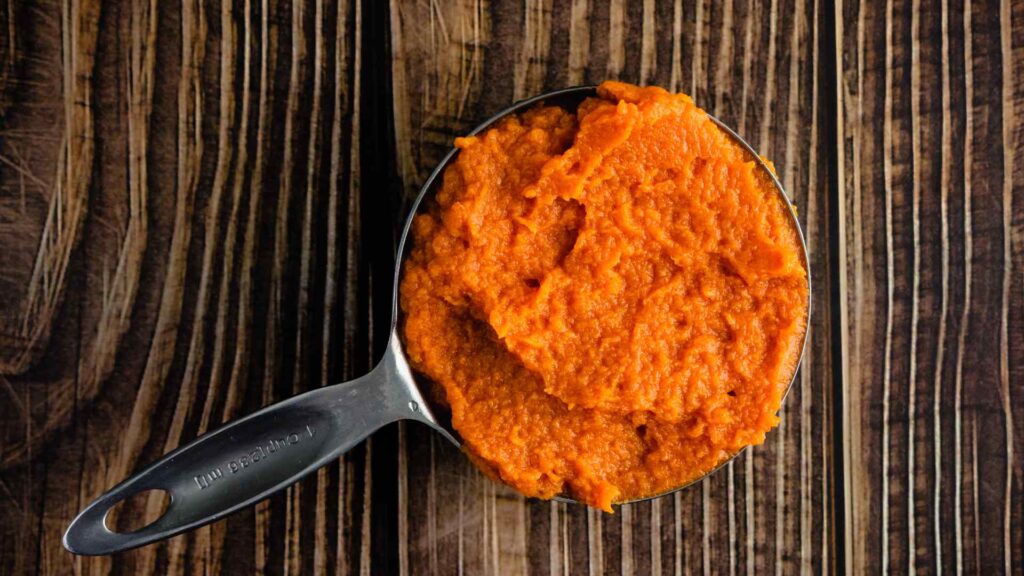
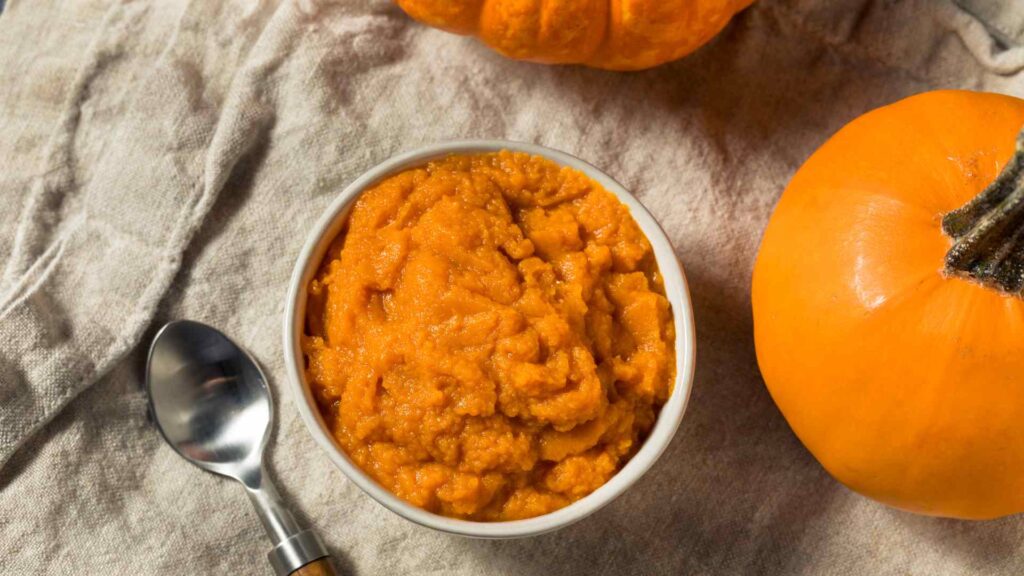
Plain canned pumpkin should list pumpkin as its ingredient, while ready-to-use pie filling or pie mix usually adds sugar and spices and may include other ingredients. Homemade puree should be plainly cooked flesh without skin, stem, butter, salt, sweetener, or seasoning.
Our plain pumpkin guide separates flesh, rind, seeds, cooked forms, and mixed dishes. An orange color or the word pumpkin does not prove a product is plain puree.
One small lick of pumpkin-only puree is more likely to cause no sign or mild digestive change than poisoning. A large serving can deliver a sudden fiber and calorie load that causes gas, cramping, vomiting, diarrhea, constipation, or appetite change.
Portion and fiber need patient-specific judgment
Pumpkin puree contains fermentable and nonfermentable fiber, but more is not automatically better. The useful amount, if any, depends on the dog’s size, current diet, diagnosis, hydration status, stool pattern, medications, and the reason it was suggested.
A large abrupt fiber increase can worsen gas, abdominal discomfort, diarrhea, straining, or reduced appetite. It can also displace complete food when a generous scoop is added to every meal.
Do not publish or follow a universal spoon-per-pound chart for treating stool problems. Ask the veterinarian who knows the dog whether pumpkin belongs in the plan, what product to use, how much, and for how long.
Dogs with diabetes, pancreatitis, kidney or heart disease, swallowing trouble, food allergy trials, calorie restrictions, or prescription diets should not receive routine add-ins without approval.
Sweetened and creamy pumpkin products differ
Pumpkin pie filling, pumpkin butter, latte mix, baby food, soup, smoothie, yogurt, and dessert may add sugar, syrup, dairy, coconut fat, salt, onion, garlic, or sweeteners. Read the exact product rather than treating every puree texture as equivalent.
Milk, cream, butter, and whipped toppings can cause gas, loose stool, cramps, or vomiting in dairy-intolerant dogs. A rich product can also be unsuitable for dogs with pancreatitis history or a low-fat diet.
Our pumpkin-pie guide covers fat, dairy, nutmeg, xylitol, crust, raw dough, toppings, and packaging. Use it when the product is dessert filling rather than plain puree.
Spices prove the product is not plain puree
Nutmeg, cinnamon, clove, ginger, and allspice may appear in pumpkin pie products. A tiny culinary amount and a raided spice jar, essential oil, concentrate, or whole nut are different exposures.
Veterinary toxicology guidance from Pet Poison Helpline describes neurologic and cardiovascular concerns after very large nutmeg exposure. That does not justify calling a small lick of ordinary pie filling a nutmeg emergency without assessing the actual recipe and amount.
Call when the spice amount is meaningful or unknown, a shaker broke, a whole nut is missing, or signs develop. Our nutmeg guide covers powder, oils, eye contact, and monitoring in detail.
Xylitol changes the urgency immediately
Plain pumpkin-only puree does not contain xylitol, and traditional pie filling often uses sugar, so one ordinary lick is not automatically a sweetener emergency. Sugar-free, keto, diabetic-friendly, low-carb, and homemade recipes require a careful check.
Xylitol may be listed as birch sugar, wood sugar, or birch bark extract. The FDA xylitol warning advises immediate veterinary or poison-control contact because dogs can develop dangerous low blood sugar and liver injury.
Do not wait for vomiting, weakness, stumbling, collapse, tremors, or seizures. Save the recipe, sweetener package, product or container weight, amount left, and dog weight.
Mixed pumpkin foods may hide urgent ingredients
Pumpkin oatmeal, trail mix, breads, cookies, smoothies, and desserts may add raisins, chocolate, coffee, alcohol, or nuts. Raisins can cause unpredictable kidney injury, while macadamia nuts can cause weakness, abnormal walking, vomiting, tremors, and increased temperature.
Chocolate adds theobromine and caffeine, with dark, baking, and high-cacao forms generally creating greater concern. Call promptly with the type, amount, time, dog weight, and recipe rather than waiting for symptoms.
Our raisin guide explains why there is no reliable safe raisin count. Assess every topping instead of assuming pumpkin is the only ingredient.
Cans, lids, pouches, and spoons can injure
An opened can may have a sharp rim, and a detached lid or pull tab can cut the mouth or gastrointestinal tract. Plastic pouches, tubs, caps, spoons, foil seals, clips, and bag pieces can choke or obstruct.
Breathing trouble, blue or gray gums, continuous gagging, or collapse is an emergency. Repeated vomiting, belly pain, refusal to eat, or inability to keep water down after missing packaging needs prompt care.
Spoiled or fermenting puree belongs in the trash
Opened pumpkin puree is perishable and can grow mold or ferment after unsafe storage. Bubbling, swelling, spraying, alcohol-like odor, mold, unusual color, slime, or a damaged can is a discard signal, not a reason to taste-test.
The United States Department of Agriculture shelf-stable food guide advises against leaking, bulging, badly dented, foul-smelling, or spurting containers. Secure suspect food where pets and people cannot access it.
Fermenting puree may add alcohol exposure, while moldy food can cause gastrointestinal or neurologic signs. Call promptly for a meaningful spoiled-food exposure and urgently for weakness, abnormal walking, tremors, seizures, repeated vomiting, or collapse.
Transfer opened puree to a covered food-safe container, refrigerate promptly, label the date, and discard it according to product guidance. Freezing small portions can reduce waste, but thawed puree still needs safe handling.
A large fiber serving can become the problem
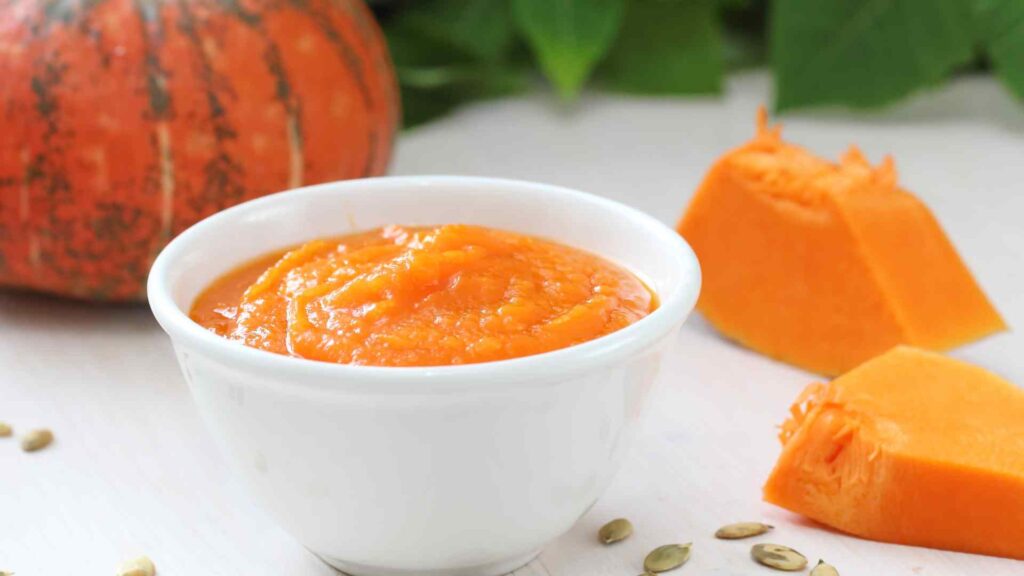
A dog that empties a can or bowl may develop substantial gas, diarrhea, constipation, abdominal discomfort, or appetite loss. The same amount is more consequential for a toy dog than a large adult.
Report the product size, amount left, dog weight, existing diet, stool history, conditions, and symptoms. Do not induce vomiting or force extra fiber, oil, milk, or water unless a veterinary professional directs it.
Pumpkin is not a universal GI remedy
Pumpkin puree should not be used automatically to treat diarrhea, constipation, anal-gland trouble, poor appetite, dehydration, or weight loss. Those signs have many causes, and the wrong fiber amount can delay diagnosis or worsen the problem.
Even plain pumpkin is not one-size-fits-all therapy because fiber type, amount, calories, hydration, disease, medications, and the rest of the diet matter. Blood, pain, repeated vomiting, weakness, dehydration, toxin exposure, or persistent stool change needs veterinary assessment.
The World Small Animal Veterinary Association treat guide recommends keeping treats below 10 percent of daily calories. Pumpkin add-ins share that allowance and can displace complete food when used generously.
A practical monitoring plan for a small taste
After one small lick of plain pumpkin-only puree, remove the rest and continue the dog’s normal routine unless a veterinarian advises otherwise. Watch appetite, energy, comfort, stool, and vomiting, and make sure normal drinking water remains available.
Do not add more pumpkin, milk, oil, bread, charcoal, antacids, or human stomach medicine in an attempt to treat an undiagnosed sign. Extra food can complicate the picture, and several common human medicines are inappropriate for dogs.
A puppy, toy-size dog, older dog, or dog with diabetes, food allergy, digestive disease, kidney disease, or a prescribed diet may need advice after less puree than a healthy large adult. The recipe and the patient’s history matter more than a catchy universal serving limit.
Compare homemade, canned, baby-food, and frozen puree
For homemade puree, list the pumpkin part used and every added ingredient. For canned, baby-food, frozen, or pouched products, photograph the ingredient panel and nutrition label before discarding the package.
Products labeled organic, natural, baby, vegan, keto, reduced-sugar, or dairy-free are not automatically suitable for dogs. They may replace familiar ingredients with nut flours, concentrated sweeteners, coconut fat, chocolate, raisins, or other additions that require separate review.
Compare the amount missing with the container’s total weight or volume instead of guessing from smears on the floor. If several dogs had access, assume the smallest dog could have eaten the largest plausible share until evidence shows otherwise.
Note whether the dog ate only puree or also swallowed the can, lid, pouch, spoon, toppings, mold, or another food. That distinction helps separate a routine stomach-upset question from a foreign-object or toxin concern.
Store puree without creating another hazard
Cool homemade puree away from the dog, then refrigerate or freeze it promptly in a labeled lidded container. Store cans, spices, sweeteners, and flavored products behind a closed door.
Clear cans, sharp lids, foil seals, spoons, pouches, and tubs as soon as serving ends because a seemingly empty counter still smells rewarding. Give everyone one simple rule: no unapproved add-ins and no open puree within reach.
What to do after a puree raid
Secure remaining puree, ingredients, spice containers, toppings, and packaging, then estimate the maximum amount. Record time, dog weight, conditions, medications, diet, symptoms, and every missing object.
Call for xylitol, raisins, chocolate, meaningful spice concentrate, a large serving, spoiled or fermenting puree, medical vulnerability, packaging, or significant signs. For one small lick of plain pumpkin-only puree in a healthy dog, label review and monitoring are usually proportionate.
Bottom line
One small lick of plain pumpkin-only puree is usually low risk, but puree is optional food rather than universal digestive care. Large fiber portions, pie filling, sweeteners, spices, mixed foods, spoilage, fermentation, medical diets, sharp cans, lids, and packaging deserve closer attention.