Can Cats Eat Pickles? Brine, Alliums, and Jar Hazards
A tiny lick of plain cucumber or one speck of a simple pickle is unlikely to poison most healthy cats, but pickles are not a useful feline treat. Brine, sodium, garlic, onion, concentrated flavorings, vinegar, hot spice, sugar substitutes, glass jars, lids, and prescribed kidney or heart diets can change the risk.
The cucumber is not the complicated part
Plain washed cucumber flesh and a commercial pickle are different foods. Pickling usually adds salt, vinegar, fermentation, herbs, spices, sweetener, preservatives, or other vegetables.
A cat that licks one droplet from a plate is not in the same situation as a cat that drinks brine or eats several slices. Save the label and record the amount, liquid, time, cat’s weight, symptoms, medical conditions, and missing packaging.
Cats do not need pickles for hydration, probiotics, electrolytes, vitamins, or digestive support. Fresh water and complete cat food meet those jobs more predictably.
Brine and sodium deserve attention
Pickle brine can be much saltier than the cucumber flesh. Rinsing a slice removes some surface liquid but does not make a pickle necessary or appropriate for a sodium-restricted cat.
The Merck Veterinary Manual’s salt toxicosis review explains that excessive sodium, especially with limited water, can cause gastrointestinal and neurologic signs. Possible signs include vomiting, weakness, diarrhea, wobbliness, tremors, and seizures.
A tiny lick is not automatically salt poisoning, but a spilled jar or brine bowl needs prompt veterinary advice. Leave normal fresh water available to an alert cat that can swallow, and never force water or attempt rapid correction.
Kidney, heart, and urinary diets
Cats with chronic kidney disease, heart disease, hypertension, fluid-balance problems, or a prescribed urinary diet may have individualized sodium and nutrient targets. Even a small human-food habit can undermine a carefully selected therapeutic diet.
Do not use brine to encourage a cat to drink or eat. A cat with poor appetite, vomiting, weight loss, or decreased drinking needs veterinary assessment because cats can deteriorate quickly when they stop eating.
Ask the clinician managing the condition which toppers, if any, are compatible. Low-sodium on a human label is not the same as approved for a specific feline prescription.
Garlic and onion can be hidden
Dill pickles may include garlic cloves, garlic powder, onion, onion powder, chives, or mixed pickling spice. Cats are particularly susceptible to oxidative red-blood-cell damage from Allium plants.
The Merck Allium toxicosis review identifies cats as the most susceptible species and includes raw, cooked, dehydrated, and granulated forms. Anemia signs can be delayed for several days.
Possible signs include poor appetite, lethargy, weakness, pale or yellow gums, fast breathing, rapid heart rate, dark urine, collapse, and vomiting. Call promptly after a known Allium exposure rather than waiting for those signs.
Our cat onion guide provides feline-specific context. Do not copy a canine dose chart onto a cat exposure.
Dill, oils, spice, and vinegar
Ordinary food-level dill is not the same as concentrated dill essential oil or extract. Concentrates can be absorbed through the mouth, skin, and lungs and should not be applied to a cat or added to food as a breath or digestive remedy.
Hot peppers, mustard seed, peppercorns, clove, and mixed spices can irritate the mouth or stomach. Powder can also reach the eyes and nose when a packet spills.
Vinegar is acidic and may cause drooling, lip licking, vomiting, or avoidance after a meaningful concentrated exposure. It should not be placed in a cat’s mouth, ears, eyes, coat, or litter area as a health treatment.
Sugar-free or specialty pickles need a full sweetener check, although xylitol is not a standard pickle ingredient. Never invent a xylitol emergency without seeing it on the exact label.
Sweet, fried, and mixed pickles
Bread-and-butter pickles add sugar and spices, while fried pickles add batter, oil, salt, and dipping sauce. Cheese, ranch, barbecue sauce, garlic mayonnaise, and hot sauce create their own dairy, fat, sodium, and seasoning questions.
Pickle relish may be easier to lick but can contain onion, sugar, salt, mustard, and preservatives. Burgers, hot dogs, tuna salad, and sandwiches add processed meat, bones, dough, wrappers, toothpicks, or raw ingredients.
Our cat cucumber guide covers plain produce, while the cat garlic guide addresses the highest-risk common pickle flavoring.
Jars, lids, and spills
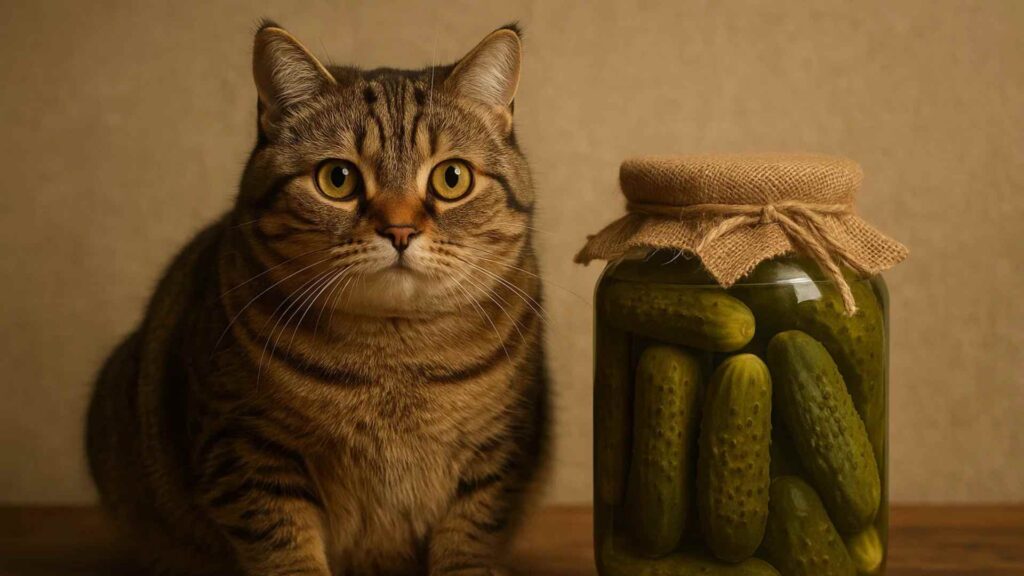
Glass jars can shatter in salty liquid, and metal lids may have sharp edges. Plastic tubs, film seals, rings, labels, toothpicks, and clips can choke or obstruct.
The FDA’s dangerous-items guide notes that food packaging can cause choking, obstruction, and even bag suffocation. Keep a cat away from the spill before counting missing pieces.
Do not induce vomiting after possible glass, sharp metal, neurologic signs, or foreign material. Check paws and fur without risking a bite, and call for cleaning or injury guidance.
What to do after an exposure
- Remove the jar, brine, slices, and packaging, then save the complete ingredient label and recipe.
- Estimate flesh and liquid consumed, timing, cat’s weight, symptoms, medical history, and any missing glass, lid, film, or toothpick.
- Check specifically for garlic, onion, chives, concentrated oils, hot spice, alcohol, sweetener, and mold.
- Call for Alliums, significant brine, symptoms, therapeutic-diet concerns, concentrated products, spoilage, or packaging.
- Seek emergency care for breathing trouble, collapse, seizures, marked weakness, pale gums, severe vomiting, or suspected glass injury.
Do not give hydrogen peroxide, salt, oil, milk, bread, charcoal, or human medicine unless a veterinarian directs it. Hydrogen peroxide is not a safe home emetic for cats.
Spoilage and fermentation
Discard pickles with a broken seal, bulging lid, unexpected mold, slime, severe discoloration, or an odor that differs from the product’s normal fermentation. Do not feed questionable food to a cat to avoid waste.
Store opened jars exactly as the label directs and use clean utensils. A cat licking repeatedly from an open jar can introduce contamination and consume more brine than anyone notices.
A better treat decision
The Cornell Feline Health Center explains that cats are obligate carnivores and that treats should remain occasional rather than displacing balanced food. A piece of the cat’s regular diet is usually the cleanest reward.
If a veterinarian permits cucumber, use one tiny fresh plain piece cut to prevent gulping. Skip pickle brine, flavorings, and any claim that fermented human food improves the feline microbiome.
Read the jar before deciding what happened
Start with the exact product name because kosher dill, bread-and-butter, spicy, fermented, refrigerated, and shelf-stable pickles can have very different recipes. Photograph the front label, ingredient list, nutrition panel, and any loose garlic cloves or peppers in the jar.
Serving-size sodium is not the same as the amount the cat reached, so estimate whether this was a tongue-tip taste, one drained slice, several slices, or a drink from the jar. If another person discarded the package, search the manufacturer’s current ingredient page rather than guessing from the pickle’s color.
Fermentation does not make it cat medicine
Some pickles are fermented, while many supermarket pickles are acidified with vinegar and heat processed. Neither category has been shown to function as a probiotic treatment for an individual cat.
A useful feline probiotic question involves the strain, viable count, indication, storage, dose, and the cat’s diagnosis. A salty human pickle supplies none of that clinical precision, and using it can delay evaluation of diarrhea or appetite loss.
Choking and digestive obstruction
A round pickle coin, firm spear, whole gherkin, garlic clove, or pepper can be awkward for a cat that bolts food. Coughing, pawing at the mouth, noisy breathing, blue or gray gums, or collapse is an immediate emergency.
Lids, tamper rings, foil seals, plastic wrap, and broken jar pieces are separate hazards from the food. Repeated vomiting, refusal to eat, abdominal pain, lethargy, straining, or reduced stool after packaging disappears warrants veterinary assessment.
Monitoring a genuinely minor taste
When the exposure was only a tiny lick of an Allium-free ordinary pickle and the cat is comfortable, remove access, offer the normal diet and fresh water, and watch closely. Do not force extra water, because correcting a suspected electrolyte problem requires controlled veterinary care.
Record appetite, energy, vomiting, stool, urination, gum color, and breathing rather than relying on a vague impression that the cat seems quiet. Call if anything changes, if the ingredient list remains uncertain, or if the cat is a kitten, frail, elderly, or medically managed.
Frequently asked questions
Can cats lick pickle juice?
Do not offer it. One accidental drop may be minor, but brine is salty and may contain Alliums or spices.
Can cats eat dill pickles?
Skip them because the recipe may contain salt, garlic, onion, vinegar, and concentrated flavoring. Plain cucumber is easier to assess.
What if my cat ate one tiny plain slice?
Check the label and monitor if the cat is comfortable, but call for medical diet restrictions, Alliums, symptoms, or uncertainty. Keep normal water available.
The bottom line
Pickles are not a feline health food. Treat one tiny simple lick proportionately, but take brine, garlic, onion, concentrated oils, vinegar, spices, chronic disease, spoilage, and broken packaging seriously.
Preserve the label and call based on the complete product, not only the cucumber. Balanced cat food and fresh water beat probiotic, hydration, and electrolyte claims.