Can Cats Eat Plums? Ripe Flesh, Pits, Trees, and Prune Products
A tiny piece of washed, ripe plum flesh may be tolerated by a healthy adult cat, but plums are not needed. The hard pit and its kernel, stem, leaves, twigs, wilted tree material, unripe fruit, dried prunes, preserves, alcohol, mold, pesticides, and packaging turn one fruit into several very different safety questions.
Start by naming the plum part
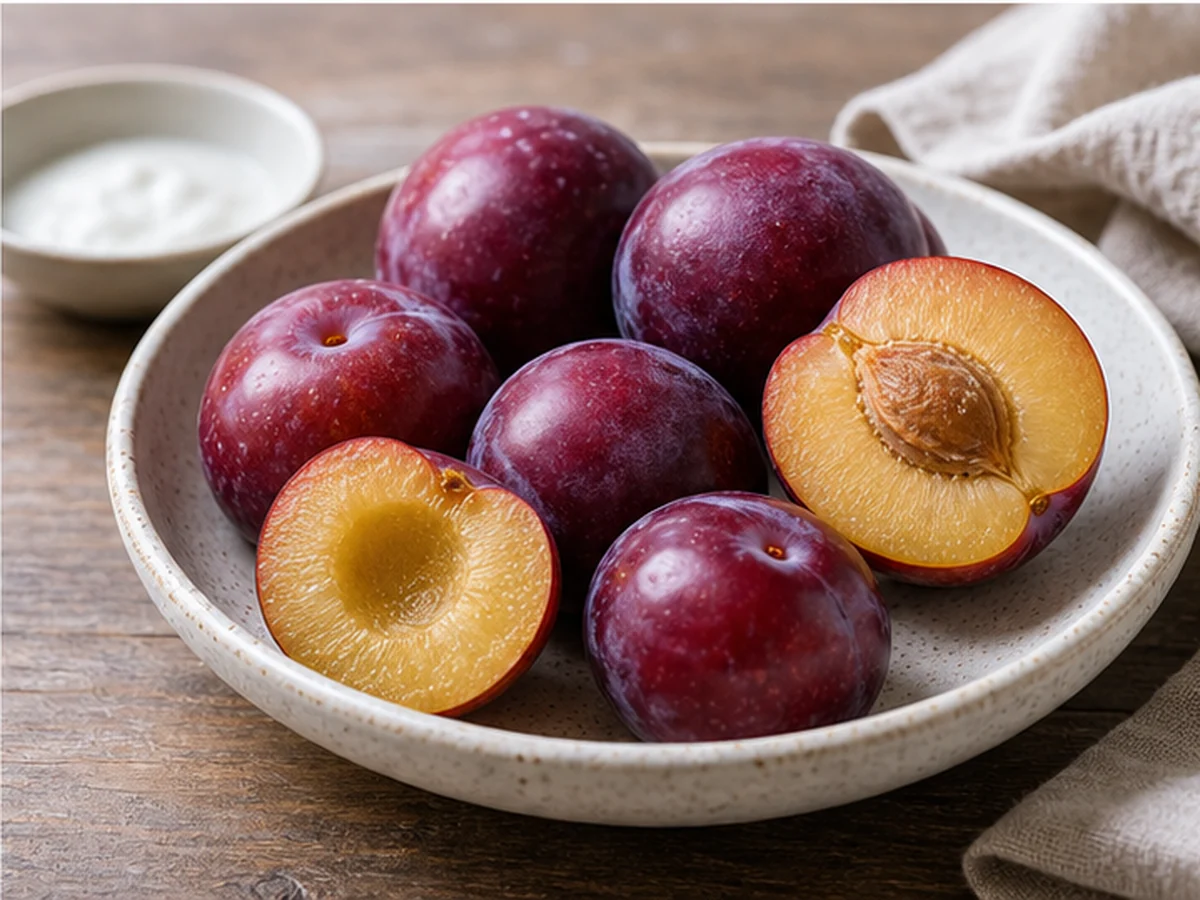
Soft ripe flesh without pit, stem, or leaf is the lowest-concern form, although its sugar and fiber still make a microscopic taste more sensible than a serving. Skin can be tough and slippery, so peeling it removes a texture problem.
The stone is a choking and obstruction hazard even before chemistry enters the discussion. Cracking the stone can expose the kernel, which contains cyanogenic compounds that should never be available to a cat.
Tree leaves, stems, and twigs belong with plant toxicology rather than fruit nutrition. Wilted or damaged material can remain hazardous and deserves prompt product-and-plant-specific advice.
The pit creates two separate risks
A whole plum pit is hard, irregular, and large enough to lodge in the throat or gastrointestinal tract. Teeth can fracture when a cat treats it like a rolling toy.
A broken pit exposes the seed kernel and increases concern about cyanogenic compounds releasing cyanide. Do not taste, crush, drill, or grind a recovered pit to decide what happened.
The Merck Veterinary Manual explains cyanide poisoning in animals, including rapid breathing, agitation, weakness, seizures, and collapse. Suspected chewed kernels or sudden signs require emergency care.
One clean flesh taste is a narrow exception
If a veterinarian agrees, wash a sound ripe plum, remove the entire pit and stem, peel it, and cut a piece smaller than a pea. Offer it cool and plain, never from your mouth or a sweetened dish.
Remove leftovers promptly because cut fruit becomes sticky and attracts insects. Refusal needs no coaxing because a complete cat food supplies the nutrients a cat actually requires.
The cat peach guide offers a useful stone-fruit comparison, but each pit, recipe, and missing amount still needs its own inventory.
Unripe, fallen, and spoiled fruit
Green fruit is firmer, more acidic, and harder to chew than ripe flesh. Windfall plums may also carry soil, lawn chemicals, insects, animal waste, fermentation, or hidden damage.
Moldy or fermented fruit can cause gastrointestinal or neurologic illness unrelated to the fresh flesh. Tremors, poor coordination, repeated vomiting, seizures, or collapse after a compost raid warrants emergency evaluation.
Do not cut around a rotten patch for a cat. Secure fallen fruit daily when pets share a yard with a plum tree.
The tree deserves a boundary
The ASPCA lists plum plant parts as toxic to cats and identifies cyanogenic glycosides among the toxic principles. Keep a plant photograph and cultivar information when calling.
Pruned branches, bouquets, blossom arrangements, firewood, and garden debris can bring leaves and twigs indoors. A dried decoration is not converted into a feline chew by losing its moisture.
Fertilizer, insecticide, fungicide, mulch, ties, netting, and stakes may matter after garden access. Preserve every label rather than guessing which exposure caused the signs.
Prunes are concentrated and sticky
A prune is a dried plum with less water and a concentrated sugar-and-fiber load. Its tacky texture can cling around teeth or be swallowed in a larger lump.
Prune juice, puree, and baby food may include other fruits, sweeteners, preservatives, or flavorings. Do not use them as a cat constipation remedy without a diagnosis and measured veterinary plan.
Straining can reflect urinary obstruction rather than constipation, especially in male cats. Repeated litter-box trips with little urine, crying, vomiting, or lethargy is an emergency.
Jam, chutney, and desserts
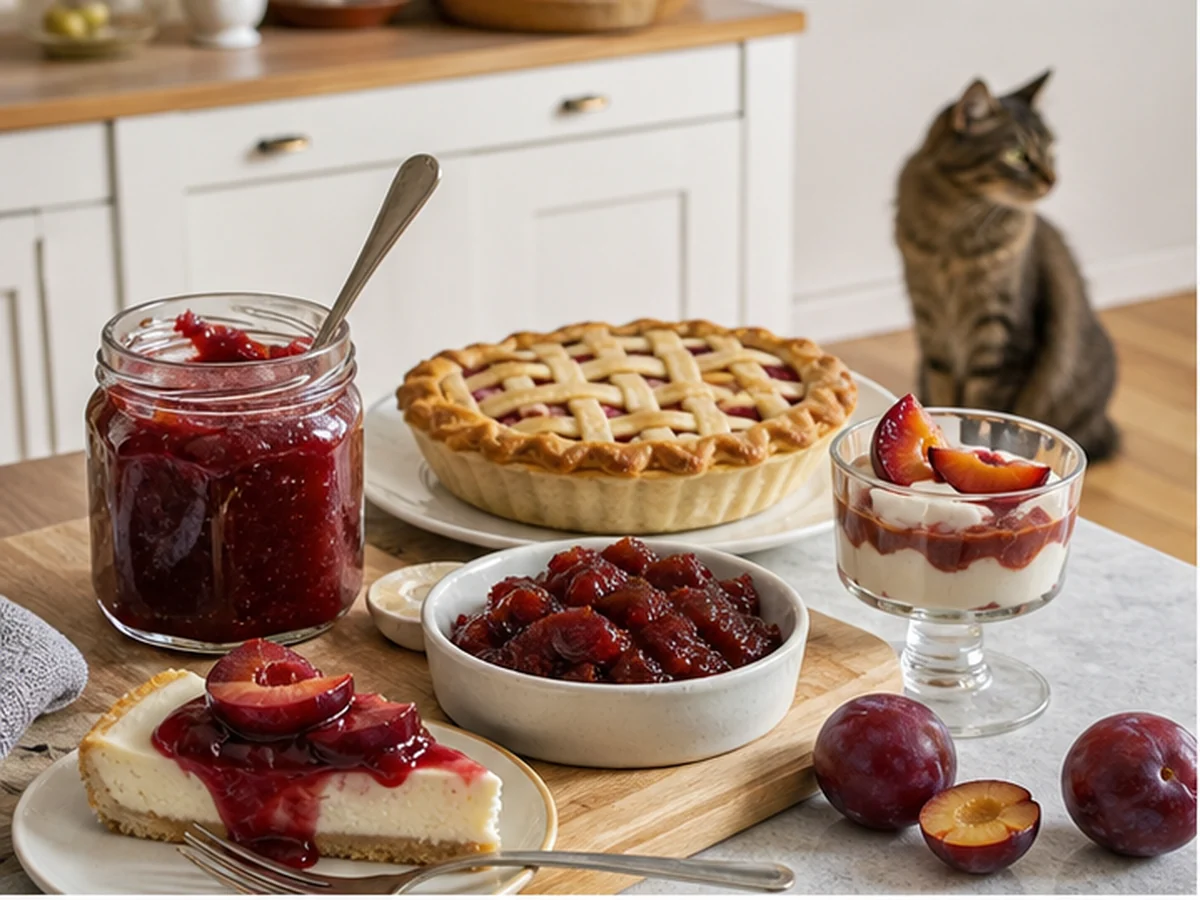
Plum jam can add large amounts of sugar, lemon, spice, alcohol, or alternative sweeteners, while chutney often contains onion, garlic, raisins, chili, and vinegar. Read the actual recipe and jar label.
Tarts, dumplings, cakes, and cobblers may contribute raw dough, butter, dairy, nutmeg, chocolate, hot filling, foil, and skewers. The plum name does not summarize the exposure.
A small lick of plain jam is not automatically a poisoning, but a jar raid or sugar-free product needs product-specific advice. Sticky lids and torn safety seals can be swallowed.
Juice, wine, and liqueur
Plum juice provides sugar and acidity without useful chewing enrichment. Commercial blends may include grape concentrate, sweeteners, vitamins, caffeine, or botanical additives.
Plum wine, brandy, slivovitz, and liqueur contain alcohol, which can cause dangerous neurologic and metabolic effects. Weakness, wobbliness, vomiting, slow breathing, marked sleepiness, or collapse after an alcoholic spill needs urgent care.
Cocktail picks, glass, bottle caps, corks, and foil may disappear during the same event. Count the bar tools as carefully as the fruit.
Produce hygiene still matters
The FDA recommends washing produce under running water without soap and keeping preparation surfaces clean. Washing cannot neutralize a pit kernel or rescue spoiled fruit.
Refrigerate cut plum promptly and discard pieces left warm or contaminated by raw meat. Never put a cat-licked portion back into the household container.
Produce stickers, thin bags, mesh, rubber bands, and twist ties smell like fruit after handling. Store them behind a closed door rather than beside the scraps.
What to report after a plum raid
- Part: flesh, skin, whole pit, cracked pit, kernel, stem, leaf, twig, blossom, or unknown garden material.
- Product: fresh, unripe, rotten, prune, juice, jam, chutney, dessert, alcohol, supplement, or compost.
- Amount: estimate missing weight, number of pits, bite marks, recipe servings, and maximum spill.
- Context: list pesticides, fertilizer, sweeteners, alcohol, Alliums, dough, mold, and packaging.
- Cat details: provide weight, age, conditions, medicines, time, route, and every observed sign.
Do not induce vomiting, force food, give milk, or administer a cyanide remedy from the internet. A clinic needs the real material and a stable route to care, not a second home-treatment exposure.
Plum skin, slices, and fruit bowls
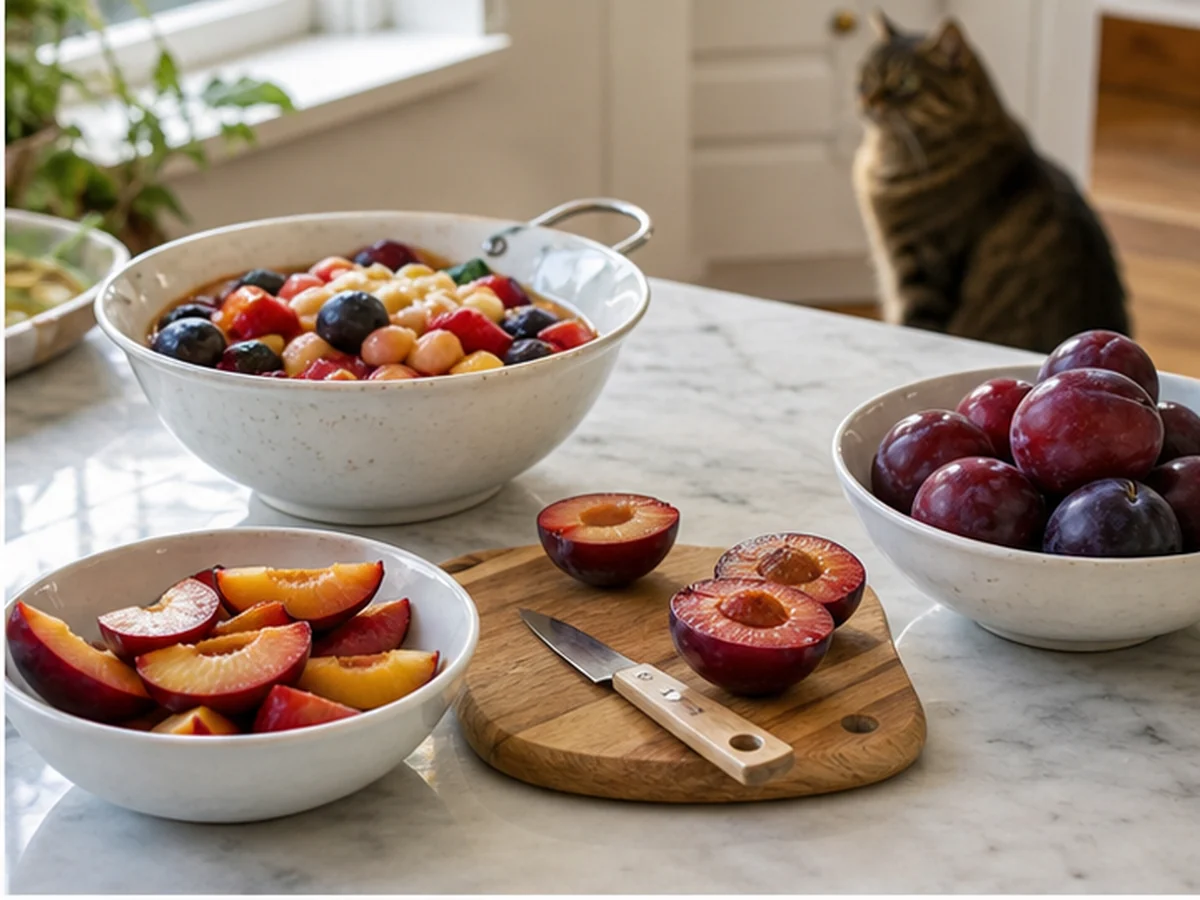
Plum skin is edible for people but can be chewy, acidic, and slippery for a cat. A long curling strip can behave more like a foreign object than a nutrient, especially when swallowed during play.
Fruit salad may combine plums with grapes, cherries, citrus, melon rind, toothpicks, syrup, yogurt, and sweeteners. The cat cherry guide is especially relevant when another cyanogenic stone-fruit pit is present.
Canned fruit cups can be packed in syrup or juice and sealed with sharp foil lids. Rinsing lowers surface sweetness but cannot turn a mixed cup into an appropriate cat snack.
Frozen plum is still hard fruit
Frozen wedges and smoothie cubes can crack teeth or stick briefly to moist tissue. Thawing softens the fruit but does not remove pits, sugar, mixed ingredients, or freezer packaging.
Smoothies may contain yogurt, plant milk, protein powder, cocoa, caffeine, grapes, supplements, or sweeteners. Ask for the entire recipe and blender size after a spill.
Do not press frozen fruit against a hot or injured mouth. Oral pain, bleeding, drooling, swelling, or refusal to eat needs veterinary attention.
Plum sauces served with meat
Asian-style plum sauce and savory glazes can contain onion, garlic, chili, ginger, soy sauce, salt, vinegar, sugar, and preservatives. The glossy condiment is not equivalent to ripe fruit flesh.
Roast duck, pork, or chicken may also bring cooked bones, skin, fat, skewers, and foil. Identify every accessible component instead of blaming the purple sauce by default.
Set aside an approved plain meat shred before sauce touches the pan. Washing a finished piece cannot reliably remove ingredients from cuts and pores.
Portion and calorie reality
A pea-sized sample already lets a cat inspect smell and texture without turning fruit into a side dish. Larger servings increase sugar, fiber, and the chance of loose stool while displacing useful food.
Cats with diabetes, obesity, chronic digestive disease, dental problems, swallowing trouble, or elimination diets should skip plum tasting. An individual nutrition plan outranks a general fruit allowance.
The cat apple guide provides another flesh-versus-seed comparison, but apple cores and plum stones differ mechanically. Similar fruit categories never justify swapping toxicology details.
Monitoring after a veterinarian says to watch
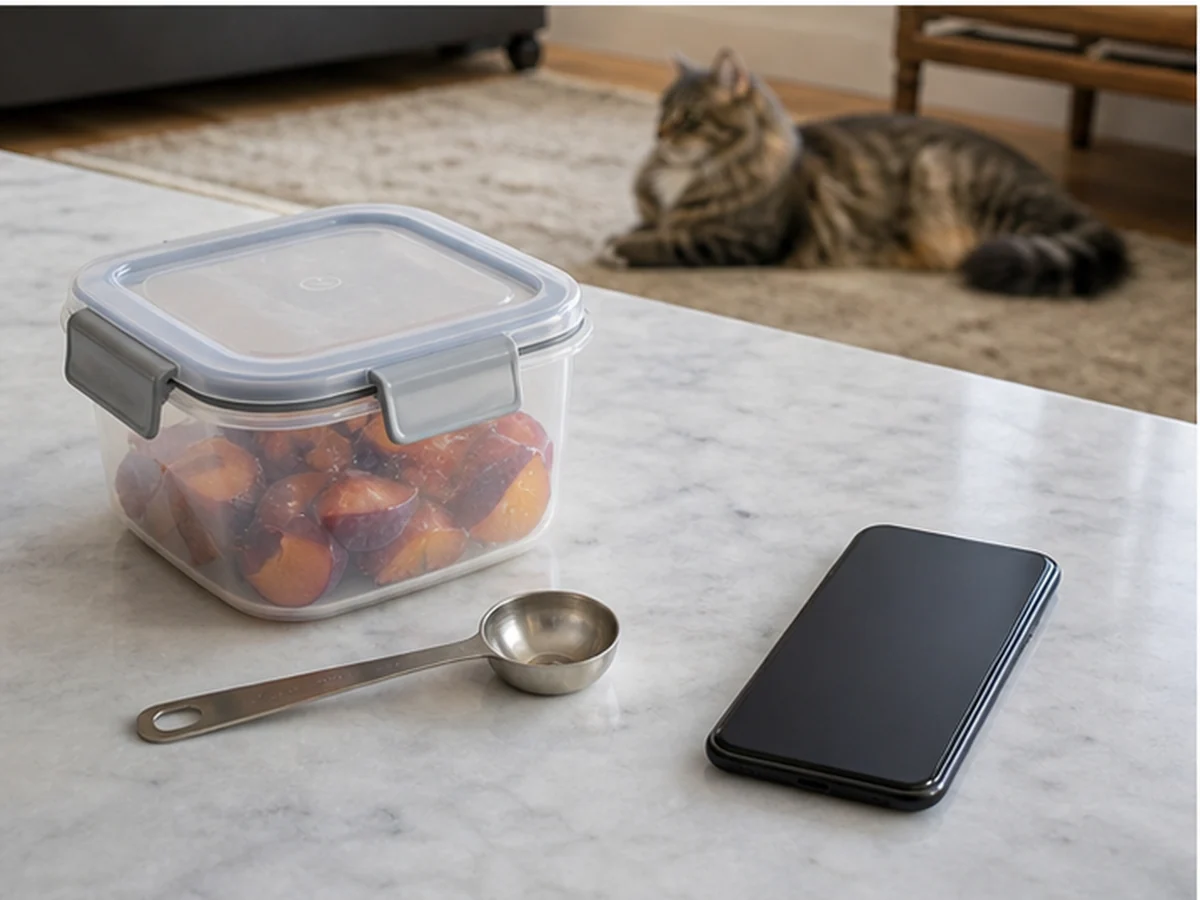
Keep the cat indoors and observe ordinary appetite, walking, comfort, breathing, vomiting, urination, and stool during the advised window. Write down changes instead of relying on memory after a stressful discovery.
A cat that develops repeated vomiting, weakness, unusual breathing, marked restlessness, pain, or poor coordination needs reassessment. Monitoring ends when the cat stops acting normal.
Do not repeatedly offer rich food to test appetite because that can muddy the clinical picture. Follow the clinic’s feeding instructions.
Keep litter-box observations separate for each cat in a multicat home so changes are not accidentally assigned to the wrong animal.
Frequently asked questions
Can kittens eat plum flesh?
Kittens should receive complete growth food rather than fruit experiments. Their smaller mouths also make skin and pit fragments especially poor choices.
What if my cat licked a plum pit?
An intact pit lick may stay low concern, but confirm that it was not chewed or swallowed. Call promptly for cracks, bite marks, a missing pit, plant material, or symptoms.
Can cats eat prunes for constipation?
Do not use prunes as a home laxative because the diagnosis, fiber type, hydration, and dose matter. Urinary straining can look deceptively similar and may be life-threatening.
Are plum leaves safe after they dry?
No. Keep fresh, wilted, and dried tree material away and ask for plant-specific guidance after chewing.
Bottom line
Ripe plum flesh can be a tiny optional taste only after the skin, pit, stem, and recipe are removed from the equation. Treat cracked stones and tree parts as urgent toxicology questions, treat whole pits as foreign objects, and leave prunes and preserves out of the cat bowl.