Can Dogs Eat Pretzels? Salt, Flavors, Coatings, and Dough
One small piece of plain baked pretzel is unlikely to harm most healthy adult dogs, but pretzels are salty, calorie-dense snacks with no useful role in a canine diet. A whole bag, flavored seasoning, chocolate or sugar-free coating, cheese dip, raw yeast dough, choking, and missing packaging can change the response quickly.
Start with the pretzel that was actually eaten
- One small plain baked piece: usually monitor a healthy adult dog.
- Several large soft pretzels or a snack bag: assess sodium, calories, and packaging.
- Garlic, onion, cheese, ranch, or spicy flavor: save the label and review every ingredient.
- Chocolate or sugar-free coating: call promptly with the package.
- Raw yeast dough: treat as an urgent veterinary exposure, not an unfinished pretzel.
Hard twists, rods, nuggets, and soft mall pretzels share a name but not the same size, salt coating, or recipe. Count pieces and inspect what is missing rather than using one generic serving estimate.
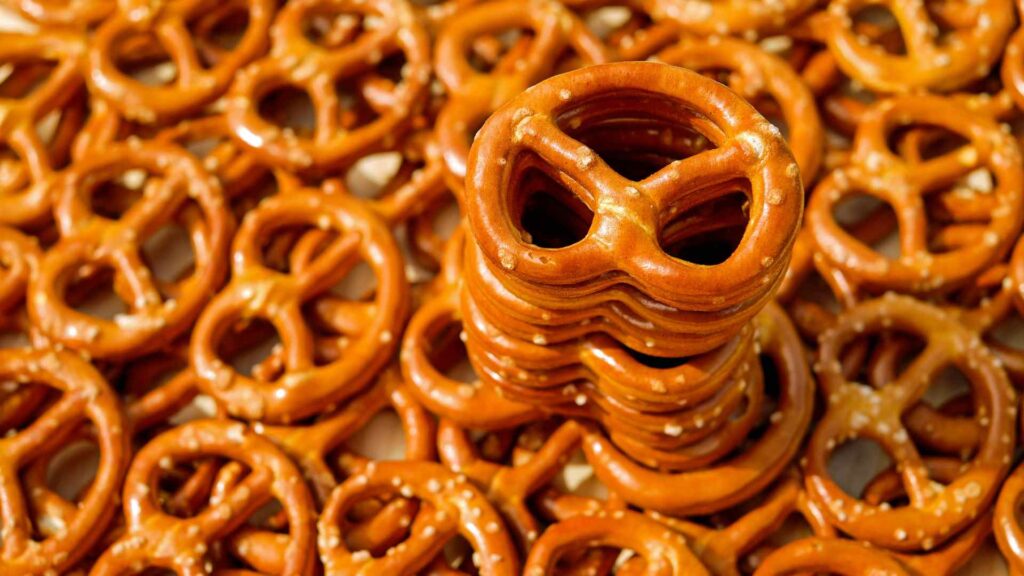
Plain pretzels are mostly an unnecessary extra
A basic pretzel is made from flour, water, yeast or another leavening method, salt, and sometimes oil or sugar. Baking makes the finished bread different from raw dough, but it does not turn it into complete dog food.
A small baked crumb may pass uneventfully, while a large amount can cause thirst, stomach upset, gas, vomiting, or diarrhea. Dogs with wheat sensitivity or a strict elimination diet also need ingredient control.
The UC Davis veterinary treat guideline recommends that treats and extras stay below 10 percent of daily calories. Pretzels share that allowance with every reward, chew, table scrap, and pill food.
Pretzels are not a bland-food treatment for vomiting or diarrhea. Salt, calories, and unfamiliar ingredients can worsen symptoms or obscure the cause.
Salt is the headline, but proportion matters
Visible coarse crystals make some pretzels especially salty, and flavored versions can add sodium throughout the dough and coating. A licked crumb is not equivalent to eating a family-size bag or a cup of dipping salt.
The Merck Veterinary Manual salt-toxicosis review explains that excessive sodium chloride, especially with limited water, can cause vomiting, weakness, incoordination, tremors, and seizures. It also notes that toxicosis is unlikely when sodium regulation is normal and fresh water remains available, which helps keep one small pretzel in perspective.
Remove access and leave fresh water available after a small exposure. Do not force a large volume of water, and do not use salt to induce vomiting.
Call after a substantial salty-food raid, limited water access, seawater exposure, kidney or heart disease, or neurologic signs. Repeated vomiting, severe weakness, wobbliness, tremors, seizures, collapse, or abnormal behavior needs urgent care.
Soft pretzels are bigger than they look
A soft pretzel can equal many snack-size twists and may be brushed with butter before being heavily salted. Cinnamon-sugar, cheese-filled, pepperoni, jalapeño, and stuffed versions add still more variables.
Tear a plain accidental piece into perspective by estimating the fraction of the whole pretzel, not merely saying one piece. A missing concession-stand box may also include cheese cup lids, paper, foil, or skewers.
Raw yeast dough is a true emergency
Pretzel dough made with live yeast can expand in a dog’s warm stomach and produce ethanol during fermentation. This is not the same exposure as a fully baked pretzel.
The Merck Veterinary Manual bread-dough review describes stomach distention and ethanol toxicosis, with signs including unproductive retching, abdominal swelling, lethargy, disorientation, incoordination, weakness, low body temperature, seizures, or coma.
Call immediately after raw yeast dough is swallowed and do not wait for it to rise. Do not induce vomiting or give cold water unless a veterinary professional directs the case.
Baking powder or baking soda dough lacks live-yeast fermentation but can still be problematic in a large raw amount, and concentrated leavening products deserve case-specific advice. Save the recipe and packaging.
Garlic and onion seasoning
Everything pretzels, ranch seasoning, sour cream and onion, garlic parmesan, pizza flavor, and snack mixes may contain garlic or onion powder. Powdered Alliums remain relevant even when the visible pieces are tiny.
Our onion guide and garlic guide explain why red-blood-cell effects can be delayed. Save the current label because flavor recipes change.
One lightly dusted crumb is not guaranteed to cause illness, but a whole seasoned bag or repeated exposure deserves a call. Report the brand, flavor, missing amount, dog’s weight, and time.
Chocolate and sweet coatings
Chocolate-covered pretzels combine methylxanthine risk with salt, sugar, and fat. Dark chocolate, baking chocolate, and cocoa-rich coatings are generally more concentrated than milk chocolate.
Our chocolate guide explains why type, amount, and dog weight matter. Keep the package rather than judging concentration by color.
Yogurt-colored or white coatings may contain sugar and fat without cocoa, but appearance is unreliable. Read the ingredients and identify raisins, macadamias, coffee, or other toppings.
Sugar-free deserves an immediate xylitol check
The Merck Veterinary Manual xylitol review explains that xylitol can cause profound low blood sugar in dogs and sometimes liver injury. Call immediately after confirmed exposure even if the dog looks normal.
Weakness, vomiting, incoordination, tremors, seizures, or collapse can follow hypoglycemia. Do not wait for signs and do not induce vomiting without professional direction.
Cheese dip, mustard, and beer cheese
Pretzel dips can add fat, sodium, dairy, garlic, onion, chile, alcohol, or artificial sweeteners. A lick of ordinary mustard is different from swallowing a tub of beer cheese and its plastic lid.
Rich dips are especially unsuitable for dogs with pancreatitis history, obesity, high triglycerides, heart disease, kidney disease, or prescribed fat or sodium limits. Repeated vomiting, marked pain, appetite loss, or severe lethargy after a rich raid warrants a call.
Choking and packaging
Large hard rods and dense nuggets can be gulped, while a soft pretzel wad may lodge in a small dog’s throat. Breakage also creates sharp little crumbs, though these are more likely to irritate than obstruct.
Breathing trouble, blue or gray gums, collapse, or active choking is an emergency. Repeated gagging, drooling, pawing at the mouth, or inability to swallow needs urgent assessment.
Plastic bags, clips, foil, paper trays, dip lids, desiccant packets, and skewers may disappear with the snack. Missing objects plus vomiting, appetite loss, abdominal pain, lethargy, or reduced stool needs prompt care.

Allergy and gluten-free pretzels
Gluten-free describes certain grain proteins, not overall canine safety. These pretzels can still contain salt, oil, starch, gums, cheese, garlic, onion, chocolate, or sweetener.
The Merck Veterinary Manual food-allergy review describes strict elimination and rechallenge as the reference diagnostic method. One itchy evening does not prove a wheat allergy.
Facial swelling, widespread hives, breathing trouble, weakness, or collapse is an emergency. Recurrent milder skin, ear, or digestive signs need a veterinarian-guided workup.
Pretzel buns, sandwiches, and snack mixes
A pretzel bun can be much larger than a twist and usually carries the fillings and condiments of a sandwich. Deli meat, sausage, cheese, onion, garlic sauce, mustard, butter, and toothpicks may matter more than the bread.
Snack mixes can combine pretzels with raisins, chocolate candy, macadamias, salty nuts, cheese crackers, garlic seasoning, or sugar-free pieces. Do not sort out visible pretzels and assume the remaining exposure is harmless.
Count every component and save the bag, including its ingredient panel and net weight. A dog that swallowed the plastic bag, clip, or oxygen absorber needs foreign-object advice even if the food ingredients are ordinary.
Storage and stale pretzels
Stale texture is usually a quality issue, but damp, moldy, pest-contaminated, or chemically tainted snacks should be discarded. Dogs should not serve as the cleanup plan for food people reject.
Keep soft pretzels refrigerated when their filling or topping requires it and follow the product label. Spoilage, meat or dairy filling, and time at room temperature create a food-safety question beyond salt.
What to do after a pretzel raid
- Identify hard, soft, baked, raw dough, flavored, filled, dipped, chocolate-coated, or sugar-free product.
- Estimate the amount and time, then record dog weight, symptoms, conditions, and medications.
- Save labels for salt, garlic, onion, chocolate, xylitol, cheese, mustard, and sweeteners.
- Count missing bags, clips, foil, trays, lids, skewers, and desiccant packets.
- Call promptly for raw yeast dough, xylitol, chocolate, a large salty amount, unsafe flavoring, packaging, or significant symptoms.
A healthy adult dog that eats one small plain baked piece and remains normal can usually be monitored with fresh water available. Return to the normal complete diet rather than feeding more pretzel as a bland snack.
Frequently asked questions
Are plain pretzels toxic to dogs?
One small baked plain piece is not a recognized toxin for most healthy dogs. Salt, calories, portion, and the dog’s medical needs still make routine feeding unhelpful.
Can dogs eat unsalted pretzels?
A small piece is lower in visible salt but remains an unnecessary refined snack. Check whether sodium is still present in the dough.
What if my dog ate pretzel dough?
Call immediately if it contained live yeast. Expansion and ethanol production can become life-threatening before the dough ever resembles a baked pretzel.
Can pretzels settle a dog’s stomach?
No. Vomiting or diarrhea may need diagnosis, and salty bread can complicate rather than treat the problem.
The bottom line
One small plain baked pretzel piece is usually a minor dietary detour for a healthy adult dog. It is not a recommended treat and does not belong in a bland-diet plan.
Large salty amounts, raw yeast dough, Allium flavors, chocolate, xylitol, rich dips, choking, and packaging require a different response. Let the exact product label guide the call.