Can Dogs Eat Guacamole? Onion, Garlic, Avocado, and Hidden Risks
Dogs should not be intentionally fed guacamole because recipes commonly combine avocado with onion, garlic, salt, lime, jalapeño, and extra fat. One small lick of ordinary guacamole is not guaranteed to poison a healthy dog, but the exact recipe, amount, dog, symptoms, missing avocado pit or skin, chips, and container determine the response.
Guacamole is a recipe, not a single ingredient
- One lick from a plate: save the recipe and monitor unless a dangerous ingredient changes the call.
- A bowl containing onion or garlic: call with amount, time, and dog weight.
- A spicy recipe: expect possible mouth and stomach irritation.
- A large amount: assess fat, sodium, calories, and pancreatitis risk.
- A missing avocado pit, skin, toothpick, bowl, lid, or bag: treat as a foreign-object concern.
Restaurant, deli, homemade, and shelf-stable guacamole vary substantially. Never infer ingredients from green color or a mild first taste.
Avocado flesh in dogs needs proportion
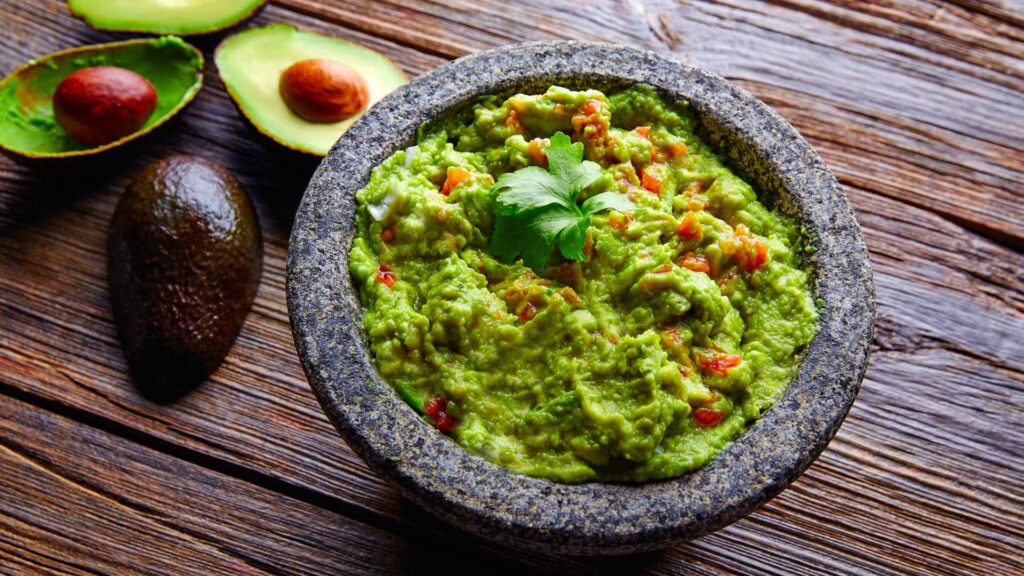
Ripe avocado flesh is high in fat and contains less persin than leaves, skin, and pit. Dogs are generally less sensitive to persin than birds and some livestock, so a small flesh exposure should not be described as automatically deadly.
The ASPCA avocado listing identifies persin and notes that avocado can cause vomiting and diarrhea, while the pit can obstruct. Species sensitivity and plant part matter.
Our avocado guide separates ripe flesh from pit, skin, leaves, fat, and guacamole ingredients. That distinction keeps triage focused on what was actually eaten.
Guacamole concentrates avocado flesh into an easy-to-swallow paste, so a dog can eat more fat quickly than by chewing a slice. It is not a healthy-fat supplement for skin, coat, joints, or heart.
Onion and garlic are the central recipe hazards
Many recipes include raw onion, garlic, garlic powder, onion powder, or prepared seasoning. Chopping, mashing, or mixing does not remove the Allium compounds.
The Merck Veterinary Manual Allium review explains that onion and garlic can damage red blood cells and that clinical signs may be delayed. Dogs can appear normal before weakness, pale gums, fast breathing, dark urine, vomiting, or collapse develops.
Our onion guide covers raw, cooked, dehydrated, and powdered exposure. Save the recipe, product label, or restaurant ingredient statement.
Do not wait for anemia signs after a meaningful exposure. Call with the dog’s weight, amount, ingredient form, and time so the case can be assessed early.
Jalapeño and hot chile irritate
Jalapeño, serrano, chile powder, hot sauce, and spicy salsa contain capsaicinoids that can irritate the mouth and gastrointestinal tract. Drooling, lip licking, vomiting, diarrhea, and discomfort can follow.
Do not force milk, oil, or antacid after a spicy lick. Offer fresh water and call if signs are marked, persistent, or combined with another unsafe ingredient.
Salt, lime, and tomato
Salt varies widely between recipes and can be substantial in commercial dips. Dogs with heart, kidney, urinary, or blood-pressure concerns may have strict sodium instructions.
Lime juice adds acidity and may worsen mouth or stomach irritation, while zest and peel contain concentrated citrus oils. A small splash differs from a concentrated citrus extract.
Ripe tomato flesh in a modest recipe is usually less concerning than onion, garlic, spice, and salt. Green tomato or plant parts require their own assessment.
Fat and pancreatitis context
Avocado is naturally fatty, and some guacamole adds oil, sour cream, mayonnaise, cheese, or bacon. A missing tub can become a major dietary-indiscretion event.
The Merck Veterinary Manual pancreatitis review identifies dietary indiscretion as a common suspected risk factor in dogs. Vomiting and abdominal pain can fit pancreatitis, but diagnosis needs the full clinical picture.
Dogs with prior pancreatitis, high triglycerides, obesity, diabetes, or fat restriction should avoid guacamole. Repeated vomiting, pain, appetite loss, weakness, or dehydration warrants a prompt call.
Pit and skin are separate emergencies
An avocado pit is a large, smooth foreign body that can choke or obstruct, while skin is tough and difficult to digest. Neither belongs in guacamole or the dog’s bowl.
The Merck Veterinary Manual obstruction review lists vomiting, appetite loss, pain, lethargy, diarrhea, dehydration, and shock among possible signs. Call after a swallowed pit even if the dog initially looks normal.
Do not induce vomiting or push a pit through with bread or oil. Object size, time, and dog anatomy determine the safer plan.
Chips add salt, fat, and packaging
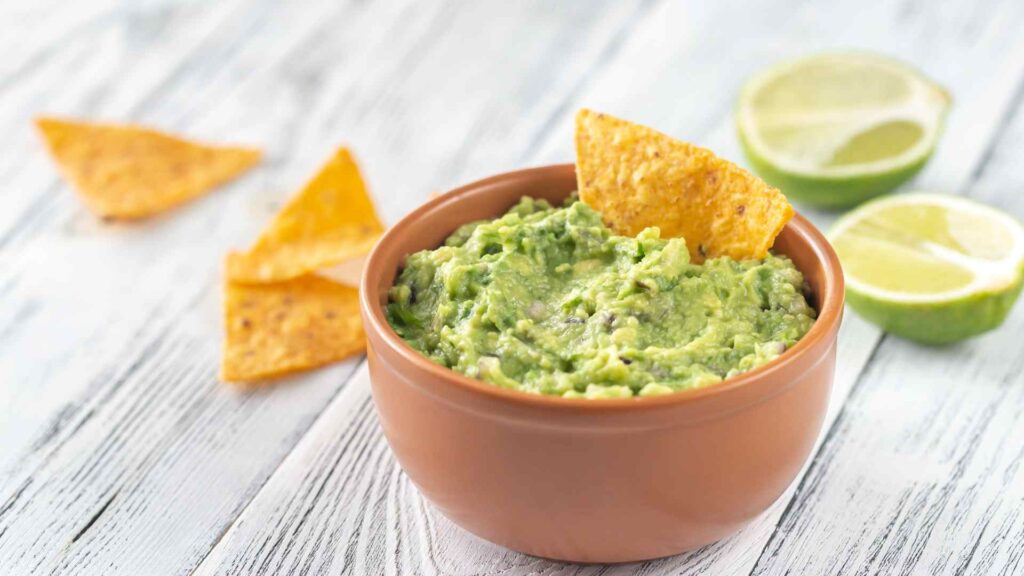
Tortilla chips are salty, oily, crunchy, and easy to gulp, with flavors adding garlic, onion, cheese, or chile. One chip fragment is different from a missing party bag.
Plastic bags, bowl shards, foil seals, lids, spoons, toothpicks, and takeout containers may be swallowed. Count them after a raid.
Breathing trouble, active choking, blue gums, or collapse is an emergency. Gagging, drooling, repeated vomiting, pain, or reduced stool after missing packaging needs urgent advice.
Store-bought guacamole and preservation
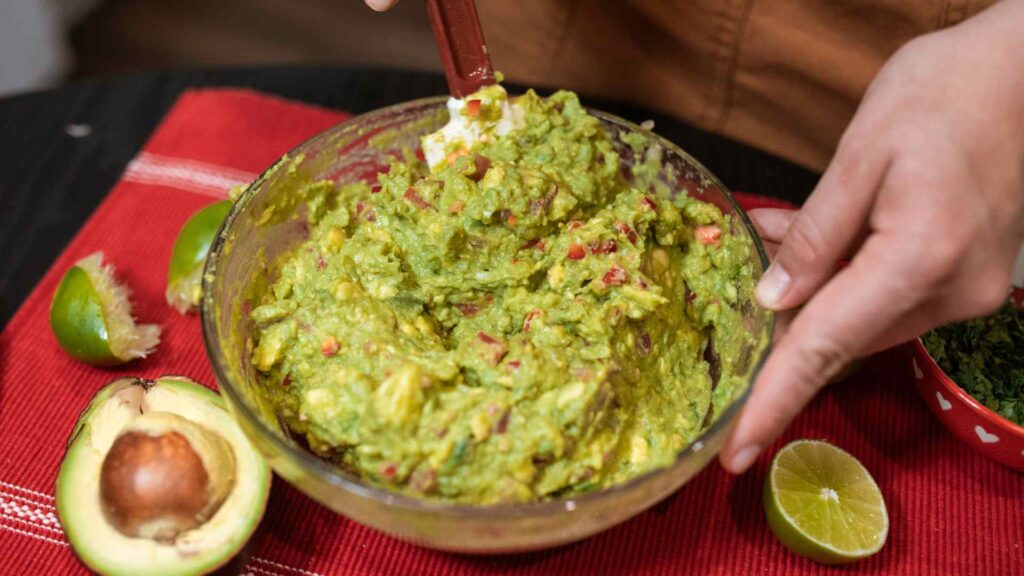
Commercial products may use preservatives, acidulants, spice blends, dairy, salsa, or processed avocado pulp. Current labels matter because formulas change.
Discard bloated, leaking, moldy, fermented, off-smelling, or temperature-abused product. Do not let a dog finish guacamole people consider spoiled.
Cilantro and recipe variations
Cilantro is common in guacamole and a small culinary amount is usually less concerning than onion, garlic, salt, chile, and fat. Cilantro essential oil or concentrated herbal products are different exposures.
Some recipes add mango, pineapple, pomegranate, corn, black beans, sour cream, mayonnaise, or cheese. Each addition changes calories, texture, allergy possibilities, and digestive effects without making the dip appropriate.
Prepared spice packets may hide onion and garlic powder behind a flavor name. Keep the packet with the dip until the incident has been resolved.
Guacamole is not a pill food or daily topper
The paste is convenient, but onion, garlic, salt, and fat make it a poor way to hide medication. Some drugs also have food-specific directions that a rich dip can disrupt.
Plain complete food or a veterinarian-approved pill treat is safer. Do not add daily guacamole for calories, coat shine, potassium, fiber, or so-called healthy fats.
Puppies and medically complex dogs
Puppies need nearly all calories for complete growth nutrition and can swallow chips, pits, lids, or toothpicks. Keeping party dip inaccessible is simpler than calculating a puppy portion.
Dogs with pancreatitis, diabetes, kidney disease, heart disease, swallowing trouble, allergies, or prescription diets need stricter rules. Their treatment plan matters more than a general safe-food list.
Food allergy is not the first conclusion
Itching or vomiting after guacamole does not prove avocado allergy because Alliums, dairy, chile, corn, meat, environment, parasites, or infection may be involved. Recurrent signs need controlled investigation.
Keep the dip above nose level and clear party plates promptly, especially around determined counter surfers. One quick raid can combine guacamole, salty chips, avocado pits, toothpicks, foil, and plastic in seconds.
Facial swelling, widespread hives, breathing trouble, weakness, or collapse is an emergency. Milder recurring signs deserve a veterinarian-guided elimination diet rather than repeated dip tests.
For the lime portion of the recipe, our lemon and citrus guide explains acidity, peel oils, concentrates, and product forms.
Calories and complete-diet displacement
The UC Davis veterinary treat guideline recommends keeping all extras below 10 percent of daily calories. Guacamole can use that budget quickly because avocado and added fats are energy-dense.
A dog does not need guacamole for fiber, potassium, healthy fat, or antioxidants. Complete food supplies planned nutrients without Alliums, spice, and concentrated calories.
What to do after a guacamole raid
- Identify recipe, brand, amount, time, and whether onion, garlic, chile, salt, lime, dairy, or oil was present.
- Record dog weight, symptoms, conditions, and medications.
- Save labels, receipts, restaurant ingredient information, and a photo of remaining dip.
- Count pits, peels, chips, toothpicks, spoons, bowls, lids, bags, and foil seals.
- Call promptly for onion or garlic, pit or packaging, a large fatty amount, severe spice exposure, or significant symptoms.
A healthy adult dog that takes one tiny lick and stays normal may need only monitoring if the recipe contains no high-risk amount. Keep water available and return to the normal diet.
Do not induce vomiting or give milk, oil, charcoal, or human medicine unless a veterinary professional directs it. Recipe and symptoms control the response.
Frequently asked questions
Is guacamole poisonous to dogs?
It is not one consistent poison, but onion and garlic can be toxic, while fat, salt, spice, pits, and packaging create additional risk. Do not offer it.
What if my dog licked a little guacamole?
Save the recipe and estimate the amount. One lick may be minor, but garlic, onion, xylitol, or significant symptoms changes the call.
Is avocado flesh deadly to dogs?
A small ripe flesh exposure is not automatically deadly in dogs. Fat and gastrointestinal upset matter, while pit, skin, leaves, and recipe ingredients carry different risks.
Can dogs eat guacamole without onion?
It can still contain garlic, salt, chile, lime, and substantial fat. Plain avocado flesh is simpler, but it is still calorie-dense and unnecessary.
The bottom line
Do not intentionally feed guacamole because recipes commonly include Alliums, salt, chile, citrus, and concentrated fat. One tiny lick is not a guaranteed crisis, but the ingredient list matters.
Onion, garlic, large amounts, avocado pit or skin, chips, toothpicks, containers, and symptoms change the response. Save the recipe and act on the actual exposure.