Can Dogs Eat Pinto Beans? Cooking, Lectins, Sodium, and Recipes
Dogs can eat a small amount of fully cooked, plain pinto beans, but beans are an optional extra rather than a nutritional treatment. Dry, crunchy, undercooked, salty, refried, or heavily seasoned beans create very different concerns.
The quick answer by type
- Plain, soft, fully cooked beans: a small taste is generally reasonable for a healthy adult dog.
- Dry or undercooked beans: do not serve them; call if a meaningful amount was swallowed or signs develop.
- Canned beans: choose no-salt-added when possible, drain, rinse, and keep the portion small.
- Refried, chili, baked, or restaurant beans: check onion, garlic, fat, salt, chile, sweeteners, meat, and every topping.
- Can, lid, bag, or freshness packet missing: contact a veterinarian because packaging is a separate injury risk.
After an accidental meal, save the label or recipe and estimate the maximum amount, time, and cooking state. Note the dog’s weight, health conditions, prescribed diet, medications, symptoms, and any missing packaging.
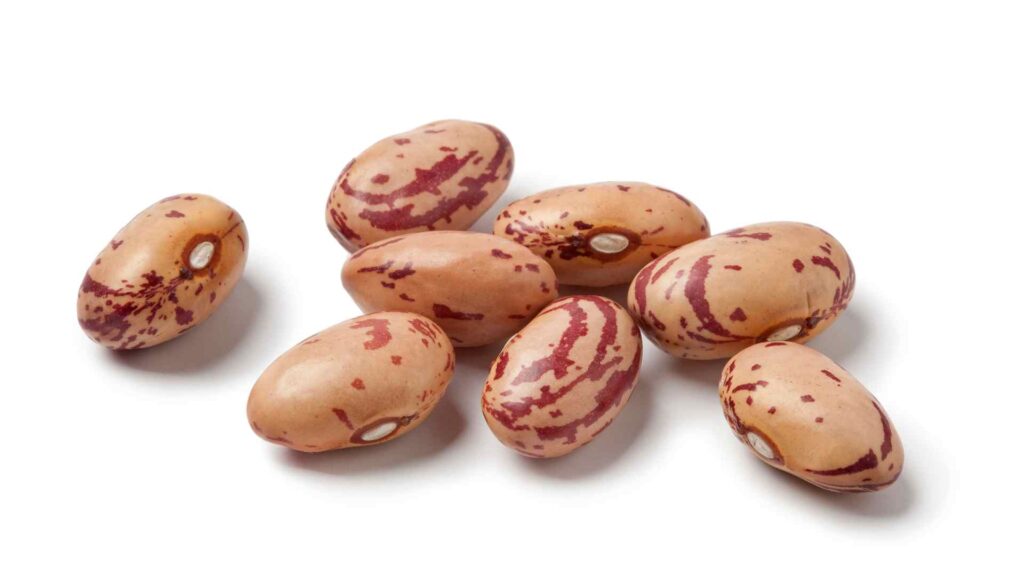
Plain cooked pinto beans are not poisonous
Pinto beans are legumes, and properly cooked plain beans are not generally considered toxic to dogs. Their usefulness is modest because a complete dog food already supplies protein, energy, vitamins, and minerals in planned proportions.
A bean can still cause trouble without being a poison. A sudden fiber load, an unfamiliar food, a large portion, or a rich recipe can produce gas, abdominal discomfort, loose stool, vomiting, or reduced appetite.
Start with only a few soft beans if a healthy adult dog has never eaten them, then stop if the digestive response is poor. There is no reason to keep increasing the serving in pursuit of a fiber or protein benefit.
Our bean-by-bean guide compares other legumes and their usual preparation concerns. Similar names do not make every bean interchangeable.
Dry and undercooked beans need a firmer answer
Dry pinto beans are hard enough to damage a tooth, lodge in the throat, or become a bulky stomach load when swallowed quickly. Soaking alone does not make them ready to feed because soaked beans still require thorough cooking.
Raw and undercooked beans can also retain lectins and other compounds that proper cooking reduces. The FDA natural-toxins guidance specifically highlights phytohaemagglutinin in raw or undercooked beans and the vomiting and diarrhea associated with high exposure.
Kidney beans contain the best-known high lectin concentrations, so that warning should not be turned into a claim that every pinto bean exposure has the same severity. It does support the practical rule to serve beans fully cooked and soft, never raw, sprouted, merely soaked, or crunchy.
Call a veterinarian after a large dry-bean raid, an unknown amount, repeated vomiting, significant belly pain, marked bloating, weakness, bloody diarrhea, or inability to keep water down. Do not induce vomiting or force oil, milk, bread, laxative, or extra fiber.
How to cook dried pinto beans plainly
Sort out stones and damaged beans, rinse the beans, and soak if the package method calls for it. Discard soaking water, add fresh water, and cook according to a tested food-safety method until every bean is soft through the center.
Do not add onion, garlic, stock cubes, bacon, ham, sausage, salt, chile, butter, or cooking fat to the dog’s portion. Set aside a few plain beans before seasoning the family pot.
Cool them fully and mash or flatten them for a small dog or fast eater. Refrigerate promptly, use clean utensils, and discard beans with mold, sour odor, slime, swelling containers, or uncertain storage.
A slow cooker is not a shortcut unless a validated recipe ensures adequate heat for the bean involved. If the finished beans remain firm or chalky inside, continue cooking for the household and do not test them on the dog.
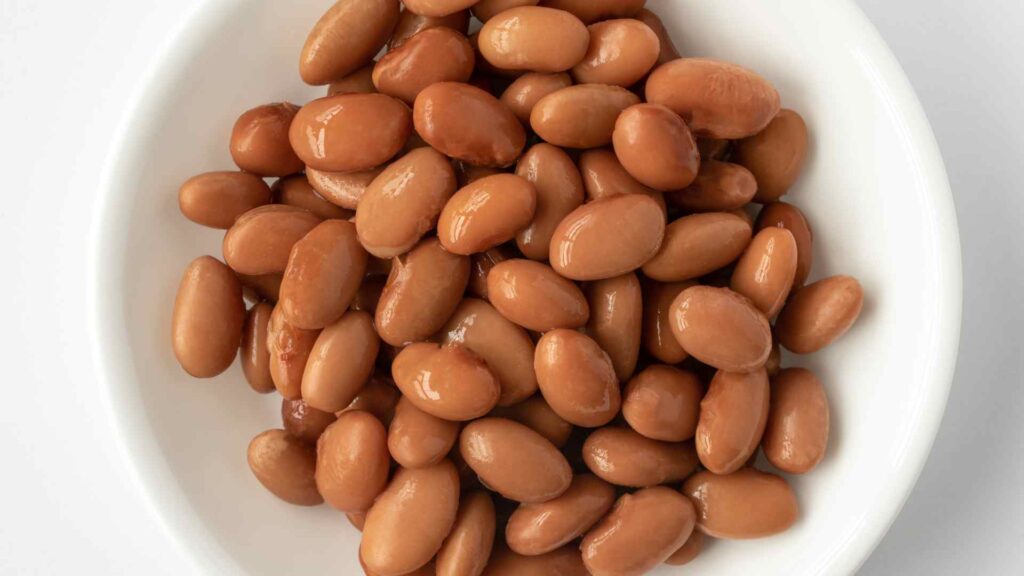
Canned pinto beans: read beyond the front label
Canned pinto beans are already cooked, but the liquid may contain substantial sodium. No-salt-added is the simplest option, while low sodium is a comparative label and may still contribute more sodium than a particular dog should receive.
Drain and rinse canned beans under running water to remove brine clinging to the surface, but do not describe rinsing as removing all sodium. Check the nutrition panel, serving size, and ingredients before deciding whether the product fits.
Dogs with heart disease, kidney disease, fluid-balance problems, high blood pressure, or a prescribed sodium restriction need advice from the clinician managing the diet. Even a no-salt-added bean can be inappropriate when the complete therapeutic plan limits ingredients or minerals.
Never let a dog lick a sharp can or loose lid. Rinse containers before recycling and keep pull tabs, lids, plastic liners, and opened cans outside the dog’s reach.
Refried beans are a recipe, not just beans
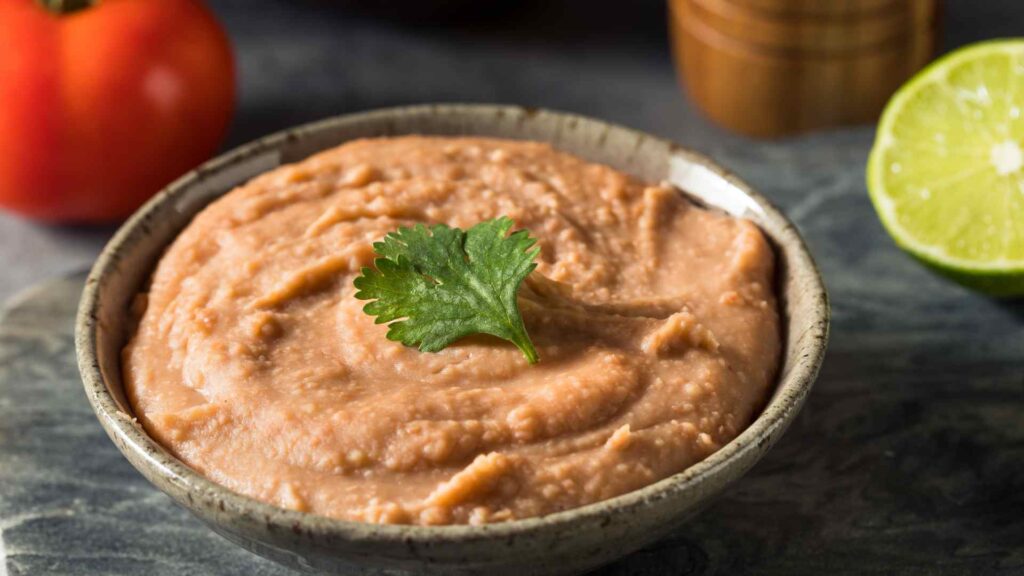
Refried beans may contain lard, oil, cheese, salt, onion, garlic, chile, and meat drippings. The texture is soft, but softness does not cancel seasoning, fat, or calorie concerns.
The refried bean guide explains how recipes change the assessment. Save a restaurant ingredient list or recipe rather than guessing from color and taste.
A lick of plain low-fat beans is different from a bowl of restaurant beans topped with cheese and sour cream. Large fatty meals can cause digestive upset and may contribute to pancreatitis in susceptible dogs.
Chile and hot sauce can irritate the mouth and digestive tract, while very salty toppings add thirst and sodium. Never use spicy beans to test whether a dog tolerates heat.
Onion and garlic can cause delayed injury
Bean chili, taco filling, baked beans, soup, dip, burritos, and seasoning packets commonly contain onion or garlic. Powders are concentrated and may be distributed throughout a dish even when no pieces are visible.
The Merck Veterinary Manual Allium review explains that onion and garlic can damage red blood cells and that anemia may take several days to develop. A normal-looking dog immediately after dinner is not automatically cleared.
Call promptly with the recipe, amount, time, and dog weight after a meaningful Allium exposure. Vomiting, weakness, pale gums, fast breathing, rapid heart rate, dark urine, jaundice, or collapse needs urgent attention.
Our garlic powder guide helps identify delayed signs and the details a clinic will need. Do not wait for anemia or attempt home vomiting.
Baked beans, chili, bowls, and dips
Baked beans may add sugar, molasses, bacon, smoke flavor, mustard, tomato, and sweeteners. Sugar is mainly a calorie concern in an ordinary recipe, but xylitol in a specialty sugar-free sauce would require immediate professional advice.
Chili may include fatty meat, onion, garlic, chile, salt, cheese, avocado, corn chips, and alcohol-based flavorings. Assess the entire bowl and every missing topping rather than isolating the pinto beans.
Bean dips can contain onion, garlic, tahini, oil, dairy, hot peppers, and avocado. The same mixed-product logic applies to burritos, enchiladas, nachos, casseroles, salads, and meal-prep bowls.
Photograph the package and ingredient panel before throwing anything away. When a homemade dish is involved, list ingredients and estimate the batch fraction eaten instead of inventing an exact bean count.
Beans are not protein or fiber therapy
Pinto beans contain plant protein, but they should not replace a complete diet or be used to correct a suspected protein deficiency. Protein needs involve amino-acid balance, digestibility, energy, life stage, health, and the rest of the recipe.
The FDA complete-and-balanced pet food guide explains how nutritional adequacy is established. A bowl assembled from beans, rice, meat, and vegetables can still miss or oversupply essential nutrients.
Fiber is not one-size-fits-all treatment for diarrhea, constipation, anal-gland trouble, diabetes, or weight loss. Different fiber types and doses have different effects, and a sick dog needs a diagnosis before kitchen experiments delay care.
Dogs on elimination trials, hydrolyzed diets, urinary diets, kidney diets, gastrointestinal diets, or home-cooked formulations should receive only approved extras. One unplanned ingredient can complicate both treatment and interpretation.
Portions without a fake universal dose
There is no medically necessary pinto-bean serving for dogs, and a breed-size tablespoon chart creates false precision. A few beans are enough to test tolerance, while the appropriate upper limit depends on calories, size, diet, health, and all other treats.
The World Small Animal Veterinary Association treat guide recommends that treats remain under 10 percent of daily calories. Beans still count as extras even when their ingredient list looks wholesome.
Use pieces of the measured daily food for frequent training rewards and reserve unusual foods for occasional tastes. Stop beans if even a small serving repeatedly causes gas, loose stool, itching, or vomiting.
For dogs that enjoy legumes, plain black beans have similar preparation rules rather than a special advantage. Switching bean color does not solve intolerance or diet displacement.
When to call after a bean raid
Call promptly for raw or undercooked beans in a meaningful amount, onion, garlic, xylitol, a very salty or fatty recipe, mold, an unknown product, medical vulnerability, or swallowed packaging. The professional may ask about the maximum possible amount rather than the amount you hope was eaten.
Urgent signs include choking, breathing trouble, repeated vomiting, severe or enlarging abdominal distension, marked pain, bloody stool, weakness, pale gums, tremors, collapse, or inability to keep water down. Transport safely and bring the label or recipe.
For a few fully cooked plain beans in a healthy dog, remove further access and monitor appetite, comfort, stool, and vomiting. Keep normal access to fresh water unless the dog’s veterinarian has given different instructions.
Bottom line
A few soft, fully cooked, unseasoned pinto beans are usually a low-risk extra for a healthy dog. Dry beans, poor cooking, sodium, Allium seasoning, rich recipes, oversized portions, medical diets, and packaging are the details that turn a simple taste into a call.