Can Cats Drink Orange Juice? Acidity, Citrus Oils, and Mixed Drinks
One lick of ordinary orange juice is unlikely to seriously harm a healthy adult cat, but it is not a good feline beverage. Its acidity and sugar can upset the stomach, while concentrated peel oils, zest, supplements, sweeteners, alcohol, caffeine, glass, caps, and mixed-drink ingredients require a more careful response.
Begin with the container, not the citrus myth
Remove the drink, keep the carton or recipe, and identify juice, concentrate, pulp, peel, essential oil, cleaner, smoothie, cocktail, or supplement. Estimate the missing volume and inspect for a swallowed straw, cap, foil tab, packet, or broken glass.
- A quick lick of pasteurized orange juice: offer fresh water and monitor for drooling, vomiting, or diarrhea.
- Concentrate, zest, peel oil, a supplement, or a large drink: contact a veterinarian with exact details.
- Alcohol, caffeine, chocolate, medication, xylitol, or another uncertain ingredient: call promptly.
- Trouble breathing, collapse, seizures, severe tremors, or repeated vomiting: obtain emergency care.
Do not induce vomiting, force water, or apply household cleaners to juice-coated fur. Wipe residue away with a lukewarm damp cloth and prevent grooming until the coat is clean.
Juice and peel are not the same exposure
The juicy flesh contains water, acids, natural sugars, and flavor compounds, while the peel houses more concentrated aromatic oils. An orange-flavored drink can also use extracted oils or flavor concentrates unrelated to its juice percentage.
That distinction explains why a tiny juice lick is commonly mild while concentrated citrus oil deserves faster advice. “Orange” is a starting clue, not a sufficient toxicology history.
What authoritative plant guidance says
The ASPCA orange entry identifies essential oils and psoralens as toxic principles and lists gastrointestinal and skin signs. It addresses plant exposures, not a guaranteed severe outcome from every drop of commercial juice.
Cats vary in exposure and response, and product concentrations vary even more. Preserve those details instead of quoting a universal toxic dose that reliable feline evidence does not support.
Acidity can make the stomach unhappy
Orange juice is acidic and may cause drooling, lip licking, nausea, vomiting, or loose stool, especially in a large amount. Cats with existing reflux-like signs, oral ulcers, or gastrointestinal disease may be less comfortable.
Do not neutralize juice with baking soda or another kitchen chemical. Remove access, offer ordinary water, and let a veterinary professional decide whether more care is needed.
Sugar and portion perspective
Even juice with no added sugar contains naturally occurring fruit sugars after most fiber has been removed. A human glass represents an enormous portion relative to a cat.
Regular juice calories can undermine weight reduction and make diabetic management less predictable. A cat does not receive the human dietary case for fruit by drinking extracted juice.
Fresh squeezed is not automatically cat-friendly
Fresh juice avoids some commercial additives but can include zest, peel oil, seeds, sanitizer residue, or microbes introduced by hands and equipment. It also remains acidic and sugary.
The FDA produce-safety guidance recommends washing whole fruit under running water, using clean tools, refrigerating cut produce, and avoiding soap on food. These steps protect people and pets sharing the kitchen.
Pulp, seeds, and peel fragments
Pulp is fibrous and can trigger gagging or digestive upset in a cat that gulps it. Seeds and peel strips are unnecessary foreign material, while a large wad may become a choking or obstruction concern.
Call if missing plant matter is followed by repeated gulping, pawing at the mouth, sickness, refusal of food, a sore belly, difficult defecation, or low energy. Do not feed bread or oil to push it downward.
Orange essential oil is not orange juice
Concentrated citrus oils may be present in diffusers, cleaners, fragrances, flavorings, and topical products. Cats can be exposed by swallowing, inhalation, skin contact, or grooming contaminated fur.
Move the cat to fresh air when safe, prevent licking, and call after a concentrated spill or ingestion. Do not apply more oil, alcohol, or solvent while attempting cleanup.
Supplements and vitamin drinks
Vitamin C powders, immune shots, electrolyte drinks, gummies, and effervescent tablets can contain large nutrient doses, minerals, caffeine, herbs, sweeteners, or medication-like ingredients. Cats generally synthesize vitamin C and should not receive human doses casually.
Save the supplement facts panel and ask about the entire serving. Added vitamin D, iron, zinc, or other concentrated nutrients may matter more than the orange flavor.
Sugar-free orange drinks
Diet juice beverages can contain high-intensity sweeteners, sugar alcohols, preservatives, and flavor blends. Xylitol has a proven emergency profile in dogs, while comparable harm is not established in cats in the same way.
That uncertainty calls for label-based consultation, not deliberate feeding. A poison specialist can assess the cat, amount, and every co-ingredient without pretending dog data transfer perfectly.
Orange juice with breakfast foods
A cat reaching across the table may encounter coffee, chocolate spread, raisins, medication, bacon, onion-seasoned eggs, or plastic packets along with juice. Inventory the scene rather than isolating the orange cup.
Our guides to oranges, fruit, bread, and bacon help with common neighboring foods. Use the exact recipe for mixed dishes.
Mimosas, screwdrivers, and punches
Alcohol changes a low-risk juice taste into a more urgent exposure. Cats are small, and ethanol can depress the nervous system, body temperature, breathing, and blood glucose.
Call immediately with the spirits, alcohol percentage, estimated volume, time, and cat’s weight. Do not wait for stumbling or sleepiness, and never encourage the cat to walk off intoxication.
Smoothies and juice blends
Smoothies may contain grapes, raisins, chocolate protein powder, coffee, tea, supplements, nut products, dairy, or sugar-free syrup. Mixed citrus juices can also contain grapefruit or botanical extracts that interact with medicines in people and may complicate feline assessment.
Keep every label and blender ingredient in view during the call. The name on the café menu rarely reveals concentration or all additions.
Carton hygiene and spoilage
Refrigerate juice according to the package and discard it after unsafe storage, mold, swelling, fermentation, or an abnormal smell. A cat should not be used to decide whether questionable juice is still good.
Fermenting juice may produce alcohol, while spoiled products can cause gastrointestinal illness. Mention storage history if the cat becomes sick after raiding an old container.
Why cats should drink water instead
Clean water hydrates without acid, sugar, flavor concentrate, or surprise calories. Wide bowls placed away from litter and noisy appliances may appeal to cats that avoid cramped water stations.
The Cornell Feline Health Center feeding page centers complete food and appropriate hydration. A meaningful change in thirst or urine output warrants medical investigation, not a juice upgrade.
Complete food supplies the real nutrient package
Cats need animal-derived nutrients in precise proportions, and juice cannot supply them. Vitamin marketing aimed at people does not override feline physiology.
The FDA pet-food adequacy guide shows how labels distinguish complete diets from treats. Orange juice lacks that statement because it belongs in a human refrigerator, not a cat bowl.
Grapefruit is not just a larger orange
Grapefruit can alter the metabolism of various human medicines, and feline drug interactions are product-specific and incompletely characterized. Never wash a cat’s tablet down with citrus juice.
If a medicated cat drinks a grapefruit-containing blend, call the prescribing clinic with the drug name, dose, beverage, and amount. Do not skip or repeat the next medicine without instructions.
Juice is not a vitamin C treatment
Healthy cats synthesize vitamin C, so routine human supplementation is unnecessary. Extra vitamin products can add large doses, minerals, sweeteners, and flavor chemicals without addressing the reason a cat seems unwell.
Scurvy-like assumptions borrowed from human nutrition can distract from dental disease, anemia, infection, or poor diet. Let examination and testing guide supplementation.
A citrus-cleaner mix-up
Some household sprays smell like oranges because they contain concentrated citrus compounds or solvents, not drinkable juice. Licking a cleaner requires the product label and poison advice.
Move the cat away, ventilate if fumes are present, and rinse contaminated skin only as directed. Never create vomiting after a corrosive or detergent exposure.
Keep brunch safe without banishing the cat
Place drinks near the center of the table, use stable glasses, and clear peels, picks, packets, and medication before opening the room. A nearby perch gives the cat a legal observation post.
Serve the normal meal first and use part of the ration in a puzzle feeder. Occupied paws make a surprisingly effective defense against unattended mimosas, wobbly glasses, and dangling paper straws on a crowded table.
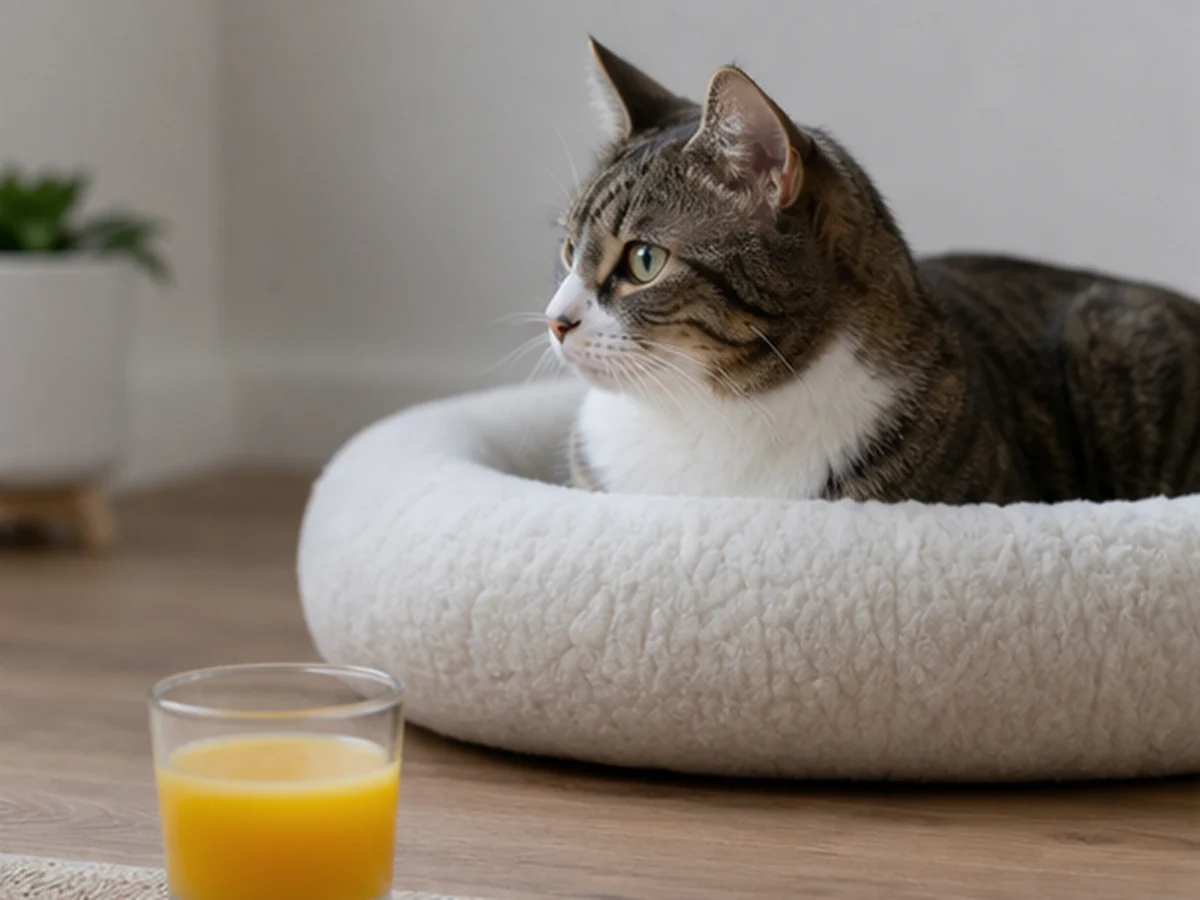
What to watch after an ordinary lick
For a healthy cat that sampled plain juice, check normal eating, drinking, walking, comfort, and litter-box use over the next day. Mild lip smacking may reflect the sour taste, but ongoing drooling or nausea deserves attention.
Call if vomiting occurs repeatedly, diarrhea continues, the cat hides unusually, or food is refused. Mention any peel oil, supplement, alcohol, caffeine, cleaner, or object that shared the scene.
Frequently asked questions
Can cats have freshly squeezed orange juice?
A tiny accidental lick is normally observed at home, but fresh juice remains acidic and sugary. Keep peel oil, zest, seeds, and equipment debris away.
Why did my cat lick orange juice if cats dislike citrus?
Individual curiosity, water, another food smell, condensation, or learned table behavior can outweigh a general odor aversion. Interest does not demonstrate safety or nutritional need.
Should I call after one sip?
Check the ingredients and amount first. Call if the drink was concentrated, mixed with alcohol or supplements, sugar-free, associated with symptoms, or missing packaging.
The bottom line
A single lick of ordinary orange juice is usually a minor acidic-food exposure, but no cat needs it. Concentrated peel oil, mixed beverages, large amounts, supplements, alcohol, symptoms, spoilage, or swallowed objects are the reasons to involve a veterinarian.