Apple Cider Vinegar for Cats: Safety, Uses, and Risks
Apple cider vinegar is not a necessary cat supplement, flea treatment, ear cleaner, or urinary remedy. A tiny lick of ordinary food vinegar may cause only irritation, but concentrated products, repeated dosing, eye contact, skin exposure, and attempts to treat illness can create real harm.
First, identify what the cat encountered
Check whether the product is culinary vinegar, a concentrated cleaning vinegar, a gummy, capsule, tonic, powder, ear product, or a blend with essential oils. Record the acetic acid percentage, amount, exposure route, time, and symptoms before calling your veterinarian.
A quick lap from a salad plate is different from a tipped gallon of high-strength cleaner. The front label may celebrate apples while the ingredient panel quietly adds detergent, fragrance, cayenne, garlic, alcohol, sweetener, or another acid.
For a substantial ingestion, concentrated formula, painful mouth, eye splash, persistent drooling, vomiting, breathing changes, or unusual behavior, seek professional advice promptly. Bring the bottle or clear label photos if the clinic wants to assess concentration and additives.
Why acidity matters
Vinegar’s active acidic component is acetic acid, and irritation increases as concentration and contact time rise. Household culinary apple cider vinegar is usually much more dilute than industrial acetic acid, yet repeated oral or skin exposure is still unnecessary.
The ASPCA household-products guide says vinegar can irritate and upset the stomach, while properly diluted cleaning solution that is rinsed and dried is generally low concern. That does not endorse pouring vinegar into a cat or leaving a wet floor available for paw grooming.
Cornell’s small-animal toxin reference lists vinegar among acids capable of concentration-dependent tissue injury and advises against inducing vomiting. The concentration is therefore not a fussy detail; it is central to triage.

What to do after a mouthful
Remove the product and prevent access to any puddle or soaked cloth. Do not make the cat vomit, because acidic liquid can injure the esophagus again on the way up and may enter the lungs.
Do not neutralize vinegar with baking soda or another alkaline product. Chemical neutralization can release heat, while forced liquids can be aspirated by a struggling or drooling cat.
Call for case-specific dilution instructions rather than syringing water automatically. The veterinary professional will consider product strength, volume, swallowing ability, vomiting, and whether another cleaner was present.
Mouth, throat, and stomach warning signs
Watch for lip licking, drooling, pawing at the mouth, vocalizing, difficulty swallowing, repeated vomiting, blood, abdominal pain, or refusal to eat. No visible mouth burn does not guarantee the esophagus is comfortable.
The Merck Veterinary Manual’s corrosive-hazard overview explains that acids and alkalis can damage the mouth, esophagus, stomach, skin, and eyes. Serious breathing difficulty, throat swelling, shock, or intense pain requires emergency treatment.
A cat refusing food after an acidic exposure should be assessed quickly. Cats should not drift into prolonged fasting while the family waits for the sour face to resolve.
Eye and coat exposure need different care
For an eye splash, begin gentle flushing with lukewarm water or sterile saline and contact a veterinarian immediately. Squinting, redness, tearing, cloudiness, or rubbing can signal corneal injury that needs staining and pain control.
When vinegar wets the coat, prevent grooming and ask how to rinse the exact product. Plain dilute food vinegar is not equivalent to a cleaner containing surfactants, essential oils, or concentrated acid.
Do not add fragrance or another home mixture to cover the smell. A cat already wearing salad dressing does not need to become a chemistry project.

Should cats drink diluted apple cider vinegar?
No routine feline need has been established, and adding vinegar can make water or food less appealing. Reduced drinking or eating is a particularly poor trade when the claimed benefit is better urinary or digestive health.
Dilution changes irritation but does not manufacture evidence. The final amount swallowed remains hard to control in shared bowls, and one cat may avoid the water while another receives the entire dose.
The Cornell Feline Health Center recommends complete food and fresh water, with supplements used only under veterinary direction. Apple cider vinegar cannot replace a balanced diet or a diagnosis.
Urinary claims deserve a careful reality check
Urinary signs in cats may result from bladder inflammation, stones, crystals, infection, stress, anatomic obstruction, or another disease. Vinegar does not tell those conditions apart and can delay the testing that does.
A cat repeatedly entering the box, straining, crying, licking the genital area, or producing little to no urine may have an obstruction. That is an emergency, especially in male cats, and a kitchen acid cannot unblock the urethra.
Prescription urinary diets are formulated to influence minerals, urine concentration, and sometimes urine pH in a controlled way. Adding vinegar can undermine the intended plan and should never be layered onto it without the treating veterinarian’s approval.
Apple cider vinegar for fleas is a weak bargain
Vinegar is not a reliable way to break the flea life cycle on the cat and in the home. Fleas can cause itching, skin infection, tapeworm exposure, and anemia, so ineffective control has consequences.
Sprays can irritate skin, eyes, and airways and will be swallowed during grooming. Use a feline-labeled preventive chosen for the cat’s age, weight, health, and household, because some dog parasite products are dangerous to cats.
If scratching persists despite prevention, the veterinarian can look for flea allergy, mites, infection, ringworm, food reaction, or environmental allergy. Sour-smelling fur is not a diagnostic test.
Ears, skin, paws, and wounds
Never pour homemade vinegar solution into a cat’s ear without an examination. Ear mites, bacteria, yeast, polyps, foreign material, and a ruptured eardrum require different treatment, and acidic liquid can be painful on inflamed tissue.
Apple cider vinegar is also not a wound wash, ringworm cure, paw balm, or acne treatment. It may sting raw skin, encourage licking, and obscure the appearance of a lesion before the appointment.
Our cilantro guide explains why culinary plant material and concentrated extracts must be judged separately. The same product-form discipline applies to vinegar tonics, tinctures, and infused sprays.

The mother, tablets, gummies, and detox blends
The cloudy mother is a collection of fermentation material, not proof of feline probiotic benefit. Unpasteurized products also raise contamination questions and should not be used to seed a cat’s microbiome.
Tablets and gummies may contain concentrated acid, sugar, sweeteners, vitamins, herbs, or fruit flavoring. A missing bottle requires a label-based call because the vinegar may be the least urgent ingredient.
Detox claims are especially slippery because a healthy liver and kidneys already handle normal metabolic waste. A cat with suspected toxin exposure needs poison-specific care, not a general cleansing mixture.
Using vinegar to clean a cat household
Dilute vinegar-and-water cleaners are commonly used on surfaces, but follow the product directions, ventilate, rinse when appropriate, and keep cats away until surfaces are dry. Never mix vinegar with bleach because dangerous chlorine gas can form.
Do not clean food bowls, fountains, carriers, or litter equipment with a homemade recipe unless every residue can be thoroughly removed. A fragrance-free veterinary or manufacturer-approved cleaner may be more predictable.
Cornell’s house-soiling guidance notes that vinegar odor can be irritating and may resemble urine to cats. An enzymatic cleaner designed for pet stains is often a better behavioral choice than turning the marked area into a pickle aisle.
Who needs extra caution?
Kittens, seniors, dehydrated cats, and animals with oral ulcers, esophageal disease, kidney disease, gastrointestinal illness, or poor appetite have little reason to encounter vinegar. Cats on prescription diets or medication need their veterinary plan protected from unreviewed supplements.
A cat with asthma may react to aerosolized cleaner, fragrance, or spray droplets. Use liquids without creating mist and give the cat clean air in another room until the area is ready.
For another vinegar-containing product, our pickle guide for cats covers brine, salt, alliums, and jar hazards. Our general vinegar guide supplies product categories without establishing feline doses.
Medication and supplement interactions are not guesswork
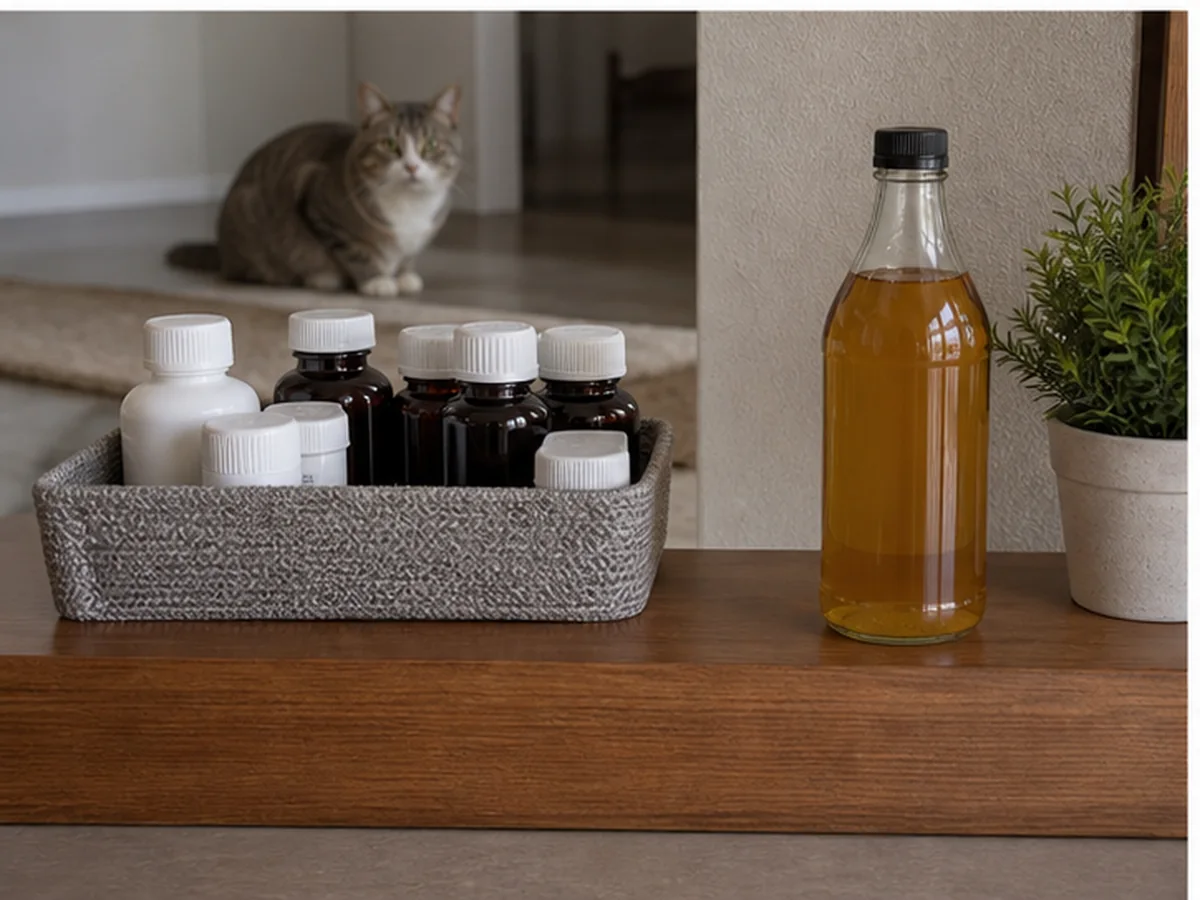
Claims that vinegar changes glucose, potassium, digestion, or medication absorption are reasons for professional review, not reasons to experiment. A cat receiving insulin, diuretics, kidney treatment, or gastrointestinal medicine needs stable intake and measurable changes.
Bring every supplement to appointments, including human gummies and homemade drops. The veterinary team cannot interpret appetite, laboratory results, or adverse effects accurately when an acidic tonic is treated as too natural to mention.
Stop and call if a new product precedes vomiting, drooling, lethargy, appetite loss, or altered drinking. Do not restart it later as a challenge unless the veterinarian specifically wants that information.
Frequently asked questions
Can a tiny lick hurt my cat?
One taste of ordinary culinary apple cider vinegar often causes no more than brief drooling or stomach irritation. Confirm the concentration and additives, then monitor according to veterinary advice if anything seems unusual.
Will apple cider vinegar cure cat dandruff?
No single home acid addresses the many causes of scaling, including parasites, infection, allergy, pain, obesity, and systemic illness. A skin examination is more useful than repeated topical experiments.
Can I add one drop to the water bowl?
Skip it unless the treating veterinarian has a defined reason and exact plan. Cats benefit from appealing plain water, and an aversive flavor can reduce intake.
The most cat-friendly feature of apple cider vinegar is a securely closed cap. Store concentrate upright, wipe drips from the bottle, and keep measuring spoons away from curious paws.
Bottom line
Apple cider vinegar is not a proven general remedy for cats, and concentration determines much of the exposure risk. Keep it out of food, water, ears, wounds, and flea routines, follow cleaning labels, and call promptly for concentrated ingestion, painful contact, eye exposure, or persistent symptoms.