Can Cats Eat Cherry Tomatoes? Ripe Fruit, Green Parts, and Choking
A tiny piece of fully ripe red cherry-tomato flesh is generally low risk for a healthy adult cat, but whole tomatoes are a choking hazard and cats do not need them. Green fruit, leaves, stems, vines, garden chemicals, mold, sauce, onion, garlic, skewers, and packaging require different caution.
Three lanes: ripe bite, green plant, or whole round object
Picture the incident in one of three lanes. A cut piece of ripe flesh is mostly a digestion question, a chewed vine is a plant-toxin question, and a whole cherry tomato rolling into a cat’s mouth is an airway question.
- One tiny ripe red piece: offer water and observe for mild digestive upset.
- Green tomato, leaves, stems, vine, or a substantial amount: call with plant details.
- Onion, garlic, alcohol, pesticide, fertilizer, skewer, or missing plastic: obtain prompt advice.
- Choking, breathing trouble, collapse, severe weakness, tremors, or repeated vomiting: seek emergency care.
Leave vomiting and forced feeding out of the home response, and never guess plant identity from fruit shape alone. Keep a sample or clear photograph where professionals can evaluate it.
Ripe tomato and tomato plant are not interchangeable
Tomato is a nightshade-family plant, and green portions contain greater concentrations of glycoalkaloids than fully ripe fruit. Leaves, stems, and unripe tomatoes deserve more concern than one red-flesh nibble.
The ASPCA tomato plant entry identifies solanine among toxic principles and lists gastrointestinal, lethargic, weakness, and cardiac effects. It does not mean every ripe tomato lick produces poisoning.
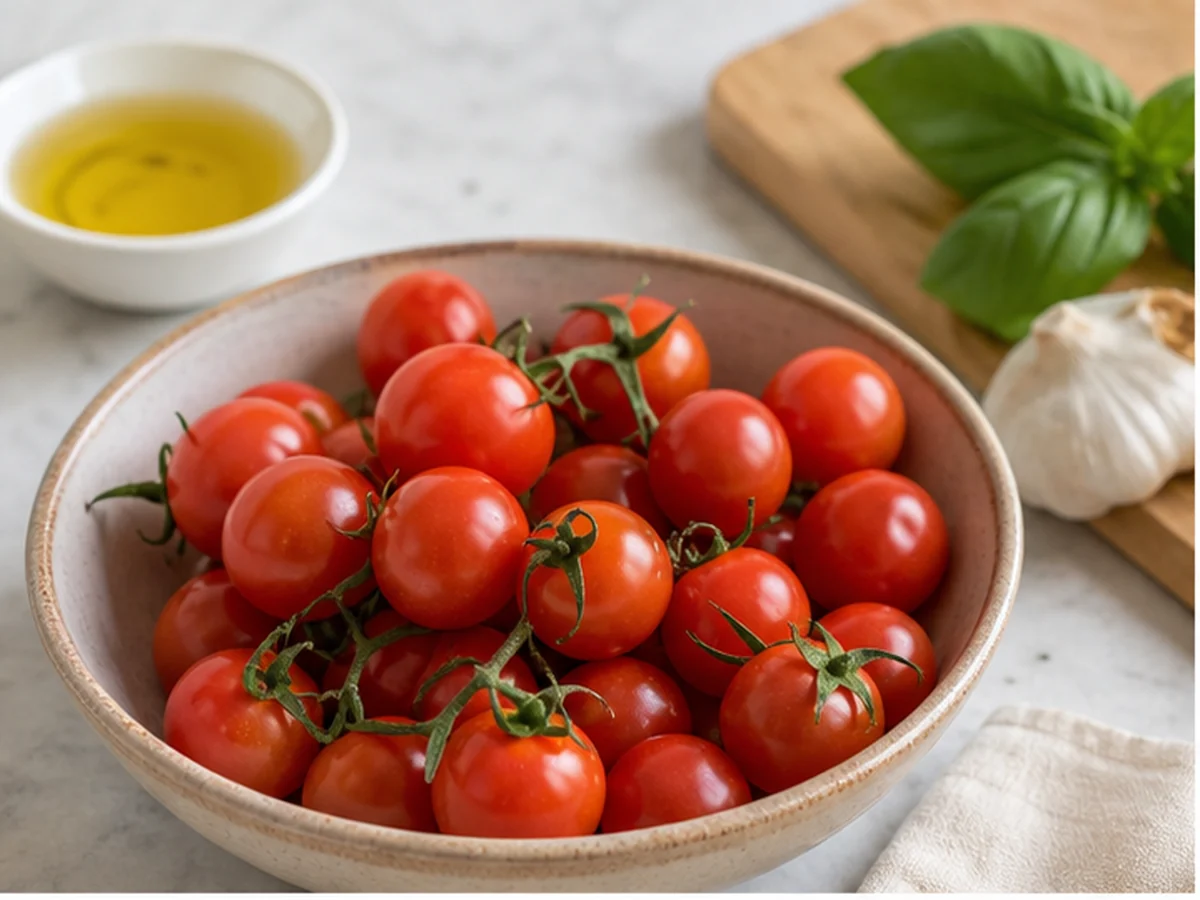
Cherry size creates a choking problem
A whole cherry tomato is smooth, round, slippery, and close to the size of a dangerous airway plug. A cat may bat it first, then gulp it when someone approaches.
Never offer one whole or toss it for catching. If a veterinarian approves a taste, cut away the stem and serve one pea-sized piece of ripe flesh.
Choking signs need immediate action
Coughing, gagging, neck extension, frantic mouth pawing, panic, noisy breathing, bluish gums, or collapse can signal airway obstruction. Do not pour water into the mouth.
Learn feline first aid from a veterinary professional before an emergency. Blind finger sweeps can push a round object deeper or result in a serious bite.
Acid and fiber may upset digestion
Tomato flesh is acidic and contains fiber and seeds, which may provoke drooling, vomiting, gas, or loose stool in an individual cat. A large portion increases that likelihood.
Do not neutralize acidity with baking soda or milk. Stop the food, leave water available, and call for persistent signs, pain, or appetite loss.
Seeds in ripe flesh
The small seeds inside a ripe cherry tomato are not the principal plant-part concern, but they add texture and no feline benefit. There is no reason to feed them as a supplement.
A cat that reacts poorly to one tiny piece should not receive a seedless retry. Individual tolerance matters more than culinary persistence.
Wash before cutting
Rinse tomatoes under running water, use clean hands and tools, and keep produce away from raw meat juices. Remove stickers and discard split or damaged fruit.
The FDA produce-safety page recommends clean handling and advises against soap or detergent on food. Refrigerate cut tomatoes promptly according to safe household practice.
Mold and spoiled tomatoes
Soft, leaking, fermented, or moldy tomatoes belong in secured rubbish. Soft produce can harbor spoilage beyond a visibly damaged spot.
Unexpected alcohol-like odor suggests fermentation, while some molds can create neurologic toxins. Tremors, seizures, marked agitation, or overheating after compost ingestion is urgent.
Garden vines and chemicals
A cat chewing a tomato plant may also contact fertilizer, pesticide, slug bait, ties, stakes, netting, or potting mix. These co-exposures can be more serious than ripe fruit.
Photograph the plant and every garden product label. Do not apply milk, oil, or a home rinse after chemical exposure unless poison guidance directs it.
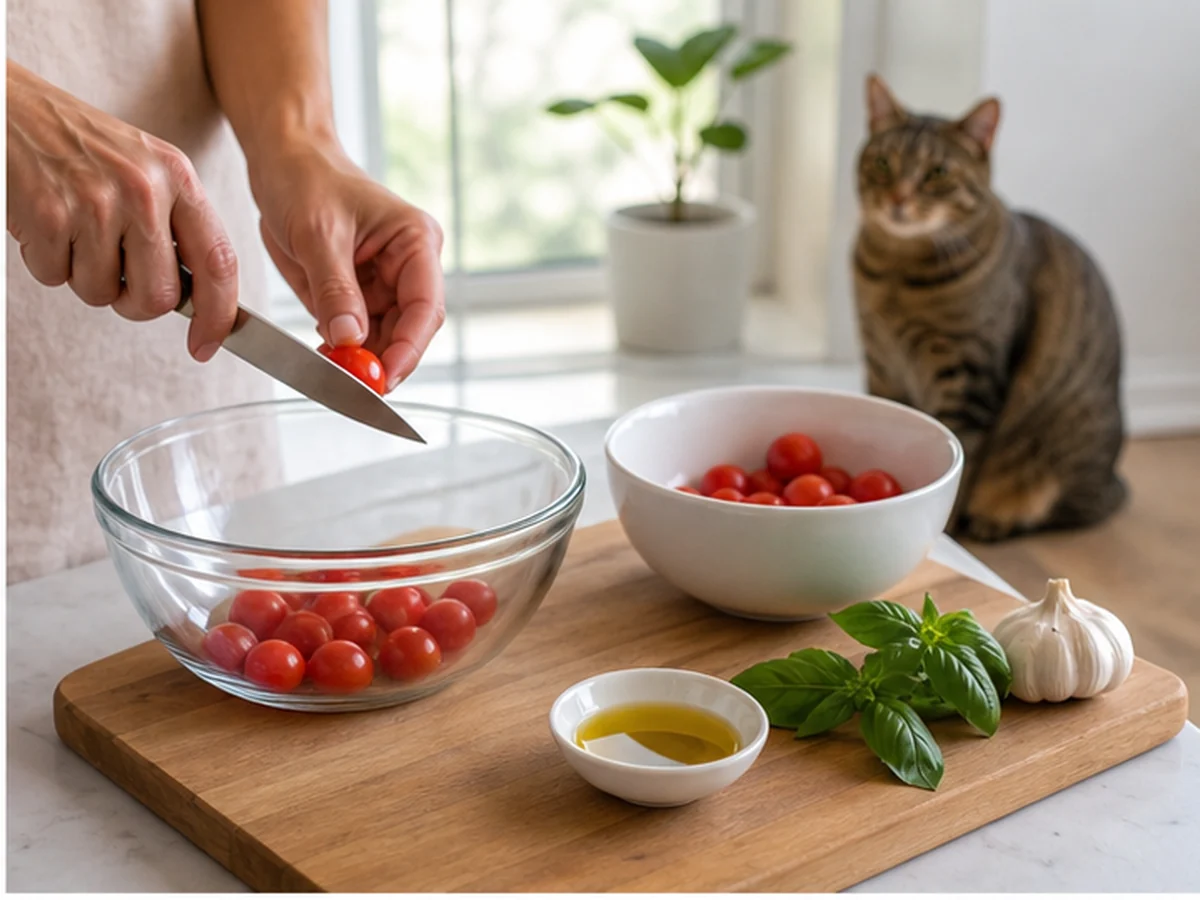
When a tomato becomes a recipe
Tomato sauce and soup commonly contain onion, garlic, salt, oil, dairy, stock, and herbs. Ketchup adds sugar, vinegar, salt, spices, and sometimes sweetener.
Our guides to tomatoes, onions, garlic, and pizza help separate the recipe. A rinsed sauce-coated tomato is not reliably plain.
Salads and skewers
Cherry tomatoes often appear with olives, cheese, onion, dressing, avocado, grapes, cured meat, or pointed picks. Inventory the entire plate and all hardware.
A swallowed wooden or metal skewer can puncture tissue, and vomiting should not be induced. Call even when the cat looks comfortable.
Sun-dried tomatoes
Drying concentrates the fruit and creates chewy strips, while oil-packed products may contain garlic, salt, herbs, and chili. The jar liquid is not suitable broth.
A long strip can obstruct, and oily seasoning clings to fur. Wipe spills promptly and check the label for Alliums.
Canned tomatoes
Canned products may contain salt, calcium chloride, herbs, onion, garlic, chili, or flavorings. Sharp lids and pull rings add physical hazards.
Transfer leftovers to a covered container and secure the metal lid. Bleeding, drooling, limping, or food refusal after can access requires examination.
Diabetes and therapeutic diets
Ripe tomato sugar is modest by human standards, but cats on diabetic, kidney, urinary, allergy, bowel, or weight plans need controlled ingredients. Optional produce can cloud a carefully measured diet.
Ask before adding tomato as a topper. Complete wet food provides moisture without plant-part uncertainty.
Why cats do not need tomato vitamins
The Merck nutrition reference outlines feline requirements and metabolism. Human interest in vitamin C or lycopene does not prove a cat needs tomato supplementation.
Cornell’s feeding resource centers complete food and limited treats. One ripe nibble can remain an occasional curiosity rather than a wellness ritual.
Different ripe colors exist
Some cherry-tomato cultivars ripen yellow, orange, brown, purple, or striped, so red color is not the only valid endpoint. Identify the variety and firmness instead of assuming every non-red fruit is unripe.
When plant identity or maturity is uncertain, do not feed it. A produce label or seed packet can help a poison specialist.
Tomato leaves on grocery clusters
Vine-ripened packages may retain green stems and star-shaped calyces that detach easily. Remove them before storage where a cat can reach.
Count green parts after a countertop raid. A missing vine deserves a different call from one punctured ripe fruit.
Tomato plant water and hydroponic nutrients
Water beneath a patio pot can contain dissolved fertilizer, pesticide, algae, or microbes. Hydroponic reservoirs may hold concentrated nutrient solution.
Do not let cats drink from saucers or systems. Save product labels after access and call about the chemical mixture.
Tomato powder and seasoning dust
Dried tomato powder can be concentrated and commonly appears with salt, garlic, onion, cheese, or chili on snacks. Airborne dust can irritate eyes and lungs.
Move the cat during cleanup and wipe paws before grooming. Persistent cough, squinting, drooling, or breathing effort needs advice.
Egg dishes and breakfast tomatoes
Cooked cherry tomatoes may share a pan with onion, garlic, bacon, sausage, butter, cheese, and hot oil. A cooled tomato still carries the surrounding seasoning.
Use the complete recipe and mention any toothpick or skewer. Do not rinse and declare it plain.
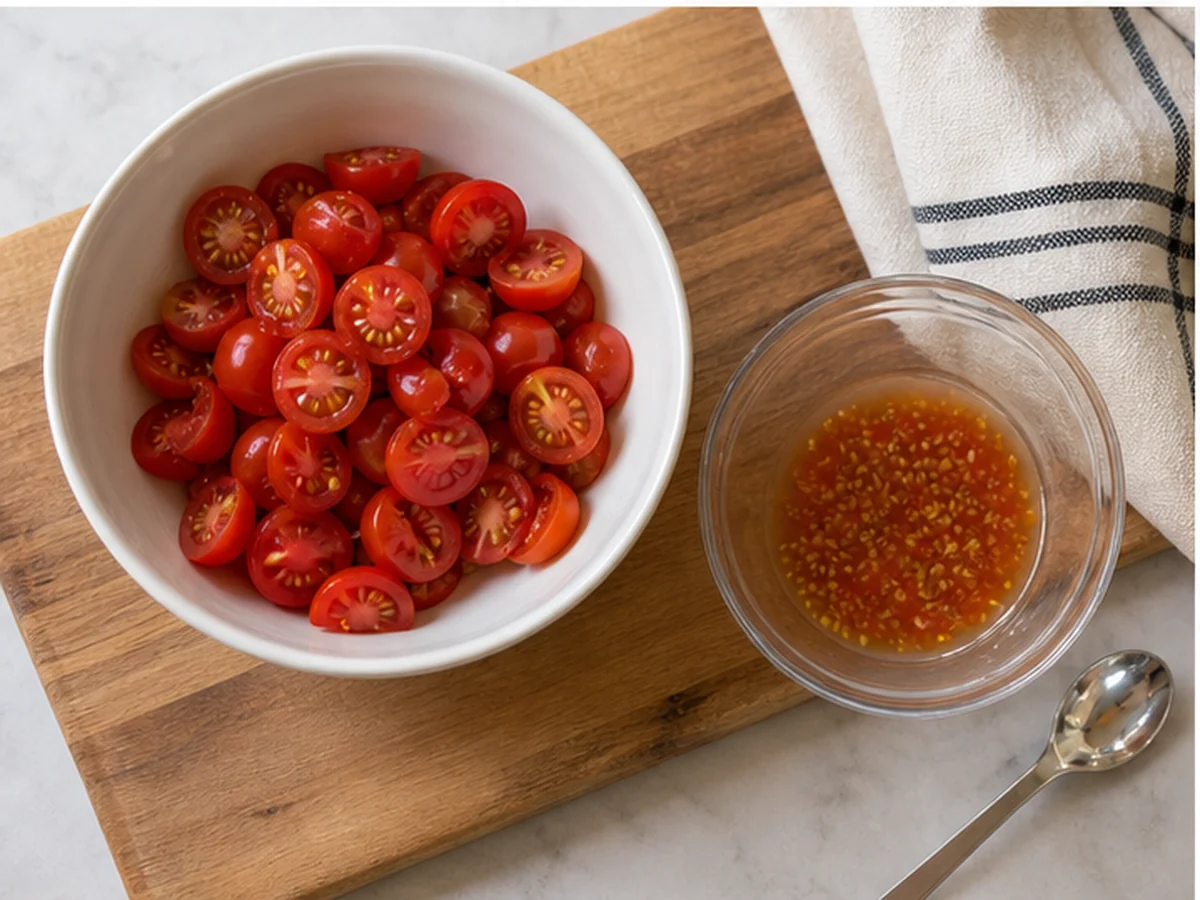
If it was only ripe flesh
Once you are confident the bite was ripe flesh rather than vine, let the cat eat and behave normally while you watch appetite, comfort, activity, and stool. A pea-sized piece often passes without any drama.
Repeated vomiting, continued diarrhea, weakness, unusual heart rate, or food refusal should prompt a call. State whether green plant material was accessible.
Tomato-related garden prevention
Use physical barriers instead of pet-accessible repellents, collect pruned vines immediately, and store chemicals in closed cabinets. Tie plants with materials the cat cannot chew.
A secure catio can separate vegetable beds from feline patrol routes. The tomatoes may miss supervision, but the emergency clinic will not.
Ripe fruit does not treat constipation
One tiny tomato piece supplies little useful fiber or water, and acidity may worsen stomach upset. Straining can signal constipation, urinary obstruction, pain, or a foreign body.
A male cat repeatedly visiting the box with little urine needs emergency care. Do not wait for produce to change the outcome.
Cats with kidney or heart disease
Plain ripe flesh is not highly salty, but prepared tomatoes and sauces may be, while prescribed diets control minerals and calories as a system. Optional extras make that control less precise.
Ask the treating veterinarian before any topper. A small amount of complete wet food is easier to account for.
Cherry tomatoes in pet food
Tomato ingredients within a complete commercial food are evaluated as part of the finished formulation. That does not mean whole garden fruit or vines are approved snacks.
Read the nutritional adequacy statement and life-stage claim. Judge a diet by the complete product, not a single ingredient in isolation.
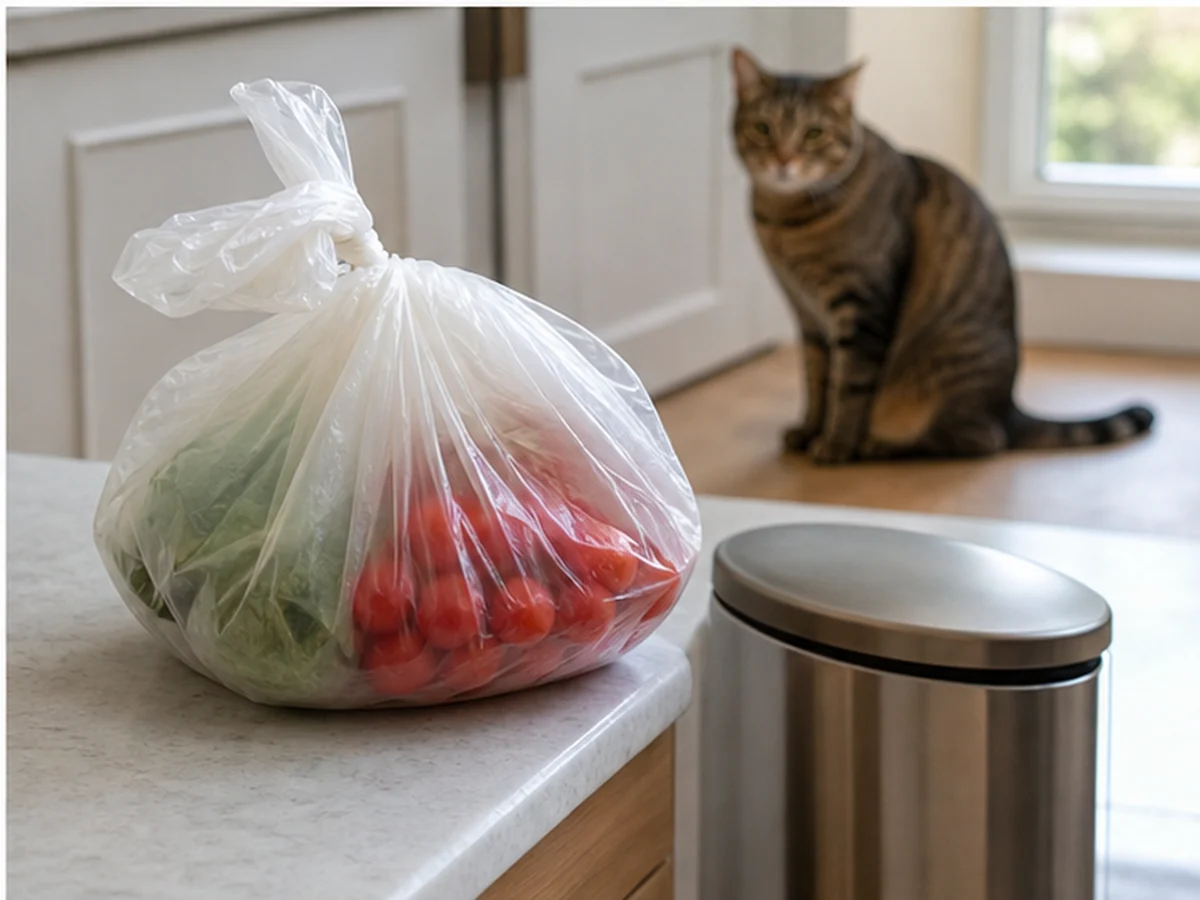
The produce bag can become the emergency
Thin bags can wrap around the face, while netting, elastic bands, price labels, and absorbent pads may be swallowed. Fruit scent remains on all of them.
Store tomatoes outside cat access and discard packaging immediately. Vomiting, food refusal, pain, or reduced stool after missing material needs examination.
Restaurant garnish uncertainty
A bright tomato on a plate may be marinated in garlic oil, vinaigrette, salt, herbs, or alcohol. It may also be pierced by a pick that stays hidden beneath leaves.
Ask for preparation details and retain the bill. Unknown garnish is not the same exposure as washed ripe flesh at home.
Frequently asked questions
Can cats eat yellow cherry tomatoes?
Color alone is not a perfect ripeness test, since some cultivars mature yellow. Identify the variety and offer no plant parts.
What if my cat ate a green cherry tomato?
Call with amount, ripeness, plant access, symptoms, and body weight. Do not wait for weakness or vomiting after a meaningful exposure.
Can kittens play with cherry tomatoes?
No. The round fruit is a choking hazard, and kittens gain safer enrichment from purpose-made toys.
The bottom line
A pea-sized piece of fully ripe tomato flesh is usually low risk, but a whole cherry tomato is the wrong shape for a cat. Green fruit, vines, garden chemicals, sauce, spoilage, skewers, symptoms, and packaging warrant more caution.