Can Cats Eat Pineapple? Flesh, Rind, Core, Juice, and Products
Most healthy adult cats can tolerate a tiny bite of ripe, plain pineapple flesh, but they do not need it. The tough rind, fibrous core, spiky crown, large pieces, sugary juice, canned syrup, spoiled fruit, and mixed recipes create more practical risk than the soft flesh.
If your cat already ate pineapple
Identify the part and product, then estimate the amount. A small plain flesh bite usually needs observation, while swallowed rind, core, leaves, skewer, plastic film, or a cocktail requires a veterinary call.
- One soft flesh piece: monitor for drooling, vomiting, diarrhea, gas, or appetite change.
- Rind, core, crown, or a large chunk: call if gagging, vomiting, pain, or appetite loss develops.
- Alcohol, chocolate, grapes, raisins, onion, garlic, cannabis, or unknown sweetener: contact a veterinarian or pet poison service promptly.
- Breathing difficulty, collapse, repeated vomiting, severe weakness, tremors, or seizures: seek urgent veterinary care.
Do not induce vomiting or force water. Save the label, recipe, skewer count, and packaging because tropical presentation can hide a very ordinary foreign-body problem.
Ripe flesh is edible, not nutritionally necessary
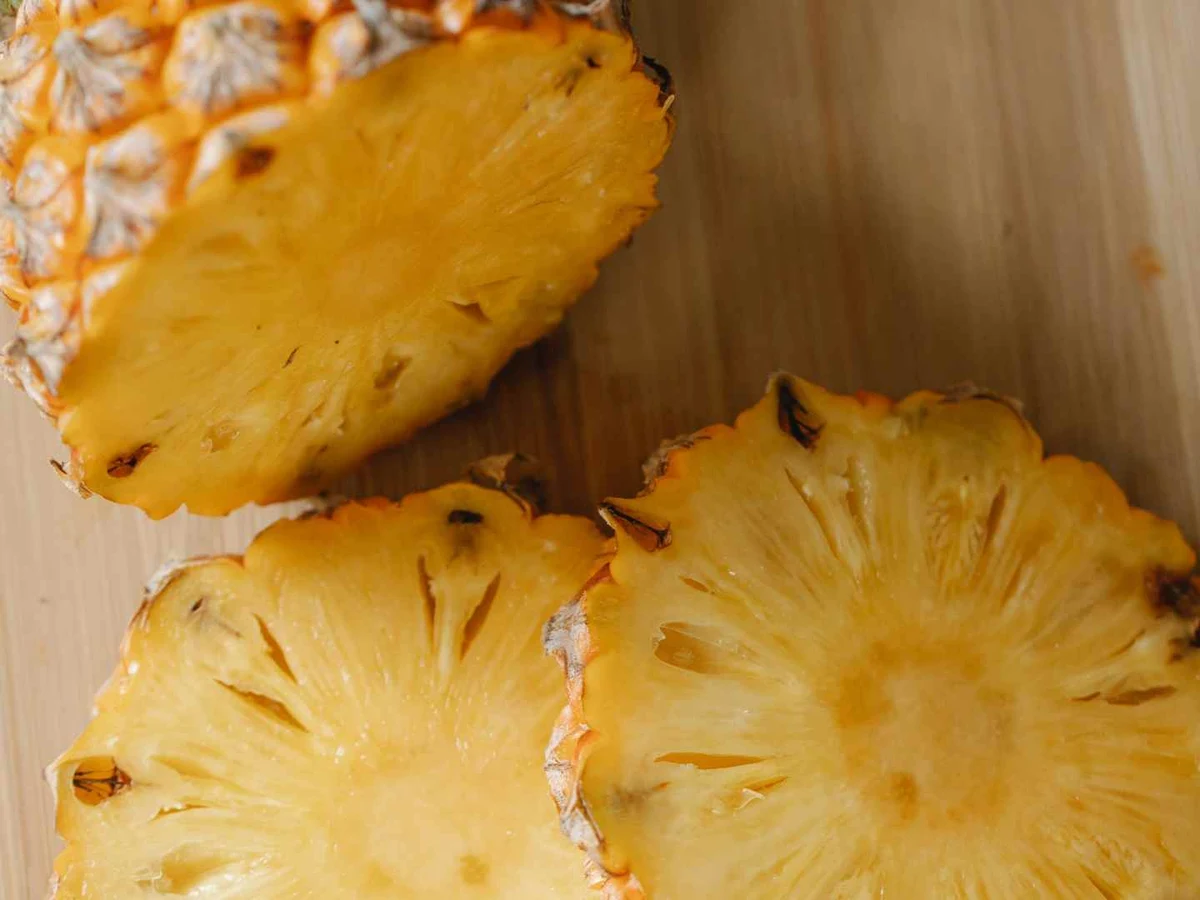
Ripe pineapple flesh supplies water, natural sugar, acid, fiber, and micronutrients for people. Cats are obligate carnivores and should receive their essential nutrition from complete feline food, not fruit.
The Cornell Feline Health Center recommends complete balanced food as the foundation and treats only occasionally. Its practical rule keeps extras to no more than roughly 10 to 15 percent of daily calories.
Pineapple does not prevent hairballs, cure constipation, supply a needed enzyme, or replace water for a cat. A cat who enjoys one soft crumb is having a novelty, not completing a nutritional side quest.
Acid and sugar can upset the stomach
Pineapple’s acidity can irritate the mouth and digestive tract, while natural sugar adds calories quickly. Drooling, lip licking, vomiting, loose stool, or reduced appetite can follow a larger or unfamiliar serving.
Start with no more than a pea-sized soft piece if the veterinarian has no objection, and stop if any reaction occurs. There is no benefit to teaching a reluctant cat to appreciate fruit.
Cats with diabetes, obesity, chronic gastrointestinal disease, dental pain, or a prescription diet should skip pineapple unless the treating veterinarian approves it. The individual health plan matters more than the fruit’s wholesome reputation.
Rind is tough, abrasive, and obstructive
Pineapple rind is difficult to chew and digest, with rough points that can scrape the mouth and gastrointestinal tract. Several pieces can lodge or clump into an obstruction.
Watch for gagging, repeated swallowing, vomiting, abdominal pain or swelling, inability to keep water down, refusal to eat, straining, reduced stool, or marked lethargy. Call promptly when rind is missing rather than waiting for it to prove its travel plans.
Do not pull fibrous material from the mouth or rectum because it may be anchored internally. Save a matching piece to show the veterinary team.
The core and crown have their own problems
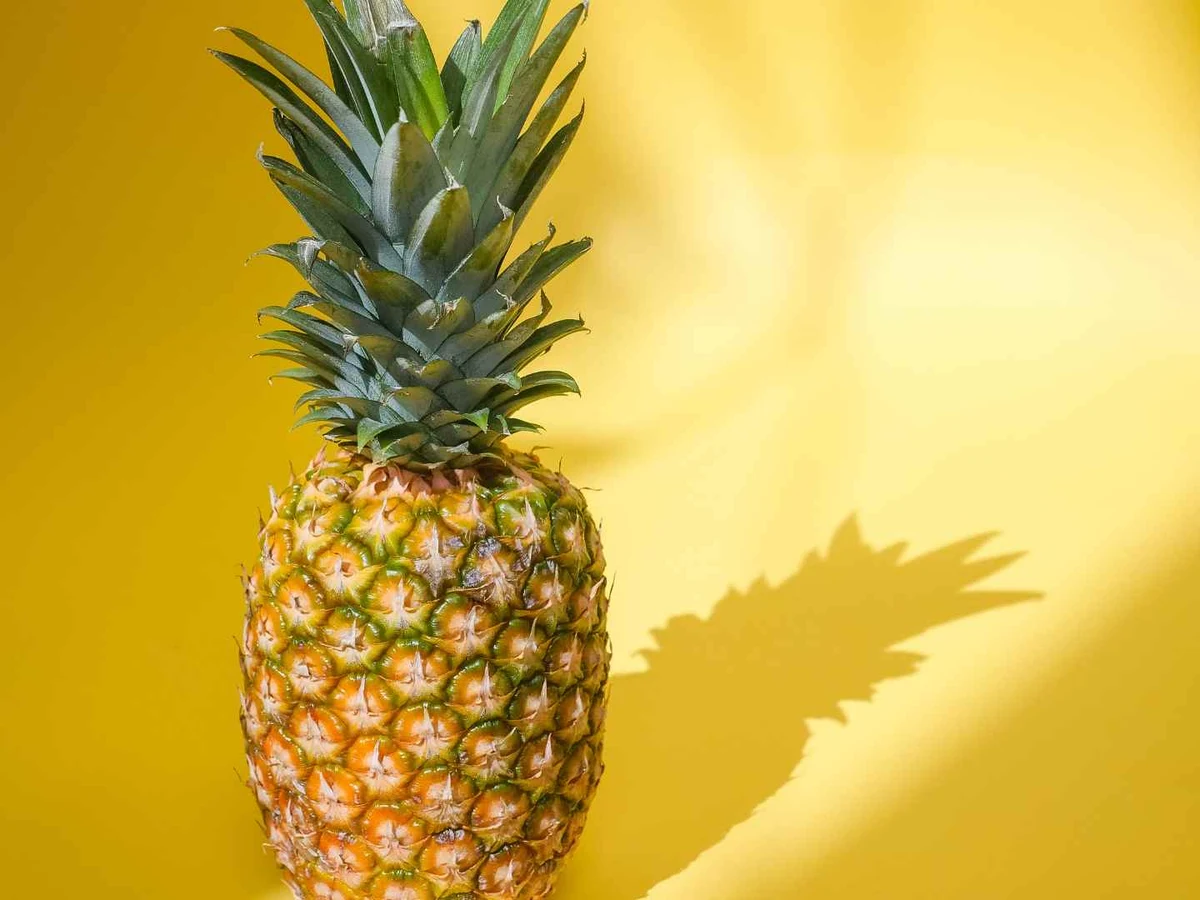
The central core is firmer and more fibrous than surrounding flesh, making large cubes a choking and obstruction risk. Remove it before offering any intentional taste.
The crown’s stiff leaves and sharp edges can injure the mouth or eyes, while plant fibers are not digestible cat enrichment. Keep the entire top and trimming pile away from the counter’s feline inspection lane.
A houseplant grown from a pineapple crown is still not cat food. Soil may add fertilizer, pesticide, mold, or foreign objects to the exposure.
Fresh, frozen, dried, and grilled pineapple
- Fresh: choose ripe flesh, remove rind and core, wash, and cut a tiny soft piece.
- Frozen: thaw before serving because a hard cube can hurt teeth or lodge in the throat.
- Dried: concentrates sugar into a chewy piece and may contain preservatives or added sweetener.
- Grilled: only plain cooled flesh is lower risk, while glaze, oil, spice, and skewers change the answer.
- Freeze-dried: may be brittle or hard, absorb water after swallowing, and concentrate calories.
Plain preparation does not make pineapple necessary, and fancy preparation does not make it more feline. If the cat wants a crunchy reward, part of the regular ration is easier to size and digest.
Canned pineapple and fruit cups
Canned pineapple may sit in juice, light syrup, or heavy syrup, adding more sugar than fresh fruit. A drained, rinsed crumb is lower in surface syrup but offers no reason to become a routine treat.
Read fruit-cup labels for grape juice, cherries, sweeteners, flavorings, and preservatives. The FDA pet-proofing guide warns that food packaging can endanger pets, so check the plastic-film lid, spoon, and cup after a raid.
Do not let a cat lick an open can, whose rim may cut the lips or tongue. Pour leftovers into a covered container and refrigerate according to the product directions.
Pineapple juice is not cat hydration
Juice delivers acid and sugar without the intact fruit’s fiber, and cats can lap a meaningful amount quickly. Blends may add grape, citrus, coconut, caffeine, supplements, alcohol, or nonstandard sweeteners.
Offer fresh water for hydration and complete cat food for nutrition. Juice does not treat urinary disease, constipation, dehydration, or vitamin deficiency.
Our guide to oranges and citrus products explains why juice, peel, and concentrated oil need separate thinking. Fruit pictured on a bottle is not a complete ingredient statement.
Pizza, cake, ham, and upside-down surprises
Pineapple pizza combines sauce, cheese, dough, garlic, onion, cured meat, grease, and packaging. See our pizza guide and cured-meat guide rather than judging only the yellow topping.
Pineapple cake and upside-down cake add sugar, butter, dairy, raw batter concerns, cherries, alcohol extracts, and sometimes nuts or chocolate. Cocktails and rum-soaked fruit are alcohol exposures, with umbrellas, picks, and skewers adding foreign-body risk.
Glazed ham with pineapple can contain salt, fat, onion, garlic, cloves, sweet glaze, bone, foil, and netting. The pineapple may be the least eventful item on the plate.
Bromelain and pineapple supplements
Bromelain is a group of pineapple-derived enzymes marketed in human supplements for digestion or inflammation. A supplement is concentrated and may include enteric coatings, sweeteners, herbs, or doses not evaluated for a particular cat.
The Merck Veterinary Manual nutrient overview explains why limited ingredients and supplements do not automatically form a balanced feline diet. Do not give bromelain, digestive enzymes, or pineapple powder without veterinary direction.
Supplements can interact with medications or medical conditions, and product quality varies.
A cat with persistent digestive trouble needs diagnosis instead of a fruit enzyme experiment. Vomiting, weight loss, diarrhea, pain, or reduced appetite can signal disease that deserves examination.
Spoilage, fermentation, and mold
Discard pineapple that smells alcoholic, bubbles unexpectedly, feels slimy, or shows mold. Fermentation can introduce alcohol, while mold creates an unknown exposure that cooking or trimming may not solve.
Follow refrigeration directions and move scraps into a lidded bin. A discarded rind becomes considerably more fascinating after marinating beside meat drippings in the trash.
What to tell the veterinarian
Report the cat’s weight and health, pineapple form, amount, time, symptoms, and every other recipe ingredient. Mention rind, core, leaves, skewers, plastic, foil, and alcohol specifically.
Send photos of labels and the remaining pieces, and estimate the maximum amount rather than the amount you hope was eaten. The veterinarian may recommend monitoring, examination, imaging, or treatment based on those details.
Preventing the next pineapple raid
Trim pineapple on a clear counter and move rind, crown, core, stickers, and plastic directly into a lidded bin. Do not leave a hollow rind on the table as decoration where a cat can chew it after everyone leaves.
Count cocktail picks and grilling skewers before and after serving. A greasy wooden pick can puncture the mouth or digestive tract, and a missing one deserves a veterinary call even when the fruit itself was harmless.
Keep canned cups, dried fruit, supplements, alcohol infusions, and juice in closed storage. Refrigerate prepared fruit promptly and wipe sticky drips from floors, counters, and fur before grooming turns a small mess into a larger serving.
During meals, offer the cat a measured normal portion or food puzzle in a calm place. This meets the social demand to dine together without recruiting tropical fruit into the feline nutrition plan, and it keeps the cat away from sharp tools, hot grills, sticky packaging, fruit knives, can lids, and the inevitable unattended serving spoon beside dessert.
If scavenging suddenly becomes intense or accompanies weight loss, increased thirst, vomiting, diarrhea, or rejection of regular food, schedule a veterinary examination. A changed appetite can be a medical clue rather than a sudden passion for fruit salad.
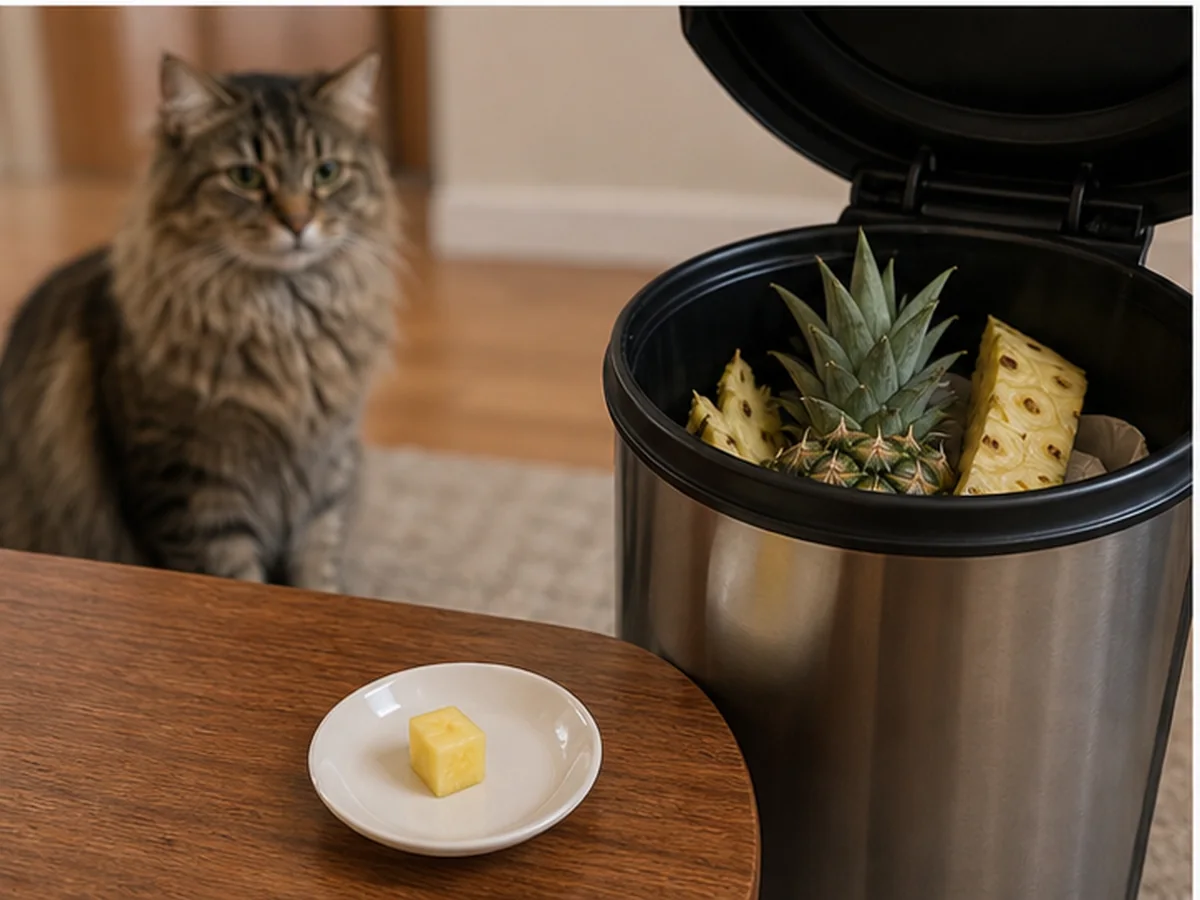
Safer serving, if your veterinarian approves
- Choose ripe, fresh, plain flesh.
- Remove every bit of rind, core, crown, and skewer.
- Cut one pea-sized soft piece and serve it cool.
- Count it among daily treats and do not repeat after digestive upset.
- Prefer part of the regular complete ration when the cat simply wants inclusion.
Our boiled egg guide covers a more species-relevant occasional extra for healthy cats. No cat is nutritionally disadvantaged by declining the pineapple course.
Frequently asked questions
Can kittens eat pineapple?
Skip it. Kittens need complete growth nutrition and have small airways, digestive tracts, and calorie budgets.
Can cats eat canned pineapple?
A drained plain crumb is unlikely to poison a healthy adult, but syrup and juice add sugar. Check blends, lids, and packaging, and do not make it routine.
Can pineapple help hairballs?
There is no good reason to use pineapple as a feline hairball treatment. Ask a veterinarian about grooming, diet, parasites, skin disease, and evidence-based options when hairballs are frequent.
The bottom line
A tiny ripe flesh bite is usually low risk, while rind, core, leaves, syrup, juice, recipes, spoilage, and packaging change the decision. Keep portions tiny and optional, save the product after a theft, and let complete feline food handle the nutrition.