Can Cats Eat Ranch? Garlic, Onion, Dairy, Fat, and Packets
Do not offer ranch dressing to cats. One tiny lick may only cause mouth or stomach upset, but garlic, onion, dairy, fat, sodium, seasoning packets, homemade recipes, spicy varieties, mixed dishes, and packaging can make ranch more concerning.
Find the exact ranch product
Save the bottle, packet, cup, restaurant label, or recipe and estimate the amount. Determine whether the cat licked dressing, dry powder, dip, seasoned chips, or a ranch-coated meal.
Call promptly when garlic or onion appears, powder was inhaled, the amount is large, the recipe is unknown, or packaging disappeared.
Weakness, pale gums, rapid breathing, dark urine, repeated vomiting, collapse, severe coughing, or breathing difficulty needs urgent care. Do not induce vomiting.
Alliums are the headline hazard
Ranch commonly contains garlic powder, onion powder, chives, or seasoning blends. Powdered forms are concentrated and may be mixed throughout the dressing.
The ASPCA people-food guidance notes that cats are particularly susceptible to allium-related red blood cell damage.
Call with the product and amount instead of waiting for anemia. Signs can be delayed after the condiment has left the stomach.
One lick is not the same as a bowl
A small ranch smear may cause no obvious illness, while lapping a dip cup delivers more allium seasoning, sodium, fat, and dairy.
Estimate teaspoons or container fraction when possible. Do not declare one bite poison or create a safe spoonful without feline evidence.
The live ranch product guide helps identify formats, but dog dose discussions do not establish cat thresholds.
Dairy can upset adult cats
Buttermilk, sour cream, whey, milk solids, cheese, and yogurt may appear in ranch. Many adult cats digest lactose poorly.
Gas, soft stool, vomiting, or abdominal discomfort can follow dairy without representing allium toxicity. Both mechanisms can occur in one product.
The cat cheese guide covers lactose, milk protein, fat, and portions. Facial swelling or breathing difficulty is urgent.
Fat and calories
Oil, mayonnaise, sour cream, and cheese make ranch calorie-dense. A large amount can trigger vomiting, diarrhea, and abdominal discomfort.
Do not claim one lick instantly causes pancreatitis. Persistent vomiting, pain, lethargy, hunched posture, or food refusal needs veterinary evaluation.
Cats with obesity, diabetes, pancreatitis history, or gastrointestinal disease should receive no ranch.
Sodium varies widely
Bottled dressing, dip mix, restaurant cups, and seasoned snacks can differ in sodium. Dry powder may be especially concentrated before dilution.
The FDA Nutrition Facts guide helps interpret serving size, sodium, and ingredients.
Extreme thirst, vomiting, weakness, disorientation, tremors, seizures, or collapse after a substantial salty exposure is urgent.
Dry ranch packets can reach lungs and eyes
Powder spills easily when a packet tears. A cat can inhale dust or carry it on paws and groom it later.
Move the cat to clean air without brushing powder upward. Call for coughing, sneezing, eye pain, repeated vomiting, or breathing changes.
Prevent grooming and request cleaning instructions. Do not trap seasoning with oil or use scented products on the coat.
Homemade ranch is not automatically safer
A home recipe can reveal every ingredient, which helps triage, but it may contain fresh garlic, onion, chives, mayonnaise, raw egg, dairy, salt, and herbs.
Write down measurements and batch volume. A clove of garlic cannot be assessed from the word homemade alone.
Raw egg introduces a microbial concern, while garlic creates delayed blood-cell risk. Report both.
Vegan, dairy-free, and light ranch
Vegan ranch removes dairy but may still contain garlic, onion, oil, sodium, nuts, soy, and sweeteners. Light versions can change thickeners without removing alliums.
Dairy-free is one label claim, not a feline safety statement. Read the current product every time.
A cat in an elimination trial must avoid unapproved ranch ingredients even when no immediate symptom appears.
Spicy ranch and buffalo ranch
Hot ranch may contain cayenne, chile extract, hot sauce, vinegar, garlic, and onion. Chile compounds in spicy ranch may burn the mouth, inflame eyes, provoke coughing, and upset the digestive tract.
Drooling, pawing, coughing, vomiting, diarrhea, or squinting deserves advice when persistent. Do not give milk as a spice antidote.
Wipe a small surface smear from fur with a damp cloth before grooming. Eye contact and breathing difficulty require prompt care.
Ranch-seasoned chips and crackers
Snack coatings combine concentrated powder with salt, oil, starch, cheese, and packaging. Bag-corner dust may be licked without many chips disappearing.
The cat cracker guide covers hard snack texture and labels. Ranch flavor still requires allium review.
A solitary chip fragment bears little resemblance to licking seasoning from an opened family-size bag. Report the serving size, amount, and whether a freshness packet is missing.
Chicken, pizza, and salad
Ranch commonly accompanies fried chicken, wings, pizza, bacon, salad, vegetables, and sandwiches. Bones, skewers, cured meat, hot sauce, and onion may outrank dressing.
The cat pizza guide helps assess a coated slice, while bone ingestion requires its own call.
Photograph the complete plate. Scraping off visible sauce cannot remove seasoning already absorbed into food.
Ranch on vegetables
Carrots, celery, cucumber, broccoli, and radish dipped in ranch become coated mixed foods. Large raw chunks can choke even when the vegetable is low risk.
Do not rinse a party vegetable and serve it after exposure; dressing can remain in crevices. Start with a fresh veterinarian-approved food if needed.
Count toothpicks and plastic cups. A missing pick requires urgent direction.
Restaurant and refrigerated handling
Ask the restaurant for current ingredient or allergen information while available, but do not expect it to certify feline safety. Recipes and suppliers can change.
Keep dairy-based dressing refrigerated and discard cups left warm beyond safe handling. Sour odor, swelling, leaking, or mold means secure disposal.
Foodborne illness can cause vomiting, diarrhea, feverish behavior, lethargy, and appetite loss. Preserve date and lot information.
Bottle caps, foil seals, and packets
Plastic caps, inner foil, squeeze tips, condiment cups, film, and tear-off packet corners retain food scent and may be swallowed.
The FDA pet-hazard guide supports securing food bags and foreign objects.
Missing ranch packaging warrants a veterinary call; visible film should be left in place for professional removal rather than tugged.
Medical diets and medication hiding
Kidney disease, heart disease, diabetes, obesity, food allergy, and gastrointestinal illness eliminate any reason to offer ranch.
Do not hide medication in ranch unless the prescriber approves it. The cat may lick dressing and leave the drug behind.
If appetite is poor, ranch is not an appetite treatment. Cats that stop eating deserve timely assessment.
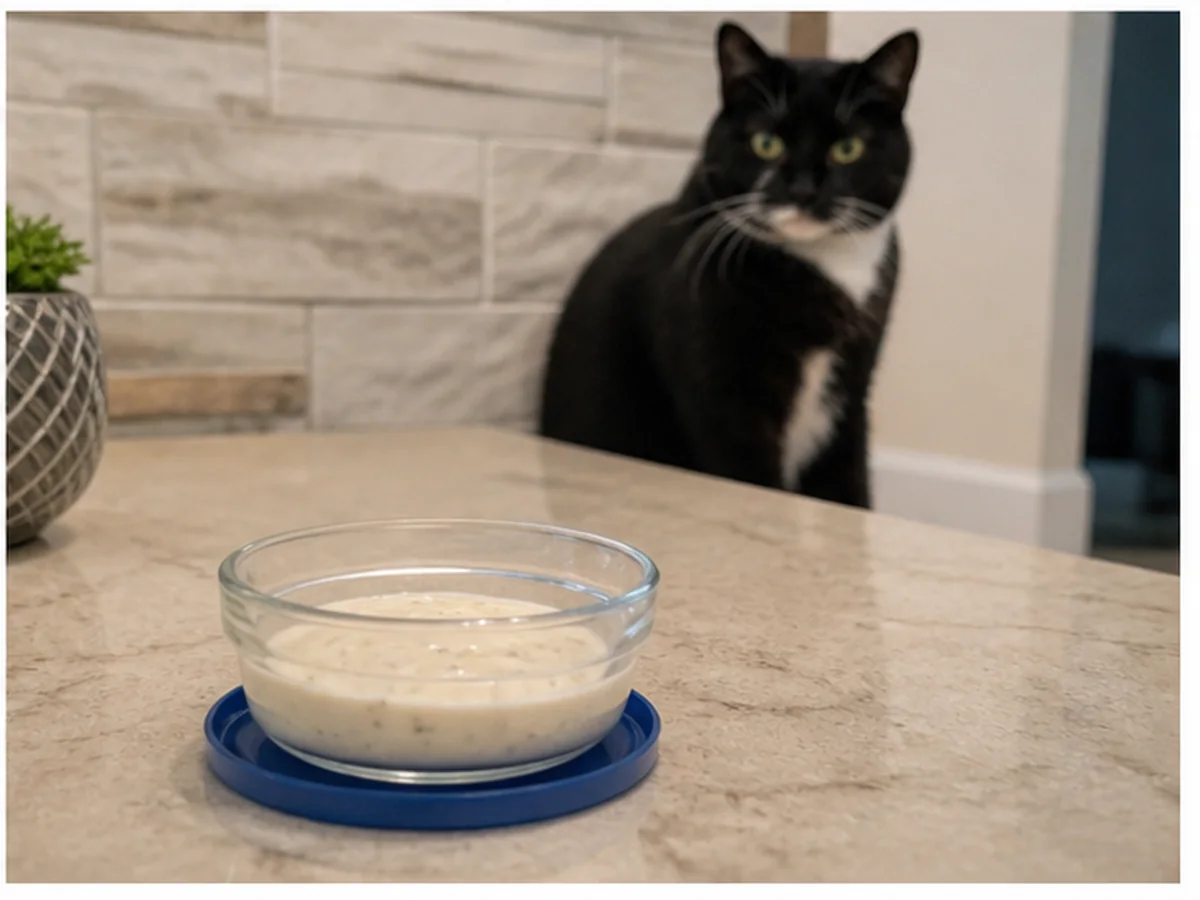
Monitoring after a known tiny lick
Keep the label and continue normal food and water while watching appetite, vomiting, diarrhea, energy, gum color, breathing, and urine.
Follow the veterinarian’s duration because allium-related anemia can be delayed. A normal first hour does not rewrite the ingredient list.
Ranch should stay off the cat menu; alliums, dairy, fat, sodium, powder, spice, mixed dishes, spoilage, and packaging determine how urgently a theft needs care.
Ranch powder sprinkled over popcorn may also contain butter flavor, cheese, high sodium, and hard unpopped kernels. A cat should not clean the bowl after movie night.
Ranch-flavored nuts add whole hard pieces, shell fragments, mold potential, and concentrated fat. Identify nut species rather than treating the coating as the only concern.
A separate nut-safety assessment covers shell and spoilage risks. Mixed nuts still require item-by-item inventory.
Ranch water or diluted dressing trends are not suitable feline hydration. Cats need fresh water, and flavorful liquids can add alliums and sodium while disguising increased thirst.
Restaurant dipping cups may be unlabeled, so ask for current ingredient information without delaying a call. Save the receipt and photograph cup size for an amount estimate.
Blue-cheese ranch adds mold-ripened dairy, extra salt, and product-specific cultures. Intended cheese mold and spoiled dressing are different situations.
The cat blue-cheese guide helps distinguish fresh commercial cheese from spoilage. Garlic and onion in the ranch remain separate hazards.
Powder caught under a collar or harness can prolong skin contact and grooming. Remove equipment carefully and bag it until cleaning instructions are clear.
A squeeze bottle chewed at the nozzle may shed a hard plastic tip. Count every component before assuming only dressing was swallowed.
Allium exposure history should include garlic bread, onion snacks, broth, and other foods eaten around the same time. Several small sources can matter together.
A veterinary team may recommend bloodwork later even when the cat initially seems normal. Attend follow-up because red-cell changes can precede obvious weakness.
Store seasoning packets with spices behind a closed door and dispose of restaurant cups immediately. An empty ranch container still smells like a snack.
Ranch pasta salad can combine dressing with onion, garlic, bacon, cheese, noodles, peas, and mayonnaise. Storage history matters because a dairy-and-meat salad left warm can support microbial growth.
A ranch packet accidentally mixed into cat food should not be diluted by adding more food and served anyway. Remove the batch, save the packet, and ask what monitoring is appropriate.
If the cat vomits after ranch, note whether visible plastic, bone, or tablet material appears. Do not reach into vomit bare-handed when sharp debris or medication may be present.
FAQ
Will one lick of ranch hurt a cat?
A tiny lick may only cause stomach upset, but check for garlic and onion and call if the amount or recipe is uncertain.
Why are garlic and onion in ranch concerning?
Cats are unusually susceptible to allium-related red blood cell damage, including from concentrated powders.
Is dairy-free ranch safe?
Not automatically. It may still contain garlic, onion, sodium, oil, nuts, soy, and other ingredients.
What if my cat inhaled ranch powder?
Move the cat to clean air without stirring more dust and call for coughing, eye pain, or breathing changes.
Bottom line
Ranch should stay off the cat menu; alliums, dairy, fat, sodium, powder, spice, mixed dishes, spoilage, and packaging determine how urgently a theft needs care.