Can Cats Eat Wasabi? True Wasabi, Restaurant Paste, Powder, and Snacks
Do not feed cats wasabi. A tiny lick may cause brief mouth or stomach irritation, but tubes and restaurant pastes often combine horseradish, mustard, starch, color, salt, oil, or Alliums; powder can reach eyes and airways, while sushi plates add raw fish, soy sauce, skewers, and packaging.
The green dab is a product-identification puzzle
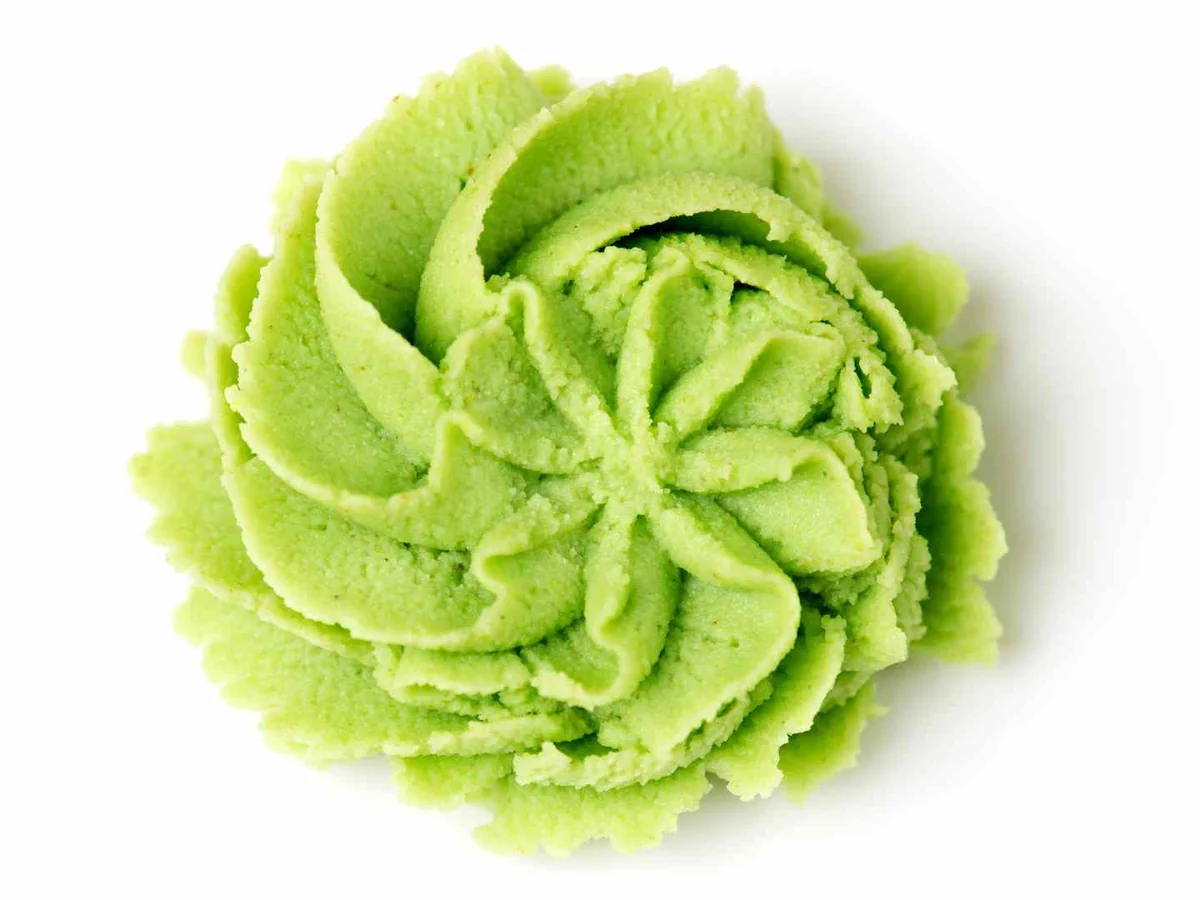
When someone says wasabi, they may mean freshly grated Japanese rhizome, a refrigerated tube, reconstituted powder, a horseradish-mustard restaurant paste, wasabi mayonnaise, crunchy peas, almonds, chips, crackers, or flavored oil. The name describes a flavor family more reliably than it describes one formula.
Save the tube, packet, powder tin, menu, receipt, or snack bag before wiping the plate. Estimate whether the cat licked a film, swallowed a mound, inhaled dust, stepped in paste, or ate the food underneath it.
| Scene | First priority |
| One lick from a plate | Mouth comfort, recipe, amount |
| Paste from a tube or packet | Full ingredients, salt, Alliums, packaging |
| Dry wasabi powder spill | Eyes, nose, lungs, fur contamination |
| Wasabi snack bag | Coating, base food, quantity, wrapper |
| Sushi or sashimi plate | Raw seafood, soy sauce, garnishes, skewers |
| Concentrate or extract | Higher concentration, route, immediate professional advice |
True wasabi has a precise botanical identity
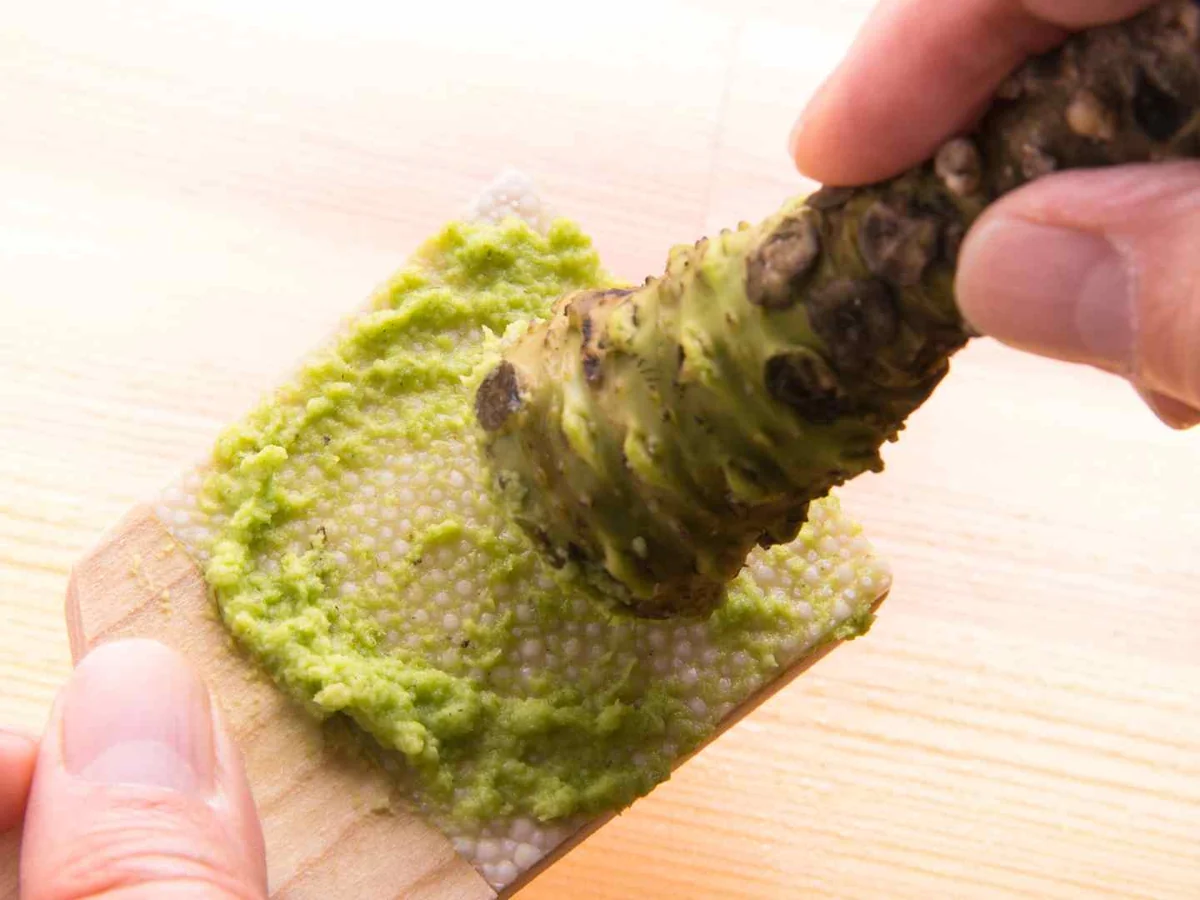
True wasabi is Eutrema japonicum, an accepted species in the mustard family. The Royal Botanic Gardens, Kew Plants of the World Online record lists its accepted name and botanical synonyms, including Wasabia japonica.
Fresh culinary wasabi is commonly prepared by finely grating the rhizome-like stem, which develops a volatile pungency after plant tissue is disrupted. Botanical identity does not make a grated mound necessary, gentle, or nutritionally valuable for cats.
Leaves, stems, flowers, and an unidentified garden plant should not be treated as equivalent to a measured restaurant garnish. Photograph the plant and its nursery label, including fertilizers or pesticides, when an exposure begins in a garden rather than at dinner.
Most restaurant paste needs a label, not a color guess
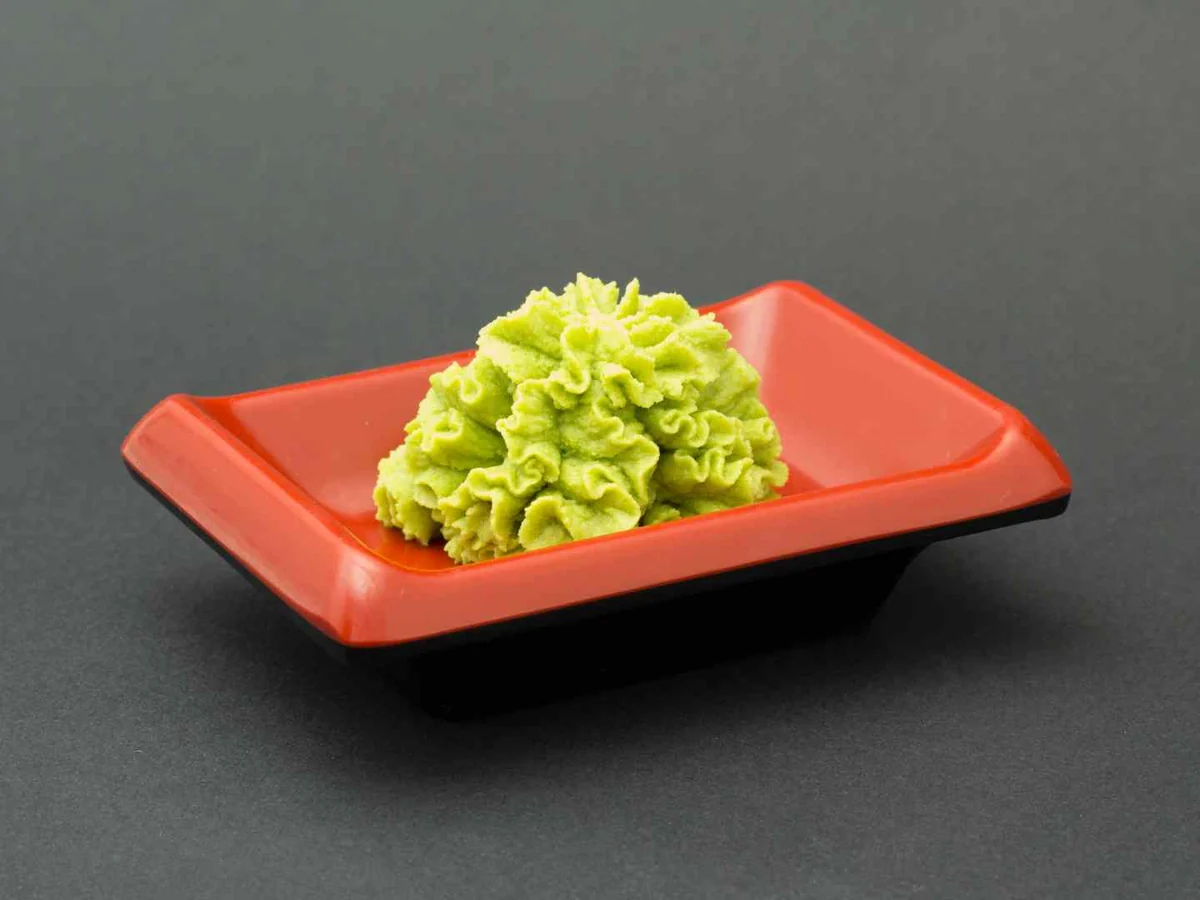
Commercial green paste often relies heavily on horseradish and mustard, with starch, oil, acid, color, salt, or a small amount of true wasabi. Formulas vary across restaurants, brands, countries, and product lines.
Ask for the container or ingredient specification instead of accepting the server’s shorthand. Green coloring cannot tell you how much true wasabi, horseradish, mustard, sodium, garlic, onion, or preservative the cat encountered.
The cat mustard guide is useful when mustard is actually listed. It does not replace reading the rest of a blended paste.
Pungency is irritation, not proof of a feline toxic dose
Wasabi, horseradish, and mustard can contain pungent isothiocyanates, including allyl isothiocyanate. A human sensory study indexed by PubMed specifically used wasabi powder and mustard oil to measure nasal irritation, which supports calling the vapor an irritant but does not establish a cat dose or outcome.
Cats may drool, foam, paw at the mouth, squint, sneeze, cough, vomit, or retreat after contact with a strong paste. Those signs can reflect painful sensory irritation, yet persistent or severe signs still require evaluation because burns, foreign material, another ingredient, and respiratory compromise remain possible.
There is no defensible universal number of wasabi licks that is safe for every cat. Concentration, product, route, body size, airway health, and recipe variability make an invented threshold less helpful than the actual label and signs.
A powder spill becomes an eye and airway event
Dry wasabi powder can billow when a pouch tears, a spoon drops, or a mixer starts, coating whiskers, nostrils, eyes, paws, and fur. Grooming then creates a second oral exposure long after the kitchen cloud settles.
Move the cat into clean air without chasing it through the dust, turn off fans, and keep other pets away from the room. Open-mouth breathing, blue or gray gums, collapse, persistent coughing, severe wheezing, or marked eye pain is urgent.
Do not pour water into the nose or mouth, and do not use human eye drops, oil, milk, or vinegar as a neutralizer. A veterinarian can advise flushing or coat cleaning based on the product, amount, and cat’s condition.
Fresh paste can travel on paws
A paw planted in wasabi spreads paste across floors, upholstery, eyes, ears, and the coat before the cat begins grooming. Prevent licking with calm supervision and call for cleaning directions when more than a tiny spot is involved.
Do not apply essential oils, dish degreaser, alcohol, adhesive remover, or another spicy condiment. Clip fur only if a veterinary professional recommends it, because scissors and a distressed moving cat are an unkind pairing.
Soy sauce often supplies more sodium than the green paste
Wasabi on a sushi plate commonly sits beside soy sauce, tamari, ponzu, spicy mayo, or a salty marinade. A licked saucer can deliver far more liquid and sodium than the decorative green dab.
FDA lists salt among potentially dangerous pet exposures and stresses that risk varies by species, amount, and circumstances. Fresh water should remain available, but force-feeding water can cause aspiration and does not replace professional advice.
Marked thirst, repeated vomiting, diarrhea, weakness, poor coordination, tremors, seizures, or collapse after a substantial salty-food incident warrants urgent care. Cats with kidney, heart, urinary, or blood-pressure disease should not be used to test how salty a condiment seems.
Garlic and onion can hide in fusion sauces
Wasabi mayo, aioli, creamy dip, steak sauce, dressing, and flavored paste may include garlic, onion, scallion, chive, or concentrated powder. Pale color and a sharp horseradish smell do not rule out Alliums.
The Merck Veterinary Manual Allium review explains oxidative red blood cell injury and the importance of raw, cooked, and concentrated forms. Save the recipe and call promptly rather than waiting for delayed weakness, pale gums, fast breathing, dark urine, or collapse.
Use the site’s garlic guide to organize a seasoned-sauce incident. Scraping the top layer away cannot remove seasoning already mixed through mayonnaise or paste.
The sushi plate has a cast, not one culprit
A sushi meal can add raw fish, cooked shrimp, imitation crab, rice, nori, avocado, cucumber, sesame, roe, tempura crumbs, cream cheese, eel sauce, spicy mayo, pickled ginger, soy sauce, wooden picks, and plastic grass. Inventory the plate before focusing on the smallest green item.
CDC does not recommend raw pet food because raw animal proteins can carry germs that affect animals and people. Acid, freezing, curing, or sushi presentation should not be described as equivalent to thorough cooking.
The site’s salmon guide helps distinguish cooked fish from raw, smoked, seasoned, and bony forms. It cannot answer for tuna, eel, shellfish, imitation crab, or every other roll component.
Wasabi peas are seasoned crunchy snacks
Wasabi peas usually begin with peas and add a crisp coating made from starch, oil, sugar, salt, wasabi or horseradish flavor, color, and sometimes mustard. The hard round shape can be swallowed whole or become a choking concern, especially for kittens and cats with dental or swallowing disease.
A crumb may produce no sign, while a bag raid can cause digestive upset and a large sodium load. Count the bag’s tear strip, plastic film, desiccant, and any clip before deciding only peas are missing.
The spicy-food guide for cats covers mouth and stomach irritation across seasoned snacks. Wasabi’s volatile pungency differs from capsaicin chemistry, so the words spicy and hot should not erase the exact ingredient.
Wasabi nuts, crackers, and chips multiply variables
Wasabi almonds, peanuts, cashews, rice crackers, chips, popcorn, and snack mixes combine a base food with oil, salt, sugar, starch, mustard, powdered flavor, and sometimes seaweed or soy. A shared bowl may also contain chocolate, raisins, macadamias, hard candy, or foil-wrapped pieces.
Identify the entire product and amount rather than assuming every green-coated bite is the same. Rigid fragments can injure the mouth, and flexible packages can obstruct or create a suffocation hazard.
Tube, packet, and jar pieces can outlast the condiment
Single-serve packets are easy to bat under furniture, while tube caps, foil seals, inner membranes, glass jars, and metal lids can be swallowed or cause cuts. Flatten flexible packaging and count every removable part after a raid.
Call when a packet corner, cap, seal, glass fragment, or strip of film is missing, especially with gagging, vomiting, abdominal pain, reduced stool, or appetite loss. Skip home vomiting, and leave any protruding material alone until a veterinarian directs the next step.
Concentrates, oils, and supplements are not garnish
Wasabi extract, allyl-isothiocyanate flavor concentrate, essential-style oil, nasal novelty products, and human supplements can be more concentrated than table paste. A study of a purified compound cannot be converted into a household feline dose or wellness promise.
Call immediately with the product concentration and route after contact with a concentrate, especially for eye exposure, inhalation, soaked fur, repeated vomiting, tremors, or breathing signs. Do not wait to see whether a product marketed as natural behaves gently.
Wasabi supplements are not treatments for infection, cancer, inflammation, parasites, appetite, or weight in cats. Human anticancer, antimicrobial, or memory claims do not demonstrate feline clinical benefit or dosing safety.
Pickled ginger is a separate condiment
The pale or pink slices beside wasabi are usually pickled ginger with vinegar, sugar, salt, and sometimes color or sweetener. Ginger garnish should be identified independently rather than assumed to neutralize wasabi.
Do not feed ginger, milk, bread, yogurt, oil, or rice to cancel the burn. Adding food can increase nausea or delay appropriate care, while force-feeding creates stress and aspiration risk.
Wasabi cannot improve a cat’s everyday diet
Pungent plants and snack coatings do not provide a feline nutritional advantage, and appetite stimulation through irritation is neither kind nor medically sound. Cats that need help eating require the cause of appetite loss to be addressed promptly.
FDA’s explanation of complete-and-balanced pet food is the right framework for daily meals. A wasabi supplement or garnish has no place as a replacement for formulated food or prescribed medication.
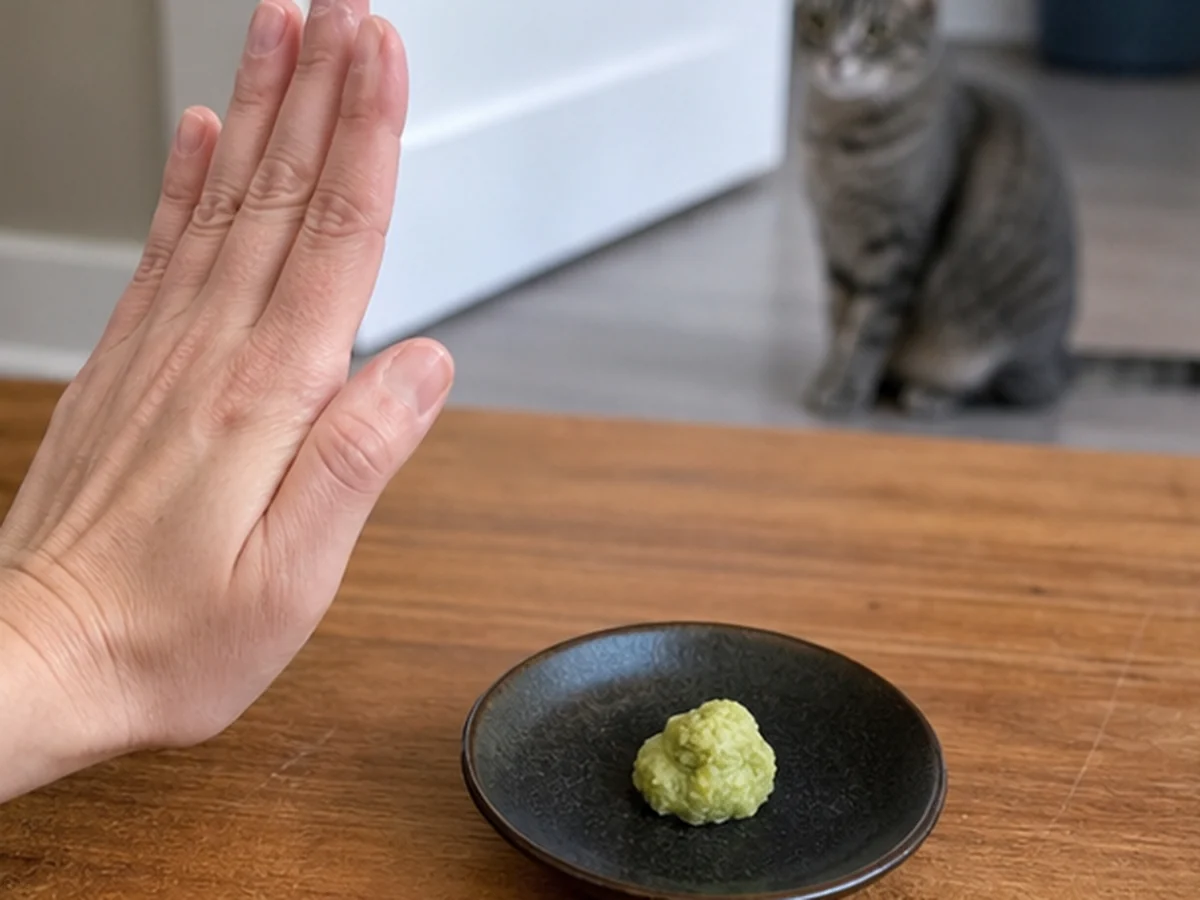
A calm response after the green-dab theft
- Move the cat away from paste, powder, sushi, sauces, hot cookware, snacks, and packaging.
- Identify true wasabi, horseradish-mustard paste, powder, mayo, snack coating, concentrate, or unknown product.
- Record amount, time, route, cat’s weight, airway and digestive conditions, complete ingredients, and signs.
- Call for powder inhalation, eye or extensive skin contact, concentrate, Alliums, large salty amount, packaging, vulnerable cat, or persistent symptoms.
- Follow professional cleaning and monitoring instructions without inducing vomiting or attempting to neutralize the condiment.
Frequently asked questions
Is a tiny lick of wasabi poisonous to cats?
A tiny lick may cause irritation without severe poisoning, but feline dose data are limited and products vary. Remove access, identify the ingredients, and call if signs persist or the amount is uncertain.
What should I do if my cat licked wasabi paste?
Save the label, wipe residue from nearby surfaces, and note drooling, vomiting, coughing, eye pain, or breathing changes. Let a clinic direct oral care rather than making the cat vomit or pushing a meal or drink.
Are wasabi peas safe for cats?
No deliberate serving is appropriate because they are hard, salty, oily, and coated with a variable pungent blend. A missing bag also raises wrapper and quantity concerns.
Is restaurant wasabi real wasabi?
Sometimes, but many pastes rely on horseradish and mustard with other ingredients. The menu name and green color cannot replace a current product label.
Bottom line
Wasabi is an avoidable irritant rather than a feline treat, and the green dab may represent true plant, horseradish-mustard paste, powder, snack coating, sauce, or concentrate. Identify the product and route, assess the entire sushi or snack scene, and call promptly for breathing trouble, Alliums, a large salty exposure, packaging, or persistent signs.