Cat Ate Macadamia Nuts? Feline Evidence and What to Do Now
If your cat ate macadamia nuts, remove the product and call a veterinarian for amount-specific advice. Macadamia toxicosis is a well-described syndrome in dogs, but feline evidence is sparse, so the honest response is neither to copy a canine toxic dose nor to declare cats immune.
The useful answer in the first five minutes
- Secure the nuts, recipe, bag, and any loose shells.
- Check breathing and swallowing without probing the throat.
- Count or weigh what may be missing.
- Photograph every ingredient and the nutrition panel.
- Call with the cat’s weight, time, medical history, and current signs.
A veterinarian may advise home observation, examination, or poison-service consultation after reviewing the actual product. Do not delay the call while trying to find a feline dose that has not been established.
What science says clearly about dogs
Dogs can develop weakness, incoordination, depression, vomiting, tremors, and increased body temperature after macadamia ingestion. The ASPCA’s people-food hazard page describes this as a canine syndrome.
That dog evidence is relevant because it explains why macadamias appear on warning lists, but it does not supply a cat threshold. Species differences in exposure patterns and metabolism make direct dose conversion unsound.
What science does not establish in cats
Published feline case data are too limited to define a characteristic syndrome, lowest toxic amount, or guaranteed safe amount. Absence of a well-described pattern is an evidence gap, not affirmative proof that any serving is safe.
The FDA includes macadamia nuts among potentially dangerous pet items and recommends considering species, amount, and individual details. That broad caution supports calling without pretending the dog syndrome is already proven in cats.
Use a species boundary, not a shrug
| Statement | Accuracy |
| Macadamias cause a recognized syndrome in dogs | Supported |
| Cats must react at the same dose | Not supported |
| Cats are definitely unaffected | Not supported |
| A small feline exposure needs product-based triage | Reasonable |
| Symptoms deserve veterinary assessment | Supported practical advice |
This boundary keeps the guide useful without manufacturing certainty. The veterinarian can weigh sparse toxin evidence alongside choking, fat, salt, recipe ingredients, packaging, and the individual cat.
Whole nuts are awkward feline mouthfuls
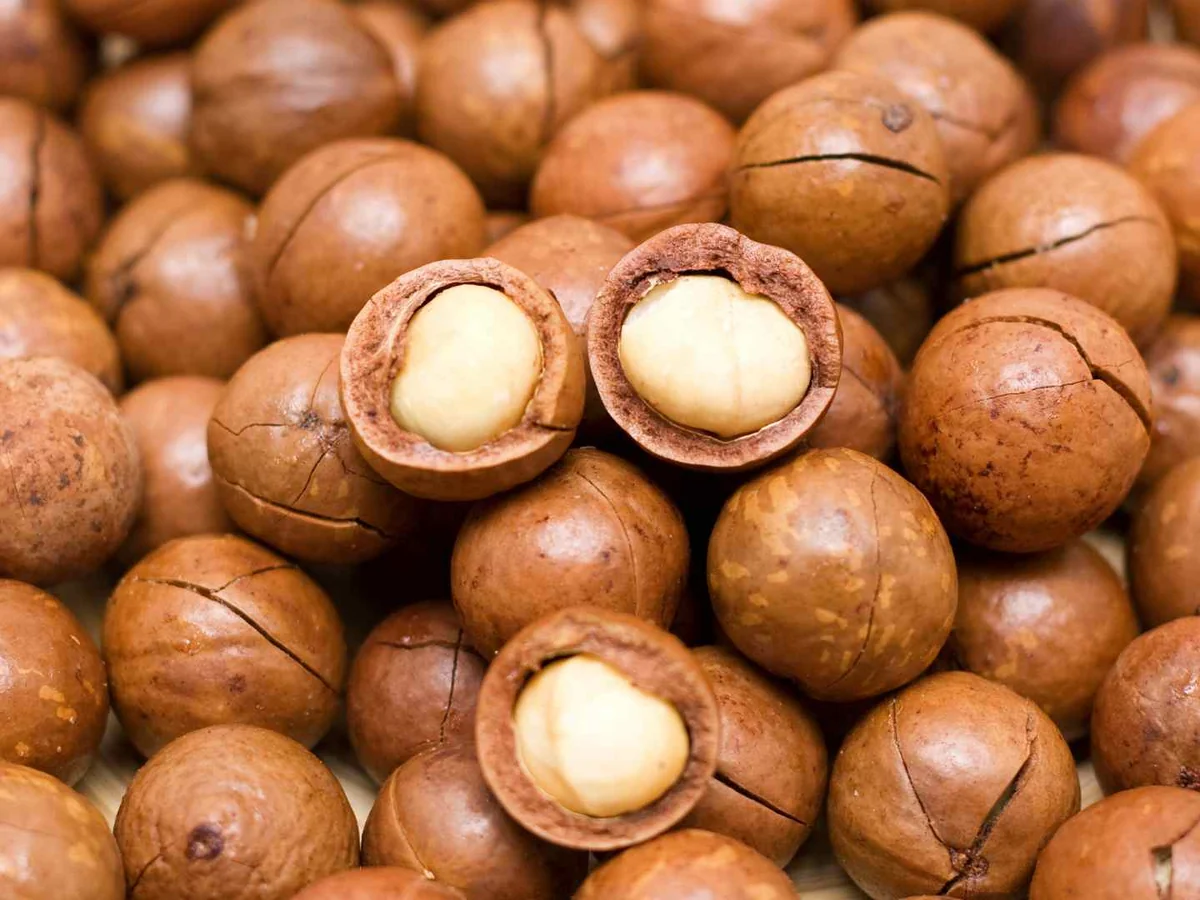
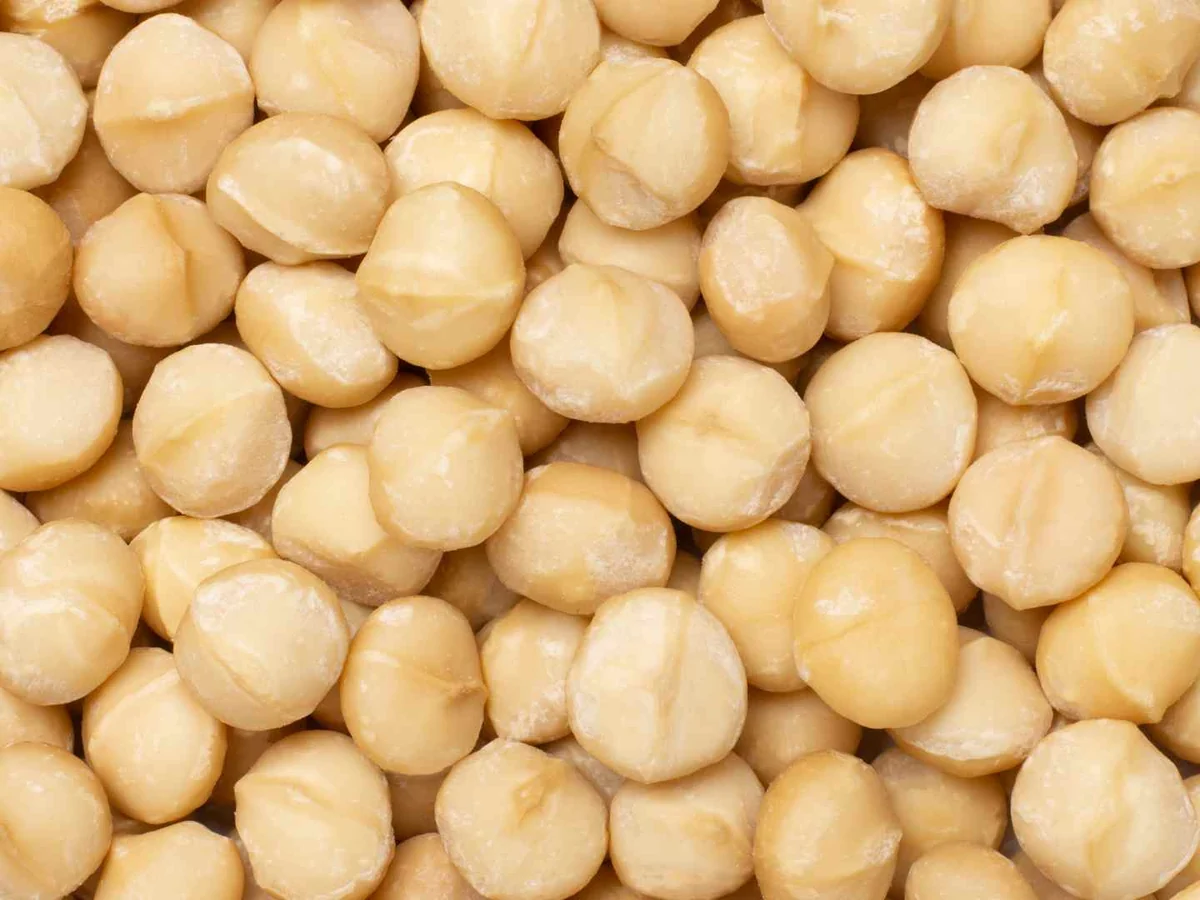
A macadamia is round, smooth, and firm enough to lodge in the mouth, throat, or gastrointestinal tract. Broken pieces can still be gulped with little chewing, especially when coated in butter or chocolate.
Breathing difficulty, blue-gray gums, collapse, frantic face-pawing, or repeated unproductive retching is an emergency. Do not pour water into the mouth or sweep blindly with your fingers.
Shells make the physical risk sharper
Macadamia shells are extremely hard and can fracture into rough pieces, damage teeth, or behave as foreign material. They offer no nutritional upside and should never be left as toys.
Call promptly for a missing shell fragment, bleeding mouth, broken tooth, vomiting, abdominal pain, or appetite loss. Do not give bread, oil, or bulky fiber to push a fragment through.
Chocolate-covered nuts are a methylxanthine exposure
Chocolate adds theobromine and caffeine, both capable of stimulating the heart and nervous system in susceptible species. Dark and baking chocolate usually concentrate more methylxanthines than pale milk coatings, but brand and amount still matter.
Use our cat chocolate emergency guide and call with the coating type, product weight, and missing count. The Merck Veterinary Manual explains the potential for arrhythmias, agitation, tremors, and seizures.
Cookies and white-chocolate clusters need full recipes
Macadamia cookies may contain chocolate chips, raisins, butter, raw dough, coffee flavor, alcohol-containing extract, or sweetener blends. A bakery label may also list multiple tree nuts.
Keep wrappers and cupcake liners in the inventory, since a cat may swallow packaging along with crumbs. Report the largest plausible portion rather than estimating only the number of visible nuts.
Salted and seasoned nuts add predictable problems
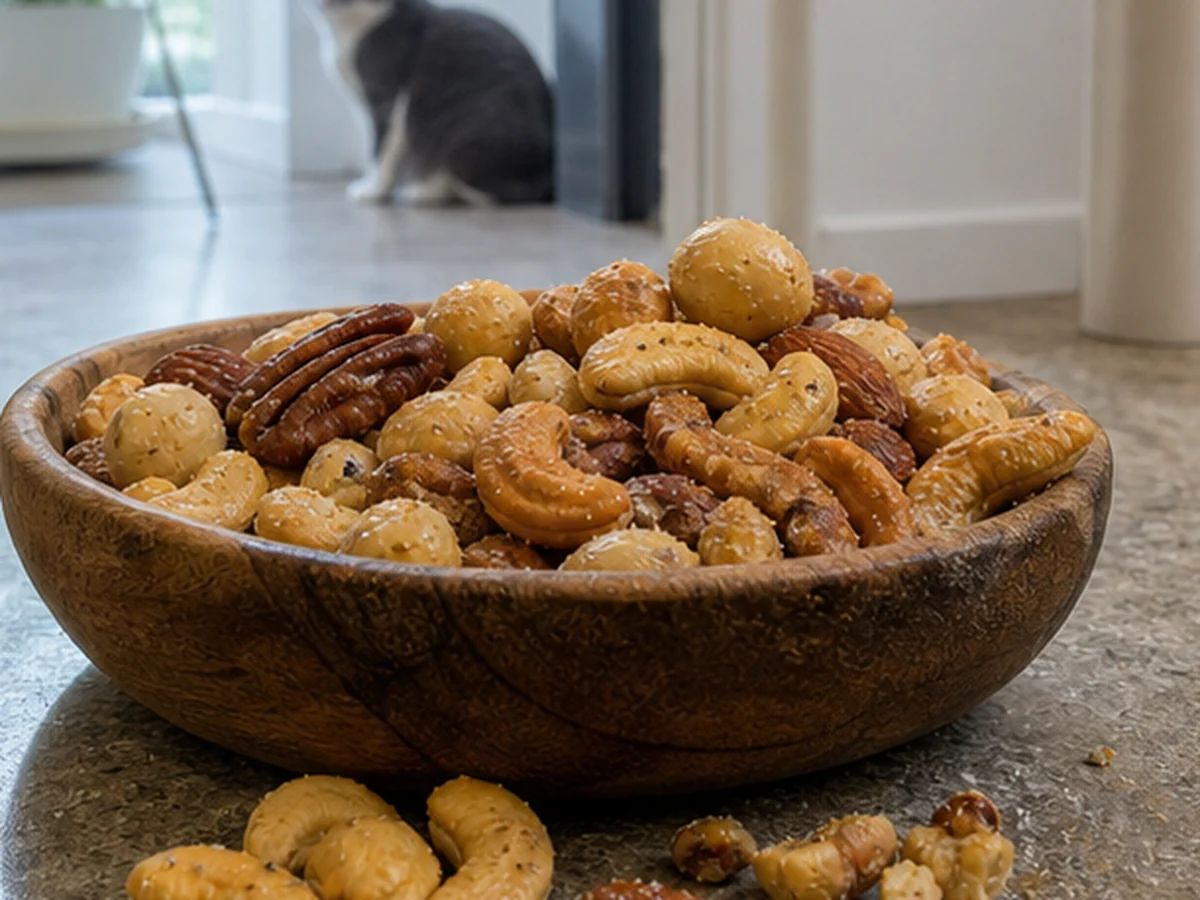
Snack nuts may be roasted with salt, garlic, onion, chili, cheese powder, smoke flavor, or oil. A tiny lick does not automatically equal salt poisoning, but a large or unknown amount of concentrated seasoning deserves case-specific advice.
Our garlic-powder guide explains why concentrated allium seasoning matters to cats. Save the flavor packet because “savory” cannot identify its contents.
Fat is relevant without guaranteeing pancreatitis
Macadamias are calorie-dense and fatty, so a substantial amount may trigger vomiting or diarrhea and complicate weight management. It is inaccurate to promise that a single nut will cause feline pancreatitis.
Persistent appetite loss, lethargy, vomiting, weight loss, diarrhea, or apparent abdominal pain still warrants examination. Those signs overlap many conditions and should not be self-diagnosed from the snack bag.
Nut butter is not simply easier to swallow
Macadamia spread may be sticky and combined with cashews, chocolate, coconut, sweeteners, oils, salt, or protein ingredients. A cat can lick a larger amount quickly than it could chew whole nuts.
Read the current jar rather than an online brand list, and inspect the foil seal and lid liner. Our cat nut overview can help identify concerns from a multi-nut blend.
Moldy or stale nuts change the case
Nuts stored warm or damp can spoil, and mold introduces possible mycotoxin exposure unrelated to the established dog macadamia syndrome. Save a sample in its package, avoid sniffing visible mold closely, and call after ingestion.
Tremors, seizures, repeated vomiting, profound weakness, or high temperature needs emergency care regardless of which component caused it. Product storage history belongs in the veterinary handoff.
Do not try to reproduce dog first aid
Never give hydrogen peroxide, salt, mustard, oil, or charcoal without professional direction. Home vomiting methods can injure cats and cause aspiration, and treatment choices depend on time, formulation, and symptoms.
Do not give a canine medication or calculate a dose by shrinking a dog instruction. Veterinary professionals choose cat-appropriate decontamination and supportive care when indicated.
What to monitor after professional triage
Follow the advised window for appetite, energy, walking, vomiting, stool, temperature-related behavior, tremors, and breathing. A quiet cat who hides can be ill without displaying the dramatic weakness described in dog reports.
Call back if anything changes or the original amount estimate increases. Finding another torn package or realizing several nuts are missing is new clinical information, not an embarrassing correction.
Which cats deserve extra caution?
Kittens, very small cats, seniors, and cats with swallowing disorders, chronic gastrointestinal disease, diabetes, obesity, or prescribed diets have less reason to be observed casually after a substantial snack raid. Their existing medications and diagnoses can also alter triage.
This does not create a secret toxic dose for those groups. It means the clinician needs the whole patient, not only the ingredient.
Roasting method does not settle toxicity
Raw, dry-roasted, oil-roasted, and baked macadamias differ in surface fat, salt, seasoning, texture, and recipe use. None provides the missing feline dose-response research, and heating cannot be assumed to neutralize the canine-associated factor.
Report preparation because it helps identify co-exposures, not because one roast style has been proven safe for cats. A stale roasted nut may also create spoilage concerns absent from a fresh raw one.
Milk and white chocolate names can mislead
White chocolate contains little cocoa solids but can still be rich in fat and sugar, while milk chocolate contributes methylxanthines at a product-dependent concentration. The visible nut count may be impossible to reconstruct inside a cluster.
Use package weight and the missing fraction to establish a maximum, then give the veterinarian the cocoa percentage when listed. Do not treat a pale coating as proof that the entire candy is harmless.
A quiet cat can still be abnormal
Canine descriptions emphasize hind-limb weakness and tremors, but a cat may simply hide, stop eating, move reluctantly, or become less interactive. Those nonspecific changes cannot confirm macadamia toxicosis, yet they deserve veterinary reassessment after an exposure.
Record short videos of walking or tremors if doing so does not delay care. Objective footage can help a clinician see a transient sign that disappears in the unfamiliar clinic room.
Temperature should be measured safely
Feeling ears or paws does not reliably diagnose fever or hyperthermia, and forcing a rectal thermometer into an agitated cat can injure both cat and person. Ask the clinic whether a measurement is needed before attempting one.
Panting, marked agitation, weakness, hot surroundings, tremors, or collapse requires urgent help regardless of a home temperature reading. Do not use ice baths or alcohol rubs to cool a cat.

Keep the dog and cat histories separate
In a multi-pet home, establish which animal reached the bag and whether both could have eaten some. The dog may need established macadamia-risk triage while the cat needs a feline evidence-limited assessment.
Separate the pets and count remaining pieces before cleaning the scene. One shared product can produce two species-specific plans, which is exactly why dose transfer is inappropriate.
Frequently asked questions
Are macadamia nuts poisonous to cats?
A specific feline toxicosis and dose are not well established, unlike the recognized canine syndrome. Avoid feeding them and call after an accidental ingestion for product-specific advice.
Can I use the dog toxic dose for my cat?
No, dog thresholds should not be transferred to cats by body weight. Species differences and sparse feline data make that calculation unreliable.
What if my cat ate one plain macadamia?
Remove access and call with the cat’s weight, nut size, time, and signs. The veterinarian can also assess choking and foreign-body risk.
What if the nut was chocolate-covered?
Treat chocolate as a separate toxic exposure and call promptly with coating type and amount. Do not wait for hyperactivity, tremors, or a fast heartbeat.
Should I make the cat vomit?
No home vomiting method is recommended for cats. Contact a veterinarian or animal poison service and follow their instructions.
Bottom line
Macadamia toxicosis is established in dogs, while feline evidence remains sparse. Call rather than copying a dog dose, and let the exact nut product, amount, physical form, coatings, storage, packaging, symptoms, and individual cat determine the response.