Can Dogs Eat Quinoa? Rinsing, Cooking, Portions, and Recipes
Dogs can usually eat a small amount of quinoa that has been rinsed, fully cooked, cooled, and served plain. Dry or raw quinoa, large portions, rich salads, and heavily seasoned leftovers are less digestible and may carry ingredient risks that have nothing to do with quinoa itself.
The safest version is pleasantly boring
- Plain cooked quinoa: a spoonful may be reasonable for a healthy dog that tolerates it.
- Dry, raw, or inadequately rinsed quinoa: do not serve it intentionally because it is harder to digest and may retain more bitter saponin residue.
- Quinoa salad or a restaurant bowl: check onion, garlic, raisins, grapes, avocado pits, macadamia nuts, sauces, salt, and fat.
- A large pot theft: call if the amount is substantial, ingredients are concerning, packaging is missing, or the dog develops symptoms.
- A prescription or elimination diet: ask the managing veterinarian before adding quinoa.
Save the recipe or label and estimate how much is missing, including oil, stock, dressing, toppings, and mix-ins. A bowl described as quinoa can be nutritionally and toxicologically closer to a seasoned casserole than a plain cooked seed.
Quinoa is a seed, not a canine superfood
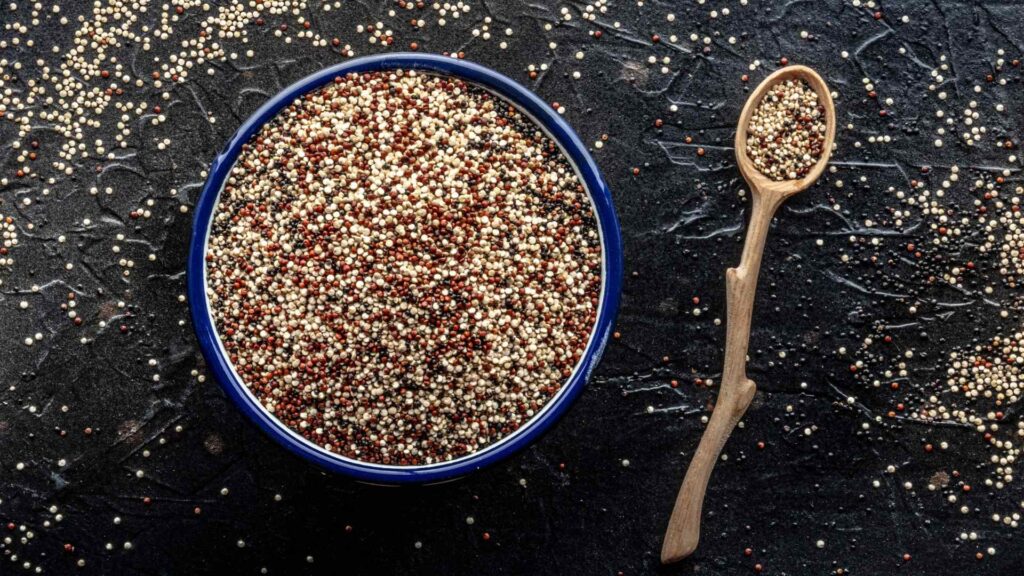
Quinoa is often used like a grain, although botanically it is a seed. It supplies starch, protein, fiber, fat, and micronutrients, but a nutrient list for one ingredient does not establish that a dog needs it added to an already complete diet.
Some commercial dog foods contain quinoa as one component of a formulated recipe. That is not equivalent to replacing part of a balanced food with a scoop from the family pot.
Quinoa protein does not cure weakness, build muscle by itself, correct anemia, treat allergy, or make a homemade diet complete. Dogs need the full diet assessed for calories, amino acids, fatty acids, minerals, vitamins, digestibility, and their individual health needs.
The World Small Animal Veterinary Association nutrition FAQ advises keeping treats to about 10 percent of daily calories. That limit helps prevent extras from displacing the complete food that supplies balanced nutrition.
Rinsing and cooking address the practical concerns
Quinoa naturally has bitter compounds called saponins on its outer surface, and commercial processing often removes much of them. Rinsing before cooking is a sensible extra step because residual saponins may contribute to digestive irritation.
The American Kennel Club quinoa guidance recommends washing quinoa before cooking and serving it cooked to improve digestibility. It also advises stopping if a dog develops vomiting, diarrhea, or constipation.
Place dry quinoa in a fine-mesh strainer and rinse under running water while moving the seeds around, then cook in plain water according to package directions. Do not add salt, bouillon, butter, oil, garlic, onion, spice blends, or sauce.
Let it cool before offering a tiny portion because hot food can burn the mouth. Refrigerate leftovers promptly and discard quinoa that smells sour, looks moldy, or has been left at room temperature long enough to raise food-safety concerns.
Red, white, black, and mixed quinoa can all be prepared with the same plain-food approach. Color does not determine whether a product was pre-rinsed, so follow the package directions and rinse when the label does not clearly say it was done.
Why dry quinoa is not a good experiment
Dry quinoa absorbs water and expands during cooking, while its hard texture and intact starch are less digestible. A few spilled seeds are unlikely to create a crisis, but intentionally feeding a bowl of dry quinoa offers no advantage.
A dog that raids a bulk bin may also swallow a scoop, twist tie, plastic liner, desiccant, or pieces of the storage container. Missing packaging, repeated vomiting, a painful belly, inability to keep water down, or refusal to eat warrants prompt veterinary assessment.
Do not pour water into the dog’s mouth to make dry quinoa expand safely, and do not induce vomiting unless a veterinarian directs you. Report the product weight, amount left, timing, and every missing object.
Portion size matters more than the health halo
Cooked quinoa is not calorie-free, and a cup can represent a large extra meal for a small dog. Start with a teaspoon for a small dog or a modest spoonful for a larger dog, then count it within the treat allowance rather than adding it on top forever.
Those examples are conservative tasting portions, not universal prescriptions. Dogs with diabetes, obesity, pancreatitis, kidney disease, urinary disease, or a veterinary diet need guidance tied to the entire diet and medical plan.
Repeatedly replacing kibble with quinoa can dilute essential nutrients even if the dog’s weight stays stable. A balanced diet is about proportions over time, not whether every individual ingredient sounds nutritious.
Our guides to rice and oatmeal make the same point: plain preparation and a small portion matter, but none of these starches is automatically a treatment. Choose based on the dog’s diet, tolerance, and veterinarian’s purpose.
Quinoa salad is an ingredient-list problem
Quinoa salads often contain onion, garlic, scallions, raisins, grapes, nuts, avocado, cheese, oil, lemon juice, vinegar, herbs, salt, and dressings. The visible quinoa may be harmless while one mix-in drives the urgent call.
Onion and garlic can damage canine red blood cells in raw, cooked, and powdered forms. The Merck Veterinary Manual Allium review notes that anemia can be delayed for days, so an exposed dog may look normal at first.
Grapes and raisins can cause acute kidney injury in dogs, and the dangerous amount cannot be predicted reliably from appearance. Call promptly for either exposure rather than waiting for vomiting, thirst changes, or weakness.
Macadamia nuts, xylitol-sweetened dressing, alcohol, and chocolate each require separate assessment. A homemade recipe, restaurant ingredient list, or product label is more valuable than the menu name.
Our guides to onions and garlic explain what details to collect. Do not subtract risk because the ingredients were cooked into a large bowl.
Broth, bouillon, and meal kits
Quinoa cooked in stock may contain onion, garlic, salt, and concentrated flavorings even when no pieces are visible. Bouillon powder and seasoning packets can be especially concentrated, so save the brand and preparation instructions.
Microwave cups and meal kits may include sauce packets, cheese powder, dried vegetables, oil, and multiple servings. Check whether the dog ate the food before or after water and seasoning were added, and count any missing lid or pouch.
High sodium may be particularly unsuitable for dogs with heart or kidney disease or a prescribed diet. Do not force water or use salt, oil, milk, or bread as a home antidote.
Digestive upset and possible food reactions
A new food can cause gas, soft stool, vomiting, constipation, or appetite changes without being toxic. Stop quinoa and call if signs are repeated, painful, bloody, accompanied by weakness, or not settling as your veterinarian expects.
A true food allergy cannot be diagnosed because a dog scratched once after dinner. Veterinary food-allergy diagnosis usually relies on a carefully controlled elimination diet and challenge, not an online list or a single blood or saliva result.
Facial swelling, hives, breathing difficulty, collapse, or rapidly worsening signs require emergency care. Photograph visible skin changes if it does not delay departure.
If your dog is already on an elimination trial, quinoa can invalidate the trial even if it is not the suspected allergen. Ask the managing veterinarian before adding any food, flavored medicine, chew, toothpaste, or supplement.
Quinoa is not a digestive cure
Do not use quinoa to treat ongoing vomiting, diarrhea, constipation, pancreatitis, kidney disease, diabetes, or weight loss without veterinary direction. The right diet depends on the diagnosis, hydration status, nutrient needs, and sometimes laboratory results.
A bland-looking ingredient is not automatically part of an appropriate bland diet. Homemade chicken-and-starch combinations are often nutritionally incomplete and may be wrong for dogs with food allergies, fat restriction, or other medical needs.
For persistent digestive signs, bring a complete diet and treat history to the appointment. Include chews, table scraps, supplements, flavored medications, scavenging, and recent food changes rather than reporting only the main kibble.
How to offer a taste
- Use a plain quinoa product with no seasoning packet or mixed grains.
- Rinse thoroughly in a fine-mesh strainer, then cook completely in water.
- Cool it and offer a very small portion without butter, oil, stock, salt, sauce, garlic, or onion.
- Count the calories within the daily treat allowance and do not replace the balanced meal.
- Stop if digestive or skin signs appear and tell your veterinarian exactly what was served.
When to call after a theft
Call promptly for grapes, raisins, onion, garlic, xylitol, macadamia nuts, alcohol, chocolate, a large or unknown amount, missing packaging, or a dog with relevant medical disease. Seek urgent care for collapse, trouble breathing, seizures, repeated vomiting, marked weakness, abdominal pain, or inability to keep water down.
Do not induce vomiting unless a veterinarian specifically directs you for this dog and this incident. Timing, symptoms, ingredients, and the possibility of swallowed plastic or sharp material can change the safest plan.
Bottom line
A small amount of rinsed, fully cooked, plain quinoa is usually reasonable for a healthy dog, but it is optional and should not displace a complete diet. Raw product, oversized portions, seasoning, salad ingredients, digestive signs, and medical diets deserve closer attention.