Can Cats Eat Caramel? Sticky Candy, Hot Sugar, and Recipe Risks
Caramel should stay off a cat’s treat list. A tiny cooled smear of plain caramel may only cause stomach upset, but hot syrup can burn, chewy candy can lodge or choke, and recipes containing chocolate, coffee, alcohol, xylitol, excess salt, or a swallowed wrapper need a faster response.
With caramel, temperature comes before nutrition
Fresh caramel can exceed the temperature of boiling water and cling to whatever it touches. A curious paw or tongue can sustain a deeper burn than the small visible splash suggests because molten sugar keeps transferring heat as it sticks.
Move the cat away from the pan and turn off the heat without risking another burn. If hot caramel contacted skin, paw pads, mouth, or eyes, call an emergency veterinarian while beginning only the cooling steps they recommend.
Do not peel hardened sugar from tissue, apply butter or oil, place ice directly on a burn, or pop blisters. Mouth burns may show as sudden drooling, pawing, lip swelling, refusal to eat, vocalizing, or repeated attempts to drink.
Breathing effort, facial swelling, collapse, extensive skin injury, a burn involving the eye, or obvious throat pain is an emergency. The sweetness of the recipe is irrelevant until immediate burn and airway concerns are addressed.
Cooled caramel has three main problems
| Property | Common forms | Practical concern |
|---|---|---|
| Sticky | Sauce, dip, soft center, caramel apple coating | Clings to fur, teeth, palate, wrappers, and foreign objects. |
| Chewy or hard | Wrapped square, toffee-like piece, brittle caramel | Can choke, obstruct, cut the mouth, or damage teeth. |
| Recipe-rich | Cream sauce, salted caramel, flavored coffee syrup | Fat, sodium, dairy, stimulants, alcohol, or sweeteners may be present. |
Plain cooled caramel is largely cooked sugar, often with cream or butter. It offers calories without the protein-centered nutrition a cat needs, and repeated tastes can become a meaningful dietary extra for a small animal.
One small lick does not automatically mean poisoning. Separate a low-volume plain-sugar incident from a missing candy bag, a hot saucepan, a sugar-free sauce, or a specialty caramel whose label reads more like a cocktail menu.
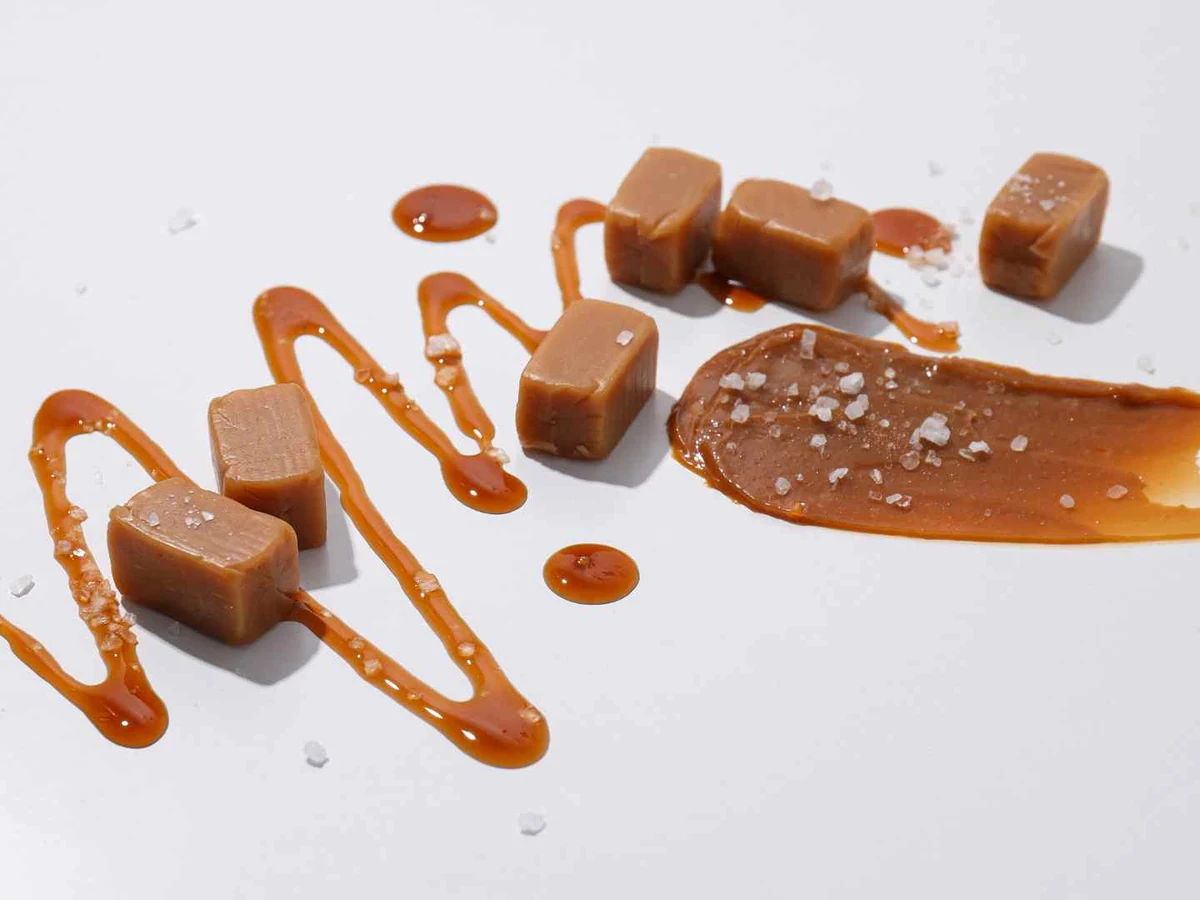
A soft cube can become a mouthful of trouble
Cats often tear food with their teeth and swallow pieces rather than grinding them thoroughly. A dense caramel square can flatten over the palate, stick between teeth, or travel as a large rubbery lump.
Watch for gagging, frantic pawing, drooling, repeated swallowing, regurgitation, coughing, open-mouth distress, or inability to settle. Blue-gray gums, collapse, or poor airflow demands immediate emergency care.
Do not perform a blind finger sweep in a conscious cat and do not tug on material that is firmly stuck. A veterinary professional can protect the airway, control pain, and examine for tooth or soft-tissue injury.
Hard caramel and brittle pieces can fracture an already weakened tooth. New chewing reluctance, food dropping, one-sided chewing, facial sensitivity, or blood near a tooth merits a dental examination even if the candy is no longer visible.
Dairy can upset a cat without being a classic poison
Cream, condensed milk, butter, and milk powder make many caramels rich and smooth. Many adult cats digest lactose poorly, while a large fatty serving can provoke nausea, vomiting, diarrhea, or abdominal discomfort.
The ASPCA notes that pets lack enough lactase to handle significant milk and dairy. That digestive limitation is different from a toxin, yet it is a sound reason not to share caramel sauce.
Butter caramel is not made cat-friendly simply because butter contains less lactose than milk. Our butter guide for cats explains fat, salt, portions, and wrapper hazards in greater detail.
Whipped topping and caramel drizzle often arrive together on café drinks. The cat whipped-cream guide can help untangle the dairy portion, while the coffee and chocolate components still require separate review.
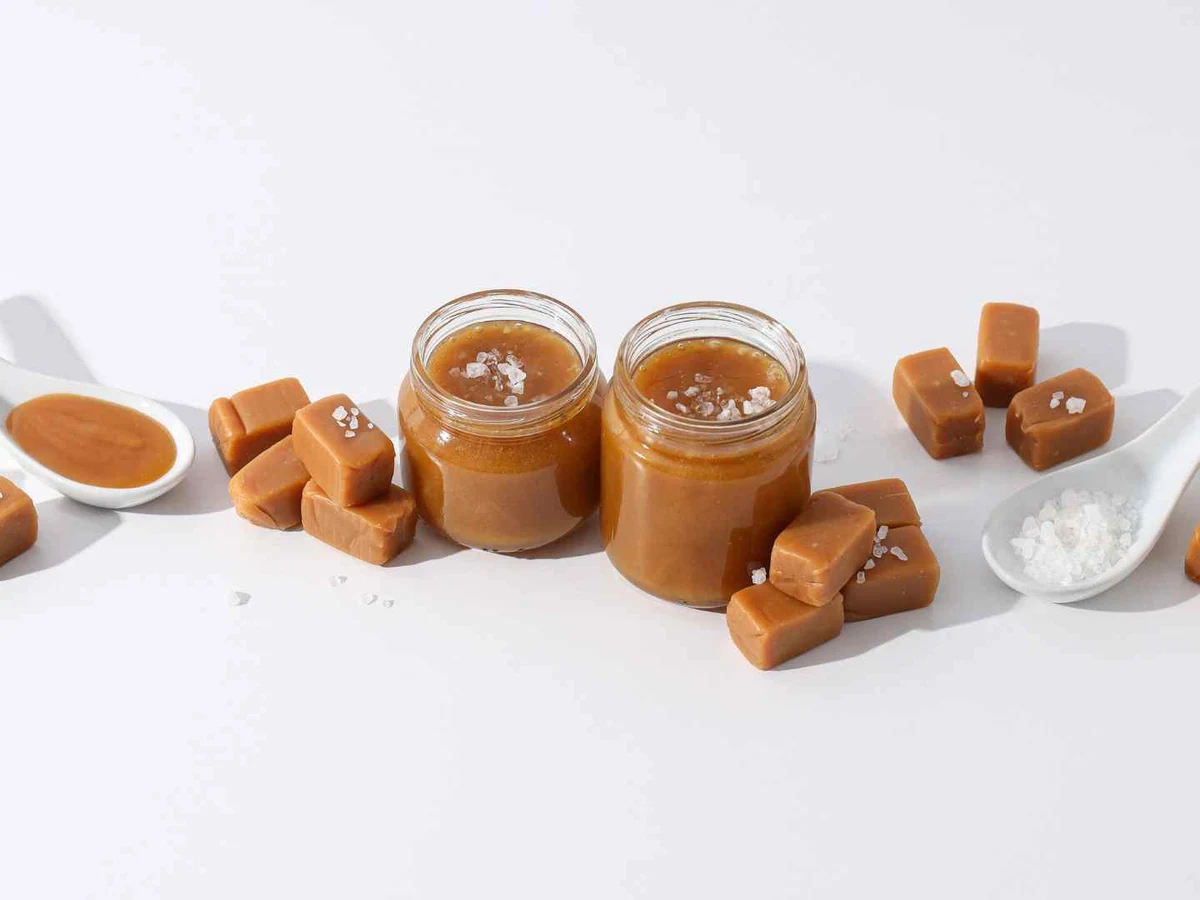
Salted caramel varies from a pinch to a concentrated topping
The word salted does not reveal the sodium dose. A few decorative flakes on one candy and a restaurant sauce made with salted butter, added salt, and salty mix-ins can produce very different exposures.
A tiny taste of ordinary salted caramel is unlikely to cause sodium poisoning in a healthy cat. Larger quantities, a concentrated recipe, restricted water access, kidney or heart disease, and signs such as marked thirst, vomiting, weakness, tremors, incoordination, or seizures deserve immediate advice.
Offer normal access to fresh water, but never force water down a cat’s throat. Electrolyte problems need measured veterinary management rather than an at-home flushing experiment.
Chocolate, mocha, and coffee caramel are different desserts
Chocolate-filled caramels, cocoa caramel corn, mocha sauce, and coffee candies may contain caffeine or theobromine. These methylxanthines can affect the nervous system and heart, with concentration depending on cocoa type, coffee ingredient, and amount.
Possible signs include vomiting, agitation, a rapid or irregular heartbeat, tremors, seizures, and collapse. Use the cat chocolate guide to organize the cocoa information, then call with the actual label and missing quantity.
Caramel color is not the same thing as chocolate, and a tan-brown sauce is not proof of cocoa. Ingredient-level accuracy prevents unnecessary alarm in one case and dangerous underreaction in the next.
Alcohol-flavored caramel needs a recipe, not a guess
Bourbon caramel, rum sauce, Irish cream candy, and liqueur-filled chocolates may retain alcohol, especially when spirits are added late or not cooked. The word flavor can refer to different formulations, so ask the manufacturer or restaurant when the label is incomplete.
Alcohol can cause vomiting, disorientation, poor coordination, depression, low body temperature, breathing problems, coma, or worse in pets. Treat known alcohol-containing caramel as a prompt veterinary call rather than waiting to see whether the cat appears tipsy.
Sugar-free caramel and the xylitol knowledge gap
Some reduced-sugar candies and syrups use sugar alcohols or mixed sweeteners. Xylitol is profoundly dangerous to dogs, but published canine thresholds cannot be relabeled as feline thresholds.
The FDA describes xylitol poisoning in dogs, including rapid insulin release and potential liver failure. Comparable sensitivity is not established in cats, so the responsible feline response is to identify the product and obtain case-specific professional advice.
Save the wrapper, photograph all sweetener names, and report the maximum portion missing. Do not administer honey, corn syrup, or a dog-directed remedy unless a veterinarian treating this cat tells you to do so.
Caramel apples bring fruit, seeds, and sticks
A caramel apple is a bundle of separate questions: sticky coating, chocolate or nut topping, apple flesh, seeds and core, wooden stick, and wrapper. The stick and hard core can matter more urgently than a lick of coating.
Our apple guide for cats covers plain flesh and why stems, leaves, core, and seeds are not offered. Call after a swallowed stick, persistent gagging, abdominal pain, repeated vomiting, or a missing pointed fragment.
Do not induce vomiting after a skewer or stick goes missing. Sharp objects can puncture tissue on the way back and may require imaging or removal planning.
Caramel popcorn is not just caramel
Popcorn pieces can be hard, irregular, and easy to scatter under furniture. Unpopped kernels may damage teeth, while nuts, chocolate drizzle, salt, butter, and flavor powders add their own concerns.
A cluster can also carry string, a gift-bag tie, foil, or plastic film. Count missing nonfood items instead of assuming every absent piece was digested candy.
Sticky fur, paws, and whiskers
Cooled sauce on the coat encourages grooming and can tighten into a painful mat. Gently use lukewarm water on a small external patch if the cat is calm, keeping water and sugar out of the ear canal and eyes.
Avoid solvents, essential oils, harsh soap, and scissors against the skin. A groomer is not a substitute for a veterinarian when the caramel was hot, the skin looks red or blistered, the cat is painful, or a large area is involved.
How to triage a caramel incident
- Handle heat first: any fresh-pan contact, mouth burn, eye splash, or extensive coat contamination warrants immediate veterinary direction.
- Name the recipe: list dairy, salt, chocolate, coffee, alcohol, sweeteners, nuts, apple parts, and toppings rather than reporting only caramel.
- Inventory objects: account for wax paper, plastic film, foil, sticks, twist ties, popcorn kernels, and candy-bag pieces.
- Escalate symptoms: breathing difficulty, collapse, seizures, tremors, repeated vomiting, obstruction signs, severe pain, or abnormal heart rhythm is urgent.
- For a tiny plain lick: after confirming it was cool and free of high-risk additions, a healthy cat may only need normal food, water, and observation.
Record the time, brand, amount missing, cat’s weight, medical conditions, and current behavior before calling. Those facts let a clinic distinguish a minor dietary indiscretion from a burn, toxic ingredient, or foreign-body emergency.
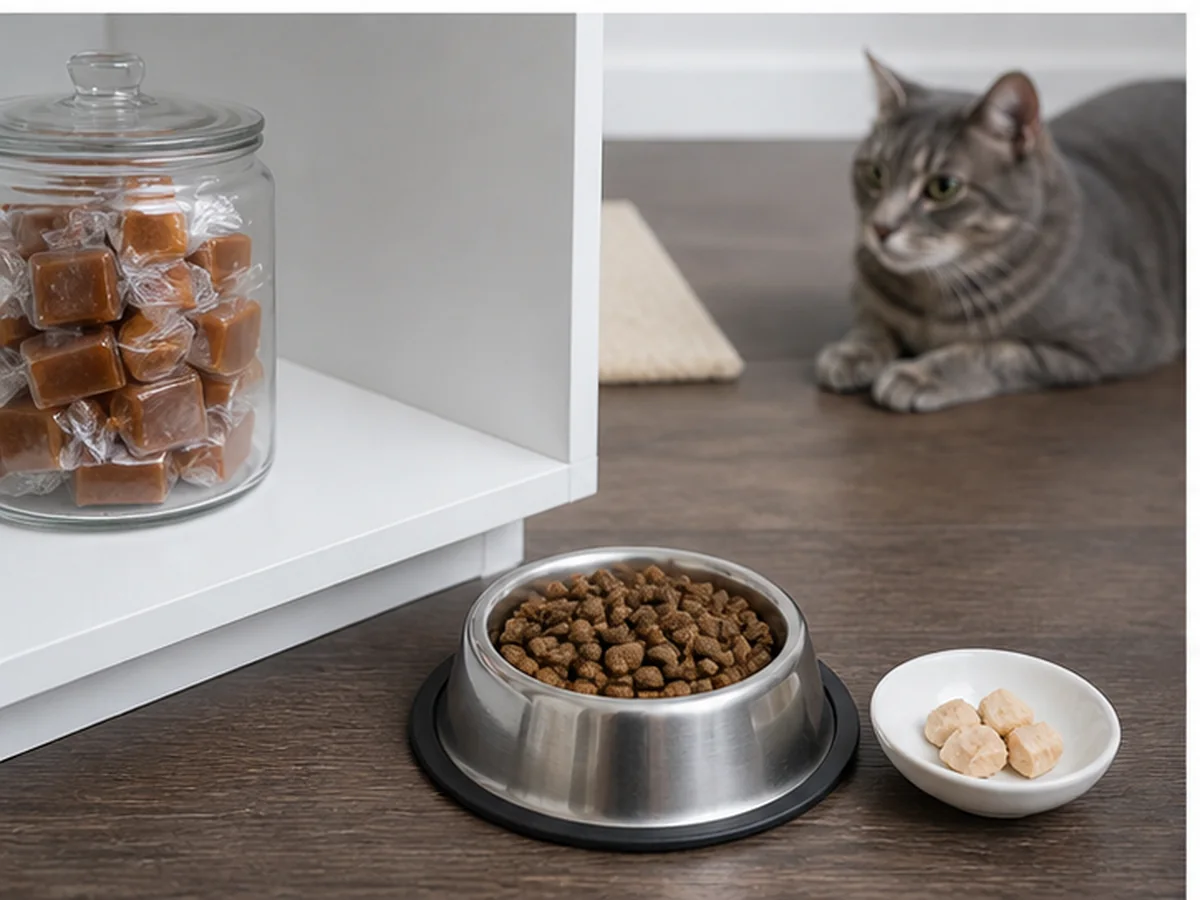
Why caramel should not become a routine reward
Cornell advises that treats should remain occasional and emphasizes food formulated for feline nutritional needs in its cat-feeding guidance. A teaspoon of sauce can consume snack calories without supplying a useful feline nutrient profile.
For a cat who appears whenever dessert is served, reserve a measured cat treat or a piece of the regular diet before human plates arrive. Predictable substitution is easier than negotiating with a sticky paw at the table.
Frequently asked questions
My cat licked a little caramel sauce. What should I do?
Confirm it was cool, then inspect the recipe for chocolate, coffee, alcohol, xylitol, and excessive salt. If it was a tiny plain lick and the cat remains normal, monitoring may be enough after label review.
Can cats eat caramel made only from sugar and water?
It is not a balanced or useful treat even without dairy. Cooled traces are generally lower concern than rich specialty caramel, but hot syrup, hard texture, and large amounts remain hazards.
Is caramel color toxic to cats?
Caramel color is a food-coloring category, not a sticky caramel candy and not automatically chocolate. Assess the complete product in which it appears, because the surrounding ingredients and quantity determine the practical risk.
Should I make my cat vomit after eating a caramel wrapper?
No home vomiting method should be used unless a veterinarian specifically directs it. Wrapper material, shape, timing, and the cat’s signs determine whether observation, imaging, or another intervention is appropriate.
Bottom line
Caramel earns its place in the human cupboard, away from paws. Cool the burn problem first, read specialty flavors literally, respect sticky texture and missing packaging, and choose a balanced feline reward when those amber-colored eyes begin negotiating.